

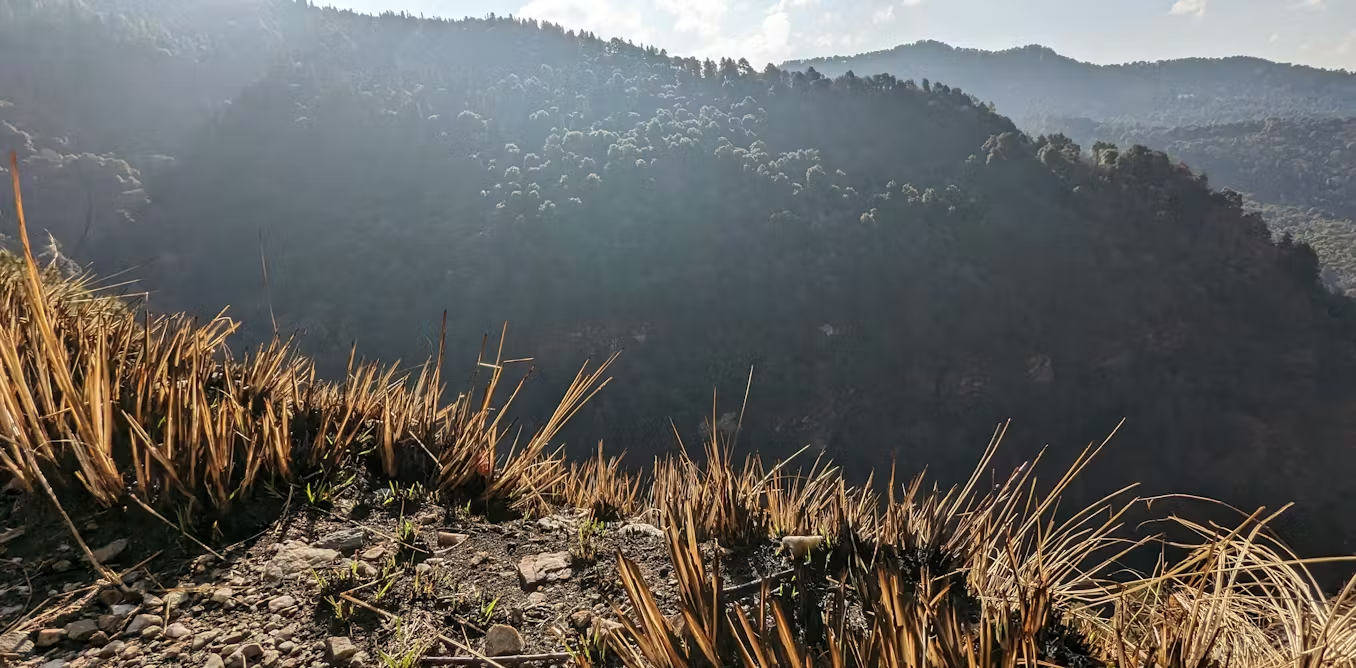
Every year during December and January, in the Indian Himalayan state of Uttarakhand, rural communities carry out traditional burning on steep hill slopes to regenerate grass. These carefully timed burns, which take place when fuel stocks are low, are needed to support livestock and, indirectly, agriculture in the region.
Similar practices are observed among Indigenous and traditional groups in other regions, highlighting the importance of controlled burning in supporting livelihoods, maintaining biodiversity, and reducing wildfire risk.
Unfortunately, in Uttarakhand, these winter burning practices for regenerating grass remain misunderstood. They are often wrongly believed to happen in summer and blamed for wildfires, which means their important role in rural life remains overlooked.
Across the world, with wildfires becoming more frequent and intense worldwide, the limitations of a “zero-fire” government policy – which focuses on putting out all fires – are becoming ever more evident. However, recent interdisciplinary research highlights that adapting to climate change (and more wild fires) requires learning to live with fire, rather than attempting to extinguish it in every instance.
So there is renewed attention on Indigenous and traditional burning practices and how they can complement prescribed burning practices implemented by the state agencies. Controlled use of fire, which was once discouraged, is now cautiously reconsidered as a necessary tool for reducing the risk of mega wildfires.

Author, Author provided (no reuse)
My research examines these approaches to living with fire in the Uttarkashi district of the Uttarakhand Himalayas, where both officials and communities conduct controlled burning. It highlights that these different approaches differ in their social and environmental objectives, and community-led burning practices offer lessons for others.
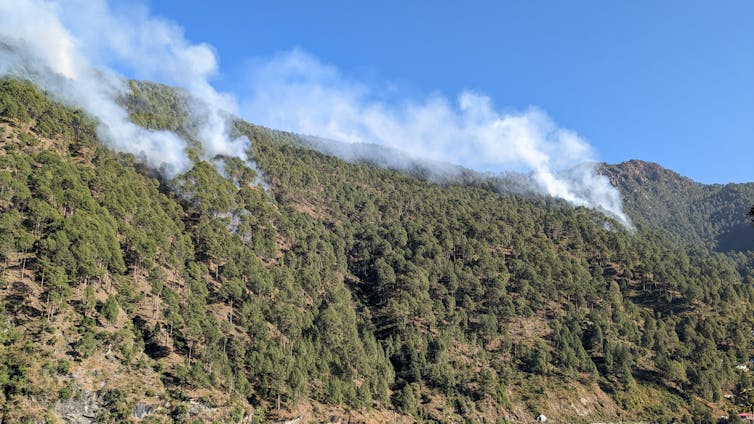
At first glance, the fires lit by state agencies and those set by rural communities may appear similar in their timing and intensity: both are low-intensity burns conducted during winter months and remain confined to small areas. However, they differ in purpose and what they achieve.
For state agencies, prescribed burning is primarily a fire-prevention measure. The goal is to reduce inflammable material on the ground that could fuel wildfires in the summer. In this approach, the forest is valued primarily for its trees and carbon sequestration (the capturing, removal and permanent storage of CO₂ from the earth’s atmosphere), while the needs of local communities are given less importance. Moreover, these prescribed burning practices remain poorly implemented.
Author provided (no reuse)
On the other hand, communities value forests more broadly and see forests as a site for both grass and trees. They emphasise that winter burns are crucial to sustaining grass. Without them, trees and unwanted shrubs spread, leaving less grass available for fodder.
When to set fires
Beena, a community member, explained to me why summer is not the right time for traditional burning: “Fires set during summer can damage the grass roots with their high intensity. This is not what we want. Also, there is a higher risk of fire spreading out of control.”
This careful use of fire by communities ensures the care of grass, which in turn sustains livestock. Manju Devi, another community member, explained the need for fire in traditional livelihoods: “If there is no fire, there is no grass. If there is no grass, what will our animals eat?” Livestock across Uttarakhand remains central, meeting domestic nutrition needs, supporting agriculture and generating income from the sale of milk and butter.
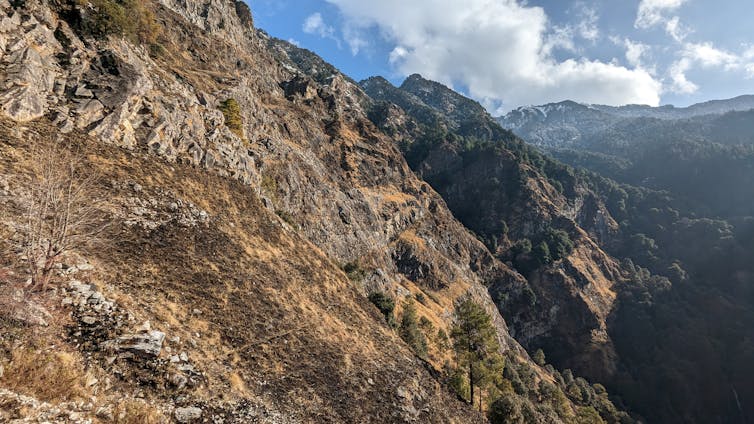
The use of fire also becomes part of supporting a wider web of relationships with the surrounding landscape. Mansukh, another community member, said that winter burning also supports nesting grounds for pheasant species, and as refuges and grazing grounds for young deer fawns. These traditional burns improve forage quality for deer and maintain the open grassy slope habitats of ground-nesting birds by limiting shrub and tree growth.
Author., Author provided (no reuse)
These findings suggest that while both community-led burning and state-led burning reduce wildfire risk, the former also sustains livelihoods, biodiversity, and a broader, more caring relationship with the forest.
Lessons from rural communities
It’s important to view the Himalayas as a living landscape, shaped by communities over centuries, rather than as pristine wilderness. Currently, only state agencies are legally permitted to conduct burns in Uttarakhand, a legacy of colonial-period forest legislation.
It is essential to value Indigenous and traditional fire knowledge, both in Uttarakhand and beyond. Often, communities are unfairly blamed for wildfires, and their knowledge is overlooked. When burning is done in secret due to stigma, the risk of accidental fires increases. The Indigenous and rural communities possess valuable solutions for managing wildfire risk. What is needed now is greater recognition of their experience and expertise.



