
News Beat
I lecture Stirling University nursing students about my dementia

Graeme OgstonTayside and central reporter

 BBC
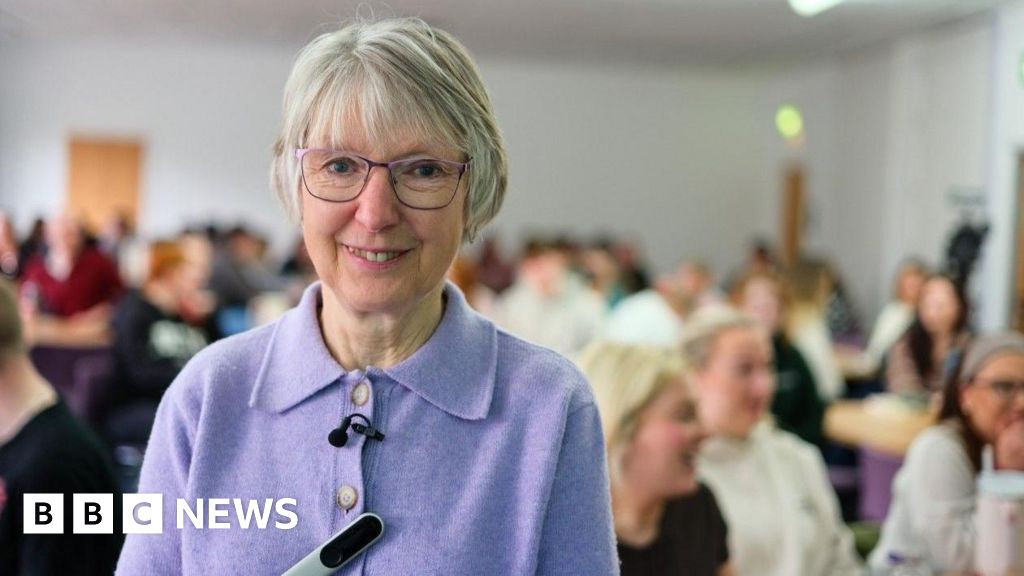
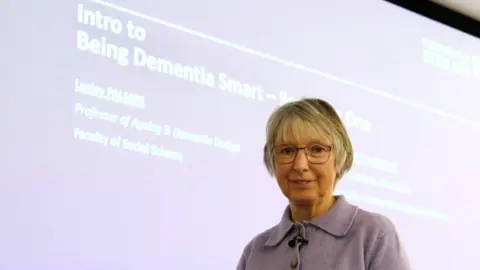
BBCSpeaking to almost 100 first-year nursing and paramedic students, Joan Lyon has her young audience in the palm of her hand.
But Joan is not a university lecturer – she is a 75-year-old grandmother with dementia.
The retired Episcopalian priest wanted something positive to come from her 2023 Alzheimer’s diagnosis, so offered her help to Stirling University’s Dementia Services Development Centre (DSDC).
Joan now regularly delivers talks to students about her day-to-day life with the condition, navigating the online world, and the importance of treating dementia patients with dignity and respect.
The university said Joan is integral to the success of its Being Dementia Smart module, the first in the UK to include dementia design for undergraduate nurses and paramedics.
Joan also volunteers at DSDC, offering her input on research into better design for people with dementia and testing new dementia-friendly products from manufacturers.
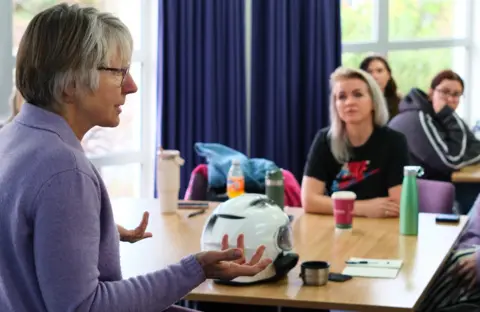
Joan first noticed something was wrong in 2022 when her sister and daughter pointed out that she was asking the same questions and sending them the same emails.
She went to her GP with her concerns, and after a battery of tests was diagnosed on Hogmanay 2023 with Alzheimer’s.
Joan said the diagnosis did not come as a surprise.
“I knew something different was happening,” she said. “This was not normal forgetfulness, which does get worse as you get older, this was different.”
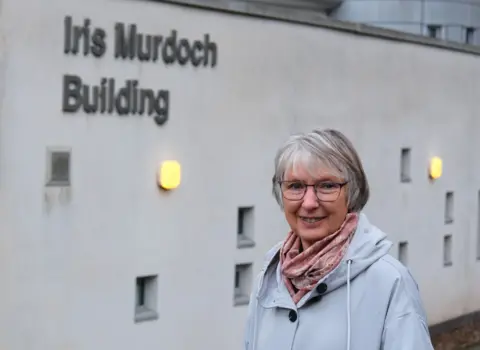
A chance encounter during a walk on Stirling University’s campus with her dog Bella, led to her involvement with its dementia centre.
She said: “I’d often pass the Iris Murdoch Centre, I’d read her books and she had dementia of some kind.
“I thought, I wonder what goes on in here, so I just went in and asked.”
Dementia affects an estimated 90,000 people in Scotland.
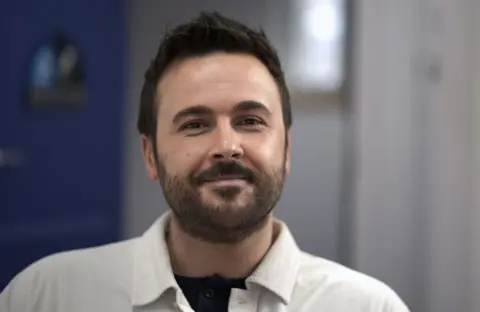
David Wilson-Wynne, DSDC senior dementia care consultant, said he “grabbed the opportunity with both hands” when Joan offered her help.
He said: “It’s not common for individual people to just come into the centre and ask to be involved with what we do.
“I had made Joan aware what the modules of the Being Dementia Aware were, gave her an overview and said, “you pick what you like”.
Glasgow-born Joan has lived in Papua New Guinea, Luxembourg and several regions of the UK, from Suffolk to Aberdeen, and has four children and five grandchildren.
She was no stranger to the university as her first job in 1970 after graduating from Strathclyde University was a year working in administration in the French department at Stirling.
She said: “I thought maybe I could be of some help, given that my diagnosis was early.
“So I was welcomed with open arms.”
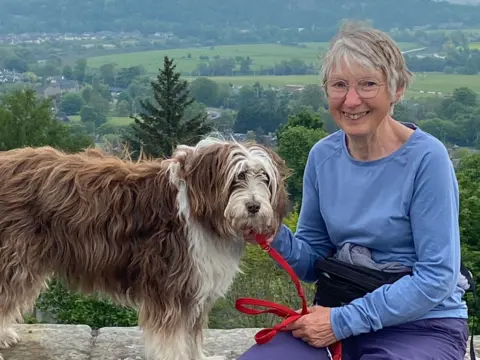 Joan Lyon
Joan began offering her help in studies and workshops at the DSDC.
She said the invitation to offer talks to the students “came out of the blue”.
Joan said: “Because I’m used to public speaking, I thought yeah I could do this.
“It’s trying to put a personalised approach into this, saying we are real people here, we are not a number, and we all react differently.
“My talks are not about “this is what Alzheimer’s disease is like’, I said this is my experience of it so far.
“I think it’s about saying anybody can get Alzheimer’s.”
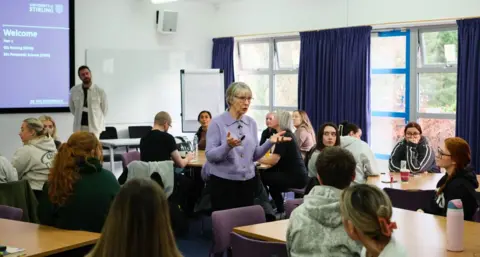
David said he is a “a huge believer” in a person-led approach to dementia care.
He said: “For me, it’s about always giving Joan that choice and control over what it is that she wants to talk about, share her journey.
“I can stand up and deliver a lecture on dementia and maybe bore them to tears, but Joan can stand up and is the true expert here.
“Joan is the one that we need to be listening to because she is the voice of lived experience and that helps inform everything that we should do.”
During the lecture, Joan told the students that she was “still compos mentis enough” to make use of the help that is available.
She said that one of her sons helps with “the financial aspect of life” and said she fears being “treated like a child and not given choices”.
Joan said the feedback from the students had been “hugely positive”.
She said: “I could tell that from the interest in the room, there was nobody having a conversation at the back table.
“They were all interested because they knew they were going to face this in their careers.”
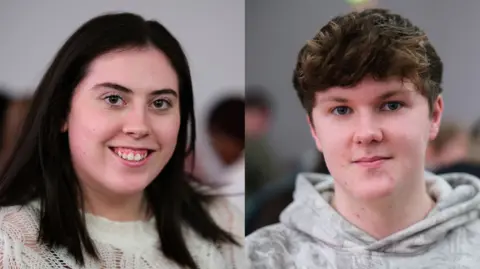
Katelin Denney, a first-year mental health nursing student, said she thought Joan’s lecture was “brilliant”.
She said: “I’ve never met somebody with Alzheimer’s or dementia before.
“I really appreciate the fact that she was mentioning that she doesn’t like to be talked about or talked down to when people are having conversations.”
Rory Clark, a first-year adult nursing student, said: “I thought Joan’s lecture was really inspiring.
“I think I always envisioned someone with dementia to be quite confused and lost, but Joan, she was really good, she was really put together.
“It definitely changed my perception of what someone with dementia actually looks like.
“So I think it will definitely change the way I deal with dementia patients in the future.”
Connor Walker, a first-year adult nursing student, said: “It was really, really fascinating. I’ve cared for people with dementia before, but it can be a wee bit clinical.
“It’s all about care plans and more about sometimes making decisions for people.
“So it was really fascinating and quite touching to hear about her experiences.
“I had that preconceived notion when I heard there was going to be someone with dementia (speaking), but I think it’s such a wonderful thing that she’s doing while she can.”
First-year nursing student Kerry Aitken said: “When she was standing up there, I had no idea that she had a diagnosis.
“Her views of her day-to-day life, how she copes and how she manages was very insightful to me.”
Joan still lives independently and continues to drive, although she now has to have an annual driving assessment.
She said she will “play it by ear” when it comes to lecturing in the coming years.
Joan said: “I’m hoping that I can still do it.
“I’m aware that my situation is regressing or advancing.
“I am more forgetful, and I can get more stressed about preparing for things and remembering to take things with me.
“And the time will come when I can no longer do it, I don’t want to embarrass my audience.”
Stirling is the only university in the UK to make the dementia module compulsory for all nursing and paramedic science students.
David said: “We have first-year students that are now third years and they openly ask me how Joan is doing, how she is. I think that says it all, really.
“Joan does what she wants to do. She has control, she has choice, she’s confident, and she talks to the students, not like they’re students.
“She talks to them like human beings.”
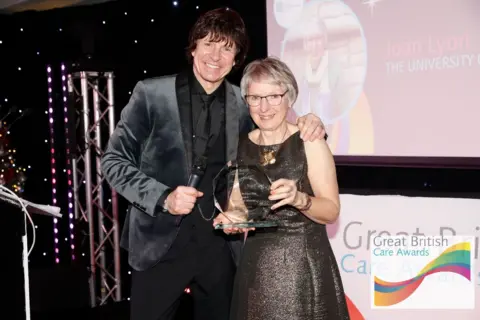 Great British Care Awards
Joan’s work alongside Stirling University recently earned both a Great British Care Award.
Judges said that Joan was “a courageous advocate for people living with dementia (who is) leaving a lasting impact on the next generation of compassionate clinicians”.
In the meantime, Joan is keen to continue her lectures and hopes other universities will follow suit.
She said: “This should be spread across the whole country.
“I think there’s insufficient education about how common this is.
“It’s been great, it helps my brain, it really does, it keeps me functioning – so it’s good.”



