News Beat
‘I was a British PoW tortured by Russia; this is how Ukraine and the West can win this war’

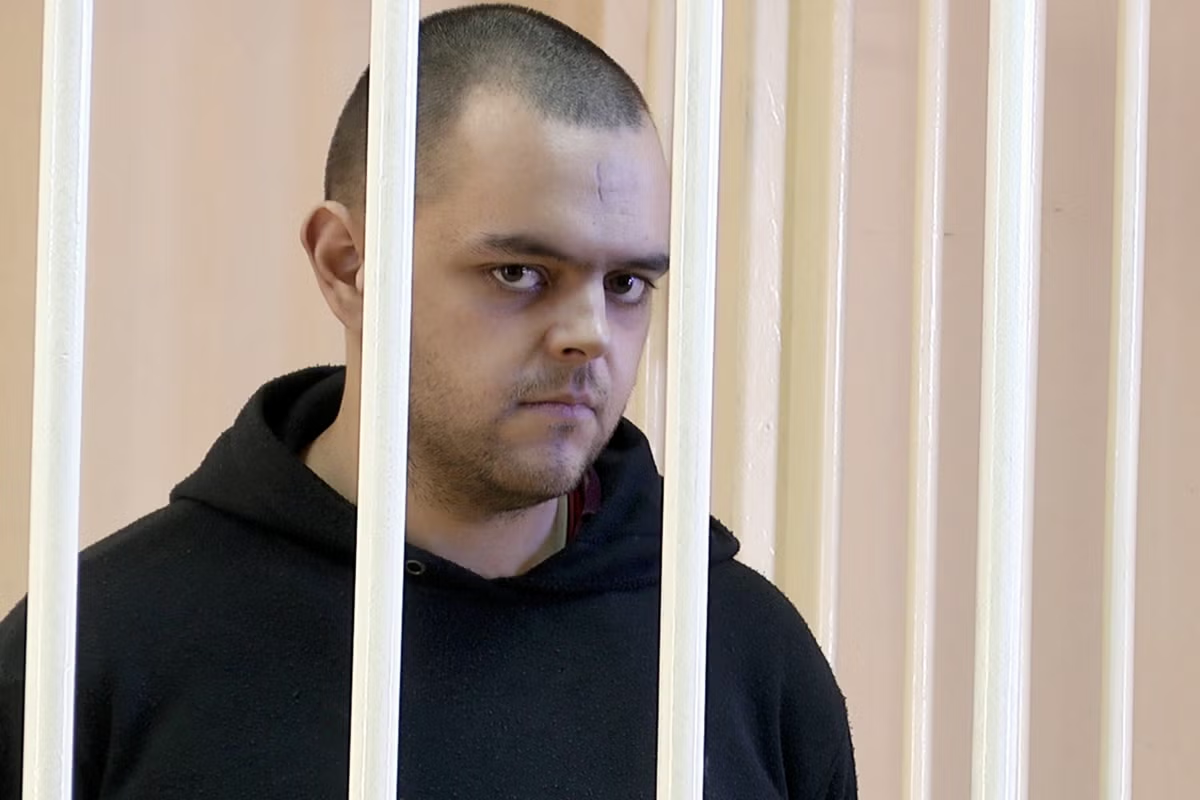
Captured and sentenced to death by Russia, tortured and a witness to war crimes, a young man from Nottingham spent months waiting for the executioner in a Russian prison, unable to cry.
“I so desperately wanted to, I was trying to force myself to let some emotion out,” he recalls. “But because I was too terrified in that place, I wasn’t able to cry. In five and a half months of captivity, I never cried once. There was moments where I wanted to, but I just physically couldn’t.”
This is Aiden Aslin, a survivor of Russianwar crimes himself, speaking to The Independent’s World of Trouble podcast.
His extraordinary life has taken him from working as a carer in Newark, Notts, to fighting with Kurdish militia against militants from the so-called Islamic State in Syria, to vicious street fighting under air attack in Ukraine’s besieged Mariupol.
Post captivity, he is now back in Zaporizhzhia in eastern Ukraine and back in the Ukrainian army, which he joined before Russia launched its full-scale invasion in 2022.
Reflecting on his adopted country’s chances of triumphing in Vladimir Putin’s brutal war, which has ground on for nearly four years, he is optimistic.
“I think Russia can be beaten,” he says quietly. “I think we have got the means to exhaust their economy. Obviously, it is not an overnight thing. At some point, it is going to give.
“People in Russia are saying that you should end this… The grasp is weakening. There are a lot of things showing that Russia is becoming a lot more destabilised.”
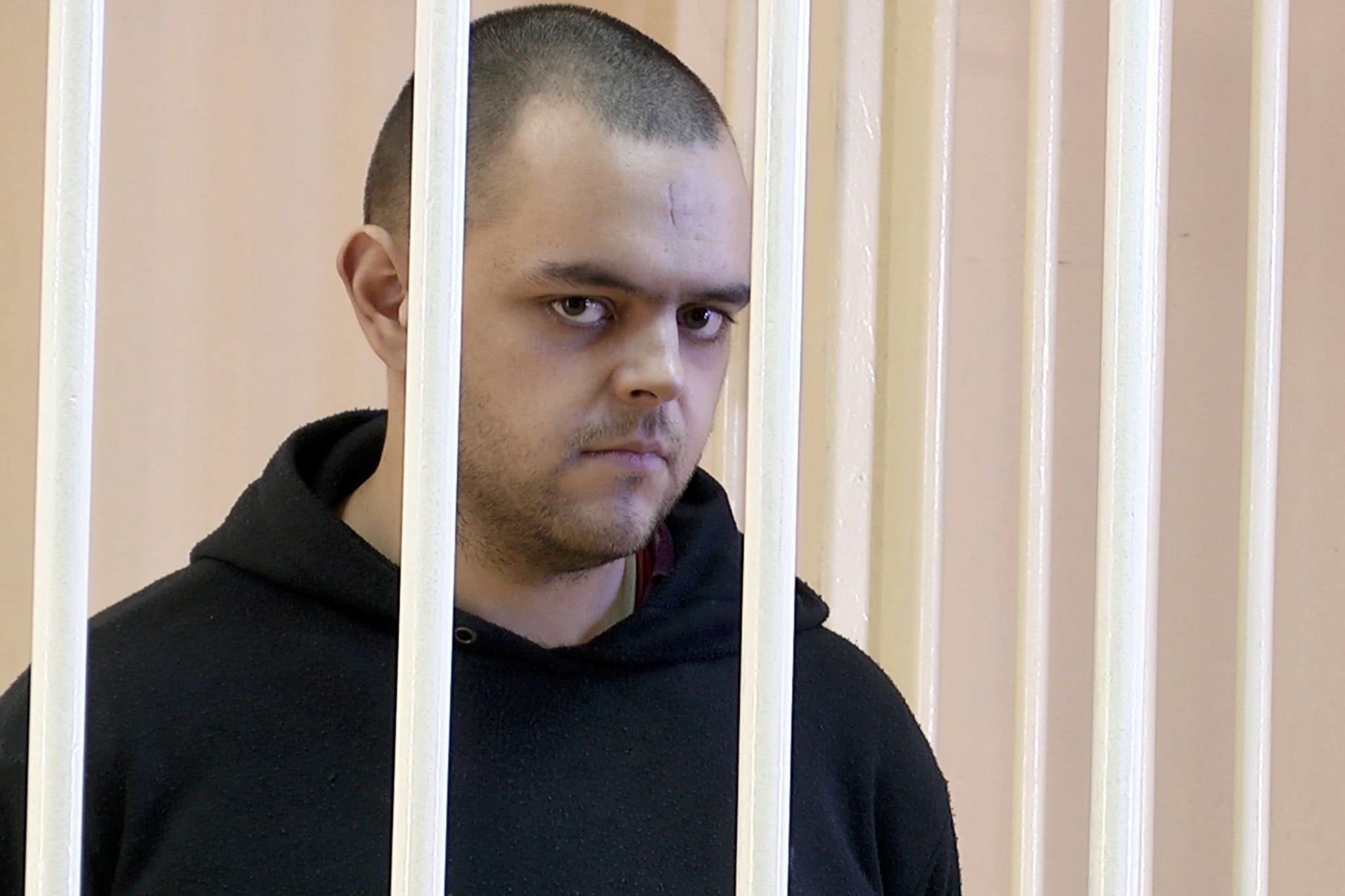
Aslin is not alone in taking up in arms for a country not his own. Thousands of foreign volunteers joined Ukraine’s fight after the Kremlin ordered troops to topple the democratically elected government in Kyiv and try to return Ukraine to the status of a Russian colony.
But few were part of Ukraine’s forces before Putin’s invasion. Aslin, now 31, was among those who had already answered a call that came from within to fight what they saw as injustice.
He was first prompted to leave the UK to fight abroad when he saw on television the massacres of Yazidis by Isis extremists in Syria in 2014, who went on to attempt genocide against the community and enslave hundreds of women.
“I never had any interest in going to Syria. But this was a defining moment in my journey where I decided I could continue to stay at home or stand by my beliefs and morals and actually do something when other people won’t.
“I felt there was a sense of injustice that the West wasn’t doing enough to try and prevent the atrocities that were being committed.”
He joined the Kurdish Peshmerga; a ruthlessly efficient militia supported by the US, UK, France and others with special forces troops, and bombers, in the fight against Isis.
After three years, Aslin, a combat veteran at the age of 23, returned to the UK but, by 2018, the sense of injustice that propelled him to Syria drove him to Kyiv, and a recruiting office where officers were “bewildered” by the arrival of a British volunteer.
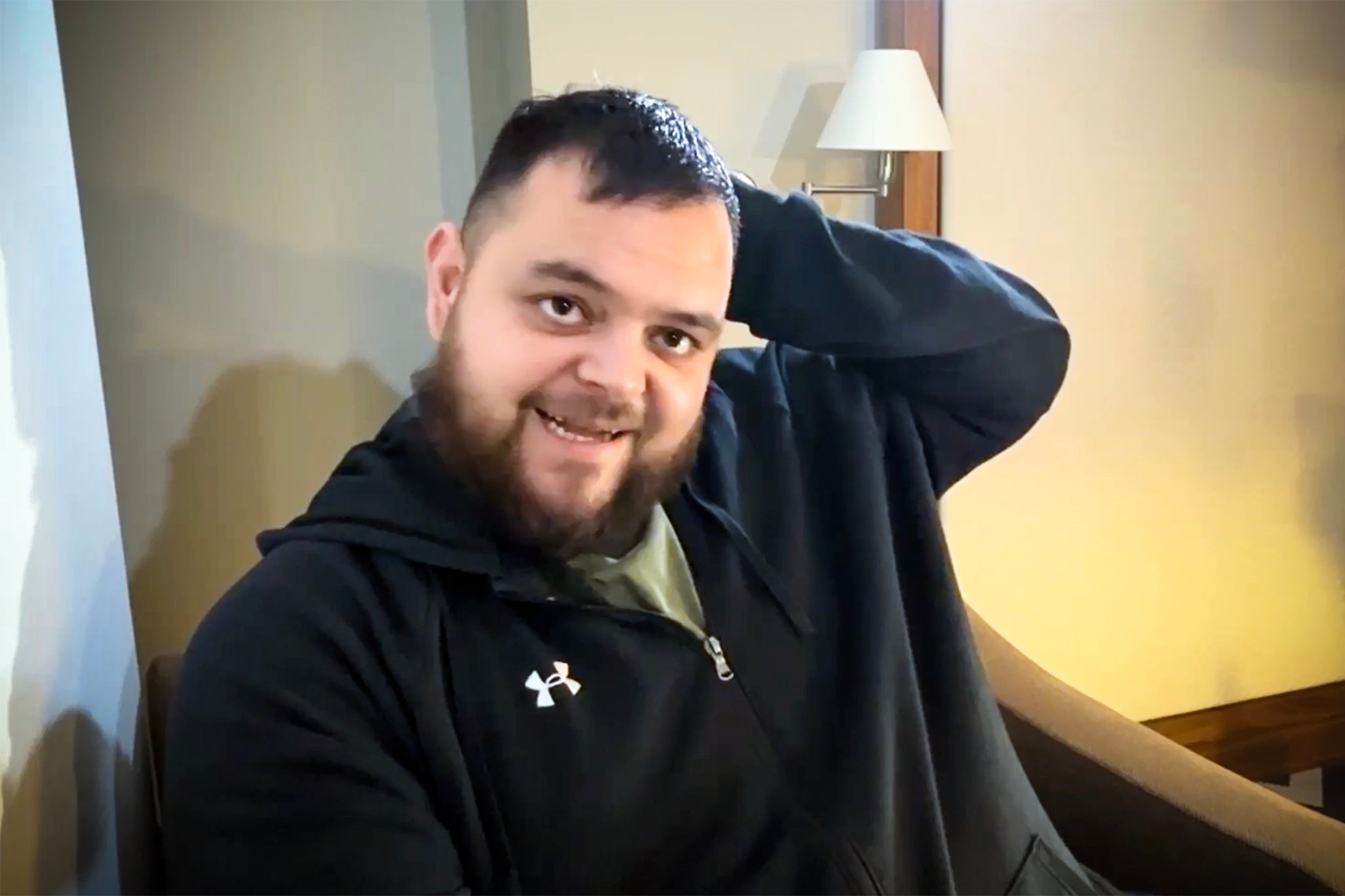
After passing training, he joined Ukraine’s marines and got his marine parachute wings. By February 2022, he was manning a frontline position with Russian forces outside the Ukrainian-held city of Mariupol on the Black Sea coast when word came that a full-scale invasion had started. It was, he says, a “relief” after the waiting.
But the sheer scale of the Putin advance meant his unit was forced back into the Ilych steelworks, close to the famed Avostal works where other Ukrainian units were making their last stand in the face of a Russian ground and air onslaught.
“You lived like mice, you stay underground as much as you can,” he says. “You try to avoid going above ground because of the aviation and artillery. But I remember in the first initial weeks of the encirclement we had a lot of artillery that we were shooting back at the Russians.”
Soon the Ukrainians and Aslin’s marine unit were surrounded.
“The territory was getting smaller; it got to the point where we didn’t have anything to shoot back with. By the first week of April, one of the neighbouring units ended up surrendering, without telling us anything. And it just exposed our entire right flank.”
Surrender became inevitable, and when Aslin became a prisoner of war, he expected to be shot on the spot.
There were times when that may have felt like a release from what was to follow: a British citizen accused by Russia of fighting as a mercenary. On his capture, he was beaten, and he knew worse would follow.
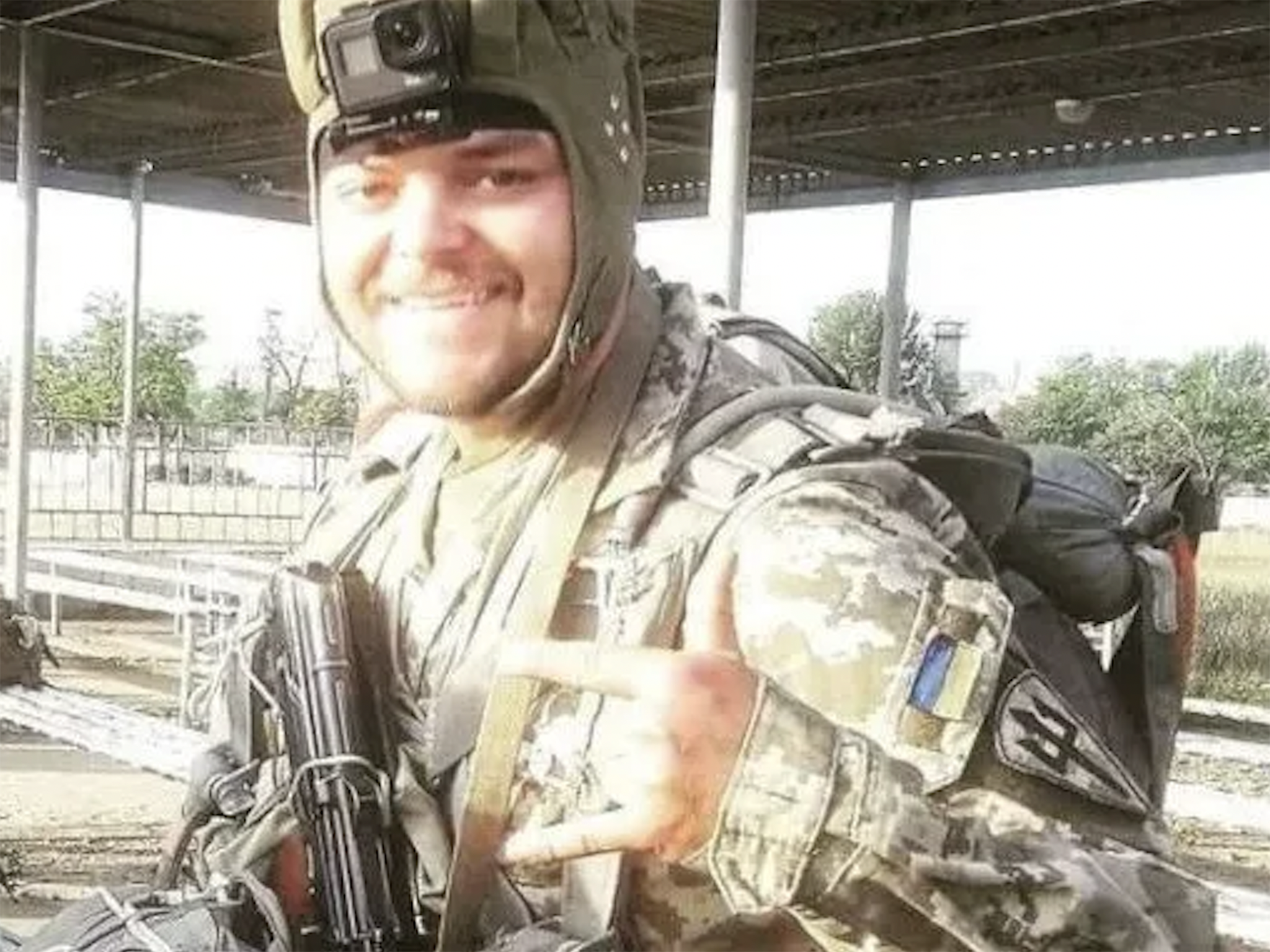
Taken to the Russian-occupied city of Donetsk, he was confronted by a Russian in a blue uniform.
“He said something to me in Russian, and he had the thickest accent and stank of alcohol,” he recalls. “Me being me, I politely asked him if he could repeat what he said because I didn’t understand.
“As soon as I said that he beat me with a police baton. Initially I got hit across the forehead and then I fell to the floor, hit a few more times, and then I felt myself getting hit on my left shoulder.
“At the time I thought it hit me on my left shoulder, but it turned out it actually stabbed me.”
Weeks and then months of torture followed. At one point a Russian interrogator stopped his attacks and lit a cigarette.
“He asked me, do I know who he is? And I was like, no. And he says, ‘I’m your death’. He asked ‘do you want a beautiful death or do you want a quick death?’ And obviously I wanted a quick death.
“And he said, ‘no, you’re going to have a beautiful death’. I was fully expecting to be murdered at that point. [But then] this Russian came in and said, ‘stop, stop, you’re going to kill him’ – I knew it must have been bad if his superior had to stop him.”
Accused of terrorism at a Russian court martial, Aslin faced a death penalty if convicted, alongside fellow British volunteer Shaun Pinner and Moroccan Saadoune Brahim. They were assigned a lawyer but knew they would not get anything close to a fair trial.
And in the run-up to the case being heard, Aslin began to crack.
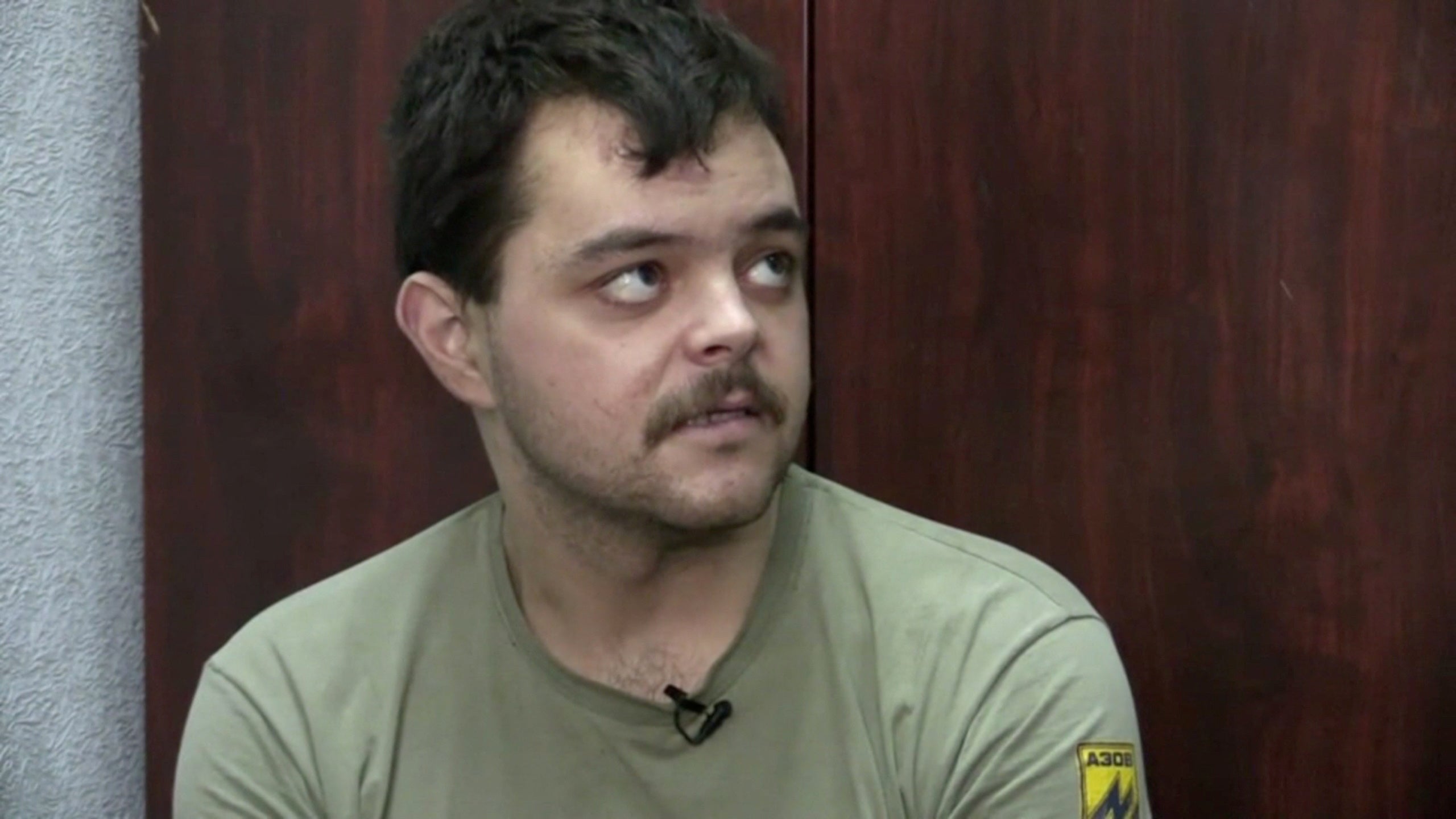
Held in a pre-trial facility, beatings became routine. On one occasion, Russian officials put bags over the heads of the prisoners who they then forced to crawl, roll and slither along the corridors while they were thrashed.
Starved and kept in overcrowded cells, Aslin was forced to learn the Russian national anthem and sing it every morning word perfect. When the guards shouted Putin’s name, they had to stand up in their cells and shout: “President of the world!”
At one stage during his incarceration, Aslin heard a man in the next-door cell being dragged out, beaten and tortured. As his body weakened, the man’s screams faded. And when he was dragged back into his cell, the whipping continued but the victim fell silent.
Prisoners sharing the cell screamed for help and shouted that the man was not breathing. It took ten minutes for a guard to look in before he then went away. Another ten minutes went by and no doctor or medic was summoned until it was too late – the prisoner was dead.
After a three day sham trial, Aslin was found guilty and the death sentence was passed. Even then, depressed and bereft of hope having been sent back to prison, he still could not summon the emotional power to cry. He was too afraid.
Unknown to him, Russia had realised there was value in keeping this foreign prisoner alive. He was paraded for interviews with collaborators working for the Moscow media, including the British propagandist Graham Phillips, now being investigated by the Met Police over alleged war crimes.
But this propaganda kept him partly protected. On film, Aslin could not appear too badly bruised.
The months went by and he had no idea that he would end up on a list for POWs to exchange. He, and others, were swapped for Russian prisoners in a deal brokered by the intelligence services of both sides, and with the help of Saudi Arabia he was flown to the kingdom in September 2022.
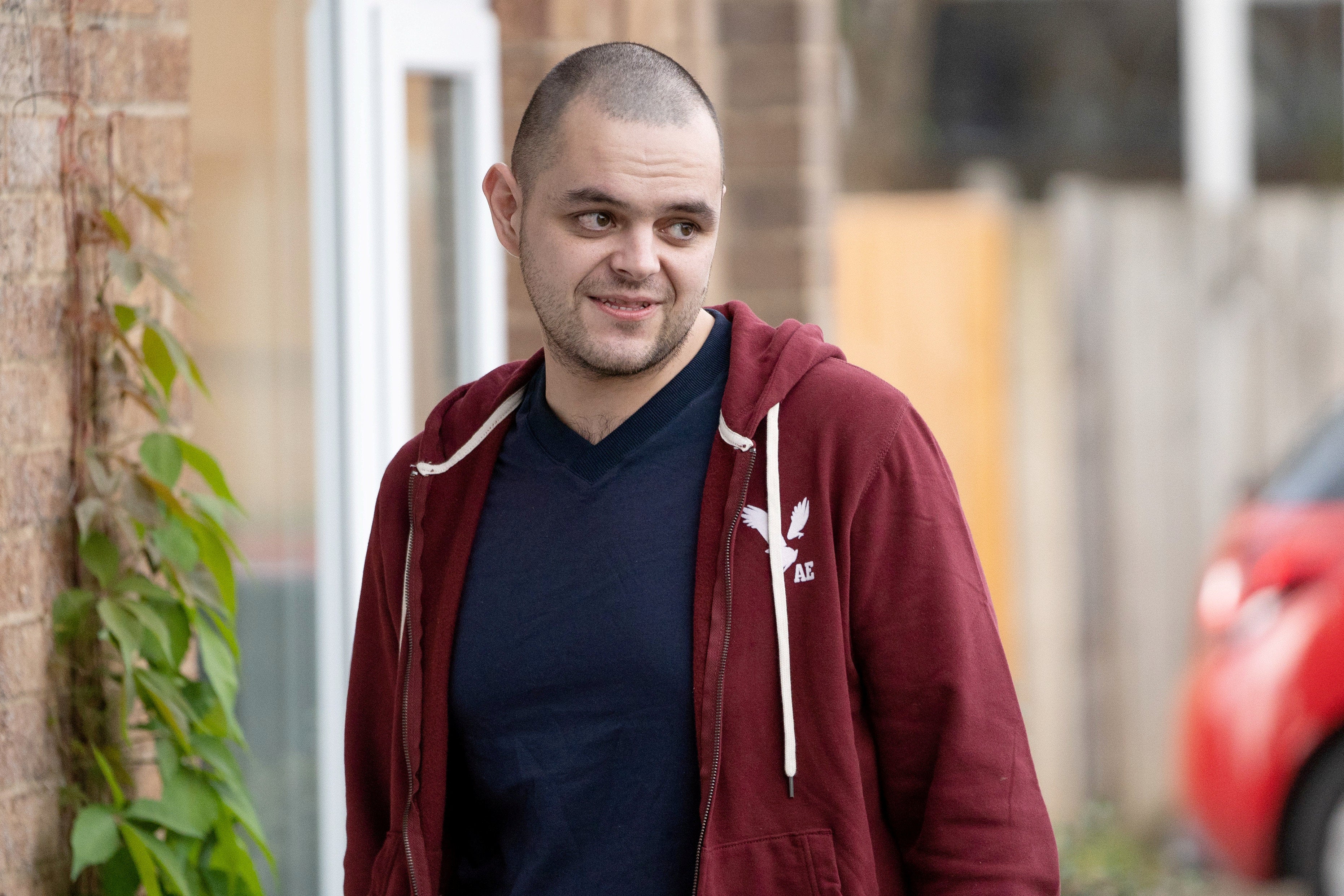
But it was not until he saw British officials and knew he was safe that he could finally shed a tear.
“I was able to cry and there was no fear of being beaten,” he says. “I was such a relief, emotionally and physically, because it it’s something I had been wanting to do for such a long time.”
Aslin returned to the UK, but his home and his heart remained in Ukraine.
He travelled to eastern Ukraine in November 2023 and signed back up with the military in January 2024. He continues to serve in Ukraine’s armed forces, where he will stay until the war is over.
Looking at history, he finds comfort for Ukraine in the examples of Afghanistan, the Soviet Union and even Napoleon: “On previous occasions throughout history, the defender has, most of the time, ended up winning.”