
News Beat
ICE shoots man in the leg and unleashes tear gas on children and protesters | News US

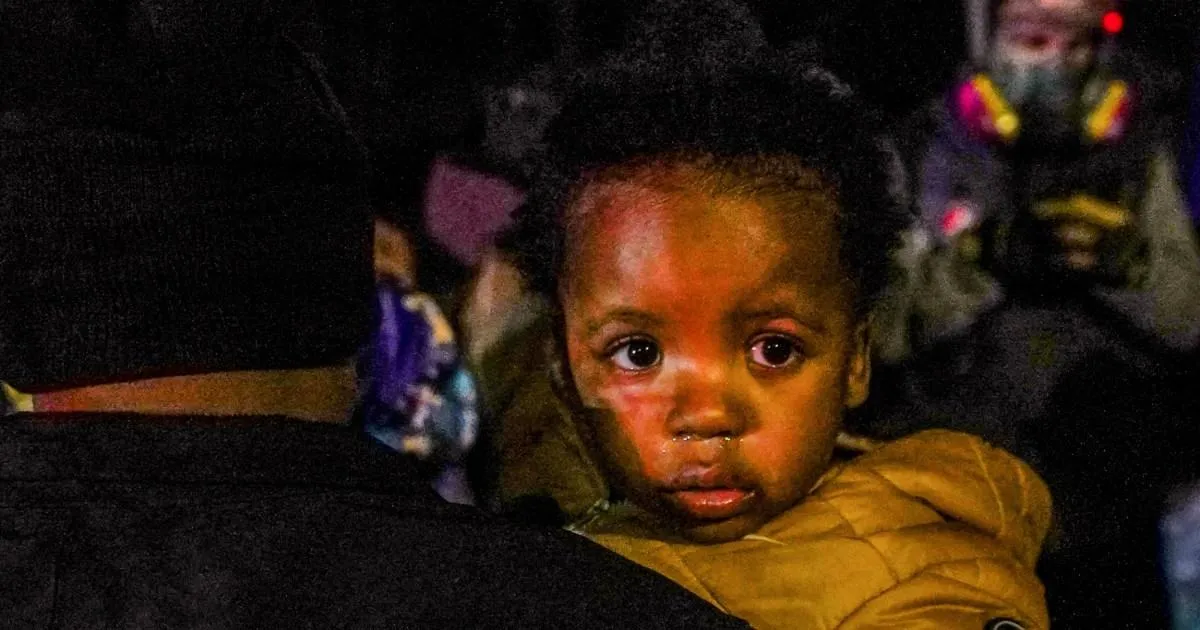
Minneapolis is at a breaking point, after ICE agents unleashed tear gas and pepper spray onto a large crowd of protesters – many of whom had children with them.
Officers also shot a man in the leg after a brief car chase, claiming he was illegally in the country from Venezuela.
DHS claimed that the man got out of his car and had an ‘altercation’ with an ICE officer, before two others came from a nearby building and ‘attacked’ the officer.
‘Fearing for his life and safety as he was being ambushed by three individuals, the officer fired defensive shots,’ the DHS said.
Minneapolis officials have slammed the shooting and the use of tear gas against their locals, telling ICE: ‘Leave the city and state immediately. We stand by our immigrant and refugee communities – know that you have our full support.’
In a neighbourhood near where Renee Good was shot and killed by an ICE officer a week ago, locals came out and began whistling to alert others that ICE were nearby.
Witnesses said the officers began to deploy pepper spray and tear gas into crowds of protesters, where children were present.


Children were seen with snotty noses and red eyes as they were carried away after being exposed to the chemical agents.
Conservative media reported the incident differently, citing what they called ‘agitators’ banging against ICE vehicles and calling them Nazis.
Chicago also had issues with ICE agents using chemical agents on protesters after President Donald Trump issued a warning to the city in September.
There were also allegations that ICE has been throwing canisters of the gas into crowds ‘unannounced’, without their body cameras on.
In a statement, the Department of Homeland Security said at the time: ‘Rioters and terrorists have opened fire on officers, thrown rocks, bottles, and fireworks at them.
‘ICE officers are facing a nearly 1000% increase in assaults against them… as they put their lives on the line to arrest murderers, rapists, and gang members.’
Is using tear gas legal, and is it a chemical weapon?

Under the Chemical Weapons Convention, tear gas is considered a chemical weapon internationally. Its use during war is banned, but using it for domestic law enforcement in the US is still permitted.
Though it’s legal for US police to use it for riot control, tear gas can still be incredibly dangerous.
Immediate effects include burning sensations in the eyes, nose, throat and skin, along with coughing, shortness of breath and temporary vision impairment.
More serious injuries, including blindness, glaucoma and even death, can occur from prolonged exposure or high concentrations.
Young children, particularly those with asthma or respiratory problems, are at higher risk of complications.
Gregory Bovino, senior ICE officer, told ABC News last year: ‘When we utilise force in law enforcement… It’s the least amount of force necessary to effect an arrest or to affect the successful outcome of any given mission that we’re on.
‘Whether it’s the use of tear gas. Or the use of hand techniques or any use of force by law enforcement, that’s the least amount of force necessary to positively affect the outcome of that mission.’
Get in touch with our news team by emailing us at webnews@metro.co.uk.
For more stories like this, check our news page.
MORE: Erfam Soltani won’t be executed after Iran backtracks on death sentence
MORE: Iran warns ‘next time the bullet won’t miss’ in direct threat to Donald Trump
MORE: Drug ‘200 times stronger than heroin’ on London’s streets has already killed three



