News Beat
I’m A Therapist. I Don’t Think Banning Social Media For Kids Is The Only Answer

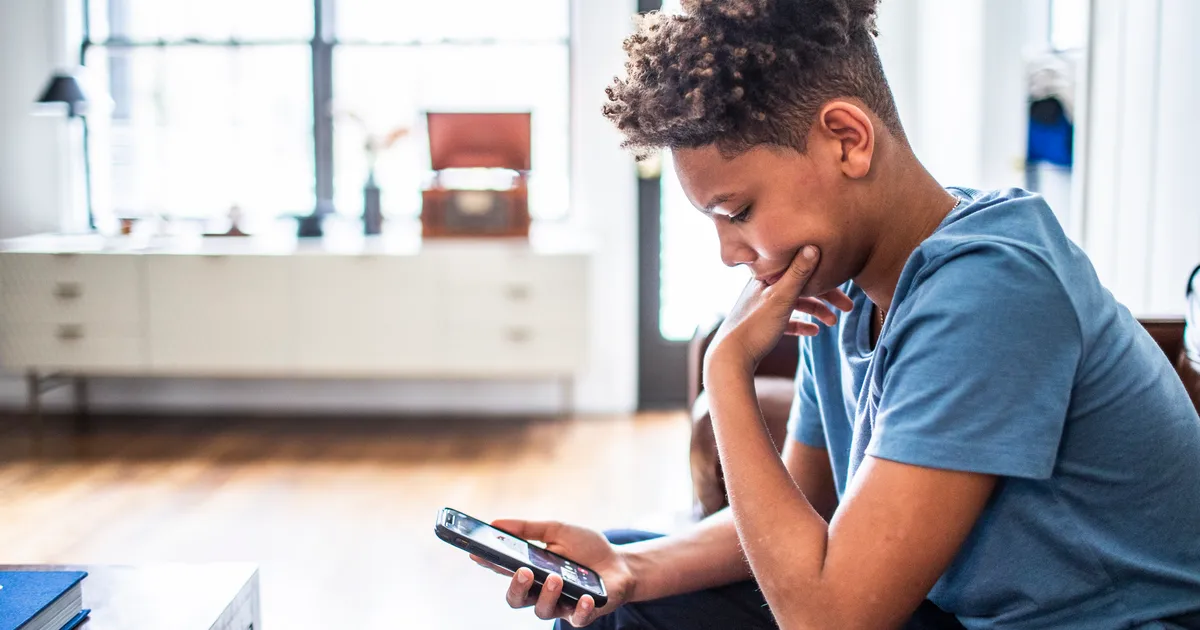
This generation of parents have gone above and beyond to make childhood safer: using location-tracking apps, thinking carefully about sleepovers, knowing who their children are with and where they are going.
Risk in the physical world is now managed with unprecedented care.
Yet at the same time, many children are being given unrestricted access to a digital world that is largely unregulated, commercially driven, and developmentally mismatched to their needs.
As a child and adolescent psychotherapist, this is the contradiction I see daily: we monitor our children’s movements, but often not the environments their phones take them into.
Social media’s impact on the teens I work with
Adolescence is the period when young people form identity through peer feedback and social comparison. Social media amplifies this process dramatically.
Large-scale studies link heavy social media use with increased rates of anxiety, depression and loneliness, particularly among teenage girls.
What’s striking in therapy, however, is that many young people don’t come in saying “social media is harming me”. For them, this level of visibility feels normal, it’s simply the water they’re swimming in.
They often describe the pressure to respond, to stay connected, to manage friendships online as “just how things are”, rather than something that can be questioned.
It’s usually only when we slow things down that the impact becomes clearer. Young people begin to notice how tiring it is to always be reachable, always aware of how they appear, always slightly on edge about what might be said or shared next. Conflict no longer ends at the school gate. It follows them home, into their bedrooms, and onto their phones late at night.
In clinical work, certain themes recur with striking consistency:
- Cyberbullying that feels inescapable because it follows children home
- Early exposure to sexual, violent or disturbing material
- Rising body dissatisfaction driven by filtered, idealised images
- Online communities that normalise self-harm, eating disorders and extreme beliefs
- Contact with adults who do not have children’s safety in mind.
We would never allow a child to wander alone through a city at night, yet many are navigating the digital equivalent daily, often without guidance.
Should the UK ban social media for under-16s?
I’d broadly support a social media ban for under-16s, as it is likely to reduce early exposure during a particularly sensitive period of emotional and social development.
However, on its own it risks being a blunt tool.
Children are developmentally curious and highly socially motivated, and without parallel changes in parenting practices and wider cultural norms, bans can simply push use underground rather than remove it.
For a ban to be effective, it would need to sit alongside age-appropriate regulation at platform level; clear societal messaging that later access is protective; and strong parental guidance around boundaries, supervision and real-world connection.
It’s also important to recognise that for many young people, social media is already embedded in how they relate to peers, so an abrupt removal could be difficult for some to adapt to without careful scaffolding and adult support.
When limits are introduced alongside meaningful offline alternatives, they are far more likely to support healthy development.
What can parents do?
1. Delay access to social media
Studies consistently show that later access to social media is associated with better mental health outcomes. Emotional maturity develops far more slowly than technology. Waiting is not depriving children, it is giving their brains time to grow into the responsibility.
2. Keep phones out of bedrooms
This single change is one of the most evidence-backed interventions. Research links nighttime phone use to poorer sleep, higher anxiety and greater exposure to harmful content. In families I work with, removing phones from bedrooms often leads to rapid improvements in mood and regulation.
3. Prioritise real-world connection
Face-to-face friendships, sport, clubs and unstructured play remain some of the strongest protective factors for mental health. These experiences build resilience, identity and belonging in ways digital interaction simply cannot replicate.
4. Supervise honestly and openly
Children don’t benefit from secret monitoring, they benefit from clear, consistent boundaries and open conversations. That means:
- Family rules about apps and screen time
- Regular, curious discussions about what they’re seeing
- Normalising parental involvement as care, not control.
The message should be: “This world is powerful, and you don’t have to navigate it alone.”
A wider shift is needed
Parents often tell me they feel they are fighting this alone. But this is not just a family issue, it is a public health issue. We have invested an enormous effort in making the physical world safer for children, while underestimating the psychological risks of the digital one.
What gives me hope is how responsive children are to change. When families introduce small, steady boundaries; I see anxiety fall, sleep improve, attention return and confidence grow – not because technology disappears, but because it finds its proper place.
Laura Gwilt is a child and adolescent therapist at Swift Psychology.