Cricket’s most profitable tournament is set to start this weekend in a significantly diminished form, bereft of both a major qualifying nation and the single biggest fixture in terms of the potential viewership it can attract.
A complicated mesh of diplomatic disputes among the South Asian nations involved, including co-hosts India, mean the T20 Cricket World Cup begins on Saturday under a shadow of geopolitical turmoil.
It all began with Bangladesh’s withdrawal from the tournament, kicked out by the International Cricket Council (ICC) and replaced by the next-closest team to qualifying in Scotland. Bangladesh had refused to play any of their scheduled fixtures in India and demanded they be moved to co-hosts Sri Lanka, a request that was rejected.
Then, Pakistan announced that they would not play their group-stage match against arch-rivals India, due to take place in Sri Lanka’s capital Colombo on 15 February. No reason was initially given, but Pakistan’s prime minister has since confirmed this was in solidarity with Bangladesh.
Advertisement
These developments have put the Board of Control for Cricket in India (BCCI) at the centre of a dispute blending geopolitics, commercial power, and long-running grievances about how world cricket is run.
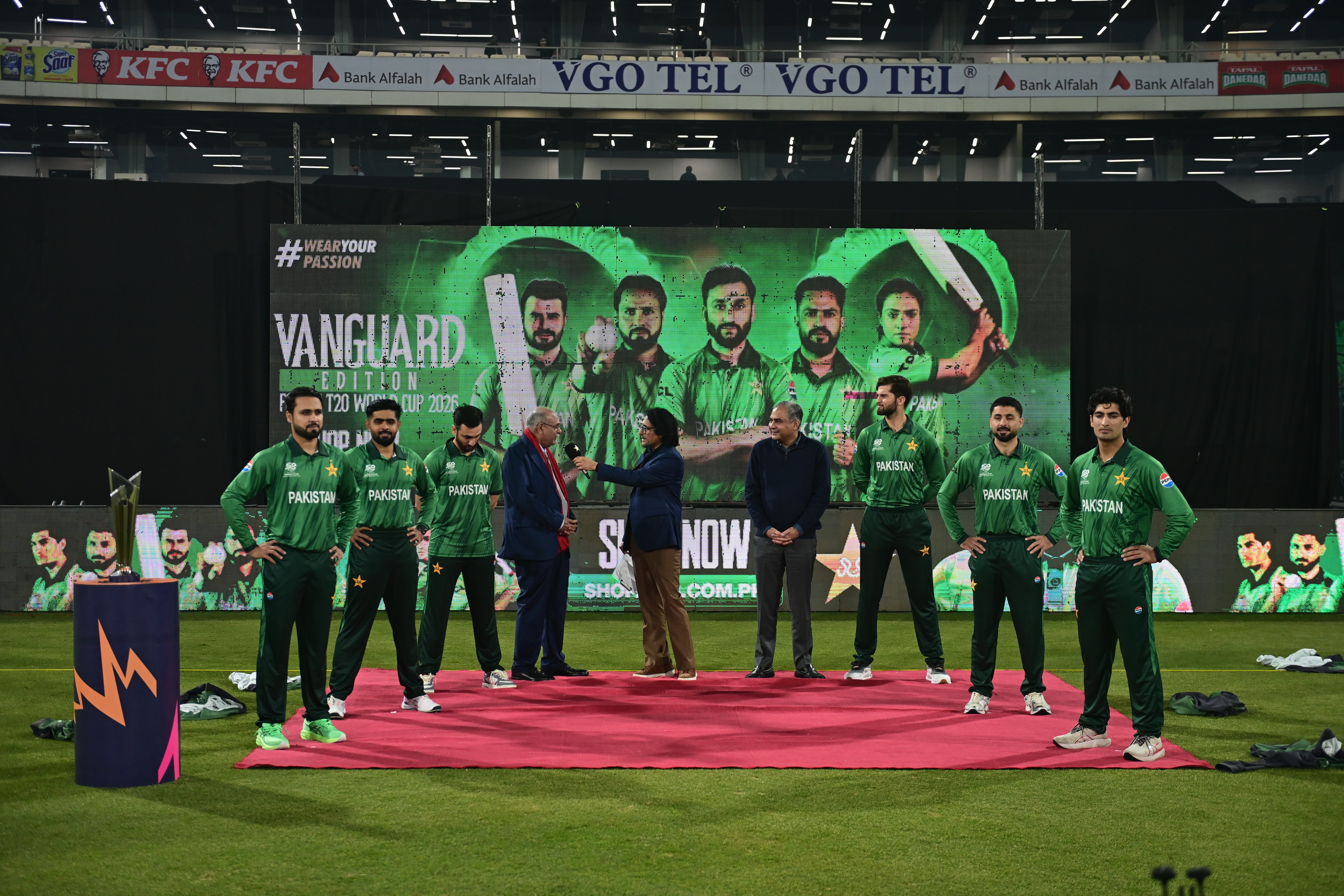
Pakistan’s players unveil ICC T20 World Cup 2026 jersey after their match against Australia at Gaddafi Stadium in Lahore on 1 February 2026 (Getty)
Bangladesh’s withdrawal followed a formal request to move its scheduled matches to Sri Lanka, with the Bangladesh Cricket Board (BCB) citing security concerns for its team and fans amid escalating political tensions between it and India.
Relations have dramatically deteriorated in the past 18 months since street protests brought down the Sheikh Hasina regime in 2024 and compelled the former prime minister, an ally of India, to flee to Delhi. India has ignored Dhaka’s requests for Hasina’s extradition to Bangladesh, where she has been found guilty of crimes against humanity.
Advertisement
Since Hasina’s government collapsed, India and India-based rights groups have repeatedly raised concerns over the safety of members of the Hindu minority in Bangladesh. In December, a Hindu man accused of blasphemy was beaten to death by a mob, triggering protests by Hindu nationalist groups in India.
Against this political backdrop, the Indian Premier League franchise Kolkata Knight Riders released Bangladeshi fast bowler Mustafizur Rahman in January after being instructed to do so by the BCCI.
Bangladeshi authorities responded by banning broadcasts of the IPL in their country.
The BCB then renewed its request for their team’s matches to be shifted out of India.
Advertisement
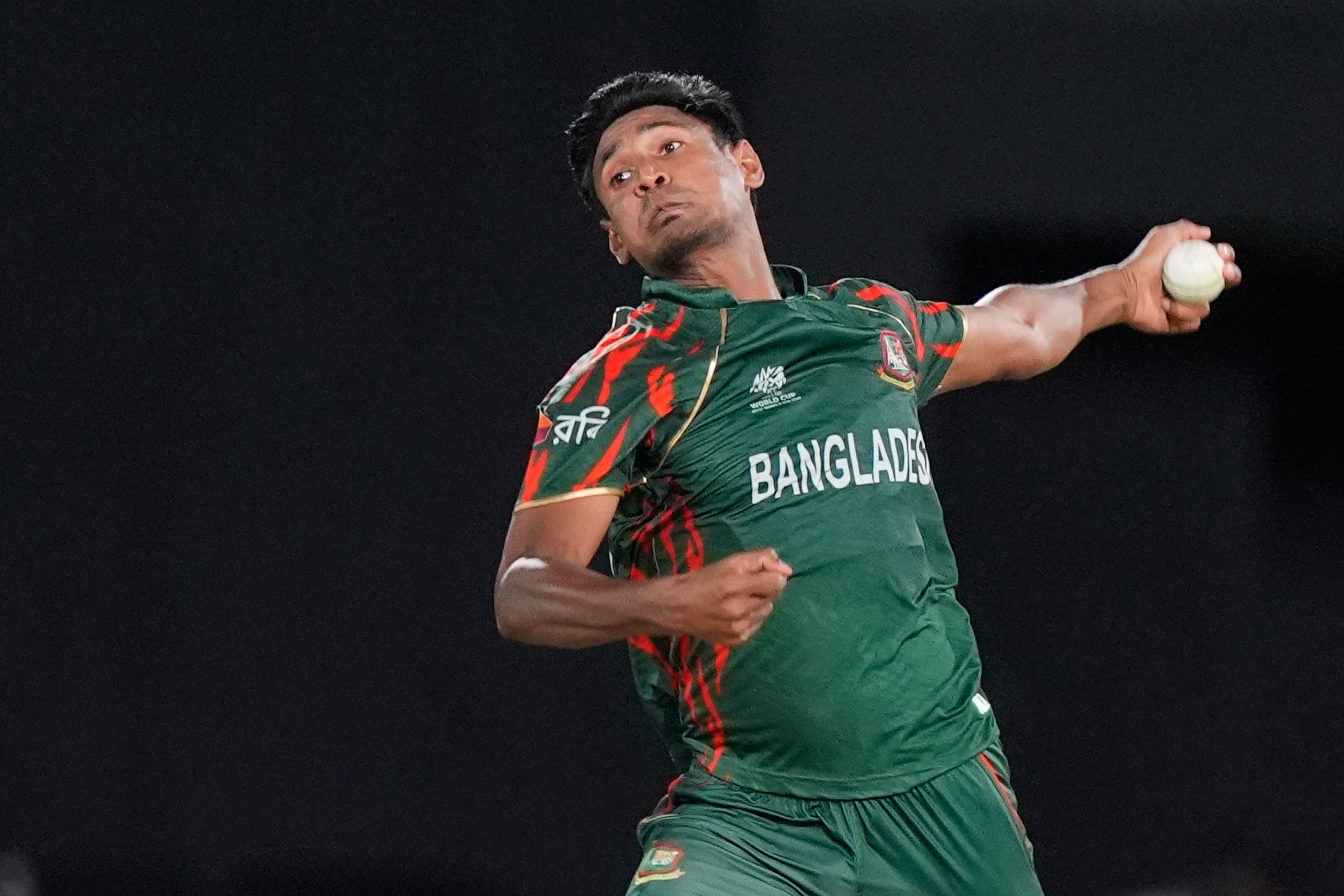
Bangladesh’s Mustafizur Rahman during the T20 World Cup match between Bangladesh and Sri Lanka in Grand Prairie, Texas, on 7 June 2024 (AP)
The ICC rejected the request on the grounds of an “absence of any credible security threat”, and gave Bangladesh 24 hours to confirm its participation.
The Independent understands that no efforts were made to provide proof of the security threat faced by Bangladesh’s team, and when the deadline passed, Scotland were invited to take the vacant place. The governing body said it was keen not to establish “precedents that could undermine the neutrality and fairness of ICC events”.
Pakistan initially indicated they might withdraw entirely in response to Bangladesh’s removal. They later confirmed participation but said their team would not play India. Pakistan’s government said it had granted “approval” for the team to compete in the tournament but that players “shall not take to the field” against their arch-rivals.
Advertisement
The India-Pakistan fixture has historically been the most-watched and commercially valuable match in global cricket. More than 600 million people watched on the Indian streaming platform JioHotstar when the teams met in last year’s Champions Trophy.
Cricketing ties between the two neighbours have been shaped by decades of conflict. They have not played a bilateral series since 2013, and India have not toured Pakistan since 2008.
Pakistan did not host any touring nations between 2009 and 2019 following an attack on Sri Lanka’s team bus in Lahore that killed six policemen and two civilians.
Pakistani players have been barred from the IPL since the 2009 Mumbai attacks, which left 174 people dead.
Advertisement
Last year, India refused to travel to Pakistan for the Champions Trophy, eventually playing their matches in the UAE.
That led to an agreement stating that when either country hosted an ICC event, matches between them would be held at neutral venues.
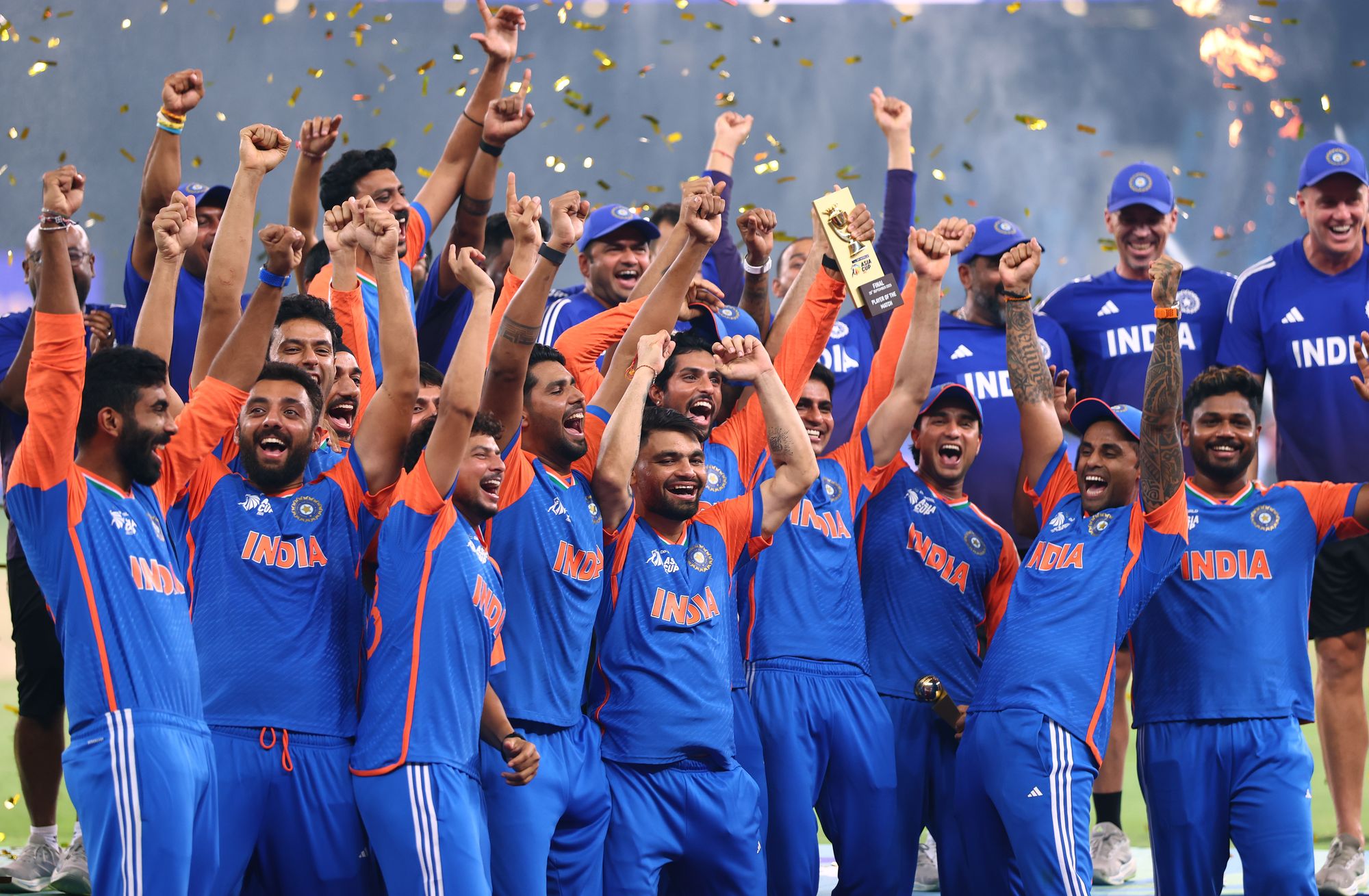
India celebrate their Asia Cup Final victory against Pakistan in Dubai on 28 September 2025 (Getty)
Tensions between the neighbours escalated in the wake of a four-day military conflict last April, sparked by a militant attack on tourists in the Indian-administered part of Kashmir.
Advertisement
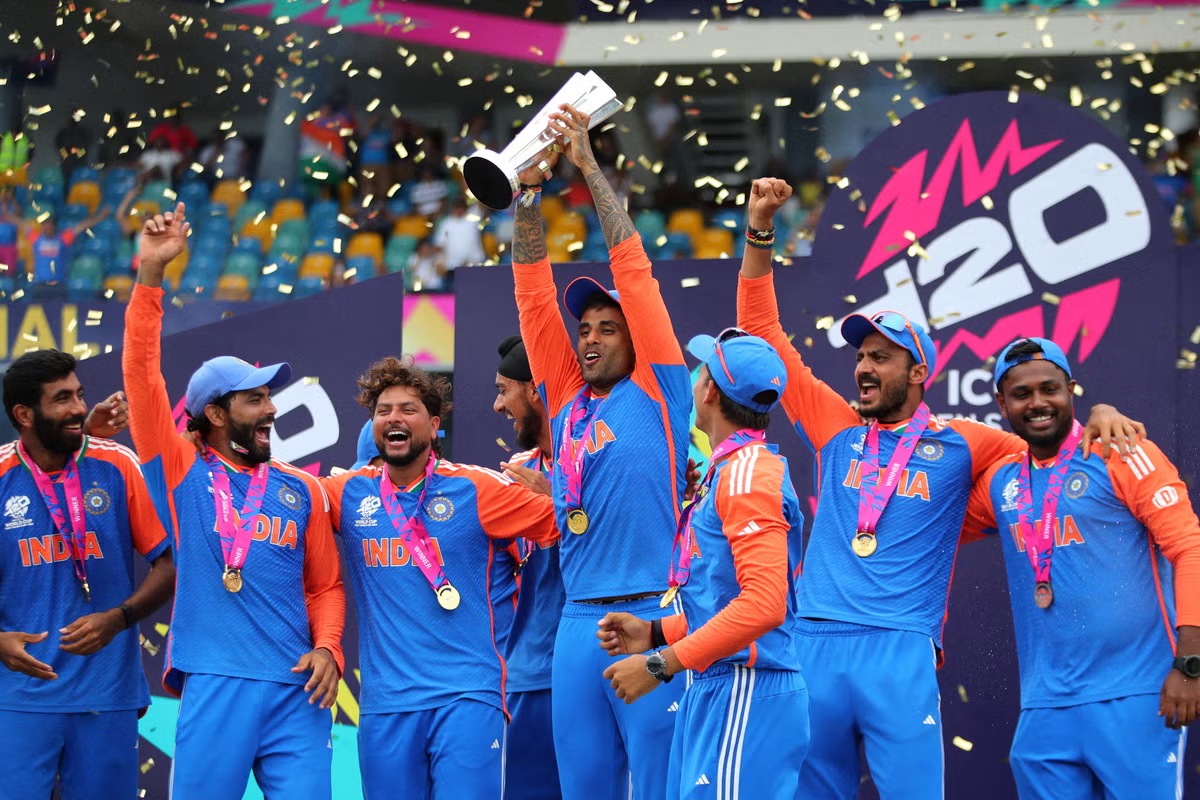
At the Asia Cup in September, Indian captain Suryakumar Yadav declared that his team’s victory in the final was a “perfect reply” to Pakistan.
His team skipped post-match handshakes, later saying: “A few things in life are above sportsman’s spirit.”
Match officials later confirmed the captains had been asked to skip handshakes, prompting protests from Pakistani officials and criticism from Asian Cricket Council chairman Mohsin Naqvi, who called the episode “utterly disappointing”.
India refused to accept the Asia Cup trophy from Naqvi, who is also chief of the Pakistan Cricket Board (PCB) as well as the country’s interior minister. It ended with Naqvi walking away with the trophy.
Advertisement
Former PCB chairman Ehsan Mani, who also served as the ICC chief between 2003 and 2006, told the Hindustan Times the latest row about matches between India and Pakistan was likely a fallout from the Asia Cup.
“You’ve got to look at the background to this,” he said. “I don’t think the PCB chairman was happy with the Indian players’ refusal to shake hands with the Pakistani players at the Asia Cup, then their refusal to take their trophy from him. You’ve really got to look at the whole picture; it’s not a good relationship between the countries, which is sad, because we always worked very closely with the BCCI, and their attitudes have changed significantly.”
He urged the ICC chairman Jay Shah, who is the son of India’s home minister Amit Shah, to engage with the PCB and the Pakistan government over their stance.
“The PCB is simply going to say that it is following government instructions, the same as India did for refusing to come to Pakistan in the last ICC event,” he said. “And this is all very unfortunate. I do hope that the chairman of ICC, after all, he represents all the countries, including Pakistan, is talking to Pakistan to see how they can overcome Pakistan’s position. In fact, he should be engaging not only with PCB but also with the government of Pakistan.”
Advertisement
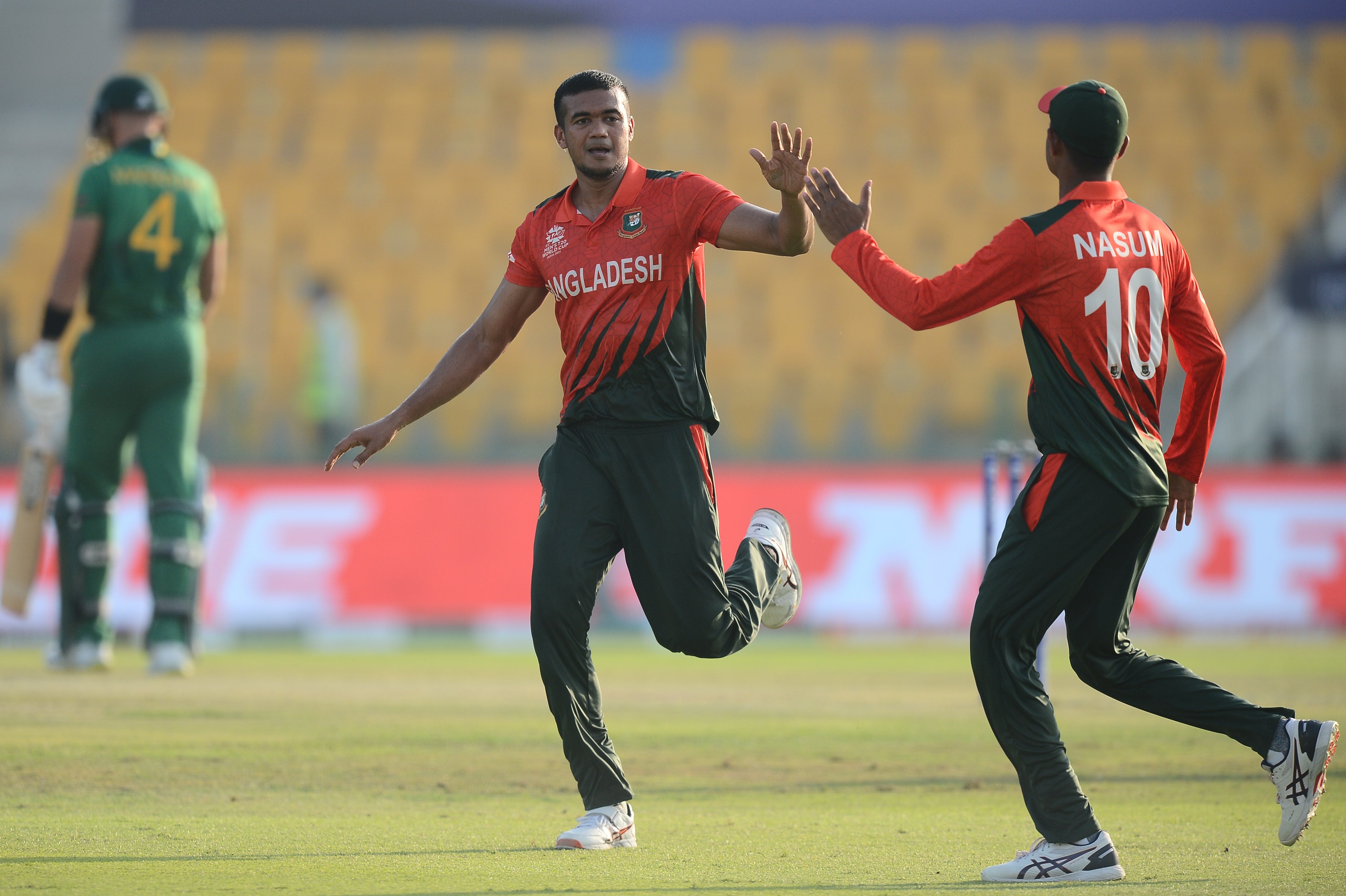
Taskin Ahmed of Bangladesh celebrates the wicket of Aiden Markram of South Africa during their 2021 ICC T20 World Cup match in Abu Dhabi (Getty)
The ICC responded to Pakistan’s position by calling it “difficult to reconcile” with the premise of global competition.
“Selective participation undermines the spirit and sanctity of the competitions,” it said in a statement and warned of “significant and long-term implications for cricket in its own country”.
While acknowledging the role of governments in national policy, it said Pakistan’s decision wasn’t in the interest of the game or fans worldwide, including millions in Pakistan.
Advertisement
The Independent has reached out to the ICC, BCCI, BCB, and PCB for comment.
Former Pakistan captain Shahid Afridi accused the ICC of mishandling the situation. “It’s regrettable that Pakistan won’t play India, but I stand behind my government’s decision,” he wrote on X.
“This is the moment for the ICC to lead and prove through decisions, not statements, that it’s impartial, independent and fair to every member.”
Former PCB chairman Najam Sethi said the standoff reflected long-standing resentment over how power and revenue were distributed in world cricket. He accused the BCCI, the sport’s wealthiest board, of using its influence to dominate decision-making.
Advertisement
“I’m not a spokesman for the PCB, I’m giving you my view. The PCB consulted the government and they made this decision. There are 10-15 days to go before that match. My sense is that there are negotiations that are taking place, and my hope is that those negotiations will bear fruit,” he said.
Sethi linked Pakistan’s position to wider opposition to the so-called Big Three arrangement, under which India, Australia and England receive the majority of ICC revenue.
“It’s the attitude of the BCCI, that’s the problem. At every stage, they’ve been bullying people,” he said, recalling negotiations during the tenure of former BCCI chairman N Srinivasan.
“Nine members signed on and Mr Srinivasan came to me and said, ‘Why do you want to be left alone, blah blah blah, you will be isolated’, and the rest of it,” Sethi said. He described agreeing to revised revenue terms and an India-Pakistan series that later collapsed. “The contract was fine, but a year later, on the eve of the series, the BCCI, without a word, pulls out,” he recalled. “Can you think of a bigger insult?”
Advertisement
Sethi argued that Bangladesh’s removal had created the conditions for a broader challenge. “They have been treating us very badly. Now that Bangladesh have been snubbed in a sense, we feel there are 400 million people on one side. We can all stand up,” he said. “There may be temporary losses, but at the end of the day, we will get a better, reformed ICC.”
Players have largely deferred to governments and administrators. Pakistan captain Salman Ali Agha said the boycott was beyond the team’s control.
“Well, they are our brothers. I thank them for supporting us,” he said of Bangladesh. “And it’s really sad to see that they are not playing the World Cup.”
The India match, he said, was not in their control. “It was the government’s decision.”
Advertisement
Yadav said India would travel to Colombo as scheduled. “We have not refused to play, they have. We’ve booked our flight and we are going,” he said.
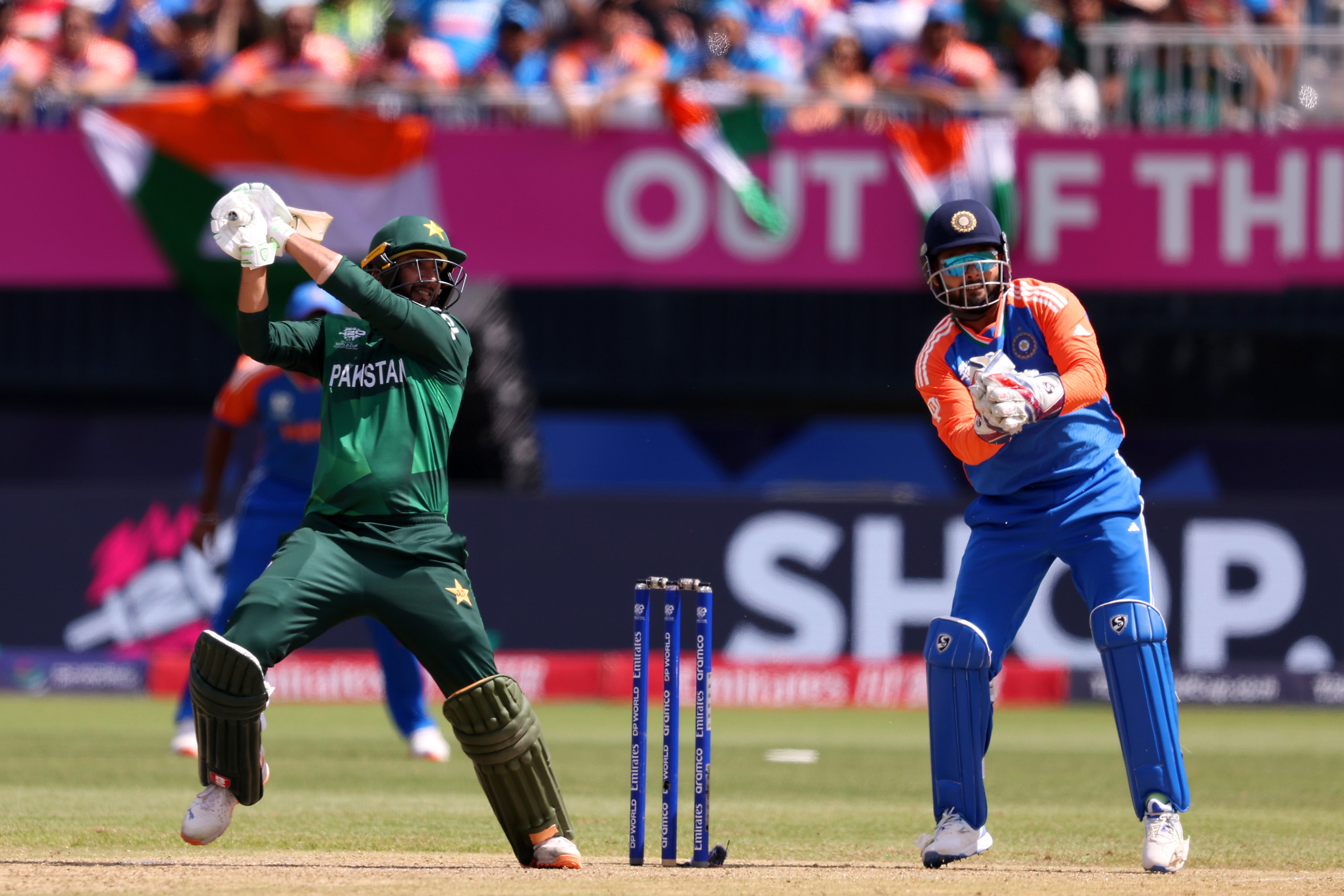
Imad Wasim of Pakistan bats during a Men’s T20 Cricket World Cup match against India at the Nassau County International Cricket Stadium on 9 June 2024 (Getty)
While the ICC continues to hope that Pakistan will backtrack – especially with the governing body having warned of possible sanctions – former BCCI chief selector Chetan Sharma has predicted the PCB will reverse its stance after the 12 February election in Bangladesh, arguing the decision is politically driven.
“What was Bangladesh players’ fault? None. This is politics. Bangladesh has elections on the 12th. After that, you will see a U-turn. There will be a statement saying, ‘Considering public sentiment, cricket shouldn’t suffer, Pakistan will play against India.’ This stance is still about the Bangladesh election only,” he told India Today.
Advertisement
“I’ve been a politician, I’ve contested elections. After the elections, maybe even the military chief will say sport should be kept free of politics and the match should go ahead.”
Former England captain Nasser Hussain questioned whether the ICC had applied its rules consistently.
“If India, a month before a tournament, said ‘our government does not want us to play in a country for a World Cup’, would the ICC have been so firm and said, ‘You know the rules, bad luck, we’re knocking you out?’” he asked on the Sky Sports Cricket Podcast.
Scotland, promoted into the tournament, said preparations had been unusual. “It’s been unique circumstances for us. Preparations have been different than other teams. Every opportunity, we want to make most of,” captain Richie Berrington said.
Advertisement
If Pakistan do boycott the match versus India, their opponent will receive two points. They face the Netherlands, USA, and Namibia in their remaining group games. Only the top two teams from each group progress, leaving little margin for error. It’s unclear what would happen if India and Pakistan were drawn to meet in the final.
There’s precedent for teams refusing to play. Australia and the West Indies declined to travel to Sri Lanka during the 1996 World Cup, while England refused to play Zimbabwe in 2003, citing security concerns. Those teams forfeited the matches but were not fined.
The ICC constitution, however, allows for sanctions where governments interfere in cricket administration and requires boards to operate autonomously.
Zimbabwe were suspended in 2019 on account of government intervention and Sri Lanka lost hosting rights for an Under-19 World Cup four years later following the dismissal of its board.
Advertisement
Cricket analysts say the financial implications of an India-Pakistan no-show will be severe. Former ICC media head Sami Ul Hasan said: “The biggest hit, if the biggest game of the tournament doesn’t take place, will come from media rights.”
The losses will be felt by member boards.
Hasan pointed to the origin of the crisis in the removal of Mustafizur Rahman from the IPL.
“We must remember that this situation arose due to one player’s removal and one administrator’s statement,” he said, referring to comments by BCCI secretary Devajit Saikia, who at the time blamed “recent developments that are going on all across” – a comment widely understood to refer to the protests by Hindu nationalist groups.
Advertisement
.As the T20 World Cup gets started, the ICC says its priority is the delivery of the tournament. It is calling on all members to protect its integrity.
The World Cup is due to begin on 7 February and will conclude on 8 March. Viewers in the UK can watch every game live on Sky Sports. A live stream will be available via Sky Go and NOW.
A report has highlighted multiple failings by a police force after a man was left with broken teeth and permanent scarring after a hit and run. Jamie Titmarsh, 27, was struck by a speeding car on Regent Street in Cambridge at around 7pm on June 14, 2025.
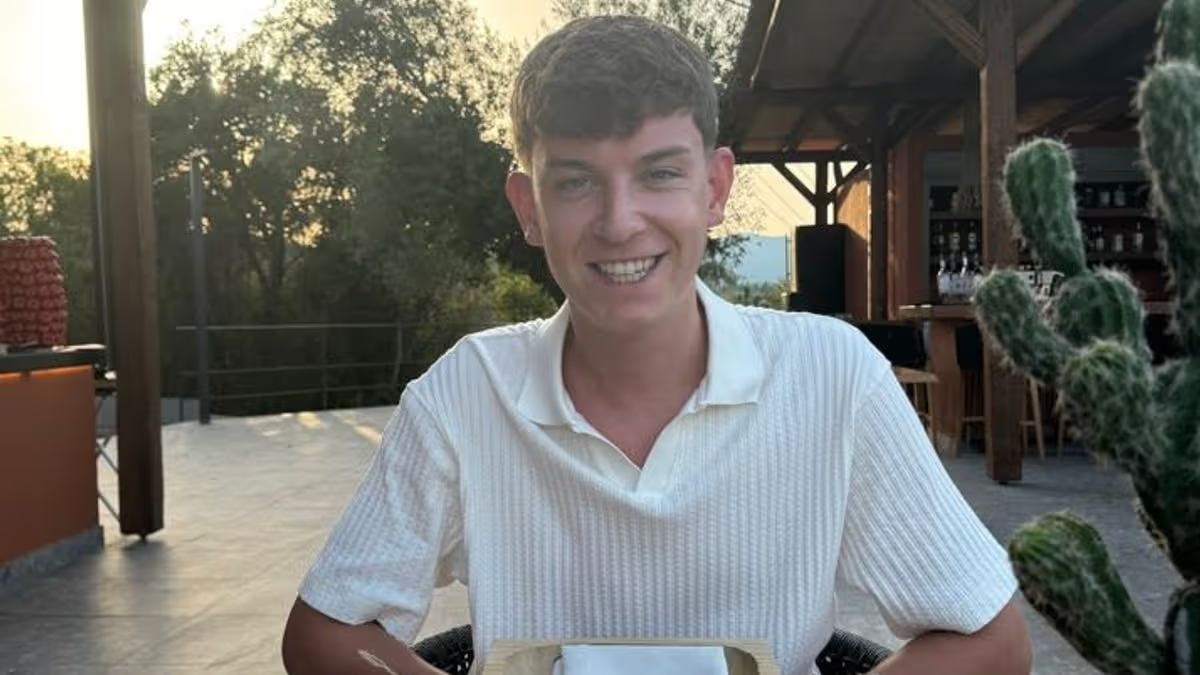
Jamie was “knocked out” and “dragged across the road”, before being rushed to hospital. He suffered broken teeth, a badly swollen lip, and bruising to his face. Cambridgeshire Police has apologised for ‘shortcomings’ in the force’s response.
Jamie is now left with permanent scarring and has composite teeth bonding, with his front teeth set to be replaced in the future. “It’s quite scary crossing the road – it’s something you have to do everyday but now, I am extremely cautious,” said Jamie.
After the crash was reported to Cambridgeshire Police, Jamie had concerns with the way it was investigated. Jamie previously told CambridgeshireLive he felt he was “going around in circles” during the police investigation.
Advertisement
He said: “The communication throughout [the investigation] had been horrendous, and they didn’t speak to me. I felt that I have not been treated fairly as a victim, and that the handling of this case demonstrates a concerning lack of accountability and standard of care.”
Jamie complained about the way the force investigated his hit and run crash. An investigation was carried out by the Police Professional Standards, which highlighted “multiple failings” by the police during the investigation.
Advertisement
Jamie made four allegations. These were:
Jamie didn’t receive a “good level of service”, such as police “failing to attend the scene of the incident“. He also alleged the severity of the incident wasn’t acknowledged and that the force didn’t review the evidence “thoroughly enough”.
The police failed to “fully investigate the incident which resulted in no prosecution taking place and evidence wasn’t adequately organised”.
Due to officers failing to attend the incident scene, it wasn’t “correctly assessed and treated as seriously as it should have been“.
The police had “poor communication” with Jamie and there was a “lack of victim care”.
All four allegations were upheld and the service level was considered “not of an acceptable standard”. Some failings highlighted in the report were that police failed to attend the scene, despite it being reported as a serious injury.
It also flagged that there were missed time windows with CCTV, delays in filing a road traffic collision report, a decision not to seize the suspect’s vehicle, and poor communication with Jamie. Jamie said he found it “absolutely ridiculous” that the police can “get away with it”.
He added: “I have never needed the police before and the one time I did, they have done nothing. I have been left out of pocket. I am left here with no compensation, and they don’t care. I have future costs from the dentist as I’m going to have my teeth replaced at the front. I’m also worrying for other people. I am just one person, but it might happen again.”
A Cambridgeshire Police spokesperson said: “We apologise to Mr Titmarsh for the shortcomings in our response, which fell below the standards we expect of ourselves and that the public rightly deserve.
Advertisement
“Following the concerns raised, we have fully reviewed the issues through our Professional Standards Department. The points identified have now been acted upon, and steps have been put in place to ensure these errors are not repeated in the future.”
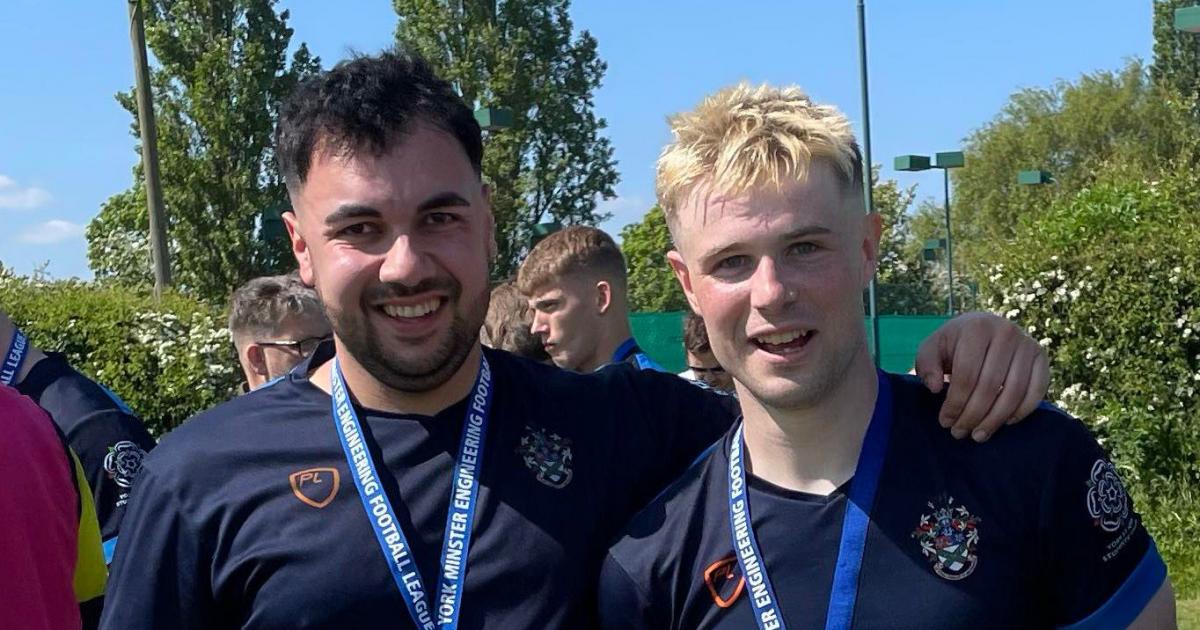
Alistair Harvey met Jenson in 2019 at York St John University where they played for the men’s football team and lived in the same house.
He is a member of the Jog Fathers, a group of seven running from Aston Villa’s ground in Birmingham to Valley Parade, the home of Bradford City FC, between April 7 and April 11, to raise funds for The Natasha Allergy Research Foundation.
Some of the members of the Jog Fathers, who are preparing to run 115 miles over five consecutive days in memory of their friend Jenson (Image: Supplied)
The Bantams were Jenson’s hometown team and he “fell in love” with the Villa through one of the team’s strikers, John Carew, said Alistair.
Advertisement
He spoke to The Press and paid tribute to his friend and teammate.
Alistair said: “When we first me he came across as a quiet lad and the more you got to know him, the more you realised how funny he was.
“He was really good at getting people together, he was the life and soul of any party, cracking jokes left and right.”
Jenson (top left) with teammates from York St John University (Image: Supplied)
He said signing up for Fulford United FC was “down to Jenson really” – York St John played in the city’s Saturday league and the teams were opponents.
Advertisement
“Jenson was funny, but he was also vociferous on the side of a football pitch, and we had had a funny relationship with the Fulford team, it was a bit of a rivalry.
“We bumped into a couple of the players on a night out and said we were looking for a team.
“Jen got chatting to them and ended up dragging some of us down.”
Last year, Fulford United FC raised funds in Jenson’s memory by hosting a charity football match which raised over £10,000, and the idea for the 115-mile run was borne out of the wishes of another team made up of friends.
Advertisement
Alistair said: “Joe Finnegan, who played with Jenson, wanted to bring some light out of the situation of him dying and he started a football team called Anaphylaxis FC in his honour, with a mix of people who knew Jen and we’ve played a couple of matches.”
The Anaphylaxis FC team lining up for their first fixture in Coventry (Image: Supplied)
As well as raising funds through matches, a few of the squad who run wanted to do more, which led to the foundation of the Jog Fathers, five from Jenson’s hometown of Bradford, plus Alistair and Jack Drummond.
They are hopeful that their 115-mile running effort over consecutive days will be marked by appearances on the pitch at both Villa Park and matchday on April 11 at Valley Parade, where Bradford will host Stevenage FC.
Alistair said: “Jenson hated running himself, so some of us will be running while imagining how much he would be laughing at us.
Advertisement
“However, he always made special trips to places like Manchester to watch and support his friends who were running marathons, and then to Bristol when a mate took part in a charity boxing match.
“He was always up for supporting his mates, and all in all the things we’ve tried to organise have been carried out in the memory of how he would support other people.”
The Jog Fathers are running 115 miles between the grounds of Aston Villa FC and Bradford City FC over consecutive days from April 7 to April 11 to raise money for The Natasha Allergy Research Foundation.
Manchester United supporters have reason to be excited for the future if these players are anything to go by
06:00, 30 Mar 2026
Advertisement
Manchester United have a rich history when it comes to promoting players from their academy into the first team. The Class of ’92 will forever be the standard the Reds aspire towards for their young players but in recent years, golden generations have been few and far between.
That being said, we have still seen gems come through the ranks who have contributed to the first team. Kobbie Mainoo is the standout of recent years while Marcus Rashford, Scott McTominay, Alejandro Garnacho and Amad have all had varying degrees of success and exposure to the United starting XI.
With Ruben Amorim in charge, the relationship between the first team and academy was strained but, under Michael Carrick’s watch, this is starting to mend. Once again, it seems like the club are united in their approach to development and that pathway from Carrington to Old Trafford is now realistic.
Get MEN Premium now for just £1 HERE – or get involved in our United WhatsApp group by clicking HERE. You can also join our United Facebook page by clicking HERE and don’t miss out on our brilliant selection of newsletters HERE.
Advertisement
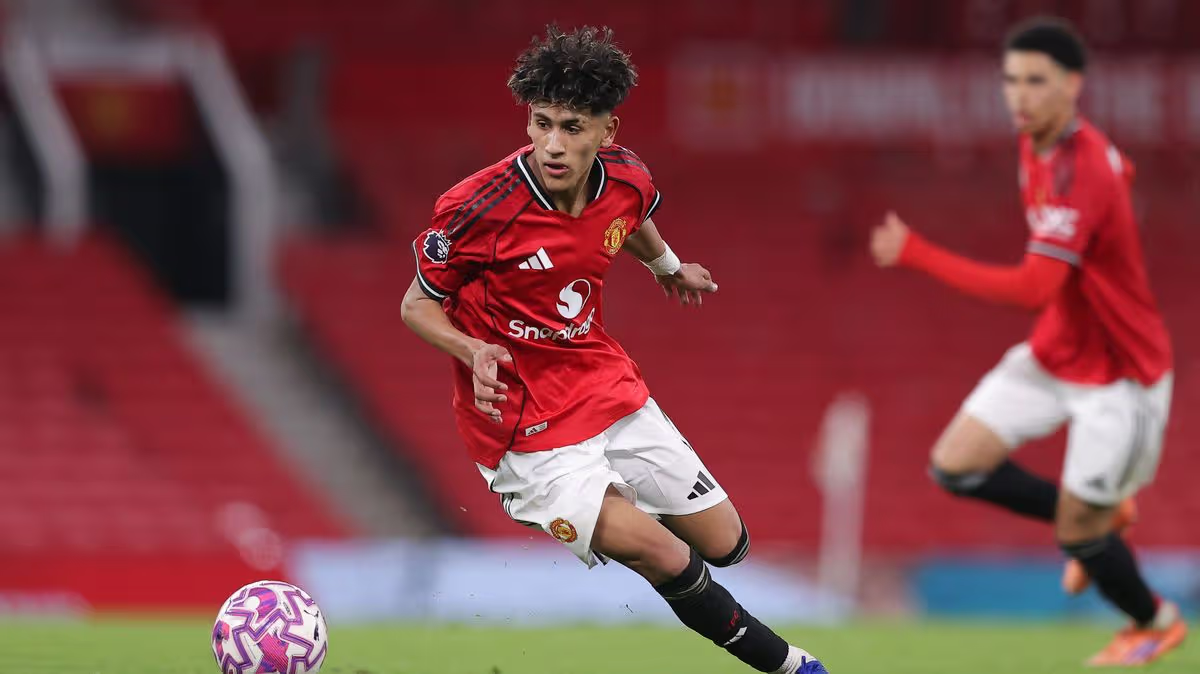
There are plenty of young players who are impressing but United’s attackers are the ones who are really catching the eye. Even if you are not following the academy regularly, you will have heard of the name JJ Gabriel. The 15-year-old has been the subject of highlight reels aplenty this season.
Despite being in his mid teens, the forward has been excelling in the U18 Premier League and FA Youth Cup. He has scored an astonishing 21 goals in 24 appearances and plays with the elegance of a more seasoned professional. Gabriel has even been invited into first team training sessions this season – a remarkable feat for someone so young.
However, because of his age, Gabriel has been unable to play in the Premier League this season. That ban will lift in the summer and there is already hope he will be able to emulate the success of Max Dowman at Arsenal.
Thanks to the brilliance of Gabriel, Noah Ajayi has floated under the radar this season. However, he is another player who the Reds think highly of.
Advertisement
The 17-year-old German winger has scored a more modest seven goals in 16 appearances this season but has hit red hot form at the right time as United fought their way to the FA Youth Cup semi-finals. That competition is a testing ground for young players and Ajayi is proving more than capable of holding his own.
He is also closer to making that step up to the first team as he has a physical presence that is more suited to senior football. His goal in the victory over Sunderland was a sign of his potential as he showed great awareness to drift through the defence and slot home.
But while Ajayi is progressing nicely away from the limelight, Kai Rooney is having to adapt to senior exposure at just 16.
Of course, his surname has led to this fame but don’t be fooled, Rooney is not simply living off his father’s legacy. The winger has been slowly exposed to the U18s this season and has made his Old Trafford debut in the FA Youth Cup.
Advertisement
He bagged his first U18s goal against Middlesbrough in August and after a spell away from the age group, returned in February to bag a goal and an assist in three U18 Premier League matches. Sadly for Rooney, injury has brought a premature end to his season.
But, those dreaming of another Rooney stealing the headlines for United in the future can take encouragement from the progress he has made this term. All this is incredibly positive for the Reds and should be encouraged for the future.
Continuing to bring players through the academy will allow the Reds to save money in transfer windows. Even if just one of these players becomes a regular United starter, the investment in the academy continues to be worthwhile.
Content cannot be displayed without consent
The mum of Fawziyah Javed, who was murdered by her husband in 2021, spoke after a Scottish Government bid to better identify victims of ‘honour-based’ abuse.
The tragic case sparked widespread concern over crimes committed to defend the “honour” of a family.
Now the Scottish government has drafted a “long-overdue” definition of the crime which involves physical, emotional, sexual abuse and killings.
Advertisement
It is hoped the move will ensure authorities and support services can better identify victims.
Fawziyah’s mum Yasmin yesterday told the Record her daughter’s harrowing death must be the last of its kind as her “legacy” continues to save lives.
She said: “This must never ever happen again. Another family can not go thorough this.
Advertisement
“He’s (Anwar) got a prison sentence, but we’ve got a life sentence until our last breath on this earth.
“For your only child to be brutally murdered alongside her unborn baby, time is definitely not a healer. It gets more difficult as time goes by.
“Every day is a battle to get through. There are no ways to express something as horrific as this for a family. It can’t happen again. It just can’t.
“It does bring me comfort that this progress is Fawziyah’s legacy and I’m optimistic that lives are going to be saved because authorities will better recognise the signs and be able to better protect women and girls.”
Advertisement
Anwar, from Leeds in Yorkshire, denied killing Fawziyah but was found guilty after a week-long trial at the High Court in Edinburgh in 2023 and was jailed for 20 years.
Chilling CCTV images revealed the pair’s movements as Anwar led his employment lawyer wife to her death, just nine months on from their wedding.
The trial heard how the tragic mum-to-be told a police officer as she lay dying that her husband had pushed her because she “told him I wanted to end (the marriage)”.
Advertisement
Fawziyah had planned not to return to Anwar’s home but to go to her parents’ house and contact police to retrieve her belongings after earlier logging, in secret, abuse she had suffered.
There were several thousand reported cases of honour based abuse (HBA) across the UK last year, but the crime is known to be hugely under reported and often hidden within domestic abuse statistics.
In Scotland, there is not yet a statutory definition of HBA and it has not been a specific crime within Scots’ law.
Scottish Government strategy incorporates the crime within the wider definition of domestic abuse, along with female genital mutilation, forced and child marriages.
Advertisement
Now, as part of the strategy to tackle violence and abuse against women and girls, officials have developed a “clear and robust draft policy definition” to ensure those responding to survivors understand what HBA is.
A progress report published this week said: “This is crucial because stakeholders have raised that when the complexity and nuances of HBA are not fully understood, minority ethnic women can be overlooked by the Police and other services.”
The policy definition has now been tested with mainstream services, including police, social work, the NHS and councils and work is underway to see it applied across services.
The move follows a tabling of an amendment by the UK Government last month to introduce a statutory definition of honour-based abuse following campaign work by Yasmin and HBA charity Karma Nirvana.
Yasmin said her daughter’s case, which featured in two-part Channel 4 documentary The Push, which re-aired this month, is helping educate the public.
She said: “I get messages from women from all walks of life who have said to me ‘Fawziyah saved our life’. They’ve watched the documentary and realised they’re in that position and taken steps to get out. I’ve also had messages from victims’ families contacting me asking what they can do to help them.
“This definition is a step in the right direction for Scotland but there is still a lot of work to be done. This definition has got to be crystal clear and it has to go deeper into this type of abuse so that people in authority can recognise it and do something about it.
Advertisement
“Not every incident is violent. In Fawziyah’s case in the start it was subtle. There was coercive control and gaslighting. That played a massive part in what happened to her.
“Irrespective of what community you come from, people have this stereotypical type of person in their mind this can happen to. But I know this has happens to highly articulate, confident professional women. Sometimes people may not even realise that they’re being abused in that way. This can happen to some men as well.”
Executive Director at Karma Nirvana, Natasha Rattu, welcomed the Scottish government’s work on HBA but said emotional HBA must be understood as much as physical.
She said: “It’s always really difficult to get to a point of consensus on what we understand about honour-based abuse.
“This definition is a starting point, which is really welcome. It’s just about making sure that we are absolutely landing it in the experience of victims and survivors.”
Equalities Minister Kaukab Stewart said: “Our Equally Safe delivery plan progress report reflects that real and meaningful progress is being made to realise our shared ambitions of a Scotland free from violence against women and girls.
“We are now confident that we have a strong draft policy definition of Honour-Based Abuse that reflects the realities of women in Scotland.
Advertisement
“We look forward to continuing to work with partners to explore how the definition can be applied in practice across services, and how it can support better responses for survivors.”
What is honour-based abuse?
Honour-based abuse, according to the Scottish government’s definition, describes “a range of violent incidents or patterns of abuse” committed against a person, mainly women and girls, due to the perception that they have brought, or may bring, “dishonour or shame to their family or community”.
They say it includes physical, emotional, sexual abuse and killings and perpetrators can include partners, family
members and members of the community.
They say the abuse “is not exclusive to any specific racial or religious group” but perpetrated by a “minority of individuals within diverse communities”.
Advertisement
The extent of HBA in Scotland is unknown but several thousands of cases are reported across the UK every year.
Fawziyah’s tragic case is not considered the first honour killing north of the border.
In 2011, police in Pakistan confirmed they were treating the murder of a couple from Glasgow as an honour killing.
Advertisement
Saif Rehman, 31, and his wife Uzma Naurin, 30, were shot after their car was ambushed in Gujrat.
It is understood Mr Rehman was shot dead by a group of men at the scene and his wife was driven away and killed.
The perpetrators remain unknown.
In 2013, a man was found guilty of burning his “westernised” ex-wife to death, after setting fire to her following a bitter divorce in another suspected honour killing.
Advertisement
Ahdeih Khayatzadeh, 46, suffered 95% burns in an attack by Ahmad Yazdanparast at the Venus Hair & Beauty salon in Stirling.
Get more Daily Record exclusives by signing up for free to Google’s preferred sources. Click HERE.
Tuchel is hoping to build on Sir Gareth Southgate’s promising but ultimately trophy-less reign by leading England to their first World Cup trophy since 1966 this summer.
Two March friendlies against Uruguay and Japan gave Tuchel one last chance to get a look at which players will make the plane and be selected in England’s World Cup squad.
Trent Alexander-Arnold was perhaps the most high-profile player to miss out, with Tuchel making the ‘tough decision’ to omit the Real Madrid star and ex-Liverpool defender.
‘I know what Trent can give us and I decided still to stick to the players with us,’ Tuchel said. ‘I know it’s difficult to leave out a player like Trent.
Your football fix
Metro‘s Head of Sport James Goldman delivers punchy analysis, transfer talk and his take on the week’s biggest stories direct to your inbox every week.
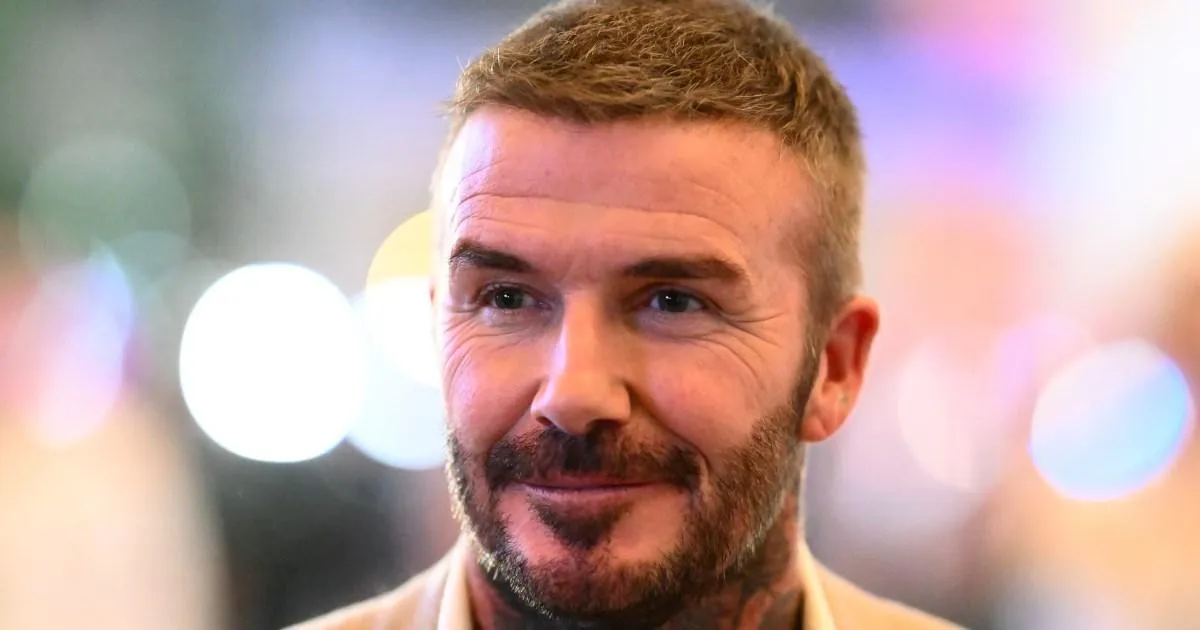
Beckham also appears to disagree with Tuchel’s stance over Alexander-Arnold, insisting he would ‘find it very hard’ not to take him to the World Cup.
Real Madrid defender Trent Alexander-Arnold (Picture: Getty)
Asked about Tuchel’s decision to omit Alexander-Arnold, Beckham told talkSPORT: ‘That’s why I’m not England manager, because I don’t have to make those decisions!
‘But, I’m a massive fan of Trent, I love Trent as a player. I’ve heard so many times over the years when he was at Liverpool, when he’s at Madrid, when he’s playing for England, about, “Well, he’s not as good at defending as he is going forward”.
‘Well, sometimes you have to accept that… Roberto Carlos was an unbelievable defender, but he was also unbelievable going forward.
‘He’d always go forward, and then we’d have to cover him, so those kind of things you expect. But with Trent, would I take him? I’d find it very hard not to take someone like Trent.
‘But then Thomas, he’s come out and said, I think I read it this morning, that there are other players that are ahead of him at the moment. But he said “at the moment”, so that could change.
Advertisement
‘These friendlies might prove that other players are playing that might not get in the squad, so you don’t know.
‘This is very close to picking a final squad, but I still think that Thomas is probably still considering about Trent as well.’
Manchester City prospect Floyd Samba speaks to the Manchester Evening News about coming through the ranks at the Etihad, training under Pep Guardiola and his first team ambition
06:00, 30 Mar 2026
Advertisement
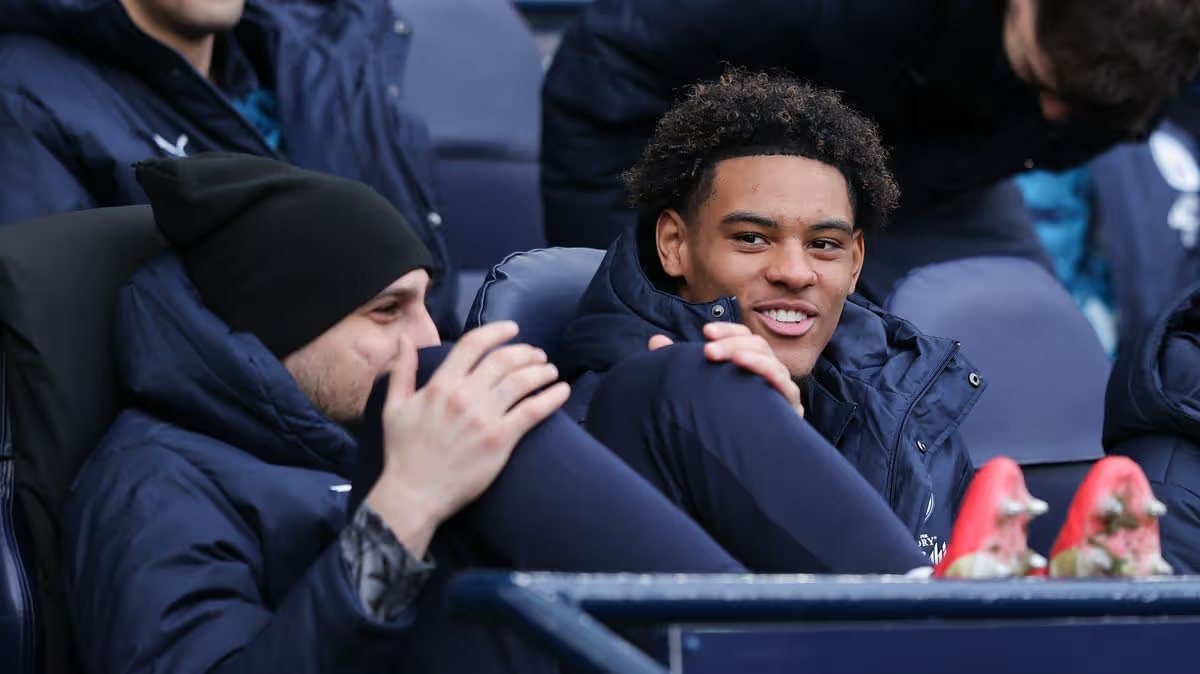
Floyd Samba has an unlikely Manchester City mentor in Abdukodir Khusanov. Samba, 17, has been something of a regular in first-team training for the Blues in recent months, and it’s Khusanov, along with goalkeeper Gianluigi Donnarumma, who have taken the teenager under the wing.
Donnarumma has, of course, been there and done it, tasting success at club and international level prior to his arrival at City. For Khusanov, who is still trying to cement his place in the first team and is still learning English, his willingness to assist Samba and the other youngsters who step into the senior training sessions is commendable.
“He doesn’t speak much English but he is really helpful with the young lads,” said Samba, speaking to the Manchester Evening News of Khusanov. “Donnarumma is very nice and a good guy. He spoke to me quite a bit. A few players helped and are welcoming.”
Get MEN Premium now for just £1 HERE – or get involved in our City WhatsApp group by clicking HERE. You can also join our City Facebook page by clicking HERE and don’t miss out on our brilliant selection of newsletters HERE.
Advertisement
Samba is one of the leading lights of City’s Under-18 side who are chasing FA Youth Cup glory this season. The young Blues have a last four tie with Blackburn Rovers next week and could potentially face Manchester United in a mouthwatering final.
And while tangible success on the pitch is important, it’s the development and improvement of the players that is most vital. Spells in first team training play a key role in the line of progression, City don’t gift spots in the senior set-up and when youngsters move across they are treated as though they belong. There is no easing off for academy prospects, no drop in intensity. The message is clear: You’re here on merit, show us what you’ve got.
For Samba, the initial wow moment of training alongside his heroes has passed. He’s been involved with Pep Guardiola’s group on countless occasions this term and is determined to absorb the information and detail to help him on his way.
“I think it is more natural now because I have been there a few times,” he said. “When I first went it was mad just seeing the quality of the players.
Advertisement
“It is surreal, you get to go over there and see the best players and managers in the world. The staff are very welcoming, you don’t feel out of place and you can pick up on all of the basics that the players do and I can take it on and get a bit of experience.”
It’s telling that the words Samba uses to describe the biggest takeaway from Guardiola’s sessions are ‘intensity, demanding and 24/7.’ Samba describes the boss as ‘focussed with whatever is next’. “He treats you the same as any other player,” he adds.
Samba’s Under-18 coach at the Etihad Oli Reiss sees the right traits in the midfielder to believe he can succeed at the highest level. “He is an incredible player,” he told the Manchester Evening News. “His mentality and physicality and the way he is able to play football . . . I think he can have a big future.”
For now the next step for Samba is a City debut. The son of former Premier League football Christopher and brother of fellow City prospect Tyrone, is a progressive midfielder with attacking instincts and an eye for goal.
Advertisement
He could be the next youngster in line for a first team bow, with the likes of Jayden and Reigan Heskey and Charlie Gray having had minutes in the Carabao Cup this season.
Samba was on the bench for the FA Cup win over Salford City in February, another staging post in his fledgling career, and he makes no bones about what the next ambition is.
“Playing in the first team is the next aim and it would be a proud moment for me and my family. I was proud to be on the bench, unfortunately I didn’t get on but hopefully, give it time, and it will happen in the future. I just have to be patient.”
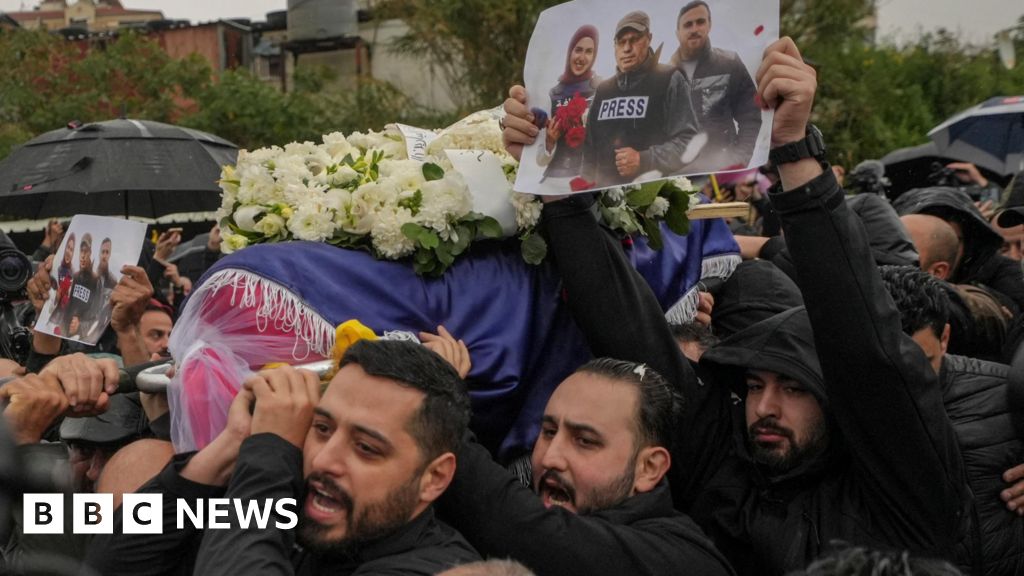
The BBC’s Middle East correspondent Hugo Bachega reports from the funerals of three journalists killed by a targeted attack by Israel in southern Lebanon on Saturday 28 March.
Ali Shoeib, a reporter for the Hezbollah-affiliated Al Manar TV station, was killed in the town of Jezzine alongside reporter Fatima Ftouni and her brother, cameraman Mohamed Ftouni, both from the channel Al Mayadeen, according to the stations.
The Israel Defense Forces (IDF) confirmed it had killed Shoeib, describing him as a “terrorist”, but provided no evidence to support the claim that he played a military role in the organisation. The Israeli military has not offered any comment on the killings of Fatima and Mahamed Ftoni.
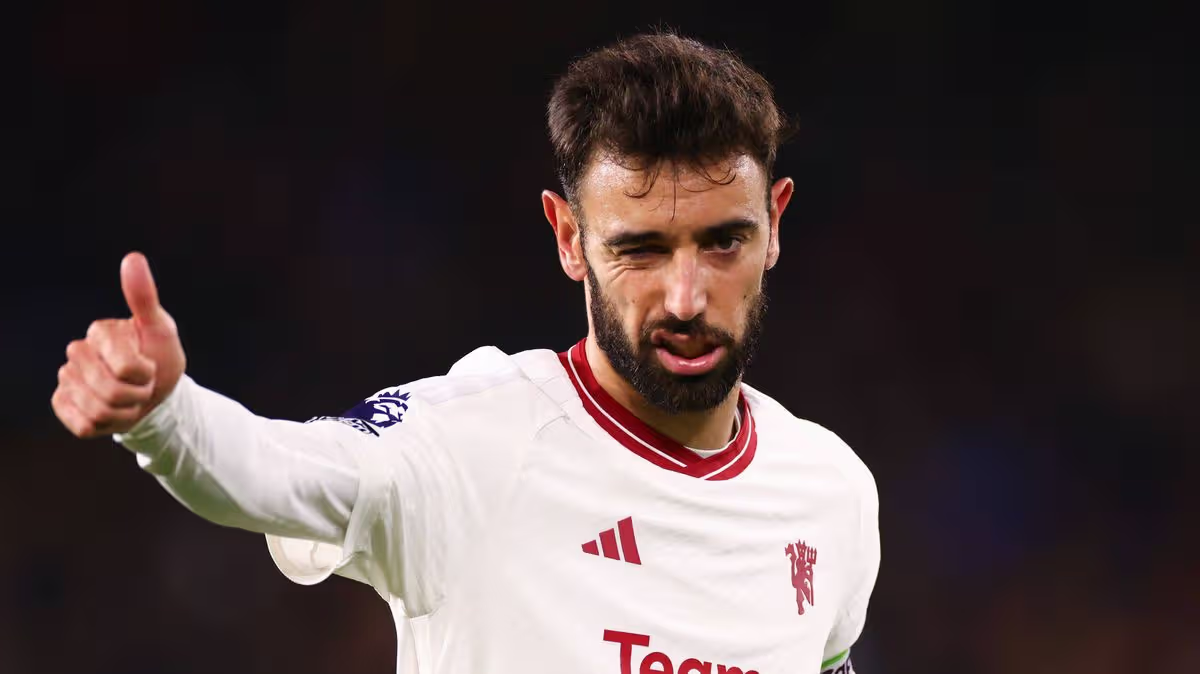
Bruno Fernandes’ Manchester United future is still hanging in the balance
Although he has been arguably Manchester United’s best and most reliable performer in recent seasons, Bruno Fernandes‘ long-term future at Old Trafford has seldom seemed completely assured. The 31-year-old is having a standout campaign, having tallied eight goals and 17 assists in all competitions so far.
Advertisement
But regardless of his productivity and close connection with both the club and its fanbase, ongoing talk of a possible exit has continued. That feeling of doubt grew stronger during Ruben Amorim’s spell in charge, when reports suggested the club were willing to consider a high-value transfer to Saudi Arabia, briefly putting strain on the bond between player and team.
However, with the Portugal international returning to peak form and firmly in contention for PFA Player of the Year, things seem to have settled – at least for now.
Here, Mirror Football looks at the broader situation involving Fernandes, including details of a huge contract offer and a little-known release clause in his Unitec contract.
Last year, reports indicated that Saudi Pro League club Al-Hilal were ready to lodge a £100m bid for Fernandes, along with an eye-watering £700,000-per-week salary that would have made him one of the top earners in global sport.
As the midfielder nears the latter stages of his career and United aim to manage their finances carefully, the club were willing to approve a transfer. However, that position did not sit comfortably with Fernandes, who was said to be “hurt” by United’s openness to letting him go.
In the end, no formal offer was submitted, meaning United kept their captain but also missed out on what could have been a record-breaking sale for the club.
Advertisement
Release clause
Although Fernandes has stated his desire to remain at United, the club technically cannot prevent him from leaving. This is due to a £56.68 million release clause in his contract, which can only be activated by overseas clubs.
While that figure might discourage some European sides from pursuing a player who turns 32 in September and offers limited resale potential, it would not pose an issue for Saudi teams.
Al-Hilal had been willing to bid £100m as they were keen to secure Fernandes ahead of last year’s Club World Cup, which started in June before the clause became active, and fresh interest from the Middle East is anticipated this summer.
Advertisement
If Fernandes remains at the club, United are expected to begin talks over a new deal, with his current contract set to expire in 2027. They also hold the option to extend it by an additional year.
United keen to keep Bruno
Despite earlier speculation linking him with a departure, the club’s position has now clearly shifted toward keeping Fernandes. While there is a continued effort to lower the wage bill – with Fernandes earning £300,000 per week – United are determined to maintain their captain’s influence on the field.
That stance has reportedly been communicated directly to Fernandes to help remove any lingering uncertainty about his future. He is also thought to feel more settled since Michael Carrick assumed control in January.
Advertisement
Join our new MAN UTD WhatsApp community and receive your daily dose of Manchester United content from Mirror Football. We also treat our community members to special offers, promotions, and adverts from us and our partners. If you don’t like our community, you can check out any time you like. If you’re curious, you can read our Privacy Notice.
Sky Sports discounted Premier League and EFL package
This article contains affiliate links, we will receive a commission on any sales we generate from it. Learn more
Sky has slashed the price of its Essential TV and Sky Sports bundle ahead of the 2025/26 season, saving members £192 and offering more than 1,400 live matches across the Premier League, EFL and more.
Sky will show at least 215 live Premier League games next season, an increase of up to 100 more.
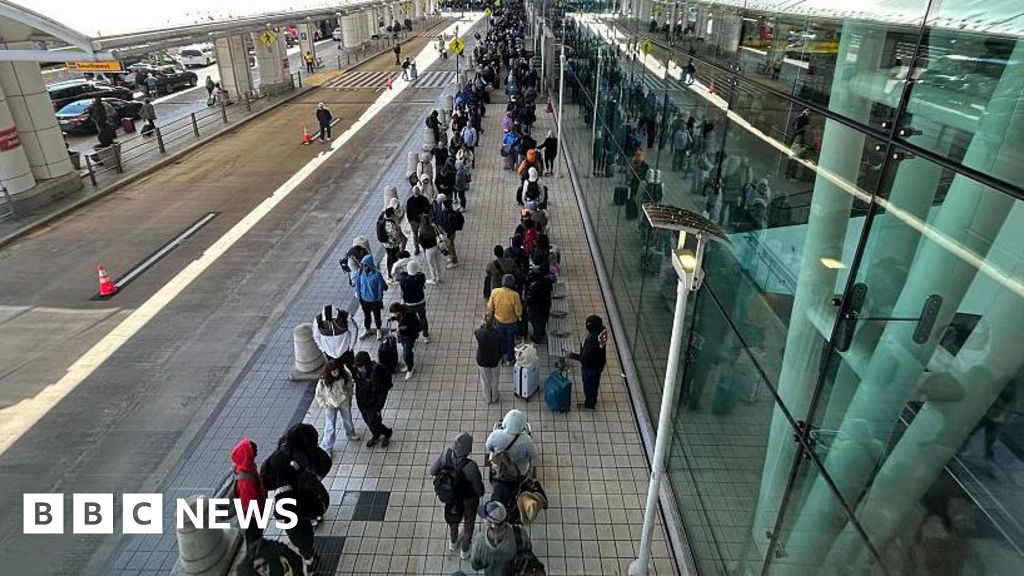
Homan also told CBS, the BBC’s US news partner, that even after the shutdown ended and funding for TSA was restored, Immigration and Customs Enforcement (ICE) agents currently deployed to airports across the country to help with travel disruptions would remain “until the airports feel like they are 100%.”
Manchester United have been linked with an interest in Chesea’s Cole Palmer during the international break
Manchester United will be closely monitoring players on international duty as the club continue to formulate their summer strategy. The team’s resurgence under Michael Carrick has placed United in the running for a Champions League berth and has generated enthusiasm ahead of the forthcoming transfer window.
Advertisement
United have maintained their ability to attract top talent even during more challenging periods but securing a return to Europe’s premier club competition could pave the way for even more distinguished signings. Chelsea star Cole Palmer has been tentatively linked with a potential move to Old Trafford.
The England international has been an exceptional performer since joining the west London outfit but their recent struggles have intensified speculation that Palmer could be considering his future. United have been mentioned as one of several potential landing spots.
Get MEN Premium now for just £1 HERE – or get involved in our United WhatsApp group by clicking HERE. You can also join our United Facebook page by clicking HERE and don’t miss out on our brilliant selection of newsletters HERE.
Palmer is reportedly growing increasingly frustrated at Chelsea. The Blues were eliminated from the Champions League by PSG this month, while their disappointing league campaign has left Liam Rosenior’s side sitting six points adrift of the top four.
The Sun has reported that Palmer is primed to depart Stamford Bridge in the summer, with the attacking midfielder valued at £150million. United are cited as a potential suitor but are claimed to be up against Real Madrid and Bayern Munich for his signature.
The 23-year-old is reportedly unhappy with Chelsea’s tactics, while injury issues have frequently hindered him from performing at his peak this season. However, any transfer would require a hefty fee as he is under contract until 2033.
Palmer came through Manchester City’s academy before moving to Chelsea in 2023 but the attacking midfielder was a boyhood United supporter. He has netted 10 goals in 25 appearances across all competitions this season.
Advertisement
Marcus Rashford given hope
Rashford has caught the eye of England manager Thomas Tuchel after starting for the Three Lions against Uruguay on Friday. The 28-year-old has found it challenging to secure a regular spot in Barcelona’s team at club level but Tuchel, who had previously commented on Rashford’s struggle to fulfil his potential, has praised the United loanee’s dedication to the cause.
“He tries. He tries hard,” the England boss stated. “He hasn’t started a game for a long, long time. So we gave him this because I spoke to him.
“I was very impressed with the training yesterday. It was a defensive training and he was very strong with Djed Spence on the side.
Advertisement
“Understanding how to initiate the press for us. He worked hard and I think he worked very hard. He just can’t get the goal that he maybe needs to be in full confidence. I’m happy with the way he tried and it was a constant threat.”
Rashford will be looking to assert himself once again against Japan on Tuesday, with his sights set on securing a place in England’s squad for the 2026 World Cup. The forward has been a consistent presence in the England team under Tuchel’s management.
England’s 2026 World Cup kits
This article contains affiliate links, we will receive a commission on any sales we generate from it. Learn more
England and Nike have launched the new home, away and goalkeeper kits to be worn at this summer’s FIFA World Cup. You can get free delivery on all orders with the code: ENGFREEDEL














































You must be logged in to post a comment Login