

News Beat
Inside the Hong Kong newsrooms stifled by fear after Jimmy Lai’s conviction


When police raided the Apple Daily newsroom in 2021, journalists across Hong Kong understood they were watching more than the collapse of a newspaper. They were being shown the future.
Five years later, the conviction of the paper’s founder Jimmy Lai on sedition charges has merely formalised that state of affairs. The real impact has long since settled in – embedded in daily decisions about what can be written, who can speak, and how far the press can push in their pursuit of the truth.
What remains of journalism is editors identifying invisible red lines, protecting staff, and ensuring their reporting does not expose journalists or sources, while reporters engage in self-censorship to escape harassment and intimidation at the hands of the government.
“Nothing has changed because everything has already changed. The changes are baked in,” Tom Grundy, founding editor of Hong Kong Free Press, tells The Independent. “Many Hong Kongers, from whatever side you’re on, are reluctant to speak nowadays, and there are fewer opportunities to ask questions of the authorities.”
Only a handful of journalists working in Hong Kong agreed to speak to The Independent, with several requesting anonymity for fear of reprisal. Those interviewed, from local and foreign media organisations based in the city, described witnessing in real time a rapid erosion of press freedom in what was once one of Asia’s most open and freewheeling media environments.
Critics of the Chinese government say the guilty verdict against Lai, delivered after a 140-day trial, was preordained. The elaborate courtroom performance, they argue, should not be mistaken for justice.
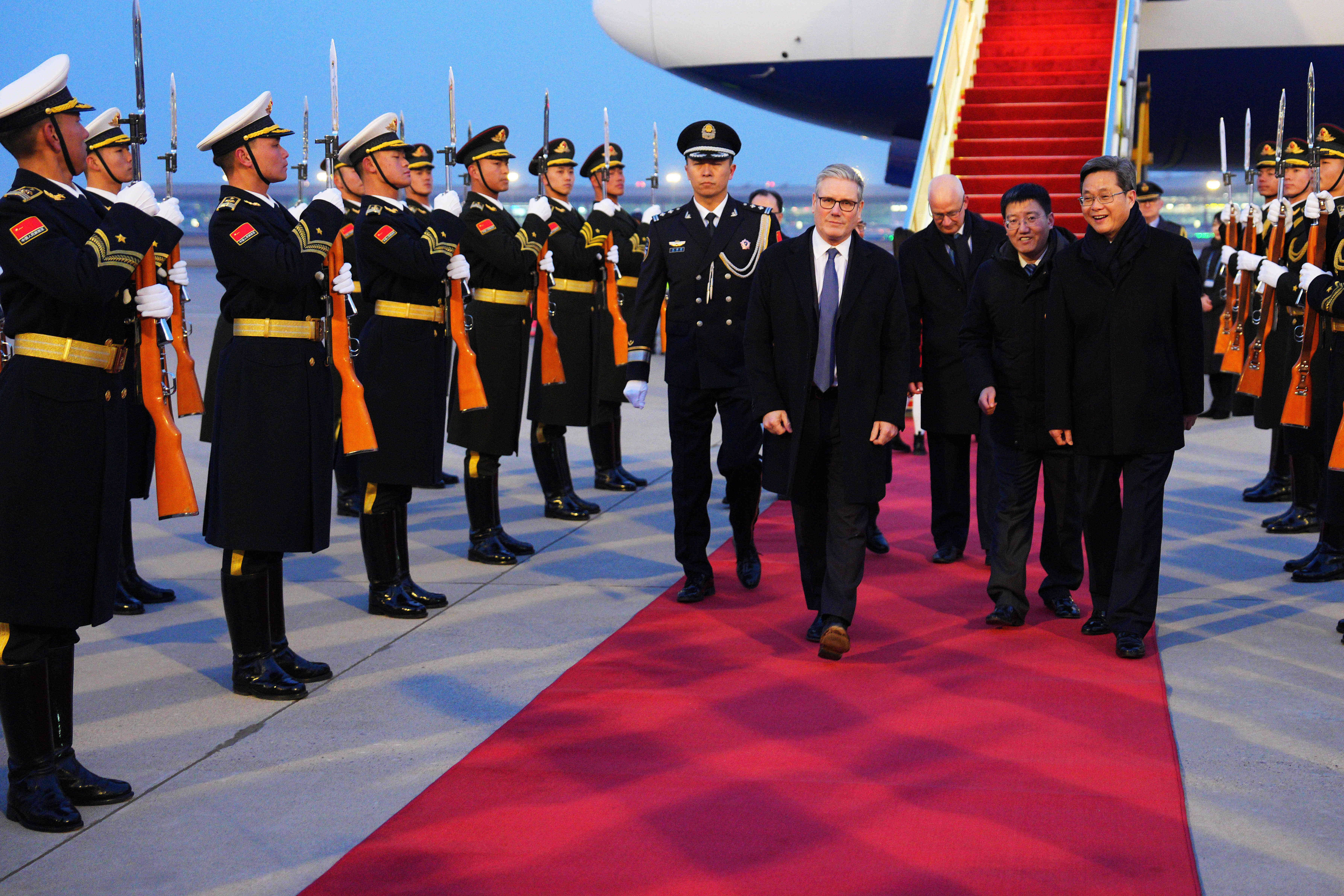
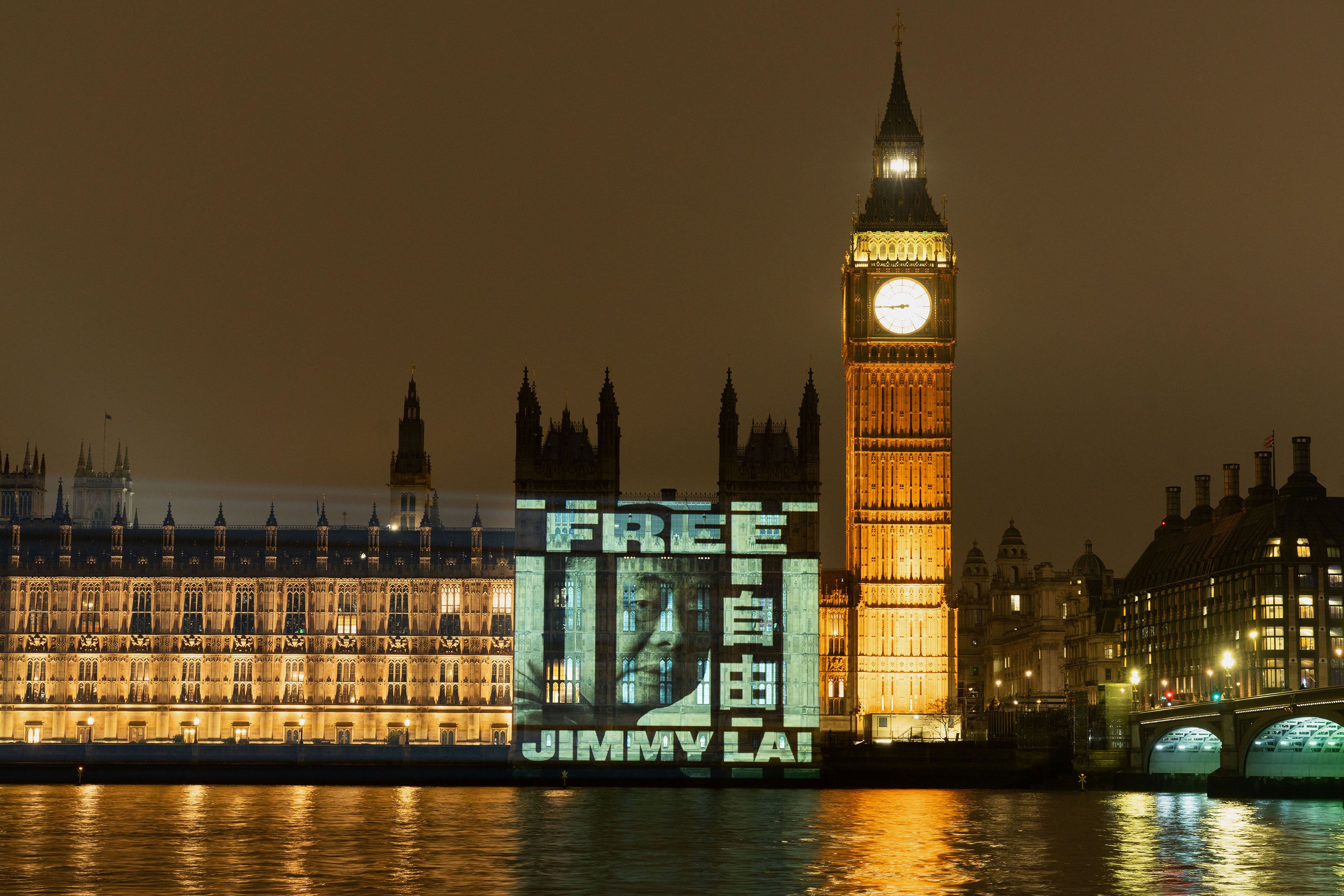
Lai is due to be sentenced soon, likely to life imprisonment. The looming verdict against the British billionaire businessman has sharpened pressure on prime minister Sir Keir Starmer, who arrived in Beijing for a three-day visit on Wednesday, to raise the matter directly with president Xi Jinping.
Starmer is the first UK leader to visit China in eight years. His flight out came just days after the controversial approval of China’s planned mega-embassy in London, and Starmer is facing widespread calls to prove he can still stand up to Beijing by securing the freedom of the British citizen whose health continues to deteriorate after more than 1,850 days in detention.
Selina Chang, chair of the Hong Kong Journalist Association, says the days are now gone where you would see any story that questioned political power or the city’s disciplinary forces in the local press, as these are now deemed the most sensitive areas.
On the surface, the working conditions for the city’s press seem quiet and calm: there are no longer dramatic newsroom raids, sudden arrests of journalists or people working in news organisations, and few if any overt acts of censorship.
Instead, she explains, there are more covert forms of coercion – anonymous letters accusing journalists of indulging in anti-China activities, threats of being reported to the national security police, targeted tax audits, and, in some cases, gag orders preventing them from explaining why they have stopped publishing or speaking publicly.
“Authorities have continued to arrest and prosecute people over speech, sometimes over quite innocuous comments on the internet criticising the government or over certain political slogans. None of these used to be criminal in Hong Kong,” she says.
“They have moved to use other coercive methods covertly, so that people stop publishing or saying things in public.”
Chang, who is currently embroiled in a legal battle with The Wall Street Journal over her dismissal by the paper, says that the authorities have realised arresting people, especially journalists, could backfire or lead to greater reputational damage for the government.
The 35-year-old says she has first-hand experience of the threats and harassment that many in the profession have faced. Letters accusing her of anti-China activities or causing unrest in Hong Kong were sent to a professional organisation connected to one of her family members.
“Basically, it felt like a way to intimidate me and their professional contacts, suggesting that those contacts should not have a relationship with me,” she says, adding the letters mixed half-truths with public information to appear credible.
The journalists’ association has documented about a dozen similar cases involving reporters and their relatives, with complaints to police yielding no relief.
The deterioration of press freedom in the city – Hong Kong’s global press freedom ranking has dropped from 18th in 2002 to 140th now – moving closer to that of mainland China, which is in 178th place – worsened dramatically with the imposition of the national security law in 2020. The law, imposed directly by Beijing after bypassing Hong Kong’s local legislature, criminalises any acts of secession, subversion, terrorism and collusion with foreign forces, using language that critics say is deliberately vague.
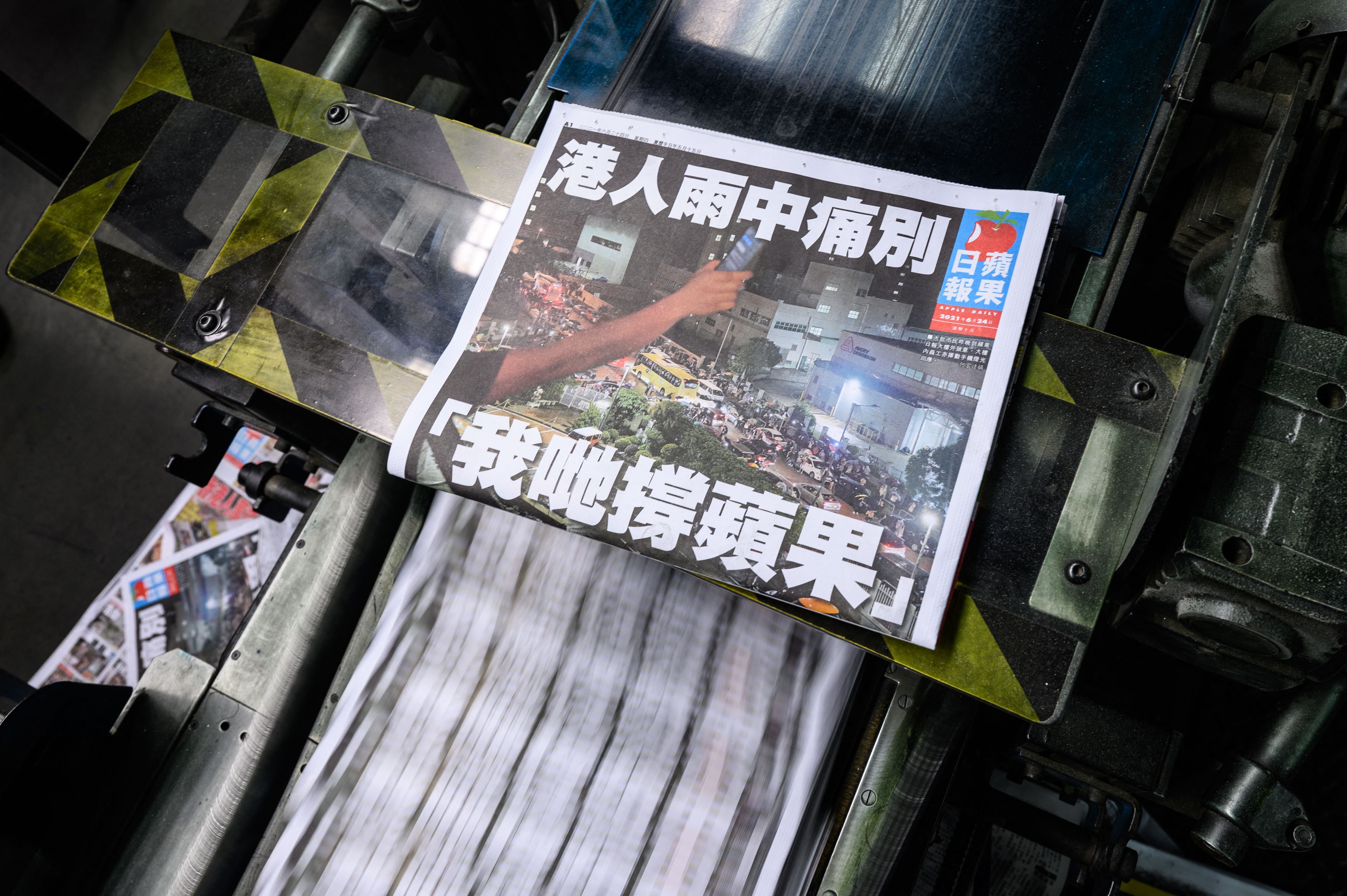
One of its first blows landed in June 2021 when almost 500 police officers raided the Apple Daily offices. Lai and senior staff were arrested and assets worth £1.64m were frozen. The newspaper was raided twice before it announced its closure a few days later — a move described by Hong Kong’s journalists and critics of the Chinese government as a “chilling blow to freedom of expression”.
At least 14 other media outlets have shut down since and many individual journalists have been arrested, according to Human Rights Watch.
Stand News, once the city’s most prominent pro-democracy outlet, saw its office raided, had its assets frozen and, two years later, had its editors convicted of sedition over published articles.
A journalist working for a foreign outlet, among those who requested anonymity, says the pressure is no longer confined to local media.
“International outlets are now part of the same calculation,” he says.
In a move that he described as chilling and unprecedented, the national security office called in representatives of all foreign media outlets to warn them against indulging in anti-China activity following the devastating Tai Po fire on 3 December.
“The national security law ushered a new era in Hong Kong which is now seeing a steady march towards becoming an integrated part of the authoritarian state,” the journalist says.
Unlike in mainland China, he says, news outlets in Hong Kong now routinely consult lawyers before publication, highlighting the unpredictability of the national security framework.
“That legal ambiguity has created a level of nervousness we’ve never seen before,” he notes. “Almost every international media organisation now seeks legal advice before publishing stories related to figures like Jimmy Lai.”
Reporters from local media outlets are being approached by national security police to “drink tea” – a euphemism long used in mainland China to call in journalists to threaten or question them, he says.
“Drinking tea is framed as a polite invitation from national security police to have tea,” the journalist explains. “But it is really a euphemism for a meeting in which a journalist is warned, questioned, or quietly threatened.”
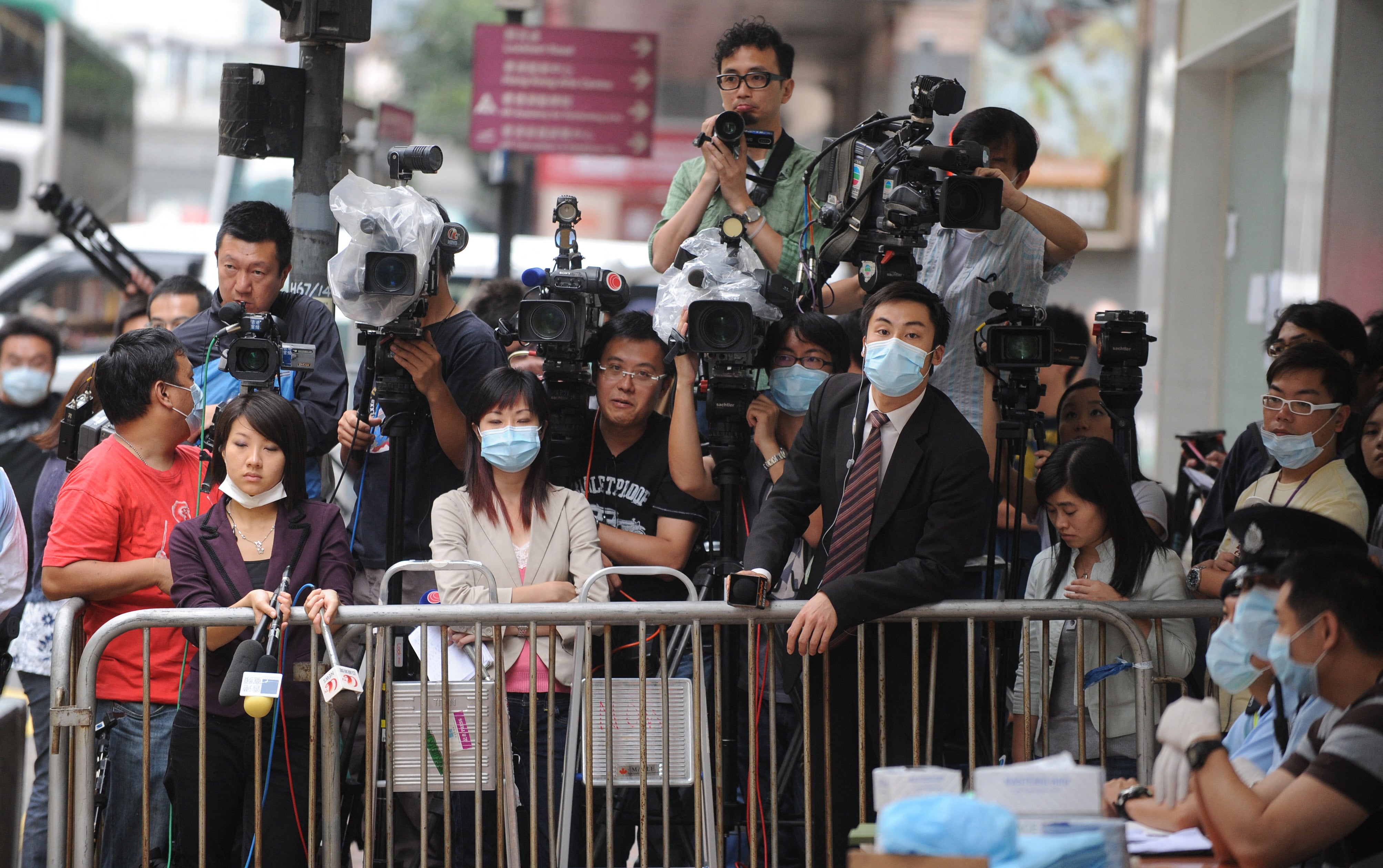
The intimidation is no longer limited to members of the media, journalists say. Sources routinely withdraw at the last minute, decline interviews, or insist on anonymity. Some media organisations allege that government representatives have contacted advertising departments to discourage certain coverage, threatening to withhold advertising budgets if they don’t comply.
“For the international community to better understand China, Hong Kong is sadly a case study in terms of how different the values are between China and much of the world,” the journalist working for a foreign outlet says.
“Some people I interview often say that Hong Kong seems, in some ways, stricter than the mainland. Authorities almost treat Hong Kong similarly to how Xinjiang or Tibet might be treated.”
Officially, authorities deny any erosion of press freedom in the city. Yet the coverage of Lai’s trial by the Hong Kong media closely followed court statements, with editorials in state-aligned outlets insisted it was fair and that the case had nothing to do with journalism.
The South China Morning Post ran an editorial saying the verdict “stands up to scrutiny”, rejecting claims it undermined judicial independence. The paper accused “the West” of misrepresenting the trial as an attack on press freedom.
State media outlets like China Daily, Global Times and CGTN echoed this line, urging international media to retract what they called misleading criticism.
Before its closure, Apple Daily sold up to a million copies per day at the peak of its popularity. That same popularity is now being presented as evidence of a criminal conspiracy.
Lai once said he had named the newspaper after a forbidden fruit in the Bible, telling Lianhe Evening News: “If Eve hadn’t bitten the forbidden fruit, there would be no sin, no right and wrong, and of course – no news”.
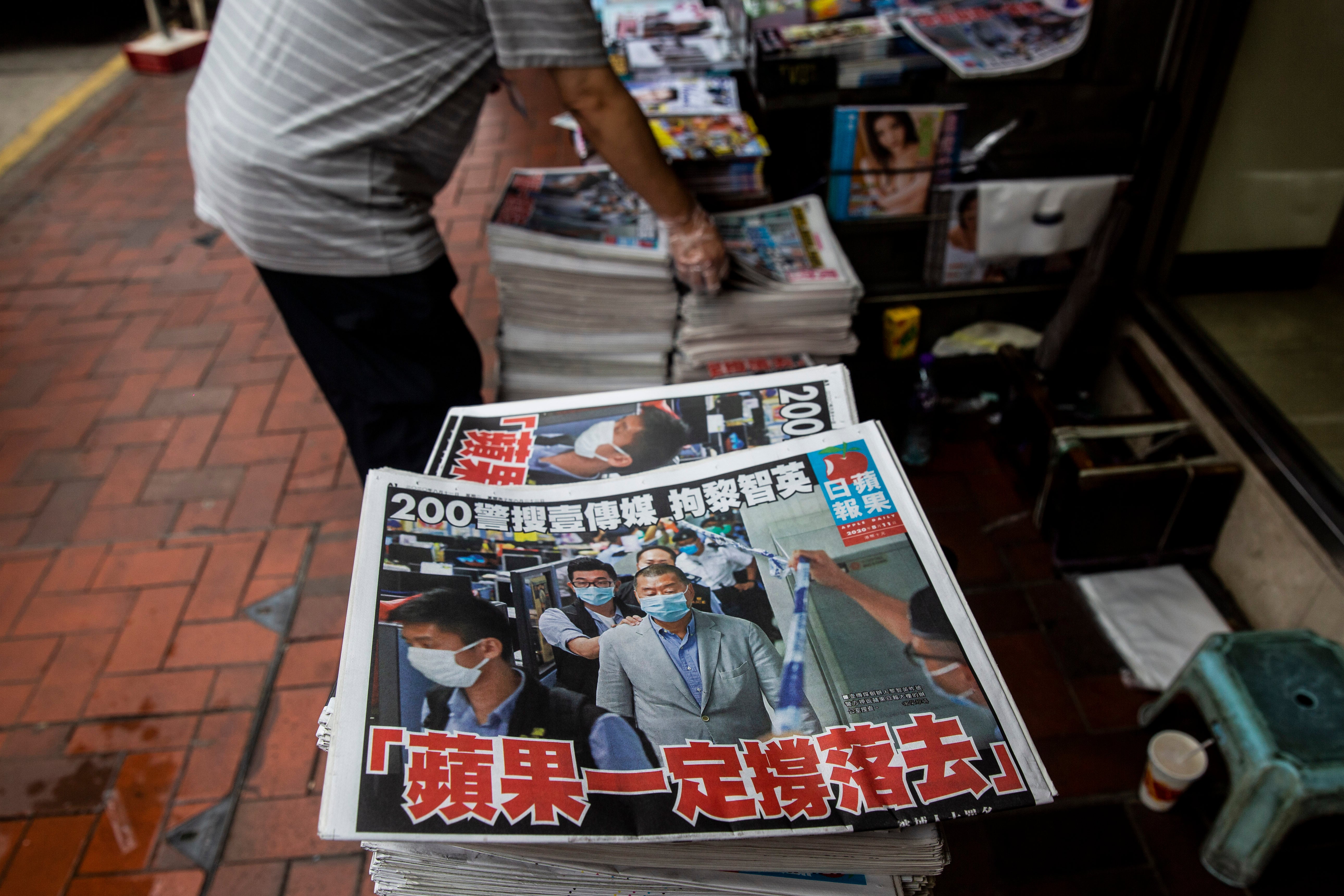
Lai has repeatedly denied acting illegally, calling for sanctions on China or inciting violence, insisting that Apple Daily gave voice to Hong Kongers’ desire for freedom.
Robert Sirico, a US-based Catholic priest and friend of Lai, says he met the media mogul in Hong Kong after his baptism and turn towards religion in the late 1990s.
“Lai’s real offence is moral, not legal,” Sirico tells The Independent. “He refused to be silent. And more remarkably, he refused to leave Hong Kong, even though he holds British citizenship. He was an uncompromising advocate of human freedom, but he was never treasonous. There were no machinations of that kind in all my dealings with him.”
Lai could easily have escaped if he wanted to, he notes, because he had the wealth, the passport, and the opportunity to do so. But he stayed in Hong Kong because he always said Hong Kong “gave me my freedom” and he felt obliged to defend it.
Sircio recalls leaving the courtroom with deep unease after seeing Lai in a glass dock, surrounded by security, during a 2024 hearing.
“It was a little frightening. The courthouse was surrounded by a lot of military presence with guns. To enter, you had to go through security, paparazzi, and metal detectors and that was the moment I felt the most uncomfortable,” he says.
“No words were exchanged when I first saw him in the small courtroom. When he walked in, he greeted his wife and family, and then he saw me. I could see he became emotional. He bowed in my direction, and I made the sign of the cross.”
Sircio hopes that “voices around the world will keep speaking up” for Lai. “The Pope has met Mrs Lai and their daughter, and political leaders have raised the case,” he says. “That’s the hope: that he can be released and spend his final years with his family.”
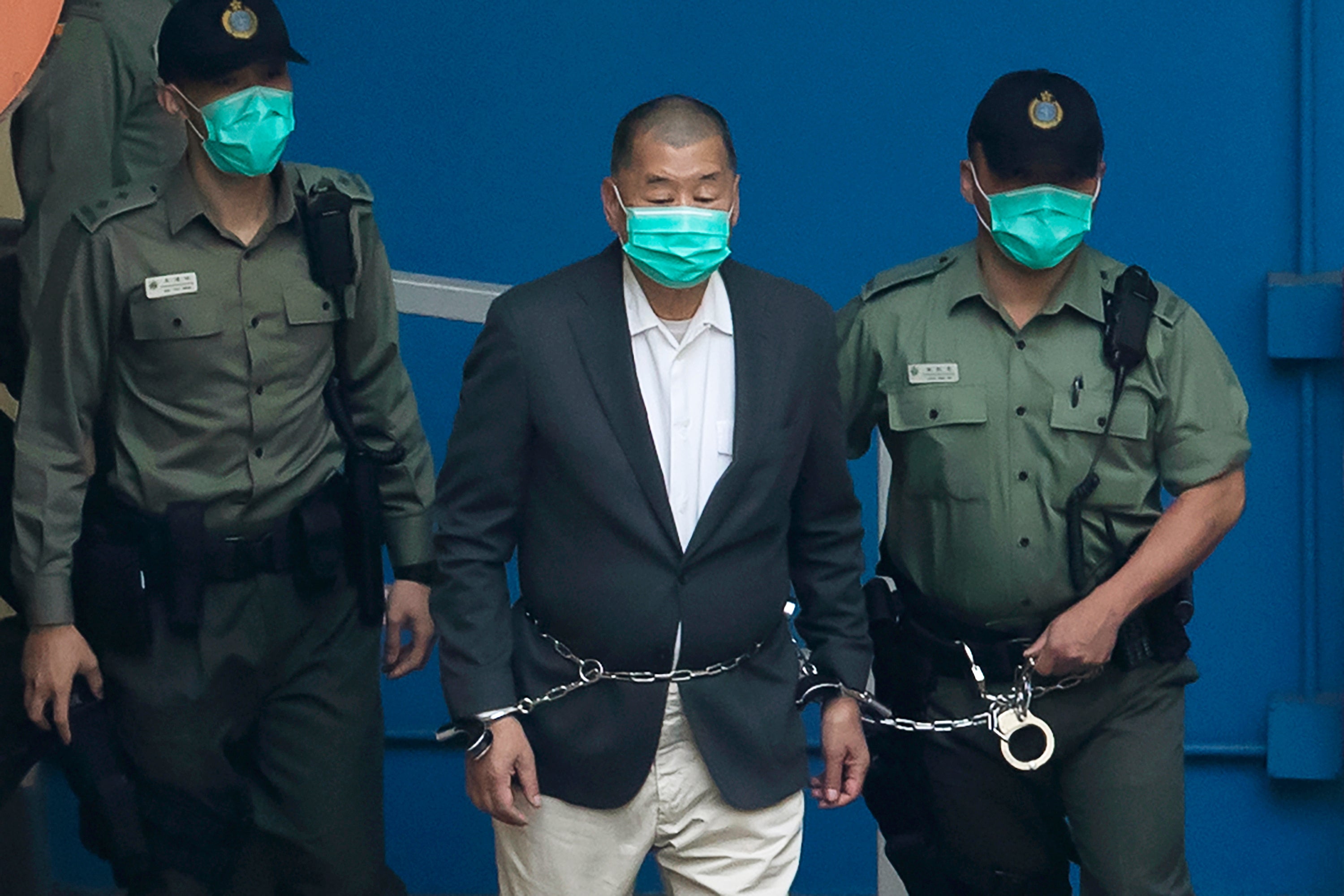
A journalist, speaking anonymously after being targeted over their work, says the case is about more than just Lai.
“Apple Daily and its publishing group meant a great deal not just to journalists, but to the entire media industry and to Hong Kong society,” they say.
The journalist says when people talk about the case, they focus on Lai because he’s the owner and a well-known figure. But six other senior figures, including journalists, were arrested and convicted as well.
“The crackdown on Apple Daily caused enormous damage to the industry. It was the first major action taken against a press group in Hong Kong. Hundreds of journalists lost their jobs, and some no longer felt secure living in the city and the country,” the journalist adds.
In addition to Lai, six former executives of Apple Daily and its parent company, Next Digital, were tried under the national security law and all pled guilty to conspiracy to collude with foreign forces.
For journalists still working in Hong Kong, Lai’s case is a boundary marker rather than a story – a measure of how far speech can go.
As for the future of the city’s press, Grundy says he is “not very optimistic”.
“But we are still here,” he says. “For all the compromises we have to make, and for all the risks we have to face, we feel it’s better to be in than out – to keep our ears to the ground and capture, with nuance, what is really happening inside the city.”



