

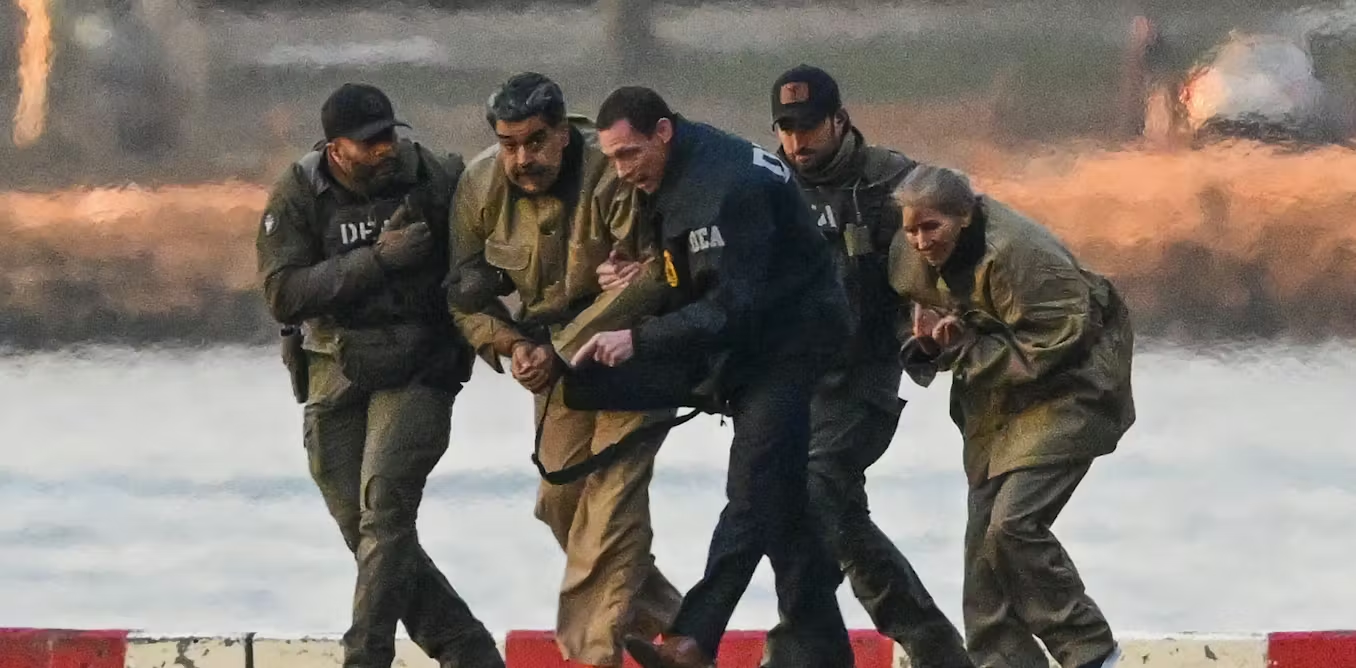
It is unlikely that within the first few days of a great global event – one moreover triggered by its closest ally launching a coup and kidnapping a head of state – a British government has said so little. It took 16 hours for it to say anything at all, and then, not much. And it has said not much thereafter.
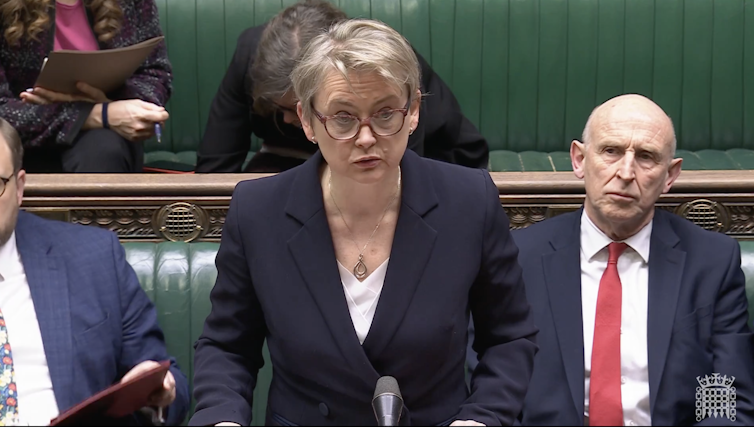
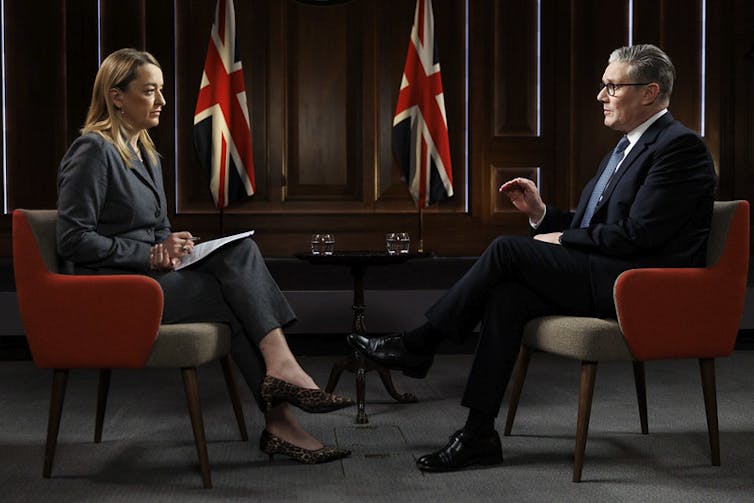
So little said, at such length: the prime minister, in his Sunday morning BBC TV interview; James Kariuki, chargé d’affaires in the UK Mission to the United Nations at Monday morning’s Security Council emergency session; and Yvette Cooper, foreign secretary, for over two hours in the House of Commons on Monday evening.
Parliament TV
This is both explicable and arguable. For Britain, Venezuela is not particularly significant. There are trade interests but it is far away, of foreign tongue; absent from domestic political discourse. The last time a British prime minister and a Venezuelan president met – Tony Blair and Hugo Chavez – was in 2001.
However, other than in times of actual war (1812) the nadir in US-UK relations concerned Venezuela. A long-forgotten crisis was triggered in 1895 by a dispute over the border between it and British Guiana. The spat elicited the equally forgotten Olney corollary – a proposition from the US government which nonetheless repays reacquaintance in light of recent developments: “Today the United States is practically sovereign on this continent.”
The present crisis similarly concerns hemispheric hegemony. It evokes the better-known 1823 Monroe doctrine, as a warning to the old world to stay out of the new. It adds resource competition (oil: Venezuela has rather a lot, much of it exported to China), while challenging the post-1945 “rules-based order” (reminding us that it was only ever convention-based) and threatening to replace it with one based largely on power. And there’s the upending of the 1648 Westphalian states system, which found fulfilment 300 years later in the creation of the UN.
Hence fears as to what precedent the president has set. Outrage at the Security Council from Russia and China was purely performative given that Trump could not have done more to legitimise their plans for Ukraine and Taiwan. Moscow was almost wistful, admiring how the Americans had managed with Venezuela in an hour what they had failed to do with Ukraine in four years.
Channelling James Monroe and Richard Olney, but with Ukrainian ally Volodymyr Zelenskyy in mind much more than either, Keir Starmer would never break publicly with Trump over something in the Americas. Canada is the exception, as was made clear in the pushback against the US when Trump suggested a Commonwealth realm should become America’s “51st state”.
Silence buys influence?
Insofar as the UK government has a distinct response, it’s that there should be a transition to democracy in Venezuela, ideally by including opposition figures. Trump has said he won’t pursue so left-field an option.
The lack of contact with the president – Starmer unwisely saying publicly that he was seeking it – is embarrassing, and summoned the inevitable clichés about puppets and poodles. The hope (increasingly more than the expectation) is that silence buys influence.
If that was not a green light from the UK, there is one red line. Greenland. The clarity of the government’s response to Trump’s predations is surprising, if the reason for it is not. Denmark has long been a close UK ally, not least over Ukraine. But siding publicly with Copenhagen over Washington is something else Starmer would not ordinarily have been expecting to have to do.
But American-led international crises have upended other Labour premiers. In 1950, Clement Attlee rearmed for the Korean War, with cuts in public spending to pay for it. Labour was out of office the following year.
The next decade, Harold Wilson declined to have a public opinion over the Vietnam war, thereby infuriating both the Americans and the young he enfranchised in 1969. Labour was out of office the following year.
The best known example remains Iraq. On the back of two landslide election triumphs in 2003, Blair split his party and inflamed the public. Labour’s parliamentary majority was slashed two years later. Unquestioning support for an American president became Blair’s nemesis.
He was comfortable with that. But Trump has transgressed the only recognisable facet of what political identity Starmer actually has: adherence to the rule of law, and international law at that. Yet he can only be mute.
The apparent inconsistencies between Starmer’s past and present can be reconciled by the elemental fact that he’s prime minister. What animated the student, the activist, the lawyer, the MP, cannot in office.
Flickr/Number 10, CC BY-NC-ND
But it is that failure – that refusal – to opine that most exasperates MPs. Cooper’s fractious Venezuela statement highlighted fissures within Labour that are evident whenever the US, or Israel, is concerned.
Maduro was the kind of leader who gives leftwing governments a bad name, which is why only the hard left – Richard Burgon, John McDonnell – are incensed. The main threats to Starmer’s leadership come from the soft left – Angela Rayner, Andy Burnham – where such affairs have less salience, and the right – Wes Streeting, Al Carns – where they’re merely awkward.
For May’s impending local and national elections the impact may be clearer, and graver. The Liberal Democrats, Greens, Your Party, SNP and Plaid Cymru accept gratefully a gift that will go on giving on innumerable doorsteps throughout the spring.
The Conservatives happen to agree with the government’s policy, if not necessarily its delivery. Few of their voters will care about recondite international law. Fewer still, Reform UK voters. Almost unheard of, Nigel Farage, too, has been mute.
Desperate to engineer a narrative reset in 2026, Starmer, this mildest of prime ministers – politically, temperamentally – now finds himself faced with the so-called Donroe doctrine, Trump’s “update” to the Monroe doctrine.
It would be somewhat to understate to say that this was not the start to the year for which Starmer was hoping. As we gaze upon the most imperial of presidencies, he can only dream of a similar premiership.



