British number one Jack Draper marked his post-injury return to action on the ATP Tour with a straight-set victory over Frenchman Quentin Halys in Dubai.
Competing on the men’s tour for the first time since the US Open last August, Draper won 7-6 (10-8) 6-3 on his debut at the Dubai Tennis Championships.
The 24-year-old, who has slipped to 15th in the world after reaching a career-high ranking of fourth in June, will play Hungary’s Fabian Marozsan or France’s Arthur Rinderknech next.
Draper contested his first competitive match for 164 days when he played at the Davis Cup Qualifiers earlier in February, beating Norway’s Viktor Durasovic in straight sets.
Advertisement
But he had remained absent from tour-level singles competition since withdrawing from the US Open before his second-round match because of a left arm injury six months ago.
Draper won the prestigious Masters 1,000 title at Indian Wells and reached the fourth round of the Australian and French Opens in a promising start to his 2025 season.
But he began struggling with a bruised bone in his service arm during the clay-court swing in April, and the issue progressively worsened.
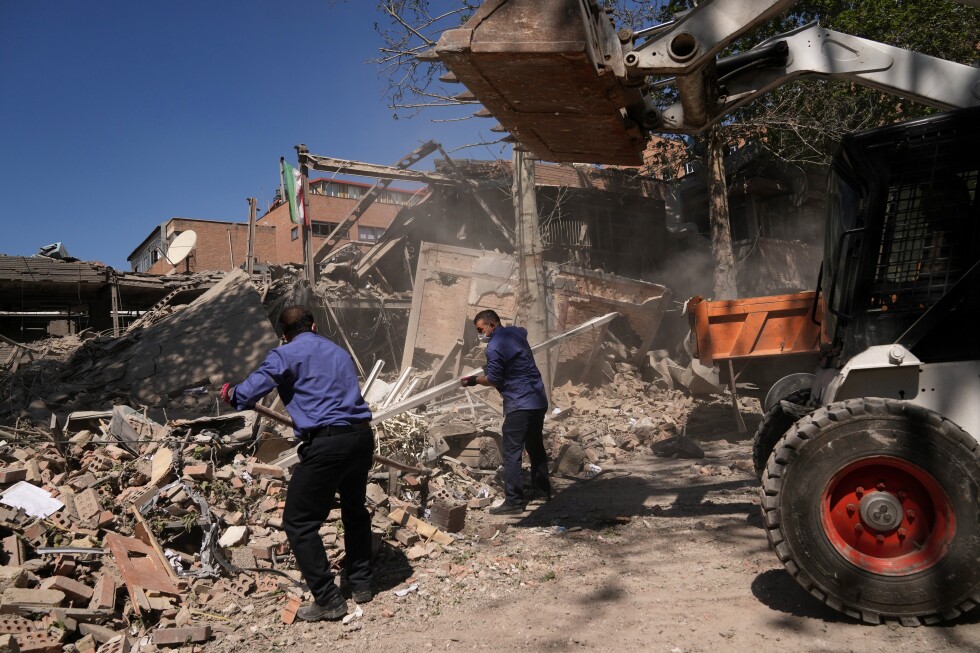
WASHINGTON (AP) — Since the ceasefire between Iran and the U.S. was announced, leaders in President Donald Trump’s administration have been quick to say Iranian military and arms capacity have been all but wiped out during weeks of fighting.
But there is also an acknowledgment that Tehran retains some capabilities, whether to strike back or defend itself.
Gen. Dan Caine, chairman of the Joint Chiefs of Staff, this week said the U.S. military has hit more than 13,000 targets. He listed high percentages for attacks or destruction to Iran’s air defenses, navy and weapons factories.
Independent data from Armed Conflict Location & Event Data, a U.S.-based group that tracks conflicts around the world, shows Iranian strikes persisted at a relatively steady and uninterrupted pace since the war began Feb. 28 through Wednesday.
Here’s a look at what the U.S. says has been targeted, has been degraded or remains from Iran, by the numbers:
About 80% of Iran’s air defense systems ‘destroyed’
Caine told reporters Wednesday at the Pentagon that the U.S. has struck more than 1,500 air defense targets, more than 450 ballistic missile storage facilities and 800 one-way attack drone storage facilities. He said, “All of these systems are gone.”
Defense Secretary Pete Hegseth similarly claimed that “Iran no longer has an air defense” and that “we own their skies” before conceding soon afterward that Iran “can still shoot — we know that.”
Advertisement
Hegseth later elaborated, saying that while the Iranians may “have a system here or there,” they no longer had an air defense “system that’s capable of defending their skies.”
Neither Caine nor Hegseth said what the remaining 20% of Iran’s air defenses looked like or which parts of the country have the ability to carry out the sporadic fire they described.
Caine offered no new details about what kind of weapon the Iranians used to shoot down a U.S. F-15E Strike Eagle last week. It was the first time an American military jet was shot down during the war, showing Tehran’s continued ability to hit back despite assertions from the Trump administration.
Trump described it on Monday as a “handheld shoulder missile, heat-seeking missile.”
Advertisement
More than 90% of Iran’s regular Navy fleet ‘sunk’
White House press secretary Karoline Leavitt told reporters Wednesday that the Iranian navy was “completely annihilated.”
While 150 Iranian ships “are at the bottom of the ocean,” Caine said, only half the paramilitary Revolutionary Guard’s small attack boats — ships the government used to swarm and harass warships and merchants in the Strait of Hormuz — have been sunk.
Caine also said that after more than 700 strikes, the military believed it has destroyed more than 95% of Iran’s naval mines.
Advertisement
Sign up for Morning Wire:
Our flagship newsletter breaks down the biggest headlines of the day.
Advertisement
Since the U.S. has not said how large Iran’s stockpile was before the war, it’s unknown how many naval mines make up the remaining 5%. Semiofficial news agencies in Iran published a chart Thursday suggesting the Revolutionary Guard put sea mines into the Strait of Hormuz, a crucial trade route for oil, during the war.
Caine said Wednesday that the military “destroyed Iran’s defense industrial base” while pointing to the fact that the U.S. and allies attacked “approximately 90% of their weapons factories.”
Advertisement
He also said, “nearly 80% of Iran’s nuclear industrial base was hit, further degrading their attempts to attain a nuclear weapon.”
While he noted that Iran was no longer able to produce certain components like solid rocket motors, he stopped short of saying that Iran could not eventually rebuild or get weapons in other ways or that the factories attacked had actually been destroyed or rendered unusable.
Trump acknowledged this possibility when he warned countries against arming Iran.
“A Country supplying Military Weapons to Iran will be immediately tariffed, on any and all goods sold to the United States of America, 50%, effective immediately,” Trump said in a social media post on Wednesday.
Advertisement
More than 90% interception rate in Israel
Meanwhile, Israel’s military pointed to how many drones or missiles it has been able to stop from landing. It said it had an interception rate of more than 90% through its aerial defense systems.
Over the decades, Israel has developed a sophisticated system capable of detecting incoming fire and deploying only if a projectile is headed toward a population center or sensitive military or civilian infrastructure.
Israeli leaders say the system isn’t 100% guaranteed but credit it with preventing serious damage and countless casualties.
___
Advertisement
Associated Press writer Sam Mednick in Tel Aviv, Israel, contributed to this report.
As a result, a return to winning ways after three league games without one is imperative for Arne Slot’s side, especially with Chelsea facing Manchester City and Brentford facing Everton across the weekend.
Fulham, meanwhile, are very much in contention to qualify for Europe – whether that be the Europa League or the Conference League – and head to Merseyside in decent form having won three of their last five league matches.
Date, kick-off time and venue
Liverpool vs Fulham is scheduled for a 5.30pm BST kick-off on Saturday, April 11, 2026.
Advertisement
The match will take place at Anfield, in Liverpool.
Where to watch Liverpool vs Fulham
TV channel: In the UK, the game will be televised live on Sky Sports. Coverage starts at 5pm BST on Sky Sports Main Event and Sky Sports Premier League.
Live stream: Sky Sports subscribers can also catch the contest live online via the Sky Go app.
Advertisement
Live blog: You can follow all the action on matchday via Standard Sport’s live blog.
Liverpool vs Fulham team news
Liverpool will be without Alisson Becker once again through injury, while Conor Bradley, Giovanni Leoni and Wataru Endo are long-term absentees.
Kenny Tete, Harrison Reed have been ruled out, as has Fulham’s club-record signing Kevin after undergoing successful surgery on an injury to his fifth metatarsal last month.
Advertisement
Calvin Bassey, however, is fit having recovered from a back problem that forced him to pull out of the Nigeria squad during the international break.
Mohamed Salah could return for Liverpool against Fulham
Liverpool FC via Getty Images
Liverpool vs Fulham prediction
Advertisement
Liverpool will need to regain a spark in the Premier League having gone three games without a win. Facing a Fulham side more than capable of getting a result makes this a tricky test for the hosts.
Though, confirmation that a top-five finish will earn Champions League qualification should ease the pressure on Slot who continues to face speculation regarding his future.
We expect Liverpool to have too much quality for Fulham and secure a much-needed win to boost confidence going into a season-defining week.
Head to head (h2h) history and results
Advertisement
Arne Slot, as Liverpool head coach, is yet to record a win over Marco Silva and Fulham in three attempts, drawing two and losing one.
The co-owner said they want guests to feels as though they have been “transported to an island”
A venue offering crazy golf with a karaoke and cocktail bar that feels as though you have been “transported to an island” is set to open in a Cambridgeshire town where there is “nothing quite like it”. Starting renovation in December last year, Volcano Valley is due to open on Saturday, April 11, in Wisbech.
Advertisement
The venue will open in the former Frankie & Benny’s unit on Cromwell Leisure Park in Wisbech. Developed by Chris Atkins and Chris Gooderson, the new venue will feature indoor crazy golf, a cocktail bar, karaoke rooms, and SMARTS darts. The venue aims to provide a family-friendly daytime activity and an evening venue for adults.
When it came to choosing a location, co-owner Chris Atkins said: “I just looked at it [the site] and thought this would be absolutely perfect”. He added that this business idea was ideal in Wisbech because “there is nothing quite like it in the area”.
He said: “What we find ourselves is whenever we want to go and do something, we end up having to either drive to Cambridge or Norwich or Peterborough to do it, and I thought, how many other people think the same thing.”
Combined with sand flooring, blue ceilings, a tiki bar with a thatched roof, and the golf course, Chris Atkins said that the “second you walk in we want to make you feel transported off to an island”.
Advertisement
The golf course takes you through three zones starting at the beach, going to the jungle, and finishing off at the volcano area. The course is priced at £8.95 for adults and £5.95 for children. The darts will be £25 for each lane per hour and a private karaoke room for guests to sing their hearts away in will be £25 for the hour.
Volcano Valley will be open from 10am to 6pm on Mondays to Thursdays, 10am to 10pm on Fridays and Saturdays, and 10am to 5pm on Sundays.
Locals are divided over England’s first ever cycle street being built in Cambridge. Some say that it offers a ‘sustainable option’, while others believe “there are better things to invest money in”.
The project is hoping to create safer travel for cyclists around the city and is part of the Greater Cambridge Partnerships (GCP) Comberton Greenway.
Work on turning Adams Road into a cycle street started on Monday, October 13, and is expected to take around 30 weeks to complete. The road has been blocked off to cars with signs providing drivers with diversions around the area.
Adams Road is one of the busiest cycle routes in Cambridge and is used by around 3,000 cyclists at peak times. The project aims to improve the safety of cyclists by reducing on-road parking to remove blind spots, redesign junctions, and offer wider footpaths.
Advertisement
Jenna McKone, 33, has lived in Cambridge for five years. She said: “I am always for better cycling infrastructures and I think if we can pair better infrastructure with fixing the main roads for cars that would be ideal.”
Jenna explained that she “loves that Cambridge is a friendly city for cycling” especially because she cycles to most places. On the other hand, she also regularly drives for work, and in general, she likes that money is being spent on cycling infrastructure but “would like to see it equal on other roads”.
Mary Stillman, 21, said that the cycle street “sounds like a pretty good idea” and will contribute to “help traffic flow better”. However, Mary raised concerns about whether it could cause safety hazards for pedestrians and put them at risk.
She added: “I imagine there are better things to invest money in. It will also take a while so there’s a lot of blocks which is quite inconvenient.” The 21-year-old explained that she used to cycle a lot and that the new cycle street would encourage her to start again.
A 25-year-old, Emma Noble, who has lived in Cambridge for over a year, works for a climate organisation. Due to this, she thinks the new cycle route is “really exciting” and said she is looking forward to seeing “more sustainable options”.
Advertisement
Emma is hoping to start cycling again and now there’s a “safer option” for cyclists, it has encouraged her to do so. The 25-year-old believes that it is a “good use of money” and it is “good for the climate and people”. Promoting and creating a cycle street will encourage more people to use a bike rather than a car, she believes.
A lady, gave her name as Kris, commented that she thinks it is a good idea because she believed it is a very bike-orientated city.
Yuening Du is 23 and lives in Cambridge. Yuening believed that it is “causing inconvenience due to the road construction” and it is taking “more time to get to the destination”.
The 23-year-old dislikes that there has been “a lot of noise” made by the construction team. However, she cycles in Cambridge so believes it “is an improvement to have somewhere specific you can cycle”.
Undertone is the terrifying feature film debut from Canadian director Ian Tuason, which promises to be the “scariest movie you will ever hear”.
Evy (Nina Kiri) is a podcast host caring for her dying mother (Michèle Duquet) at home. Told only from Evy’s perspective, the film moves from initially creepy to utterly horrifying over a tense, tight 93-minute running time.
Evy’s Undertone podcast explores supernatural phenomena. Her co-host Justin (Adam DiMarco) is in another time zone, so they record online in the middle of the night, Evy’s time. This veers close to the “witching hour”, but as Evy is the podcast’s resident sceptic – the voice of reason opposing Justin’s belief in the paranormal – she is unbothered. Until she’s not.
For this week’s instalment, Evy and Justin react to a series of mysterious recordings involving a couple: Jessa (Keana Lyn Bastidas), who has begun talking in her sleep, and her husband Mike (Jeff Yung), who records her. These clips lend the story a naturally escalating structure, as the material grows increasingly distressing and the sense of dread intensifies.
Advertisement
As elements from the recordings seep into Evy’s world and her sense of reality begins to shift, Kiri proves superb in the role. Alone onscreen aside from her unconscious mother, she balances a raw fragility with intense emotional control. Kiri carries the film almost entirely, with supporting characters reduced to voices in her headphones or on her phone.
Undertone’s domestic setting has an uncanny familiarity to it, with soft furnishings, lamps and religious artwork bathed in cold, often unpredictably flickering light. Compounding the disquiet is the fact that Tuason used his childhood home in Toronto as his filming location, inspired by caring for his own ailing parents.
The result is an uneasy intimacy which blurs the line between personal memory and horror. This, combined with Evy’s mother’s impending death and the harrowing implications of the audio clips, makes the film a disturbing yet consistently absorbing experience.
Advertisement
At times, though, Tuason leans too heavily on religious iconography to generate unease, diluting some of the originality. The film also flirts with shock value using inherently distressing subject matter, rather than fully earning its impact.
Sound as terror
Sound design is Undertone’s real strength. As podcast host Justin says: “Don’t be afraid of the dark, be afraid of the silence.”
The film captures the sound of podcasting with close, warm, immaculately clear voices and achieves an intimate, studio-polished quality. Building the sense of unease, there are authentic-sounding sleep-talking recordings, nursery rhymes played backwards, exaggerated household noises such as taps and whistling kettles, and prolonged silences.
Other horror films such as Berberian Sound Studio, The Black Phone and Keeper have harnessed the unsettling potential of sound in recent years, exploring the eerie power of disembodied voices.
Advertisement
Vertigo Releasing UK
This is a lineage Undertone joins while carving out a more intimate horror. Tuason’s film also makes narrative use of the podcast hosts’ editing skills to great effect, as they speed up, slow down, reverse and replay the recordings over and over, trying to glean some sense from them. In doing so, sound becomes Undertone’s primary source of terror, placing its audience in the same position as Evy.
Undertone is a confident debut from Tuason, who understands exactly where the film’s power lies. By grounding its horror in voice and sound, the film becomes an experience that feels immediate and inescapable.
In placing us so firmly within Evy’s singular perspective, Undertone crosses the boundary between listener and participant, resulting in a work which fulfils its promise of terror. It is not for the faint of heart.
A new book has been published to mark 100 years since the birth of east Belfast man Danny Blanchflower
10:28, 10 Apr 2026Updated 10:32, 10 Apr 2026
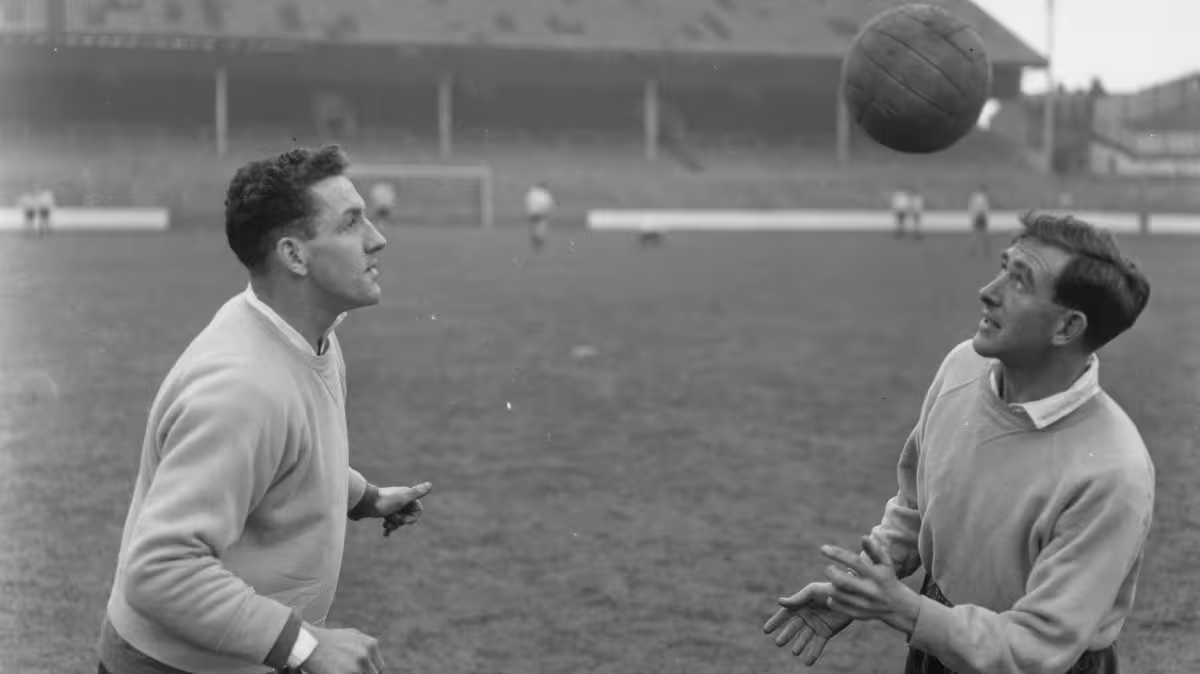
He was born in Belfast, in a place where the streets were narrow and the arguments were not. It was a city that demanded something of you early — a willingness to stand your ground. Danny Blanchflower learned those lessons long before he became a footballer. Identity came first. Football followed.
There is a new book out now — Danny Blanchflower: A Glorious Life by Mike Donovan — published to mark 100 years since his birth. It arrives not as a nostalgic exercise but as a timely reminder. Because Blanchflower does not sit easily in the modern game. He belongs to a different tradition — one where football was never just about the transaction.
Advertisement
He once explained his relationship with the sport in a way that felt disarmingly simple.
Danny Blanchflower never fell out of love with football. “Because I never had illusions to start with.”
There is honesty and a kind of defiance in that. He saw the game clearly — its beauty, its flaws, its limits — and chose to believe in it anyway. Not blindly but deliberately.
For all that clarity, he still spent a career striving for something close to perfection. Not perfection in the modern, statistical sense, but in the way a team should play, the way players should think, the way a dressing room should function.
Advertisement
Donovan’s book sets out to ensure that legacy endures.
“I want to make sure these players are not forgotten,” the author says. “Particularly Danny Blanchflower, because he was the guy who orchestrated everything. The ’61 side was the greatest in Spurs’ history. And he was the leader of that team.”
Leader, though, feels insufficient.
Blanchflower was the axis around which everything turned. He dictated tempo, shaped matches and set standards that went beyond the pitch. He had presence. When he spoke, people listened.
Advertisement
“Football was never about money,” he said.
There is a story, often told, that captures that ethos. At the height of his career, Blanchflower was offered a pay rise. He refused it. Asked for it to be distributed among his team-mates instead. It was a gesture that summed up the collective purpose he believed in.
In 1961, they achieved something that had been considered beyond reach. The League and FA Cup double — the first of the 20th century. It has been repeated since, often enough that it risks feeling routine. But at the time, it was anything but.
Blanchflower believed it could be done before anyone else did.
Advertisement
“He was the first to say it was possible,” Donovan says. “He was adamant.”
What followed was not just success, but a style of success that has endured in memory. Spurs did not simply win. They entertained. They dominated with a kind of elegance that made the game look expansive and generous.
“They crucified teams,” Donovan says, “but did it with style and grace.”
Advertisement
For a brief period, they may have been the finest side in the world. Real Madrid were ageing. Spurs were at their peak. Their European campaign came a year too late to confirm it, but the sense remains.
It was the greatest team in Tottenham’s history.
And at its centre was Blanchflower – one of only four Irishmen to captain an English club to their top division title – Roy Keane, Johnny Carey and Noel Cantwell being the others.
Donovan says: “We’ve had great players — Gascoigne, Klinsmann, Greaves, Bale, Kane,” Donovan says. “But that was our best team. And Blanchflower was the leader. I would say he is the most important player in Spurs’ history.”
Advertisement
He influenced the game in other ways too. He is credited with pioneering the defensive wall at free-kicks, a detail that now feels so embedded it is almost invisible. He thought about the game differently. He looked for solutions others had not yet considered.
And when leadership required words, he found those as well.
Before the 1963 Cup Winners’ Cup final, he felt manager Bill Nicholson had given too much respect to Atletico Madrid. Too much caution. Blanchflower addressed the players himself. He reminded them of their own quality, their own identity.
It was a moment that mattered. Spurs won. The players credited his intervention.
Advertisement
“He could command a room,” Donovan says.
That authority extended beyond club football.
In 1958, Northern Ireland embarked on a World Cup journey that defied expectation. Drawn against stronger, more established nations, they progressed through qualification and then beyond the group stage itself.
Blanchflower, alongside Peter Doherty, helped shape that achievement. It was more than a football story. Catholic and Protestant, different backgrounds and experiences, united by a shared purpose.
Advertisement
They saw off Italy, West Germany, Argentina and Czechoslovakia to reach the quarter-finals. Fatigue ended the run, but not the significance of it.
Blanchflower later returned as manager, motivated by a sense of obligation.
“I owed the game a debt,” he said. “I owed Northern Ireland a debt.”
There was always humour too, often dry, occasionally cutting. When a player asked about a win bonus, he replied: “We have no money and we don’t win matches. Therefore there is no bonus and no problem.”
Advertisement
He died in 1992, his final years affected by Parkinson’s and dementia. There is a sadness in that, an unavoidable one. A man whose life was built on clarity and memory gradually losing both.
But what remains is substantial.
Players are often remembered for moments — goals, trophies, flashes of brilliance. Blanchflower is remembered for what he valued.
That is why Donovan’s book feels important now.
Advertisement
If we don’t write about these heroes, if we don’t remember them, then what have we got?
History matters. Men like Blanchflower created legacies. May that always be remembered. And may he never be forgotten.
DANNY BLANCHFLOWER, A GLORIOUS LIFE The Authorised 100th Anniversary Biography of a Global Football Icon By Mike Donovan Publisher: Pitch Publishing Ltd
Lava flowed from the summit of Hawaii’s Kilauea volcano on Thursday 9 April, with fountains reaching heights of 625ft (190M), according to the United States Geological Survey.
The geological agency said the eruption began at 11:10am local time (21:10 BST).
Kilauea, one of the world’s most active volcanoes, has been erupting on and off since December 2024, this latest eruption marks the 44th episode since then.
Pubs have their dominion, though you do not seek one out for a blade-cold martini any more than you lean on a bar counter hoping for a half of best drawn by hand. When London begins to abrade, a bar can still salvage the hour. Better light, better seating, better company. A drink made by someone who understands temperature, timing, and the difficult art of making a stranger feel briefly restored. Visiting these bars, I found in them not only relief, but proof that London still knows how to receive people properly. It is no accident that eight of the 10 are in hotels. London handles such bars better than most cities because it understands they are not annexes for overnight guests, but some of its finest public rooms.
What stays with me from these bars is not simply what was in the glass, but who stood across it. Thanos and Markus at The Savoy. Angelos Niakas at The Lanesborough. Michele at The Ritz. Simone at GŎNG. Monica at Tayēr + Elementary. Andrea at The Goring. James at Thirteen. Lucas at Dukes. Eder at Gambit. Angelos at Câto. This is not a list of interiors, but a route through London by way of the people who keep teaching it how to drink better, host better, and feel briefly improved. I went to every one. You should do the same.
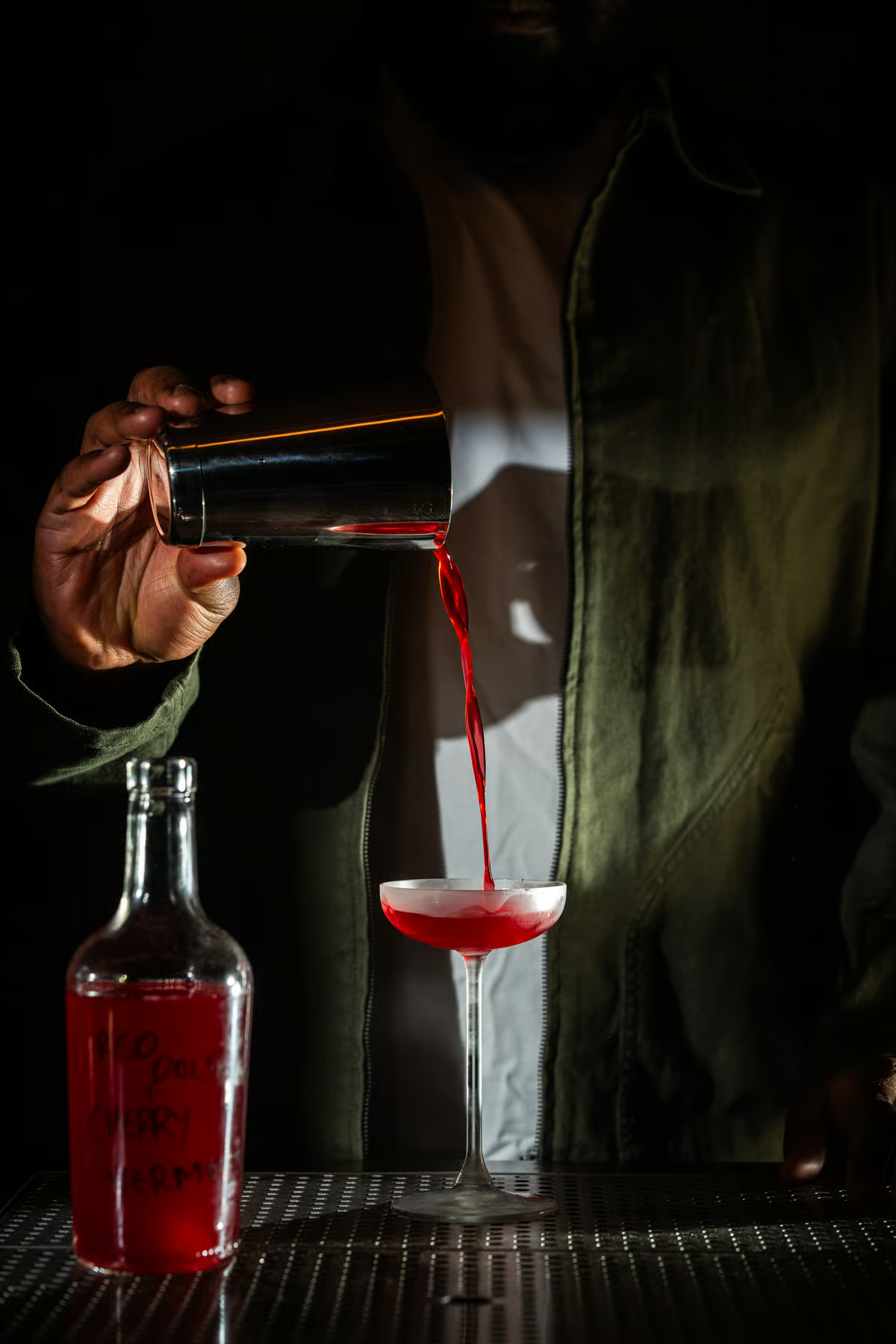
Everything begins here. Opened in 1893, the American Bar gave London its first enduring grammar of mixed drinks, though it was Ada Coleman, running the room from 1903 to 1926, who turned bartending into authorship. The hanky panky was her calling card. Made for the actor Sir Charles Hawtrey, who asked for something with a bit more punch, it arrived with gin, sweet vermouth and Fernet-Branca, and left him exclaiming, “By Jove! That is the real hanky-panky.”
What matters is not only the anecdote, but what it shows: Coleman was not simply mixing drinks, she was writing character into the glass. When I visited, that sense of lineage still held. Thanos Tzanetopoulos ran the room with the ease of a man who makes difficulty vanish before it reaches the guest, while Markus Basset, guiding the wider drinks programme, kept the line between inheritance and living relevance taut. Sit at the slim run of stools and the American Bar still feels like the source, not a preserved artefact.
The Library Bar, The Lanesborough
Advertisement
Press handout
The Lanesborough has all the credentials one could ask of Hyde Park Corner — leather, chandeliers, stature, one of the capital’s grand addresses — though the Library Bar works as more than a handsome room. The martini trolley reduces luxury to first principles: temperature, dilution, garnish, each handled with absolute assurance, while the back bar extends to pre-phylloxera Cognacs and ancient Scotch. Still, what stays with me is Angelos Niakas, sometimes known as the Fallen Angel. He arrived from Greece in 2018, began polishing glasses, then rose to run the room. I met him after he had seen off a table of Texans at 4am, yet the welcome never faltered. His drinks arrive fully resolved, including his negroni charentaise, sharpened with brandy and served in a coupe. Then come the details which make you want to return: martini sundays, his corgi, Mayfair, and Lilibet, the cherished Siberian Forest cat who is part of the address itself. In lesser hands, this bar might have remained handsome but remote. Niakas makes it land.
Press handout
The Rivoli Bar, in its current form, has occupied its gilded corner since 2001, though the bigger story is that The Ritz has never been content to coast on pedigree alone. Investment continues, new wings are being added, and the hotel remains bent on preserving its top rank by strengthening it. When I visited, Michele Saladino held the room with technical authority and charm. Behind the scenes sits a formidable preparation lab producing distillates, tinctures and calibrated batches, allowing the team to serve up to 500 guests a day from the minute counter without losing rhythm. The Ritz 110 still delivered its gold-flecked flourish, now poured more than a thousand times each month, though beneath the glitter sat real method. Saladino’s newer drinks, referencing the biodynamic calendar, show the same reach: mars drawing saffron-redistilled gin through Campari, Antica Formula and aged sherry, moon building a Martini line from pear eau-de-vie, Manzanilla and white miso. It is a bar which preserves the aura of The Ritz while proving it has no wish to live on inheritance alone.
GŎNG, Shangri-La The Shard
Press handout
Bars with panoramic views often lean too heavily on the glass, as if altitude alone were enough. GŎNG, which opened in 2014 on the 52nd floor of The Shard, works because the drinks keep pace with the outlook. When I ascended, Simone Ghiozzi brought the assurance of someone who has spent much of his London career close to the river, the city’s lifeline. Buckwheat had a nutty lift. Flower bent the French 75 through chrysanthemum and tea with grace. Best of all, perhaps, was sugar cane, made with cane pressed each morning from Borough Market, which gave the drink a snap no bottle could fake. Then there is the improbable shard-side myth which suits the site so well: during construction, a fox made its way near the top of the building, surviving on scraps left by workers. Only London could produce a story so absurd, and a bar so suited to it — urban, vertiginous, ridiculous, yet wholly persuasive.
Advertisement
Tayēr + Elementary, Old Street
Tayer & Elementary
When Tayēr + Elementary opened in 2019, Monica Berg and Alex Kratena did more than unveil a new address beside a demonic roundabout. They reset the tempo of modern London drinking. I went to see both halves in action because the split is the point. Elementary, at the front, is bright, brisk, and immediate, built for draught cocktails, quick pleasure and the sort of appetite which arrives before overthinking does. This is where the one sip martini belongs — tiny, freezing, complete; its vodka, Fino sherry, Ambrato vermouth and Gorgonzola-stuffed olive making their point at once. Tayēr, behind, moves differently. Darker, tighter, more focused, it centres on a bespoke bar system and drinks of far greater intricacy. Together they form one of the clearest statements any London bar has made in years, and Monica’s exacting influence runs through both.
Nick Rochowski Photography
The Goring Bar, refreshed in 2019 and revisited in 2024, succeeds not through novelty but tone. When I took my comfy swivelling stool amid the plaster mermaids and mermen, with the garden softening the room beyond, it felt at once welcoming and properly formed. Andrea Ferrante has understood exactly what this bar should be. At the start of the menu sits a prompt, complete with mirror, asking guests to describe themselves and let the team build something around them. Even the pink flamingo (Chambord, Italicus, fig liqueur, jasmine and Champagne) reads like the first drink of a very good day, bright and scented and entirely unembarrassed by its own charm. It is one of the friendliest counters in London, and all the better for it.
Thirteen at Chateau Denmark
Advertisement
Press handout
Thirteen arrived with dial8 on Denmark Street in February 2023 and, on visiting, what struck me most was how fully it belonged to Soho rather than merely borrowing its old voltage. James Warren, formerly of the Groucho Club, is central to that. Upstairs, Thirteen runs on music, appetite and late-hour propulsion. Downstairs, dial8 takes the register darker and pushes further into the small hours. Beyond the bars, Chateau Denmark stretches across 16 buildings and 44 bedrooms, with in-room “maxi bars” which tell you a good deal about the house appetite. The whole site feels less like a single venue than a fresh district folded into Soho’s bloodstream. Warren gives it exactly the social intelligence it needs to stop the concept slipping into fancy dress.
The Delany Drawing Room, Dukes
Press handout
Opened in December 2025, The Delany Drawing Room gave Dukes a second axis beyond the martini bar next door, and, after visiting, I came away thinking it may now be the finer room in the building. Elegant Lucas Paterson is a large part of the reason. Under his watch, whisky and darker spirits are handled with assurance and ease, through accessibly priced flights presented on oak staves, and a take on the negroni from a 10-litre cask in the room itself. The guiding figure is Mary Delany, the 18th-century artist and letter writer famed for her extraordinarily exact botanical collages, and that spirit of close observation runs through the entire proposition. Meanwhile, in the foyer, people still queue for martinis like puddings waiting to be spooned, seemingly unaware that the more interesting bar may be the one they have just wandered past.
Helen Cathcart
Gambit opened with The Newman in February 2026. Beneath the hotel, Eder Neto has made a vast, Art Deco-leaning room feel open rather than submerged, and that ease carries into the list. His background runs from Hakkasan to the opening team at The Standard London, with the added distinction of becoming Britain’s first certified sake sommelier. Most striking is the fact that each alcoholic cocktail has a non-alcoholic counterpart built as a drink in its own right rather than a dutiful substitute. Angels and demons appears in both forms, the original built on butter-infused tequila, the other on Lyre’s and blood orange, each with real length and shape. Chess nights and music give the copper-topped room life, while nods to Nancy Cunard and Aleister Crowley add just enough Fitzrovia colour. Neto makes the bar feel welcoming, broad-minded and unusually inclusive for people not drinking, which remains rarer in London than it should be.
Advertisement
Press handout
Câto, which opened in February 2026, earns its inclusion by providing such a sharp contrast to the smoother hotel-led addresses elsewhere. Created with Angelos Bafas, better known as Mr Ungarnished, it occupies a former gentlemen’s club and feels hand-built in the best sense. When I settled in, serendipitously beside Thanos of The Savoy, the drinks came stripped back until only their point remained. Pollens, cask-raised mead, ingredient-led construction, all handled without frippery. The oyster martini, served with oysters and mint-chilli mignonette, sounds like the sort of idea which might enjoy hearing itself talked about, until it arrives and proves entirely coherent. Bafas has built a room with tactility and nerve, and London needs bars like that as much as it needs gilt and chandeliers.
Man Utd midfielder Toby Collyer signed for Championship club Hull City on loan in the January transfer window.
Manchester United loanee Toby Collyer was delighted to impress on his first start for Hull City after recovering from an injury. Collyer spent the first half of the season with West Brom, but he was recalled in the January transfer window and sent to Hull for the second half of the campaign.
Advertisement
Sources close to Collyer believed he would show his quality with Hull after suffering an injury at West Brom, but he picked up another minor injury. The midfielder returned to fitness in March and was handed his first start against the Championship leaders Coventry earlier this week.
Hull were the underdogs heading into the game, but they secured a point in a goalless draw. Collyer played 74 minutes, delivering an excellent performance against Frank Lampard’s side.
Get MEN Premium now for just £1 HERE – or get involved in our United WhatsApp group by clicking HERE. You can also join our United Facebook page by clicking HERE and don’t miss out on our brilliant selection of newsletters HERE.
Speaking to Hull Live, Collyer said: “I came here having full trust from the staff upstairs as well. It wasn’t the best start in terms of physicality. I had a little setback, but I’ve just tried to build myself up in training again and be patient.
Advertisement
“I’ve managed to do a great job, I think so, credit to the manager for, I’d say putting me in at the right time. Football’s all about timing as well. I feel like he’s put me in at the right time.
“I feel like, from what I’ve shown in training, I’ve deserved it. I just enjoyed being out there again, starting, and got on the ball quite a bit. It just felt good playing again. I’m definitely (ready to play the next game), a little bit of cramp towards the end, but that’s natural with the limited minutes I’ve had.”
Over a dozen Championship clubs enquired about Collyer’s availability last summer. West Brom beat Hull to his signature, but Collyer’s first half of the campaign at the Hawthorns did not go as planned.
Sky Sports, HBO Max, Netflix and Disney+ with Ultimate TV package
Advertisement
This article contains affiliate links, we will receive a commission on any sales we generate from it. Learn more
Sky has upgraded its Ultimate TV and Sky Sports bundle to now include HBO Max, Netflix, Disney+, discovery+ and Hayu, as well as 135 channels and full Sky coverage of the Premier League and EFL.
Sky broadcasts more than 1,400 live matches across the Premier League, EFL and more with at least 215 live from the top flight alongside Formula 1, darts and golf.
“We know what sort of league the Championship is; it’s hectic. I think a lot can change in the last few weeks, so it’s a big point for the boys,” he added after drawing against Coventry.
“This league is crazy, I’ve never experienced anything like it. If feels like anyone can beat anyone. You can prepare for games, and then rock up and it’s completely different.
“We know what we’re aiming for, and we want to aim for as many points as possible. Whether we can push for automatics or get in the play-offs, we take it game by game.
Advertisement
“We’ve definitely got the quality to do it, and as I said previously, anything can change in these last few weeks. We’ve just got to do what we can do and let the rest take care of itself.”
Collyer’s contract at United runs until the summer of 2027, with the option of another year.
Sir Keir Starmer has spoken to Donald Trump about the need for a “practical plan” to get shipping going through the Strait of Hormuz in the wake of the Middle East ceasefire.
The call between the leaders came shortly after the Prime Minister criticised the US president over the knock-on effects of the Iran conflict, saying he was “fed up” with bills going up in the UK “because of the actions of Putin or Trump”.
Advertisement
Sir Keir is visiting allies in the Gulf for talks on how to support the pause in fighting and secure a permanent reopening of the key shipping strait. He is set to head back to the UK on Friday after visiting Qatar, Bahrain, Saudi Arabia and the United Arab Emirates.
Get MEN Premium now for just £1 HERE – or get involved in our WhatsApp group by clicking HERE. And don’t miss out on our brilliant selection of newsletters HERE.
On Thursday, a Downing Street spokesperson said: “The Prime Minister spoke to President Trump from Qatar this evening.
“The Prime Minister set out his discussions with Gulf leaders and military planners in the region on the need to restore freedom of navigation in the Strait of Hormuz, as well as the UK’s efforts to convene partners to agree a viable plan.
Advertisement
“They agreed that now there is a ceasefire in place and agreement to open the strait, we are at the next stage of finding a resolution. The leaders discussed the need for a practical plan to get shipping moving again as quickly as possible.”
Sir Keir earlier appeared to blame Mr Trump for rising bills alongside Russian President Vladimir Putin, telling ITV’s Talking Politics Podcast: “I’m fed up with the fact that families across the country see their bills go up and down on energy, businesses’ bills go up and down on energy because of the actions of Putin or Trump.”
He added the ships passing through the Strait of Hormuz must have “toll-free navigation” as part of the ceasefire amid reports Iran wants to charge for passage.
Advertisement
Asked whether he viewed the critical strait as now being open, he said: “There are a lot of things being said – they need to be tested” and that the UK’s position is that “open” means “open for safe navigation”.
“That means toll-free navigation and vessels can get through,” he told Talking Politics.
Speaking in London, the Foreign Secretary also called for toll-free travel through the Strait, warning that trading routes from Qatar, UAE, Bahrain, Kuwait, Iraq, Saudi Arabia and Oman were “all hijacked by Iran so that they can hold the global economy hostage”.
Yvette Cooper said: “The fundamental freedoms of the seas must not be unilaterally withdrawn or sold off to individual bidders and nor can there be any place for tolls on an international waterway.”
Advertisement
The US president later posted on his Truth Social platform: “There are reports that Iran is charging fees to tankers going through the Hormuz Strait — They better not be and, if they are, they better stop now! President DONALD J. TRUMP.”
He added in a separate post: “Iran is doing a very poor job, dishonorable some would say, of allowing Oil to go through the Strait of Hormuz. That is not the agreement we have!”
Mr Trump agreed a two-week truce earlier this week with the reopening of the strait a key condition.
But the agreement soon came under strain as Israel’s bombardment of Beirut prompted Iran to close the shipping lane again amid disagreement over whether Lebanon was included in the ceasefire.
Advertisement
However, Israeli Prime Minister Benjamin Netanyahu said on Thursday he had authorised direct talks with Lebanon “as soon as possible” aimed at disarming Iranian-backed Hezbollah militants and establishing relations between the neighbours.
Sir Keir said Israeli strikes on Lebanon are “wrong” and that it should be included in the ceasefire.
His call with Mr Trump also came hours after he was asked about the US president’s language in his posts about Iran and said they were “not words I would use”.
“Let me be really clear and blunt about this – they’re not words I would use or would ever use because I come at this with our British values and principles foremost and uppermost in my mind,” he said.
Advertisement
The US leader has repeatedly lashed out publicly at Sir Keir in recent weeks over his failure to initially allow Washington to use UK bases.
He reiterated on Thursday that the US is only authorised to use UK bases for “collective self-defence” and said the UK is “monitoring” to make sure that is the case.
Elsewhere, Sir Keir wrote in The Guardian newspaper that “Iran must now become a line in the sand”. He said: “How we emerge from this crisis will define all of us for a generation.
“And, instead of hoping to return to the world of 2008, we will forge a new path for Britain – one that strengthens our energy, our defence and our economic security in a new age.”
Advertisement
A Downing Street spokesperson said that during his Middle East tour, Sir Keir discussed “the need to push to restore the free flow of goods to support global supply chains” with United Arab Emirates (UAE) President Sheikh Mohamed bin Zayed Al Nahyan.
The Prime Minister also “expressed solidarity with the people of the UAE and his condolences for the lives lost as a result of Iran’s reckless bombardment”, according to No 10.
In talks with leaders from Bahrain, Sir Keir “reiterated the importance of ensuring the ceasefire is upheld in order to pave the way for lasting peace”.





















































You must be logged in to post a comment Login