
News Beat
January sales: London postcodes with the highest percentage of reduced homes

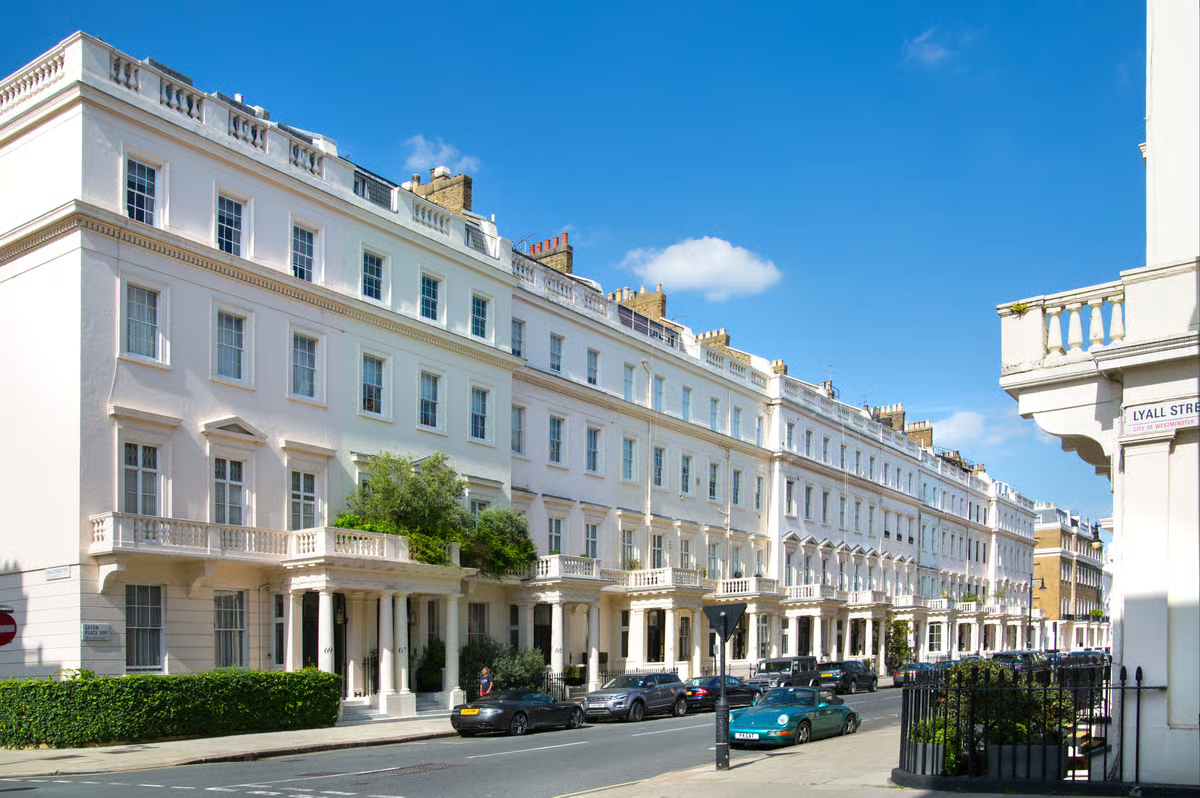

For London buyers, now might the time to secure a deal on a new home: 12.7 per cent of properties on the market had a price cut between October and December last year, according to Zoopla.
Zoopla analysed key housing market indicators like time on the market, how much asking prices are being cut to attract demand and the number of homes on the market for more than six months to compile a ranking of 120 postal areas of the UK with the best prospects for 2026.
The bottom 10 positions are all in the south of England, with the lowest five all in London, where house price growth has stagnated most.
The London areas with most reductions
Zoopla has found that 12.7 per cent of properties in London have had a price cut of more than five per cent in the last quarter of 2025, with more than a third of all stock having languished on the market for more than six months.
In south west London —SW postcodes covering areas like Belgravia, Chelsea and Knightsbridge— 15 per cent of properties have been discounted in price, the highest proportion of anywhere in the country.
Here, 36 per cent of properties have been on the market for more than six months, with the average property taking 50 days to sell.
The average property in the postcode costs £706,900, and prices have gone down by 0.8 per cent over the last year.
In west central London (WC postcodes), east central London (EC) and west London (W), 14 per cent of properties have been discounted in the last quarter of 2025.
In west central London — areas like Covent Garden, Holborn and Bloomsbury— more than half (51 per cent) of properties have been on the market for more than six months, with the average property taking 82 days to sell.
A typical property in the postcode costs £797,600, and prices have fallen by 1.8 per cent in 2025.
In east central London, 47 per cent of properties have been on the market for more than six months, taking an average of 67 days to sell.
Prices in the area have gone down by 4.5 per cent on average over the last year, with the typical property still costing £682,400.
In west London, where prices have fallen by 1.5 per cent, transactions are taking 54 days on average, with 43 per cent of properties still on the market after six months.
North west London (NW), where property values fell by two per cent over the last year, has seen 12 per cent of properties have their prices cut.
Transactions take an average of 53 days in the postcode, with 39 per cent of properties for sale for more than six months.
|
Postal area |
Average price |
House price growth % YoY |
Time to sell (days) |
% of properties with asking price cut by more than 5% |
% of stock on the market for more than 6 months |
|---|---|---|---|---|---|
| SW – South West London |
£706,900 |
-0.8% |
50 |
15% |
36% |
|
WC – West Central London |
£797,600 |
-1.8% |
82 |
14% |
51% |
|
EC – East Central London |
£682,400 |
-4.5% |
67 |
14% |
47% |
|
W – West London |
£747,100 |
-1.5% |
54 |
14% |
43% |
|
NW – North West London |
£621,700 |
-2.0% |
53 |
12% |
39% |
Why has London seen so many price reductions?
“The big story with London is how a third of homes have been in the market for more than six months and remain unsold,” says Richard Donnell, executive director at Zoopla.
“This is feeding into the need to reduce asking prices to try and boost demand for homes — 13 per cent of homes for sale in London have had their asking price cut by more than five per cent in Q4 2025. This is almost double the seven per cent of homes with a price reduction in the best-ranked markets, which also have much less aged stock.
“One other factor to note in London is that almost a third of homes for sale are formerly rented homes as landlords look to sell in the face of lower yields and weaker price inflation. This expansion in the number of homes for sale and greater buyer choice is what lies behind the weaker outlook.”
“2025 was a steady but subdued year for the property market and, as a result, many sellers will have experienced little to no buyer interest, particularly across the more inflated regions of the South and London,” agrees Marc von Grundherr, director of Benham and Reeves.
“It’s only natural that a sizeable proportion have resorted to reducing their asking price expectations in order to secure a sale and, as a result, there remains a strong opportunity for buyers to find a discounted property today.”
According to von Grundherr, there have been fewer price reductions since the beginning of the year, which may indicate that the “tide is beginning to turn”.
He says: “With autumn Budget uncertainty now firmly behind us, both buyers and sellers have re-entered the market with renewed confidence and those vendors who have listed their home during the opening days of 2026 have been far less willing to budge on price.
“It’s still very early days, but with buyer affordability receiving a boost following the December interest rate cut, we expect sellers to hold their nerve over the coming months as market conditions continue to improve. Therefore, buyers hoping to secure a January bargain would be wise to act quickly before these opportunities begin to dry up.”
What’s happening in the rest of the country?
Across the UK, Zoopla predicts that the average property will see a 1.5 per cent boost in value this year.
In Motherwell, prices are expected to grow by 3.4 per cent. Just eight per cent of homes on the market there have been reduced.
“This report captures the north–south story well. The point isn’t that one part of England is ‘winning’ – it’s that markets move to different rhythms,” says Kevin Shaw at property service group LRG.
“Many northern markets haven’t been on the same roller coaster as parts of the south. Property prices often rise in a steadier way in the good years, so they tend to fall less when sentiment turns. The temperature is generally more consistent.
“By contrast, the south can overheat – and it can also catch a cold. Higher values can mean greater sensitivity to mortgage rates, affordability and confidence. That can translate into a longer adjustment period, even while demand for the right homes remains resilient.”



