

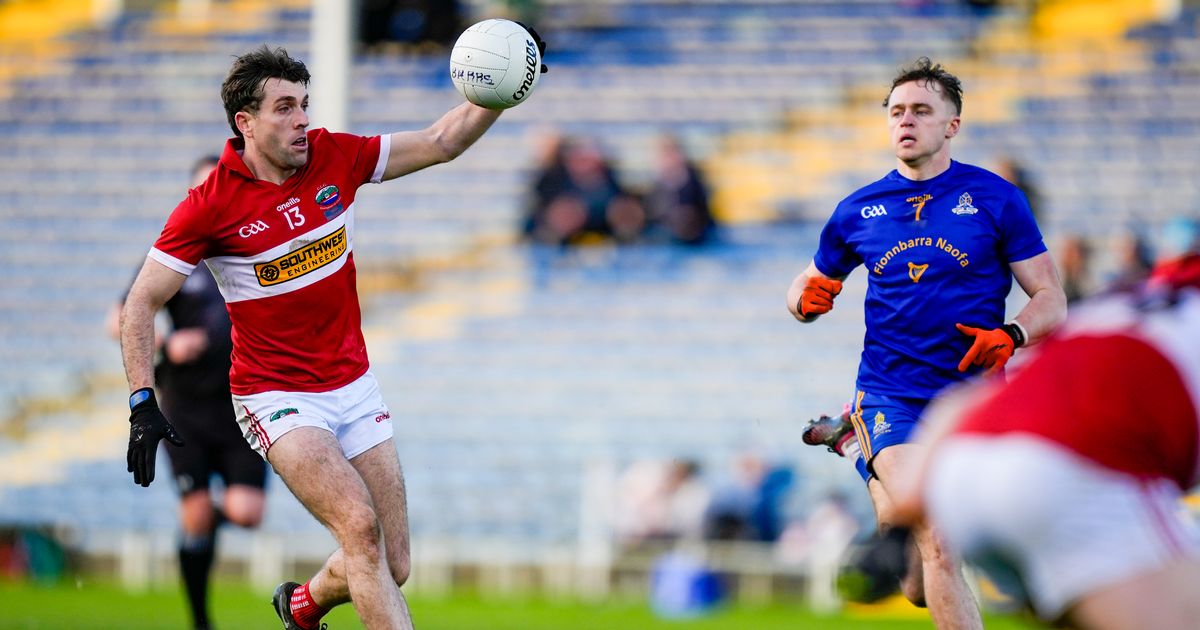
Referee Chris Maguire adjudged that Dylan White had illegally prevented the taking of a quick free. It felt cruel. But it was not wrong
Jim Gavin is associated, in the public mind, with glory and humiliation. The former came in waves — five in a row, a dynasty, an era. The latter arrived in a single soundbite, a sitting Taoiseach effectively flinging a coach under a political bus.
Yet what may prove to be his most enduring legacy lies not in Sam Maguires or soundbites but in a quiet revolution: a rewriting of Gaelic football’s rulebook, an attempt to rescue a sport that was edging towards tactical suffocation.
And then came Sunday’s Munster SFC club final.
A game of scale and promise, reduced, in the end, to a whistle and a judgement. St Finbarr’s chasing air, Dingle gifted oxygen.
Referee Chris Maguire adjudged that Dylan White had illegally prevented the taking of a quick free.
The sanction was severe by design: 50 metres advanced. The destination was fatal. Conor Geaney, steady amid the wreckage, banged over a two-point free. Full stop. Full-time. Dream done.
Predictably, the internet went to town.
“Harsh.”
“Wrong call.”
“These rules are ruining football.”
It is in moments like this — when consequence lands with a thud — that reforms are easiest to dismiss. When the rulebook has teeth, and it bites someone you sympathise with, the temptation is to declare the system broken.
But this isn’t a failure of the rules. It is their first truly brutal lesson.
Prior to Gavin’s framework, there is no 50-metre sanction. There is no two-point conversion from range. The game rolls on. We murmur about hard lines, soft whistles, and football’s slow death continues in the background.
Now? Now the rules actually matter.
The 50-metre penalty is not a bolt-from-the-blue invention. It exists for a reason: to stop teams gaming the system by delaying restarts, by tossing balls skyward, by feigning confusion, by turning quick football into slow theatre.
The sport needed speed. It needed jeopardy. It needed consequences.
It got them.
One referee’s interpretation did not “ruin” a final. It exposed a habit that teams were slow to unlearn.
St Finbarr’s didn’t lose because of the rules. They lost because they misjudged them. Because a reflex born under the old regime — to delay, to disrupt, to frustrate — now comes with a cost.
And that cost is severe. It is supposed to be.
This incident should not be clipped and condemned. It should be clipped and shown.
Every manager in Ireland should be pausing that frame in training sessions.
Every player should be forced to watch Dylan White’s moment of instinct, that half-beat of old football thinking colliding with new football reality.
Hand the ball back. On a plate. Immediately.
Not lofted. Not inspected like a relic. Delivered.
Until Sunday, these rules had not decided a final. Now they have. That does not invalidate them. It gives them legitimacy.
If laws have no edge, they are suggestions. And Gaelic football has survived too long on suggestion and wink.
Jim Gavin and the Football Review Committee did not set out to create theatre. They set out to restore tempo. To revive risk. To end the nonsense of delay disguised as game management.
Sunday was ugly for the Barrs. It hurt. It felt cruel.
But it was not wrong.
St Finbarr’s pain is not a reason to go backwards. It is the price of moving forward.
The sport asked for teeth. Now it has them.



