A court hearing was held in Cambridge regarding charges faced by Anthony Williams.
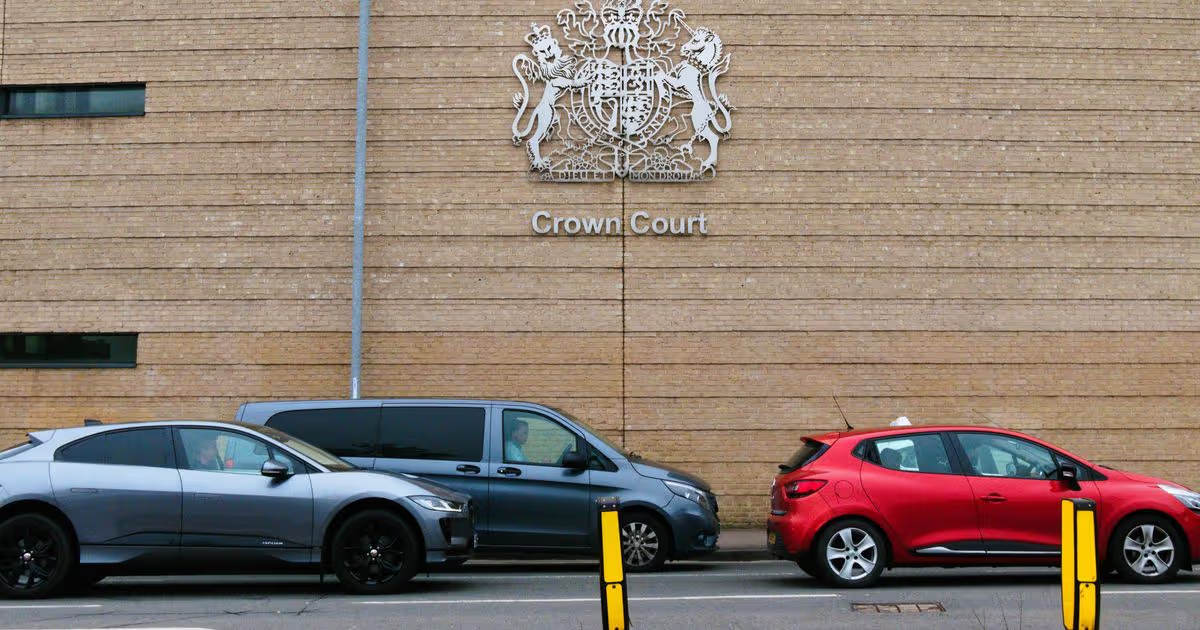
A provisional trial date has been set for the man accused of a mass stabbing on a train in Huntingdon. A hearing took place at Cambridge Crown Court for Anthony Williams, 32, on Wednesday (February 4).
Advertisement
Williams, of Langford Road, Peterborough, has been charged in relation to a knife attack on a LNER train that diverted to Huntingdon on November 1. Gillian Jones KC, defending Williams, said he is currently at Rampton Hospital, a high-security psychiatric hospital, in Nottinghamshire.
Judge Mark Bishop ordered that a report about the defendant’s fitness to plead should be prepared by April 7. The case has been adjourned until April 14 for a mention hearing.
Williams is charged with 10 counts of attempted murder, possession of a bladed article, and actual bodily harm in connection with the attack on November 1.
He is also charged with attempted murder and possession of a bladed article following an incident at Pontoon Dock DLR station in London, and attempted murder of a 14-year-old boy and a 22-year-old man in Peterborough on October 31.
Advertisement
Other charges, which will be considered alongside the above, include attempted wounding with intent of a 28-year-old man, possession of a bladed article, and affray in Peterborough on October 31.
He was also charged with common assault of a 31-year-old man on a train travelling between Hitchin and Biggleswade on November 1. A provisional trial date of June 22 has been set.
Tom Pidcock launched a late attack to win the Milano-Torino race on the 150th anniversary of the first edition of the world’s oldest classic.
The Pinarello-Q36.5 rider was making his debut in the Italian one-day race and went clear during the final 600m to win its 106th edition.
The 26-year-old double Olympic mountain biking champion became the second Briton to clinch victory in the 174km (108-mile) race, after Mark Cavendish in 2022.
Pidcock was part of a lead group of 12 riders on the final Superga climb, which whittled the contenders down to five.
Advertisement
He attacked with 600m remaining, with Tobias Halland Johannessen in pursuit, but Pidcock kicked again with 400m left to cruise to the summit finish four seconds before the Norwegian, with 2021 winner Primoz Roglic crossing a second later.
“Primoz is hard to read, he’s always in the saddle,” said Pidcock. “I was expecting him to be good there and was hesitating to attack, everyone was looking pretty strong.
“But I knew at one point I had to go. Luckily in the end I had a kick there and I could hold them off.
“A win’s a win, they’re not easy to come by, so it’s nice to get your hand in the air.”
Advertisement
It was Pidcock’s first win in a one-day race since the Amstel Gold Race in 2024 and his second victory of the season – having claimed a stage of the Vuelta a Andalucia last month.
Wednesday’s win also keeps the Briton in good form heading into another Italian classic on Saturday, the Milan-San Remo.
The Earth is under assault. Space rocks are constantly hurtling toward us, slamming into the atmosphere and often exploding into fireballs that both delight and alarm.
Thankfully, the vast majority cause no damage because they are pulverized into dust or small chunks by the journey to Earth.
A fireball streaked across the sky near Cleveland this week, caused by what was thought to be a space rock nearly 6 feet (1.8 meters) across and weighing 7 tons. It was seen from Wisconsin to Maryland, according to the American Meteor Society.
It traveled more than 34 miles (55 kilometers) through the upper atmosphere before breaking apart, according to NASA. No fragments have been found yet.
Advertisement
As dramatic as it was, it was also incredibly common. Here’s what to know:
What’s the difference between a meteor and an asteroid?
An asteroid is a chunk of rock, ice or metal that’s left over from the solar system’s formation 4.6 billion years ago. A meteoroid is a fragment of a larger space rock such as an asteroid or comet. A meteor is the light emitted from a meteoroid or asteroid as it burns up through the atmosphere. If a meteor is brighter than the planet Venus in the morning or evening sky, it is called a fireball. If a chunk of it makes it to land, it’s called a meteorite.
How common are meteors?
Flashes of light from meteoroids are incredibly common, and there are times — called meteor showers — when they can be seen every few minutes in the night sky, weather permitting. The Perseids meteor shower, which happens in mid-August every year, is considered the best, according to NASA.
How common are fireballs?
There are “several thousand” meteors that would qualify as fireballs in the Earth’s atmosphere every day, according to the meteor society. The problem is that most occur over oceans or other places where people don’t live, or the sun is too bright to notice them.
Advertisement
Still, plenty are seen by people. And if you see one, the American Meteor Society and the International Meteor Organization want you to tell them so they can check it out. So far in 2026, 10 fireballs have drawn more than 100 reports, which averages nearly one per week.
Why do meteoroids break up before they land?
Meteoroids travel through empty space at extraordinarily high speeds — from 25,000 mph (40,233 kph) to as high as 160,000 mph (257,495 kph). When they suddenly hit the gases that blanket Earth, they undergo incredible stress as they compress the air in front of them, which heats the object to the point it starts to melt and break apart.
___
The Associated Press Health and Science Department receives support from the Howard Hughes Medical Institute’s Department of Science Education and the Robert Wood Johnson Foundation. The AP is solely responsible for all content.
“As previously warned, if the fuel, energy, gas, and economic infrastructures of our country are attacked by the American-Zionist enemy, in addition to a powerful counterattack against the enemy, we will severely strike the origin of that aggression as well,” the military said in a statement published by Tasnim.
The best sofa beds promise a handy two-in-one solution; a sofa for relaxing and entertaining and a comfortable bed for guests. Historically, though, they have been neither; too firm and unyielding as a sofa, and uncomfortable and creaky as a bed. But today’s sofa beds have evolved.
“They are now comfortable, practical and easy to function,” interior designer Katy Raywood of Howson Design Interiors, says. She only recommends sofa beds for occasional use, as the mattresses are thinner than standard beds, but for a weekend visitor, it’s great to have a sofa and bed in one.
I spent a week testing sofa beds around London showrooms. I tried click-clack sofa beds, where the back folds down to create a flat surface and pull-out sofa beds, which conceal a hidden mattress. You can read my full reviews below, but if you’re in a hurry, here’s a quick look at my top five:
Advertisement
The best sofa beds: At a glance
How to choose the best sofa bed
With so many makes and models on the market, it’s easy to feel overwhelmed. Here are a few of the most important things to keep in mind while shopping for a sofa bed.
Type: “If you’re looking for a more comfortable sofa to sit on, choose a click-clack sofa bed with padded cushions,” says interior designer Naomi Astley-Clarke. “If you want to prioritise the comfort of the mattress, choose a pull-out sofa bed with a pocket-sprung or foam mattress.”
Size and shape: If you’re working with a small or awkwardly shaped room, you could shop for a corner sofa bed. A sofa bed with built-in storage provides a ready-made space for your guests to store their suitcases or spare bed linen.
Fabric: Leather is low-maintenance and stain-resistant, thanks to the tanning process, so it’s a good choice for high-traffic areas of the home. Velvet is more sensitive to spills, and benefits from the occasional steam clean, but it catches the light and adds warmth to a room. Other popular materials include cotton, linen, and polyester or acrylic blends.
Advertisement
Budget: “The base isn’t the expense, it’s the mattress,” says Astley-Clarke. A pull-out sofa bed with a built-in mattress tends to be more expensive – starting around £1,000 – but it should feel more comfortable and supportive for longer-term use.
A new immunotherapy drug has demonstrated early promise in a recent prostate cancer clinical trial. The drug, called VIR-5500, is a “masked T-cell engager”. This type of immunotherapy ignites our own immune arsenal to fight cancer.
In the trial, which is still in progress and has not yet undergone peer-review, patients with advanced prostate cancer who had failed to respond to other treatments were given VIR-5500. Remarkably, initial findings showed that in the patients who received the highest doses, 82% saw reductions in their PSA (prostate specific antigen) levels – a commonly used measure of prostate cancer.
Strikingly, nearly half of the patients within this group also showed tumour shrinkage at both the primary tumour sites as well as in metastatic tumours (tumours which had spread from the prostate into different parts of the body).
Cancer cells have mechanisms to evade being eliminated by our immune system. But immunotherapies boost our immune system’s capacity to fight cancer. They do this by combatting these evasion strategies.
Advertisement
Various immunotherapies have demonstrated phenomenal success in recent years. Yet many cancers, such as prostate cancer, remain difficult to treat exposing the need for more effective immunotherapies.
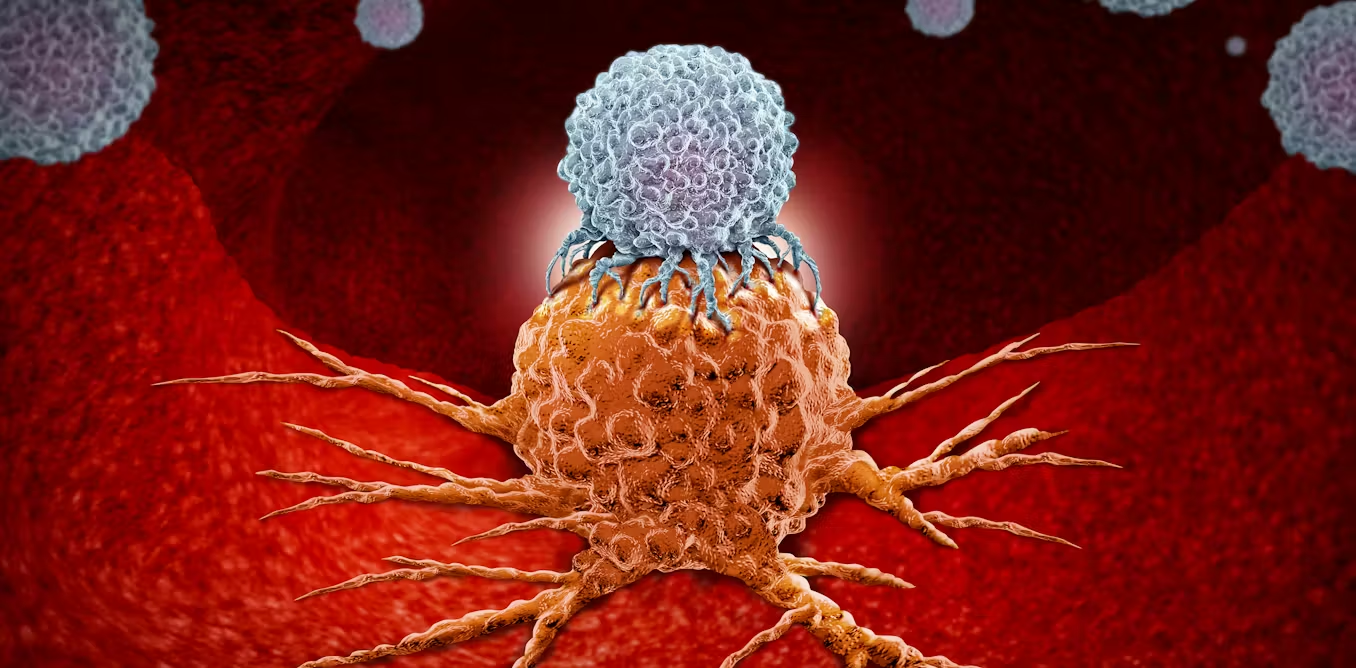
T-cell engagers are a specific type of immunotherapy that works by anchoring immune cells, called T-cells, and cancer cells together by engaging molecules on the surface of both cell types. This enforced proximity prompts the T-cells to produce toxic cancer-killing chemicals and generate a cascade of inflammatory processes that promote cancer killing.
There are now over 200 different T-cell engagers, many of which are in clinical trials to treat a range of tumours including multiple myeloma, leukaemia and lung cancer.
T-cell engagers
T-cell engagers are not just being trialled for cancer. They may also help with treating other viral conditions, such as hepatitis B, which can cause life-long infection. As in cancer, the virus can evade our immune responses – but T-cell engagers can promote more effective clearance of virally-infected cells.
Advertisement
Despite the great promise surrounding T-cell engagers, the vigorous inflammation they trigger can also be a double-edged sword. In some cases, it can cause a serious inflammatory condition called cytokine release syndrome.
Cytokines are protein messengers released by cells that can drive inflammation. Normally, their release is tightly controlled – but in cytokine release syndrome, the response is excessive and uncontrolled. This can lead to multi-organ failure with potentially life-threatening consequences.
T-cell engagers can also sometimes cause an uncontrolled immune response. ALIOUI Mohammed Elamine7/ Shutterstock
Similar toxic inflammatory side-effects can be seen with other immunotherapies. It’s likely the condition is driven by the potent, acute activation of an immune response.
This is why T-cell engagers and other immunotherapy drugs need to be refined, to ensure their effects are less toxic.
Advertisement
One way of doing this involves producing versions of immunotherapies that are inactive but can be activated once inside tumours.
This is done by covering the drug in a “mask” that prevents it from engaging both the T-cells and cancer cells. When the drug enters tumours, molecules that are abundant in cancers can break down this mask, allowing the drug to engage its target cells. VIR-5500, the drug used in this recent, promising prostate cancer trial, is one of many new masked T-cell engagers.
As such, masking creates an effective drug that may also be safer. Tumour-specific activation should restrict the anti-cancer, inflammatory response to within the tumour, preventing widespread inflammation.
It may also enable the T-cell engagers to be more selective towards cancer cells, as some of their targets may also be expressed by normal healthy cells. This could simultaneously reduce toxicity and improve anti-cancer potency.
Advertisement
An additional benefit of masked immunotherapies is that the conversion from the inactive to active drug in the body takes time. This changes how the drug is dosed within patients.
In the clinic, T-cell engagers are often given in small doses that then need to be escalated to prevent acute immune over-activation. But the mask would allow the drug to be released more slowly, making delivery simpler and safer. The mask itself may also prevent the drugs from being broken down in the body and may extend their lifespan.
An important finding in this recent trial for prostate cancer was that most patients who received the highest doses of VIR-5500 suffered only mild inflammatory side effects. Given the known toxicity associated with T-cell engagers, this is an exciting finding – suggesting the masking is working to reduce the risks of excessive inflammation.
If further research proves that masking T-cell engagers creates safer, more effective drugs, then we can expand what we can do with them. They can be combined with more traditional cancer therapies, such as chemotherapy or radiotherapy, which may prove even more effective in eliminating cancer.
As these trials are all ongoing, it’s too early to know the full extent of clinical success here. Early trials also only test within a small number of patients. The data has also not yet faced the scrutiny of peer-review and have only been presented at an oncology conferences.
Nevertheless, the initial results represent great hope for treating cancers that have proven otherwise difficult to treat with other immunotherapies.
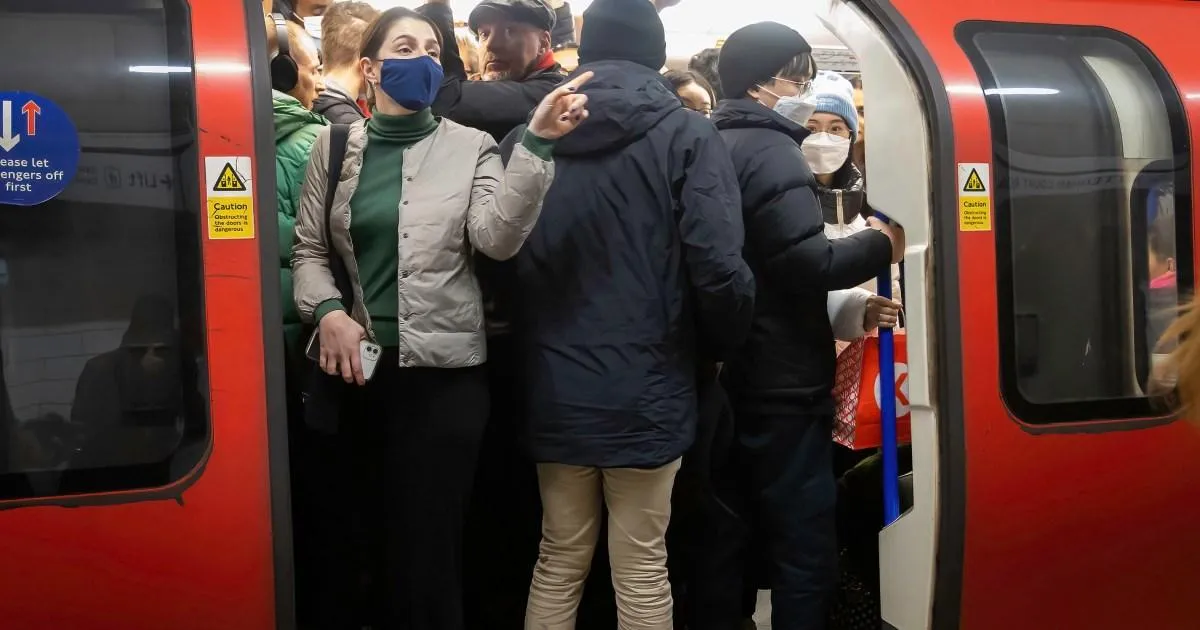
Commuters are seen on a crowded train at Waterloo Station amid the tube strikes. (Picture: Getty)
Two 24-hour strikes by London Underground drivers next week have been called off.
The RMT union declared victory in their dispute over hours with Transport for London but insist strikes planned for next month remain on.
The union even announced an additional strike action on 16 and 18 June.
A spokesman said: ‘The dispute over the imposition of a condensed hours four-day week on tube drivers is far from over but London Underground management have taken steps in the right direction and are now taking the matter seriously.
Advertisement
RMT general secretary Eddie Dempsey said: ‘Through our show of industrial strength and unity, we have forced management into a position where they are now willing to seriously engage with the issues our members want addressing.
Sign up for all of the latest stories
Start your day informed with Metro’s News Updates newsletter or get Breaking Newsalerts the moment it happens.
Advertisement
‘Further talks will take place and the dispute remains live.’
The Shout singer appeared on GMB to discuss her sobriety journey, Royal Albert Hall concert, and thoughts on Princess Kate and King Charles
Abbie Bray Deputy Editor for Screen Time and Michelle Marshall
16:35, 18 Mar 2026
Good Morning Britain presenters Susanna Reid and Ed Balls welcomed Lulu on Wednesday’s ITV show, where the singer discussed her thoughts on mortality.
The Shout legend, 77, spoke frankly about her battles with alcohol and conquering her addiction through Alcoholics Anonymous (AA). The pop icon, whose career has stretched across decades from her 1960s breakthrough, revealed her past drinking issues in her memoir, If You Only Knew, published last year.
Advertisement
She has now celebrated 12 years of sobriety and is set to return to the Royal Albert Hall stage for a special one-night performance.
The artist was questioned about her recovery journey as host Ed, 59, asked whether she continues to attend AA meetings. But in a poignant revelation, Lulu addressed her own life expectancy.
“To be honest with you, I’ve upped my meetings because I’ve got so much going on, I’m 77, and I think I’m 15, so I run like a mad woman. There’s personal responsibilities,” she explained.
“Also, at my point in life, mortality issues, and you start thinking about your lifespan and wondering about how much longer it’s going to last. There are just issues that you worry about. I’m a bit of a worry wart!”
Advertisement
Susanna then referenced the Royal Family and mentioned Princess Kate and King Charles’s cancer diagnosis, according to the Express.
“It’s interesting you say that, but the Princess of Wales recently said she’s drunk less alcohol since her cancer diagnosis,” the GMB presenter observed.
Lulu remarked, “That’s a whole other thing. That’s a whole physical problem that she and our king are handling in such a dignified manner. The fact they’re sharing their problems, problems people in life have. Because you look like you’re living on an elevated position in life but you don’t get away with real life issues.”
Advertisement
On a more uplifting note, the singer expressed her determination to stay positive.
“I’m going to have fun because I’m so lucky,” Lulu revealed. “I have had ups and downs, but I’ve had the most incredible months of my life.
She continued, “But I’ve also had downs. But I never talked about them.”
Susanna complimented Lulu, suggesting the performer has “defied ageing”. The GMB presenter enquired whether abstaining from alcohol had played a role.
Advertisement
“I think not drinking helps everything,” Lulu responded. “It helps you get clarity, and you’re not carrying a burden of shame and not carrying the responsibility of not sharing. All of this stuff… writing this book was not easy.”
She encouraged anyone battling addiction to reach out for help.
Lulu is set to perform a special one-off concert at the Royal Albert Hall in London on June 1, 2026, marking her six-decade career. The event, which will showcase her greatest hits alongside special guests, aims to raise money for her charity, Lulu’s Mental Health Trust.
With a £10million prize pot up for grabs, this city’s inclusion in the competition has been hailed an ‘extraordinary moment’.
The UK Government has revealed its longlist for the coveted City of Culture 2029 prize. With a variety of busy cities across the UK being included in the list, one vibrant Scottish city is also in the running to claim a whopping £10million prize.
Advertisement
With the price being awarded every four years, this competition is part of the Prime Minister’s ambition to restore pride in every part of Britain. The previous winner of the City of Culture went to Bradford, with the funding allowing the city to pull off a showstopping cultural programme with over 5,000 events.
In a bid for the title is the Highland’s capital Inverness. To help complete their bid for the competition, Inverness and the other eight longlisted cities will receive £60,000 to be put towards developments. This funding has jumped from £40,000 that was given in the last competition.
The other cities Inverness is up against are Blackpool, Ipswich, Middlesbrough, Milton Keynes, Portsmouth, Sheffield, Swindon and Wrexham. This competition will be used to help shine light on local visions and voices in the cities, as well as encourage further local investment.
While the overall winner will receive the hefty prize pot, the three next most impressive bids will get £125,000 each so they can continue with some of their planned projects to help spread cultural pride in the area. Each city in the longlist was recommended by an expert advisory panel from across the UK.
Advertisement
Following the announcement, Convener of The Highland Council Councillor Bill Lobban has hailed Inverness making the longlist as an “extraordinary moment”, reports the Scotsman.
He said: “I am delighted that Inverness and the Highlands have been longlisted for UK City of Culture. This is an extraordinary moment which recognises the creativity, resilience and cultural richness of communities spread across one of the most unique and diverse regions in the UK.
“This bid celebrates our landscapes, our languages, our young people and our shared ambition for a confident, connected and sustainable future. We are delighted to take this next step and to showcase the Highlands as a place where culture drives opportunity, innovation and pride.”
Advertisement
This announcement comes shortly after Inverness opened its new £39million Inverness Castle experience, with the museum having served as a sheriff court and prison up until 2020.
Additionally, the UK Government has started its first-ever Town of Culture competition. With over 230 towns from across the UK having already thrown their hat into the ring, other towns are being urged to register before the deadline closes on March 31, 2026.
From the three finalists – one small town, one medium town, and one large town – the winner will earn the title of the UK Town of Culture 2028 and will receive a £3million prize.
Meanwhile, the two runners-up will each receive £250,000 to implement parts of their bid, from a refresh to community infrastructure to electric music festivals.
Advertisement
Culture Secretary Lisa Nandy said: “For far too long, opportunity has not been shared equally across the country. The UK City of Culture and new UK Town of Culture competitions recognise the enormous contributions made by communities all over the UK who are all part of the story of who we are as a nation.
“I look forward to seeing what the nine longlisted places have in store as they progress in the competition. I also urge any towns thinking about entering the UK Town of Culture competition to seize this opportunity and get involved.
“It’s a chance to show the country what makes them unique and shine a spotlight on their cultural offer, enriching the lives of local people.”
The 11-year-old was struck by an electric Sur-Ron-style motorcycle on Denton Road, Scotswood, Newcastle, at about 5.30pm on Tuesday, March 3. The rider of the motorcycle had left the scene.
The boy was taken to hospital with serious injuries, including a broken leg, and continues to recover.
Four e-bikes police are seeking to trace after serious injury hit and run (Image: Northumbria Police)
Following the incident, an investigation was immediately launched by Northumbria Police’s Roads Policing Unit.
Officers later arrested two 14-year-old boys on suspicion of causing serious injury by dangerous driving.
Advertisement
Another boy, also aged 14, was arrested on suspicion of aiding and abetting dangerous driving.
All three have since been released on police bail, pending further inquiries.
Officers involved in the case today (Wednesday March 18) have issued new images to the public in a bid to trace four motorbikes of interest, and the riders through their clothing.
The identities of those pictured has been hidden, to protect the ongoing investigation as police look to trace the bikes in question.
Advertisement
Police appeal Denton Road hit and run (Image: Northumbria Police)
Newcastle e-bike hit and run, police appeal (Image: Northumbria Police)
Denton Road hit and run police appeal (Image: Northumbria Police)
Denton Road e-bike it and run appeal (Image: Northumbria Police)
They are especially keen to hear from anyone who has seen any of the bikes in the community or knows where they might be being stored.
Officers would also like to speak to more witnesses who may have further CCTV, dashcam or mobile phone footage of the incident, or the moments leading up to the collision.
Members of the public can get in touch by sending a direct message on social media, or by using the ‘live chat’ function or ‘report’ forms on the force’s website.
Advertisement
For those unable to get in touch in those ways, they are advised to ring 101.
Callers are asked to quote incident reference number: NP-20260303-0798.
Jadon Sancho is coming towards the end of his loan spell with Aston Villa and looks set to become a free agent when his contract at Manchester United expires in June
The 23-time England international is currently on loan at Aston Villa, his third spell away from Old Trafford since joining the Red Devils for £73million in 2021. Sancho’s switch to Villa was a dry loan, with no option to buy included.
Although Villa boss Unai Emery recently hinted at keeping the forward, Dortmund are circling. The Times report that after choosing not to target any wingers last summer – due to Nico Kovac’s insistance on playing a 3-4-2-1 formation – the Dortmund manager has changed his mind and approved a move for Sancho.
The former Dortmund star would, however, need to take a significant pay cut on his £300,000-a-week wages at United in order to secure a return to the Signal Iduna Park. Sancho made his name with the Bundesliga club, who signed him from Manchester City in 2017.
Kovac’s side have cash in reserve for the summer transfer window after deciding to let the contracts of Julian Brandt, Niklas Sule and Salih Ozcan run out. Dortmund will therefore save roughly £21million in annual wages and are optimistic that they can convince Sancho, who’s free to sign a pre-contract agreement with a club from abroad.
The 25-year-old spent half a season back at Dortmund in 2024 after he was cast aside by ex-United boss Erik ten Hag. Sancho helped them reach the Champions League final but a permanent move never materialised.
The same happened when Sancho joined Chelsea on loan last season, with the Blues even paying a £5million penalty fee not to sign him permanently. Villa snapped him up on transfer deadline day in September but he’s struggled to make an impact.
Advertisement
Should Aston Villa sign Jadon Sancho permanently? Have your say in the comments section.
In 29 appearances across all competitions, Sancho has registered one goal and one assist. However, Emery sees potential in him.
Asked in February whether he’d considered signing Sancho permanently, the Villa manager replied: “Not yet, but he is a fantastic player. Hopefully, he can help us by increasing his qualities in our structure like he is doing.
Advertisement
“He will need another contract, and maybe it could be here. If he plays his best football, we will want him. But also other teams could be involved in the interest for him.”
Join our new WhatsApp community and receive your daily dose of Mirror Football content. We also treat our community members to special offers, promotions, and adverts from us – and our partners. If you don’t like our community, you can check out any time you like. If you’re curious, you can read our Privacy Notice.Content cannot be displayed without consent

















































You must be logged in to post a comment Login