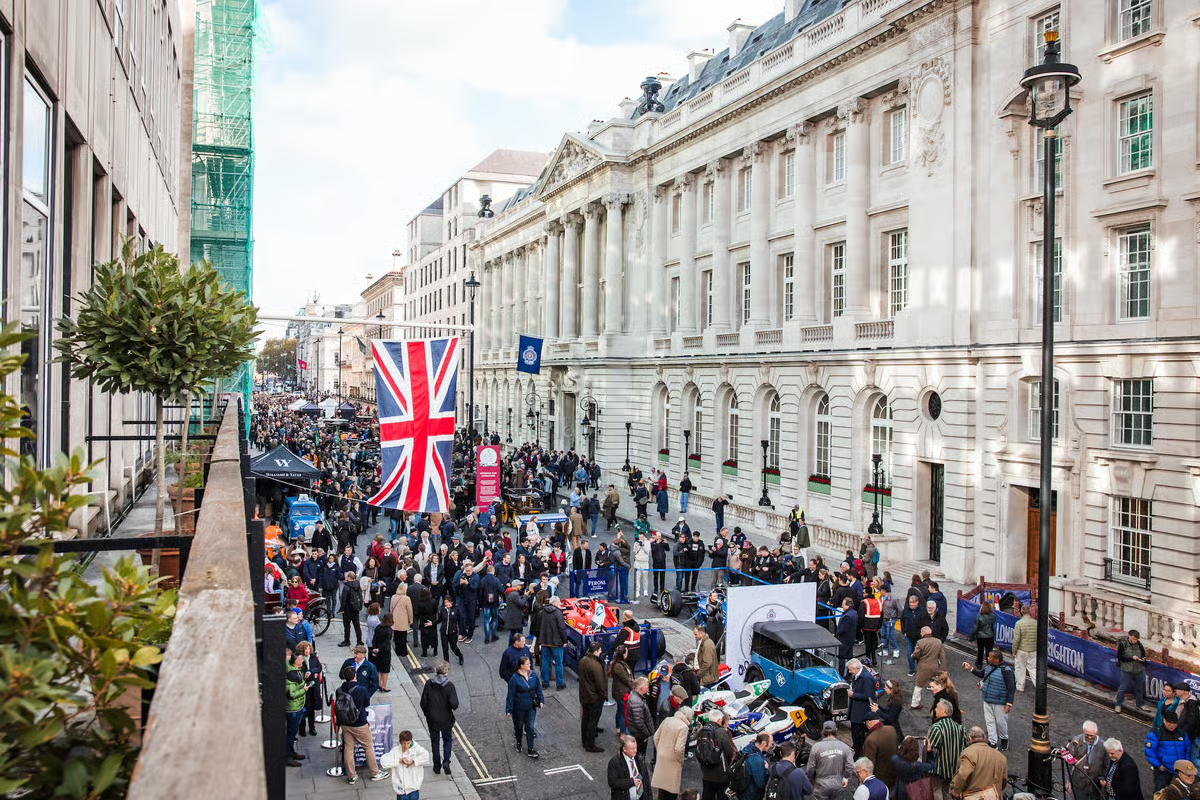
The historic 110-lap ‘Grand Prix of the Royal Automobile Club’ took place on a fast, specially designed 2.61-mile course around the famous oval circuit at Brooklands, in Weybridge, Surrey. Sections of the renowned, steeply banked track were incorporated, alongside the Finishing Straight, where challenging temporary sandbank chicanes were installed on either side of the refuelling pits.
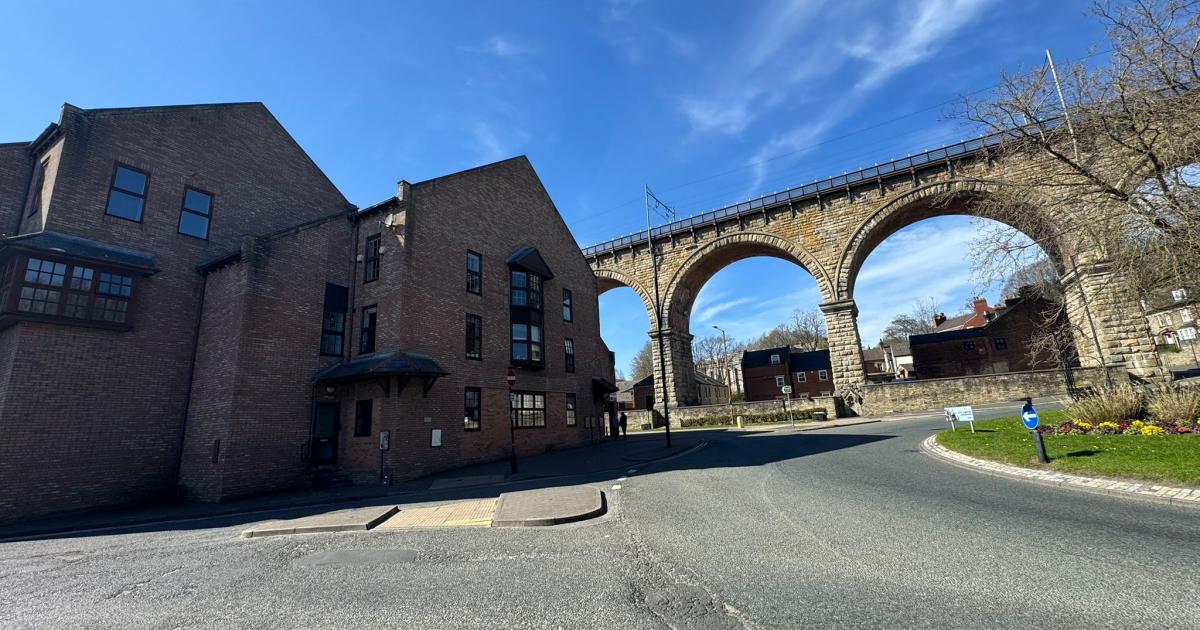
Proposals to convert the three-storey Hopper House building on Atherton Street in Durham City were approved by Durham County Council’s planning committee.
Ward Group, the applicant, said it will transform the disused site into 45 self-contained units.
It is hoped that the new accommodation will ease the ongoing pressure on the private rental market throughout the city.
Proposals to convert the three-storey Hopper House building on Atherton Street in Dur (Image: The Northern Echo)
The new facility will include communal areas including desks for studying, a shared kitchen, living area, gym, and outdoor space.
Advertisement
An independent office space and mezzanine meeting room is also proposed for the ground and first floors.
Ward Group said: “The building is in a prominent location within Durham City Centre overlooking the North Road Roundabout. It has been vacant for a significant period and is in need of significant investment to improve its appearance and make it suitable to provide modern accommodation for residents and businesses.
“The development will ease the pressure on the existing private rental market, providing purpose-built, self-contained, private accommodation for some of those currently sharing space in Homes of Multiple Occupation (HMOs) in the city.
Adrian Schulman, Reform UK member for Crook, welcomed the plans to breathe new life into the building, which has been empty for 12 years.
Advertisement
“I go around the north Road roundabout on an almost daily basis and the unattractiveness of the current building always jars with me,” he said.
Councillors also hope the new facility will reduce the need for properties throughout Durham City to be converted into HMOs.
However, objections from the City of Durham Trust and Crossgate Community Partnership questioned the need for new purpose-built student flats.
Councillor David Freeman, of Elvet, Gilesgate and Shincliffe ward, added: “Aesthetically, I don’t think it will look a whole lot better, but the building will have a use.
Advertisement
“I don’t actually see that there is a need for new student accommodation across Durham City.
“We have empty HMOs across the city and university numbers are not increasing in the foreseeable future, but I understand that we cannot refuse this application because of that.”
Work is expected to start on the site in due course.
Police Scotland have launched a major search for Richard Massey, 46, last seen in Luncarty near Perth, as concern grows after his rucksack was discovered by the River Tay.
A desperate search has been launched for a vulnerable man who has been missing for over three days after his rucksack was found near the River Tay.
Advertisement
Richard Massey, 46, was last seen at around 11am on Saturday, April 4, at a bus shelter on Main Road opposite Kirkhill Drive in Luncarty. A number 34 bus passed shortly afterwards, but it is not known if he boarded the service.
Officers from Police Scotland say there has been no confirmed sighting of Richard since, and fears for his safety are increasing.
On Monday, police discovered a rucksack containing his belongings near the River Tay at Willowgate, prompting further searches in the area.
Richard is described as a white man with very short dark hair. When last seen, he was wearing a white hooded puffer-style jacket with black shoulder patches, dark-coloured trousers, white trainers, a dark baseball cap and reflective sunglasses.
Advertisement
Images released by police show him inside a shop wearing the same distinctive outfit, as well as a separate head-and-shoulders photograph.
Police Scotland confirmed that extensive enquiries are ongoing, with officers reviewing CCTV footage and carrying out searches to establish his movements.
Inspector Mark Craig said: “If anyone has seen Richard or has any information on where he may be, please do get in touch. I would also ask people to check any sheds or outbuildings in case Richard is seeking shelter within.”
Advertisement
Anyone with information is urged to contact Police Scotland on 101.
Get more Daily Record exclusives by signing up for free to Google’s preferred sources. Click HERE
The official guidance arrives as millions gear up for extended trips
Motorists planning lengthy journeys have received a stark safety warning from the DVSA, with four straightforward steps that could prove lifesaving.
Advertisement
The official guidance arrives as millions gear up for extended trips with improving weather conditions, as the agency draws attention to the frequently underestimated risks of tiredness behind the wheel. In a message posted on social media, the DVSA encouraged drivers to adopt basic safety measures before hitting the road, cautioning that fatigue can substantially heighten the likelihood of a severe collision.
According to the DVSA, motorists should:
Not begin a journey if they are tired
Avoid long drives between midnight and 6am
Take regular breaks during journeys
Stop in a safe place if they feel sleepy
The recommendations echo established road safety guidance designed to combat driver fatigue – a factor that specialists warn can prove equally as hazardous as drink-driving.
Content cannot be displayed without consent
Why the warning matters
Government road safety guidance has repeatedly identified tiredness as a significant danger on Britain’s roads. Department for Transport figures reveal fatigue plays a greater role in accidents on high-speed routes including motorways and dual carriageways.
Studies referenced by road safety organisations have shown that drowsy driving hampers reaction times, diminishes awareness and weakens decision-making – producing effects similar to exceeding the legal drink-drive limit.
Advertisement
Fatigue-linked collisions are also more prone to causing death or serious injury as they typically involve vehicles moving at high speed with no braking attempt.
High-risk times and warning signs
The DVSA’s recommendation to steer clear of driving between midnight and 6am stems from robust evidence regarding the body’s natural sleep patterns. This window – often termed the “circadian low” – marks when alertness plummets dramatically.
Motorists are also urged to recognise signs of fatigue, including:
frequent yawning
difficulty keeping eyes open
drifting within a lane
missing road signs or turns
Should any of these symptoms appear, the guidance is unambiguous: pull over as soon as safely possible.
Breaks are essential
Road safety specialists – including Highway Code recommendations – advise taking a minimum 15-minute break every two hours during lengthy journeys.
Advertisement
Pausing for fresh air, a brief stroll or a caffeinated beverage can temporarily restore alertness, though officials emphasise these cannot replace adequate rest. The DVSA’s most recent warning serves as a reminder that while contemporary vehicles are equipped with advanced safety features, fundamental driver conduct continues to be crucial.
Tiredness might be undetectable – but its impact on the road can prove catastrophic.
Wednesday is believed to be the warmest day of the year so far with temperatures climbing, due to a band of high pressure sweeping across the UK from the south
03:41, 08 Apr 2026Updated 03:45, 08 Apr 2026
This striking weather map shows temperatures are set to peak at 26C in some areas today.
During what is widely expected to be the hottest day of the year so far, a band of high pressure will sweep northwards. This will lead to a rise in temperatures everywhere, though particularly across the Southeast of England.
It was 24.8C on the island of Anglesey, north Wales, on Tuesday but eastern areas are likely to be warmer today. The Met Office’sweather map pinpoints the hottest regions, including the Southeast of England.
Paul Gundersen, Met Office chief forecaster, said: “We’re seeing a brief but notable spell of very warm weather for early April, with temperatures more typically associated with late spring or early summer. This could be the warmest spell at this point in April since 2020.
Advertisement
“However, this warmth will be short-lived, with a marked drop in temperatures and more unsettled conditions developing later this week. In some areas, daytime temperatures could fall by around 10°C between Wednesday and Thursday.”
Lighter winds today will make things feel even warmer, particularly across central and southeast England, where temperatures will be at least 20C. These values are well above the early April average, which is typically in the mid-teens.
But not all parts of the UK will see sunshine. It will be cloudier and cooler across Northern Ireland and northwest Scotland, with outbreaks of rain at times. The Met Office also stresses conditions only count as an official heatwave if temperatures meet or exceed specific thresholds set for each UK county, for at least three consecutive days, so not every brief spell of hot weather qualifies.
Advertisement
And the warmer weather will present challenging conditions for those with hay fever. Forecasters say “very high” levels of pollen will be in the air for much of England and Wales for the next few days, with Scotland and Northern Ireland also seeing “high levels” which will decrease later in the week.
Last month, hay fever sufferers took to social media to express their frustration. Ash pollen became a threat, especially across southern counties, when temperatures started to rise at the start of spring. The Met Office typically urges those with hay fever to take measures to help minimise exposure and ease the severity of symptoms, such as wearing wraparound sunglasses, a mask or a wide-brimmed hat to stop pollen getting into your nose and eyes, and showering and changing clothes after going outside.
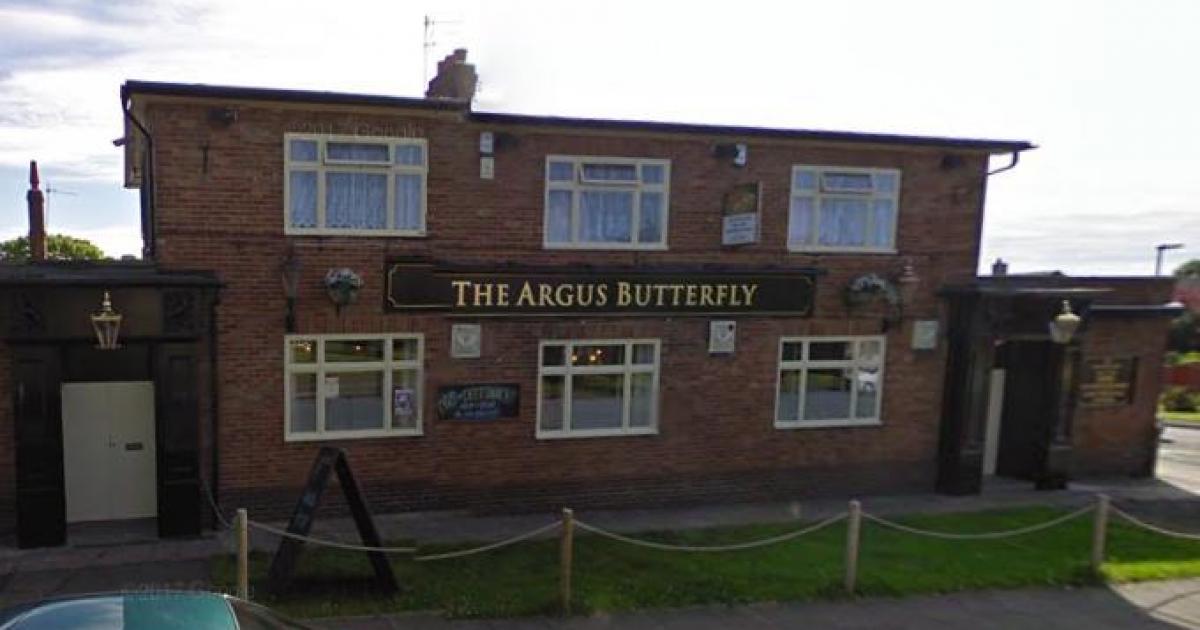
One of those places stood on York Road in Peterlee.
The Argus Butterfly became, during the late 1960s and early 1970s, one of County Durham’s most talked-about live music venues.
For a few remarkable years, it drew some of the most influential bands of a generation to a town that many would never have expected to sit on the rock ‘n’ roll map.
In its heyday, the venue managed to secure performances from the likes of Led Zeppelin, Jethro Tull, Deep Purple, Thin Lizzy, Genesis and Mott the Hoople.
Advertisement
Pink Floyd also appeared during that golden era, as the progressive and hard rock scenes began to take shape across Britain.
While there may have been larger venues elsewhere in the North East, The Argus Butterfly had something else: atmosphere.
Jethro Tull’s Ian Anderson (Image: James Manning/PA Wire)
For many local music fans, the magic of The Argus Butterfly was not just in the names on the posters, but in the intimacy of the performances.
Before global fame, platinum records and worldwide tours, bands such as Led Zeppelin were still building their reputations, and Peterlee was one of the stops along the way.
Advertisement
On March 23, 1969, Led Zeppelin took to the stage. Just weeks earlier, they had released their debut album. Within a year, they would be firmly established as one of the biggest rock bands in the world.
Deep Purple played on February 23, 1969, while Jethro Tull appeared on March 8, 1968, during a period when British rock was evolving at pace, blending blues, psychedelia and progressive influences.
Other confirmed performances included:
November 9, 1969 – Mott The Hoople
June 11, 1972 – Genesis
July 16, 1972 – Thin Lizzy
One local who remembers those formative years said online: “I started going as a bairn in 1967/68. The bands were on Sunday nights.
“I saw Free, Led Zeppelin, Jethro Tull and Family (who were a very big draw up here at the time) and a few others that I’ve forgotten.”
Advertisement
Sunday nights at The Argus Butterfly became something of a ritual for music fans across the region.
Martin Chambers, Ian Hunter, Pete Overend Watts, Verden Allen and Mick Ralphs of Mott The Hoople (Image: Ian West)
Although it is remembered primarily for its rock credentials, The Argus Butterfly was more than a one-genre establishment.
It hosted jazz and folk clubs, reflecting the musical diversity of the era, and also provided space for community events, including tap dancing and local gatherings.
After closing as The Argus Butterfly, the building went on to take various forms.
Advertisement
It later became The Tree of York Road and, more recently, housed the restaurant How Do You Do.
To passers-by today, there is little to suggest that the site once pulsed with the sound of future rock royalty. No roaring amplifiers. No packed Sunday night crowds. No rising stars on cramped stages.
Yet for those who were there, the memories remain.
The story of The Argus Butterfly is a reminder that the great chapters of British music history were not written solely in London, Manchester or Liverpool.
Advertisement
They were written in working men’s clubs, pubs and modest venues across towns like Peterlee.
The Argus Butterfly may no longer echo with guitar riffs and drum solos, but it’s still remembered online by people who were there at the time.
Man United U21s lost 4-2 against Real Madrid in the Premier League International Cup quarter-finals on Tuesday night
21:40, 07 Apr 2026
Advertisement
Manchester United youngster Shea Lacey would have travelled to Dublin for the first-team training camp this week, but the decision was made to give him a start against Real Madrid.
Knowing the Under-21s would have a better chance of reaching the Premier League International Cup semi-final with Lacey in the team, Adam Lawrence said he would “sweet-talk” Michael Carrick to get him available.
Lacey nonchalantly converted a penalty like he was playing in a park, evoked a gasp from the crowd with a backheel volleyed pass and drew Madrid’s players in to win fouls. That was just in the first half.
Get MEN Premium now for just £1 HERE – or get involved in our United WhatsApp group by clicking HERE. You can also join our United Facebook page by clicking HERE and don’t miss out on our brilliant selection of newsletters HERE.
Advertisement
There was a decent Easter holiday crowd at Old Trafford to watch the U21s take on Madrid. Lacey looked excellent in two first-team cameos in January, meaning he was the main attraction on show, but Lawrence fielded a strong team with the likes of Chido Obi and Jack Moorhouse given starts.
“Can you perform at the elite level and make the difference? Because we feel that he can,” said Lawrence of Moorhouse during an interview with the Manchester Evening News at Carrington last week.
Moorhouse responded by opening the scoring against Madrid, gliding beyond the defender and rifling his shot into the top right corner. Madrid first-team goalkeeper Thibaut Courtois wouldn’t have saved it.
Ruben Amorim named Moorhouse in a handful of first-team squads last season and Michael Carrick named him on the bench in recent Premier League games against Everton and Crystal Palace.
Advertisement
You will struggle to find a better ball-carrying than Moorhouse. His ability to glide with the ball at speed to breeze beyond opponents makes him a unique option, and he can finish when given the opportunity.
Moorhouse is not training day-to-day with the first-team like Lacey. He is currently between the U21s and the senior side, meaning his next challenge is taking that next step to performing consistently.
Lacey has been promoted to the senior squad on a permanent basis due to a blend of his talent and consistency. He has looked more mature this season, having physically developed in the gym, and he scored the penalty against Madrid like a player at home at Old Trafford.
Advertisement
Darren Fletcher handed around 30 minutes to Lacey against Brighton in the FA Cup fifth round. He was a breath of fresh air down the wing, but was shown a second yellow card for throwing the ball in frustration.
The ordeal was a crushing blow for Lacey, who apologised for being sent off on social media, but it’s that kind of exposure that has helped him look more mature than his academy peers in youth games.
Why would Lacey be fazed by taking a penalty in an academy game at Old Trafford when he has played in the venue at full capacity?
Obi has been leapfrogged by Lacey in terms of first-team involvement, but it was the young striker’s pressing that won the penalty. United academy coaches have worked meticulously with Obi to improve his out-of-possession work, and the pieces have started to gradually fall together.
Advertisement
“When a coach is tough on players, or they spend more time with them, it means that they really, really believe in the player,” said Lawrence when asked about constant shouts at Obi during academy games.
Madrid were two goals behind within 15 minutes, but the word from those who observe Spanish football was that they had fielded a strong side themselves. They were not going to roll over, and the momentum shifted in their favour when Gabriel Castrelo made it 2-1 on the stroke of half-time.
The Reds failed to come out of the traps quickly when play resumed for the second half. Lacey was getting on the ball less often. And then Madrid inevitably equalised, this time through Bruno Iglesias.
Advertisement
The solo Madrid analyst fist-pumped in the press box as Iglesias celebrated. The school-age home crowd booed, and tried to encourage the red shirts to respond by chanting ‘UNITED, UNITED, UNITED’.
Nothing split the two teams across 90 minutes and extra-time was required. Lacey pleaded with Lawrence to stay on, but the U21 boss’ body language suggested the decision had already been made before the game.
It said a lot about Lacey’s character that he was desperate to stay on, not long after returning from a small knock, but there are guaranteed to be more games at Old Trafford for the Liverpool-born lad.
Madrid forward Jaime Barrosco scored a late winner when the ball kindly fell to him in extra time, and United’s players looked skyward as they trudged back for the restart. They had simply run out of steam, and their heads dropped again when Madrid made it 4-2 with two minutes remaining.
Advertisement
United had the most difficult quarter-final draw of the three English teams that qualified for the knockout rounds of the competition, and they came the closest to making it to the semi-final stage.
That’s not bad for an academy that Sir Jim Ratcliffe criticised in October. United’s new academy chief, Stephen Torpey, suggested Ratcliffe was referring to the academy facilities when he said standards had “slipped”, but it was an ill-informed, clear dig at the entire operation.
Not many youth teams in England can go toe-to-toe for 120 minutes with Real Madrid Castilla. United’s youngsters should be proud of their effort.
The popular Indian street food restaurant in Jesmond shared a photo on Facebook on April 4 with the caption: “Amazing to have the ‘Geordie Maradona’ himself, Elliot Anderson, in Dabbawal Jesmond last night.
“We’re dreaming of a permanent return home… make it happen.”
Dabbawal has built a reputation as a celebrity and footballer hotspot in Jesmond, with staff saying it offers “a lot of nooks and crannies” where players can enjoy some privacy.
The post quickly caught the attention of supporters, with several sharing their hopes that the Whitley Bay-born player could one day return to St James’ Park.
Anderson, affectionately dubbed the “Geordie Maradona” by fans for his creative flair and attacking instincts, came through Newcastle’s academy before making his Premier League debut in 2022, but he was sold in 2024 amid a scramble to comply with financial regulations.
Nottingham Forest’s ex-Newcastle midfielder Elliot Anderson (Image: Mike Egerton)
Paul Wilson wrote, “It would be fantastic to see you back home in black and white again,” while Jay Scott added: “If Tonali leaves we need to spend whatever it takes to bring him home.”
Another fan, David Wright, summed up the affection many on Tyneside still hold for the 21-year-old, saying simply: “He’s one of our own.”
Advertisement
Whether Anderson is set for a return remains to be seen, but his appearance in Jesmond has reignited fond memories
On June 30, 2024, Newcastle sold Anderson ahead of the financial deadline for Profit and Sustainability rules. Academy prospects count as ‘pure profit’ on the balance sheet.
Anderson did not want to leave his boyhood club, having graduated through Newcastle’s academy, but agreed to move to Nottingham Forest, where he has since earned a place in the England squad.
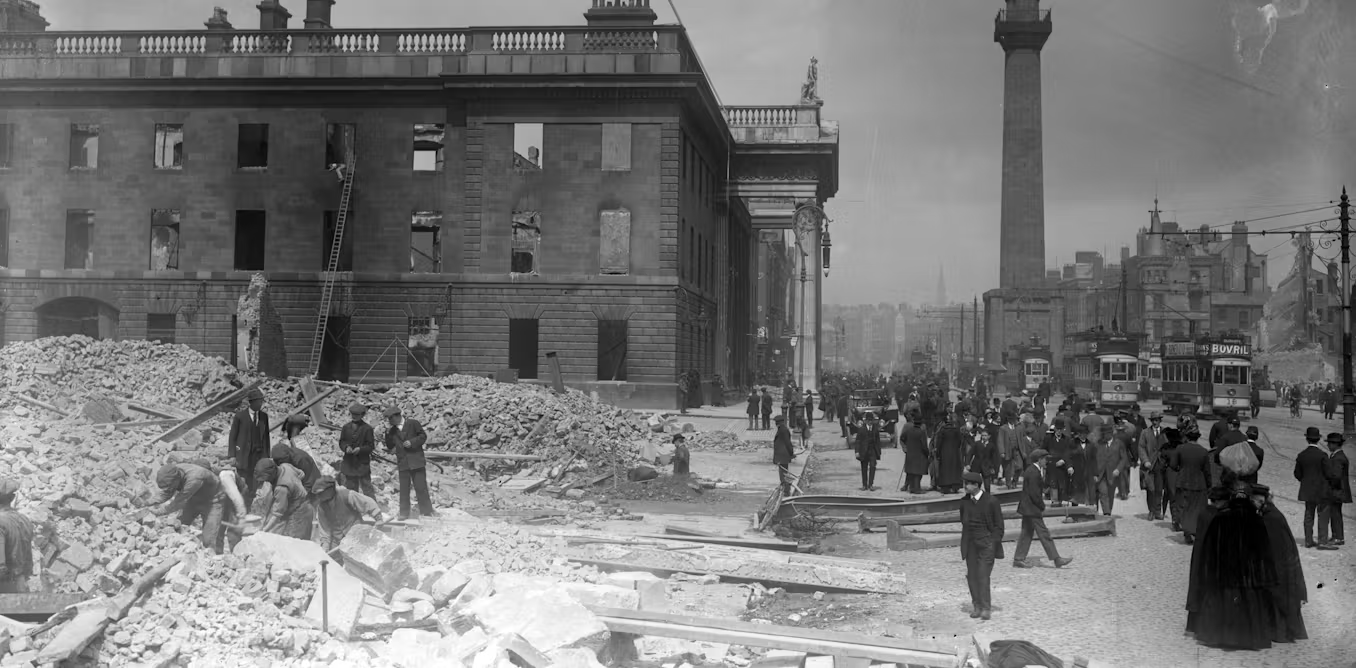
On November 26, 1923, a woman named Anne McCormack applied for a military dependent’s pension on the grounds of her husband, James McCormack’s death. He had been a soldier in the Irish citizen army, under the socialist and revolutionary leader, James Connolly. This group was committed to the establishment of a workers’ republic. Its members participated in the week-long armed insurrection of 1916 known as the Easter Rising.
James McCormack was shot in the head on the second day of the rising, April 26, 1916. Records held in the Military Service Pensions Archive show he died where he fell on Moore Lane, close to the General Post Office, the epicentre of the rising.
For many years following the establishment of the Irish state (today’s Republic of Ireland) in 1922, the focus of Irish historians, not to mention the general public, was on those, like James McCormack, who died for Ireland. Annual commemorations of the 1916 rising were focused on those executed by the British or killed in the fighting. But little attention was paid to those, like Annie, who survived.
Hundreds of thousands of people had their lives thrown off course as a result of personal injury, bereavement and trauma, while others had their material fortunes irreversibly altered. Since 2007, my research and that of many historians has revealed the high price of “living for Ireland”. Through publicly funded digitisation projects, for example the 1901 and 1911 censes, researchers have had access to details of births, deaths, marriage registrations and, more recently, military service pension files. This has enabled us to flesh out the lives of those who lived through and beyond the tumultuous Irish revolutionary period of 1916 to 1923.
The pensions archive shows the impact of the revolution on the everyday life of people who survived it and went on to build a new state. It contains over 250,000 files relating the lives of over 80,000 individuals who applied for pensions as combatants or surviving dependants.
According to the McCormacks’ digitised marriage certificate, found in the Irish Genealogy online archive Annie, as she was known, married James only eight years before she was widowed with three young children. Records show that Patrick Drinan, a member of the newly established police force in Ireland, An Garda Síochána
informed the Irish Army that since 1916 Mrs McCormack was “in poor circumstances financially. She had three children to support out of her earnings which average roughly about 12/- per week.”
Drinan noted that Annie’s father, who like many elders, lived with his daughter, was in receipt of old age pension – the great financial boon introduced in 1908. The policeman also explained that Annie had been awarded £500 in compensation, in 1917, for the loss of her husband, by “the National Aid Fund”. This is probably a reference to the Irish National Aid Association and Volunteer’s Dependants’ Fund.
The association distributed funds entrusted to it by the leaders of the rising to support the families of those killed or executed. Annie’s husband had been earning £1 week at the time of his death, which was at the higher end of a worker’s salary. The sum she received from the fund points to the depth of the McCormacks’ Republican credentials. The widows of executed leaders of the rising received an investment of £1,500 and one-off grants of between £250 and £350.
Advertisement
Entrenched inequality
My research has looked at the inherent inequality of the male-breadwinner model of Irish society at the time, and how losses incurred during the revolution left female-headed households, often widows, in extremely vulnerable positions.
Annie was one of the relatively lucky ones. She was awarded a pension of £90 for the duration of her widowhood, along with £24 per child, until they reached the age of 18.
Despite this, her pension file documents how she struggled to keep her sons supplied with the schoolbooks required to complete their education. It is significant that she sought to give them the kind of education that would spare them a life of labouring like their father and grandfather had. A relatively small proportion of the Irish population managed secondary education prior to the late 1960s, when it became free, yet Annie kept her sons (for a while at least) in the prestigious Jesuit Belvedere College in Dublin.
Balancing the books was an exhausting process for Annie. Throughout 1927 her health deteriorated. This likely explains why she failed to notice that the army continued to pay her eldest son’s allowance three months after he turned 18.
On February 29, 1928, the Army Finance Office wrote to inform Annie that it had overpaid £5 1s 6d (£5.075) in relation to her eldest son. The sum had been deducted from her allowance.
Advertisement
Annie’s last action was to write to the army to explain how much distress and difficulty this deduction had caused her. On December 1, 1928 she died at the age of 45 from tuberculosis, then endemic in Ireland
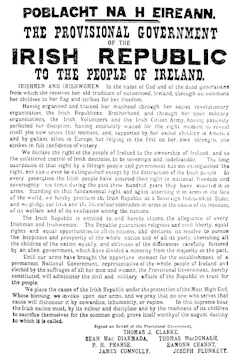
Her death certificate reduced her to the widow of a labourer. This is testimony to a life of difficult living conditions, poor nutrition and stress. The Ireland her husband James died for did not turn out to be the workers’ republic that the Irish Citizen Army had fought for, nor did the land of equal opportunities promised in the 1916 Proclamation of Independence transpire.
There are two subsequent letters in Annie’s file that reveal the enduring legacy of loss. In 1936, her youngest son wrote to ask for help finding a job. And nearly two decades later, in 1953, her eldest son wrote to remind the state of how losing his parents had reshaped his life: “My father James McCormack … was killed in action 1916 CA for which my mother receaved (sic) a pension until she died in 1927. I was 18 years of age then, and had to support two younger brothers 16 years and 14 years respectfully as her pension died with her. I was the only support or home, and got no help of any kind.”
For most of us, deep-fried food is off the menu, save for occasional treats. High-calorie, high-fat and potentially laced with carcinogens, we try to ignore the siren call of the chip shop.
But the air fryer claims we can have our chip butty and eat it, promising to “fry” food without the fat. “Air-fried foods have the traditional crunch and classic texture of perfectly fried foods, but you can enjoy them without the guilt,” gushes one recipe book. It’s a seductive thought.
But is it true? Not all foods turn out tempting after a spell in the air fryer, and some ingredients are transformed, quite simply, into mush. I’ve learned this the hard way after trying it all in my own Wonder Oven, which I most frequently use to produce “roasting tin” meals: a tray of vegetables, perhaps a bit of meat or fish, baked until the edges are caramelised and the flavours jostle together.
Advertisement
Here’s what you need to know to avoid a dinner disaster.
Roast potatoes
Cut floury potatoes into chunks, parboil, then shake them. Allow to dry and drizzle with a little oil. Air-fry for about 25 minutes on the highest setting, turning twice, until golden and crisp.
Leftovers
As long as they don’t contain too much sauce, leftovers are often better reheated in an air fryer than in the microwave. They regain their crisp edges rather than turning soggy.
Risotto
If you have an air fryer with a paddle, such as the Tefal ActiFry or the De’Longhi MultiFry, it will have a solid base rather than a rack, meaning you can cook more liquid dishes, including a proper stirred risotto.
Advertisement
Fish
The small space means it won’t dry out, and smells are contained. Rub lightly with oil or pané with breadcrumbs (dust first with flour, then coat in beaten egg and breadcrumbs), and air-fry until crisp and golden.
Chicken
It turns crisp while staying juicy, though it’s worth checking with a digital thermometer that it has reached 74C before eating. Rub with your choice of seasoning and cook for 9 to 10 minutes per side.
Roasted root vegetables
Cut into chunks, toss with oil, salt and smoked paprika, and cook for 20 to 25 minutes. Add chunks of onion or leek after 10 minutes, as these darken quickly.
Kale chips
Spray trimmed leaves with olive oil and sprinkle with salt. Lay in a single layer and cook for 4 to 5 minutes at 190C, shaking the pan after 2 minutes. Leave to cool and crisp on a rack while you cook another batch.
Advertisement
Deep-fried foods
You can make good oven-baked versions, but don’t expect the thick crust or unctuous quality of food cooked in hot oil.
Battered foods
Wet batters will drip off before they have a chance to set.
Cheese
Fresh cheese will slide around, so even in a toastie you need to weigh it down, secure it with a toothpick or use frozen slices.
Doughnuts and churros
You can bake a bready dough in some air fryers, but runny doughs and churros are a non-starter.
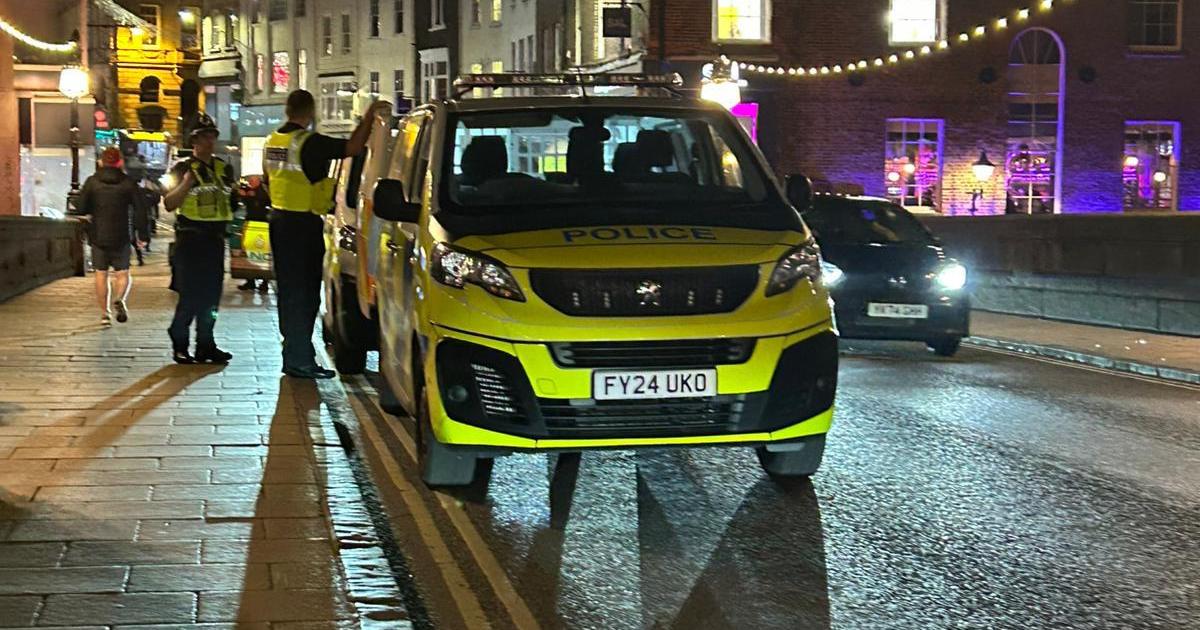
North Yorkshire Police is appealing for information after a person was assaulted in a York city centre street in the early hours of yesterday morning (Monday, April 6).
It happened in Church Lane, near Low Ousegate, at approximately 12.46am, with one victim receiving head injuries in the attack.
RECOMMENDED READING:
Advertisement
They received medical treatment for their injuries and were discharged from hospital later that day.
A suspect was arrested at the time of the incident, but has since been released pending further enquiries.
A spokesperson for the force said: “We are particularly interested in speaking to two witnesses who were in the area at the time.
“During the time of the incident, they were stood on Low Ousegate. One witness was said to be wearing a silver glitter dress and the other witness was wearing a long blue coat.”
Advertisement
If you can help the investigation, please email Peter.Maw@northyorkshire.police.uk, call North Yorkshire Police on 101 and ask for Peter Maw, or contact Crimestoppers anonymously on 0800 555 111 or via their website.
Please quote reference 12260060786 when passing on information.
















































You must be logged in to post a comment Login