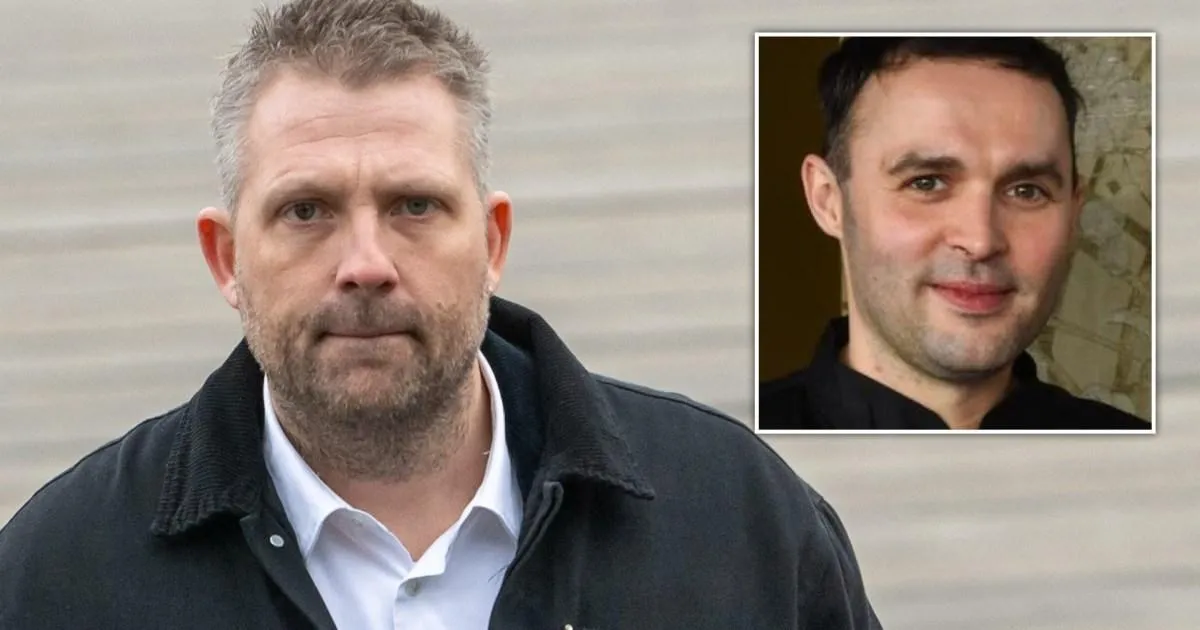
Harvey Dominy died hours after arriving at the popular Spanish resorts for his first lads’ holiday, an inquest heard.
22:48, 19 Feb 2026Updated 22:48, 19 Feb 2026
A young man died just hours after arriving at a popular Spanish resort for his first pals holiday, an inquest has heard. Harvey Dominy, from Merthyr Tydfil, Wales was found on the floor of his hotel room in Benidorm in July 2024.
An inquest at Pontypridd Coroners’ Court heard that cocaine, MDMA and alcohol were found in his system. The inquest heard that Mr Dominy had gone to the destination with three friends for a week-long lads’ holiday.
He began struggling to breathe and collapsed on the hotel room floor in front of friends Liam Mason and Levi Davies, Wales Online reports.
Advertisement
The hearing was told that Mr Mason sent a video to a Snapchat group chat showing Mr Dominy seated in a chair on the balcony, his body slumped forward. Later that evening, he sent a second video showing Mr Dominy lying on the floor looking “grey”. He also sent a message saying: “He’s gone.”
The inquest heard that Mr Dominy’s best friend, Liam Llewellyn, had left the hotel earlier as he was staying in separate accommodation. He received a call to say Mr Dominy was unwell and said his friend had been talking before he left at 8.30pm, adding he had “no concerns” at the time.
Mr Dominy was staying on the 15th floor of a hotel with a broken lift when his condition worsened, the inquest heard. Mr Davies said the friends did not know the local emergency services number, so Mr Mason left the room to alert hotel staff.
Advertisement
Giving evidence, Mr Davies said: “Harvey started to feel unwell. He said he he felt sick and then he was sick.” He added that he gave Mr Dominy water before he began struggling to breathe.
“A short time after Harvey then lay on the floor and started struggling to breathe. I don’t remember him collapsing. I tried to give him more water but he would spit it back out. I had never seen Harvey in that type of state before.”
The inquest heard that the friends had bought cocaine and MDMA after arriving in Benidorm and took the drugs together on July 16, 2024.
During the inquest, Mr Dominy’s family raised concerns about the timeline of events, saying they believed there had been a delay in getting medical attention for him. They described Mr Dominy as “extremely loved” and someone with “lots of friends”.
Advertisement
Spanish police reports estimated that Mr Dominy died between 9pm and 10.30pm. Emergency services arrived at 10.47pm and confirmed he had “no vital signs”.
A post-mortem examination gave the medical cause of death as cardiac respiratory arrest, with the underlying cause recorded as an acute reaction to psychoactive substances. Toxicology reports showed alcohol, cocaine and MDMA in his system.
Concluding the evidence, coroner Kerrie Burge acknowledged there were “numerous inconsistencies” in the evidence given, including who sought help from reception and whether CPR was given. But she said the inconsistencies were not surprising as drugs and alcohol would have “affected their recollection”.
She confirmed the medical cause of death as acute reaction to psychoactive substances (1B) and cardiac arrest (1A), recording Mr Dominy’s death as drug-related. She expressed her condolences to the family.
Advertisement
Shortly after his brother’s death, McKenzy Lee-Dominy said he was still grieving the loss of their mother. Mr Lee-Dominy, who is a published author, said: “I have a good group of friends but I had to grow up fast when mum died and then my brother dying. Now I feel allowed to cry and we learned to do that together as a family.
“Despite facing some horrible tragedies recently, I know that I need to keep writing to keep living. It’s through my writing that I’ve discovered the beautiful aspects of grief, and I hope that by sharing my experiences through stories, I can help others understand and process their own emotions.”
Get more Daily Record exclusives by signing up for free to Google’s preferred sources. Click HERE.

Kleber Mendonça Filho’s The Secret Agent (O Agente Secreto, 2025) marks a moment of consolidation in one of contemporary Brazilian cinema’s most consistent careers.

Since his early short films such as Cold Tropics (Recife Frio, 2009), the filmmaker has developed a unique style packed with movie references that tantalisingly falls somewhere between arthouse and genre film. These traits reach new heights of self-awareness and formal freedom in The Secret Agent, which has been nominated for four Academy Awards, including best picture, and best actor for Wagner Moura.
The film belongs to a recent wave of Brazilian productions revisiting the military dictatorship (1964-1985), including Walter Salles’s Oscar-winning I’m Still Here (Ainda Estou Aqui, 2024), and actor/director Wagner Moura’s Marighella (2019). Yet these films do more than reconstruct historical episodes: they process, through cinema, an unresolved trauma whose reverberations continue to shape Brazil’s political present.
The film’s Brazilian director Kleber Mendonça Filho. Marco Barada / Alamy
One of the features that makes The Secret Agent, set predominantly in 1977, particularly compelling in this regard is its treatment of universities, as battlegrounds where memory, power and democracy collide.
Advertisement
The film’s main character Armando, played by Oscar-nominated Moura, is not, in fact, a secret agent and has no obvious links to opposition movements. He is an academic forced into hiding after clashing with big business interests aligned with the authoritarian regime who want to get their hands on his research.
Brazilian philosopher Marilena Chauí has spoken of her personal experience of these dark days in Brazil portrayed in Mendonça Filho’s film. Chauí returned from France in 1969 with her PhD in hand, just after the Brazilian military suspended most civil rights in the country, leading to a state hunt for “communists” and the intensification of torture and censorship.
Chauí describes the presence on campus of mysterious military figures with the power to hire and fire and “disappear” staff and students who were hostile to the regime. The presence of secret agents disguised as students to monitor professors and students in classrooms in public universities was commonplace.
Advertisement
In The Secret Agent, Armando has recently returned from the University of Leeds in Britain. He and the international research team he has set up at the Federal University of Pernambuco in Brazil’s north-east fall under the scrutiny of Henrique Ghirotti, an industrialist from Sao Paulo.
Armando openly questions Ghirotti’s ethics and points to a conflict of interest: how can a wealthy industrialist justify taking government funding destined for universities for his own private interests? Armando’s bitter reaction to such an open show of corruption is enough for him to become a marked man. Much of the film portrays Armando’s attempt to hide from Ghirotti and the corrupt law enforcement and paid assassins he has at his disposal.
This dramatic situation illuminates not only the surveillance and repression universities endured under the dictatorship, but also broader patterns of corruption. The spider’s web connecting military interests with big business that drained Brazil’s economic momentum throughout the 1970s, is a history that is only now fully coming to light.
The film’s focus on academic freedom carries contemporary resonance. Mendonça Filho wrote The Secret Agent during the presidency of far-right Jair Bolsonaro (2019-2022), whose long list of hostile measures included attacks on public education. Between 2019 and 2022, federal universities lost 14.4% of their budget, and by 2022 funding had fallen below 2013 levels.
Advertisement
Universities reported severe difficulties maintaining basic operations and scholarship programmes, with accumulated cuts exceeding R$100 billion (£14 billion) over four years. Bolsonaro and his followers encouraged the reporting (and “outing” on social media) of teaching staff deemed to be “ideological”. Following Lula’s victory in the 2022 elections, modest relief arrived and, with the renewal of funding lines, the reconstruction of this ravaged terrain is slowly getting underway.
Walter Salles’ I’m Still Here explores similar territory about Brazil’s military dictatorship.
Archives of repression
The Secret Agent also speaks to renewed global debates around the privatisation of research, intellectual property, and the political vulnerability of universities, increasingly viewed as hotbeds of leftist sedition. Mendonça Filho’s film suggests that authoritarianism attacks society not only through violence but through the destruction, privatisation, or silencing of knowledge production itself.
The industrialist Ghirotti takes delight in informing Armando that he’ll be recommending that his research team is shut down and the work transferred to the University of São Paulo, with whom Ghirotti has dubious links. Ghirotti questions the usefulness of any research being carried out in the north-east that speaks to national interests, particularly when Canadians are working on the same tech and Brazil can pay for foreign science and technology.
Advertisement
Mendonça Filho, who is from Recife, the capital of Pernambuco, has been very vocal about the ingrained prejudice of many from the wealthier and whiter southern states in relation to the north, which is dismissed as backward. It is telling that in The Secret Agent Armando’s international research team first took shape in Leeds, given similar prejudices are often held about the north of England.
In a subplot set in the present day, a group of students work on an oral history project involving tape recordings made by dissidents during the dictatorship, including Armando. One of them, Flávia, travels to Pernambuco to visit Armando’s now middle-aged son.
A young black mother with family in the north-east, living in the periphery of São Paulo, Flávia, typifies the new, more diverse university student body, made possible by hard-won affirmative action initiatives and the expansion of the public university network.
In The Secret Agent, it is Flávia and students like her who have inherited not only the archives of repression, but also the possibility of transforming knowledge into a form of democratic repair.
Advertisement
Anchored by Wagner Moura’s compelling performance, Mendonça Filho’s film connects the struggles of the past to the curiosity and courage of a new generation. In so doing, The Secret Agent powerfully underscores cinema’s ability not only to entertain, but also to illuminate, question and inspire.
“Throughout his journey with ALS, Eric became a passionate advocate for awareness and research, determined to make a difference for others facing the same fight. He will be deeply missed, and lovingly remembered always. Eric adored his fans and is forever grateful for the outpouring of love and support he’s received.”
Trump announced Thursday night he’s directing top officials, including Defense Secretary Pete Hegseth, to begin identifying and releasing ”Government files related to alien and extraterrestrial life, unidentified aerial phenomena (UAP), and unidentified flying objects (UFOs), and any and all other information connected to these highly complex, but extremely interesting and important, matters.”
The Independent has contacted the White House for more information.
Trump announced Thursday he’s directing officials to release files about ‘alien and extraterrestrial life’ and other related matters (Getty Images)
“They’re real, but I haven’t seen them, and they’re not being kept in … Area 51. There’s no underground facility unless there’s this enormous conspiracy and they hid it from the president of the United States,” Obama told the podcaster.
Obama later clarified his answer on Instagram: “I was trying to stick with the spirit of the speed round, but since it’s gotten attention let me clarify. Statistically, the universe is so vast that the odds are good there’s life out there.”
The Independent has contacted Obama’s office for comment.
Officials have been quick to react to Trump’s comments.
Hegseth re-shared the announcement on X, along with an alien emoji and a salute emoji.
Advertisement
Senator John Fetterman, a Democrat from Pennsylvania, discussed the announcement during a Fox News interview with Jesse Watters on Thursday night.
“If he’s going to release all of the X-Files, I think that could be a bipartisan thing,” Fetterman said, referring to the 1990s TV show, which follows two government agents as they investigate aliens and other unexplained phenomena.
A statement from the Eric’s family reads: “With heavy hearts, we share that Eric Dane passed on Thursday afternoon following a courageous battle with ALS. He spent his final days surrounded by dear friends, his devoted wife, and his two beautiful daughters, Billie and Georgia, who were the centre of his world.”
Ensure our latest stories always appear at the top of your Google Search by making us a Preferred Source. Click here to activate or add us as your Preferred Source in your Google search settings.
“Throughout his journey with ALS, Eric became a passionate advocate for awareness and research, determined to make a difference for others facing the same fight.”
Advertisement
“He will be deeply missed, and lovingly remembered always. Eric adored his fans and is forever grateful for the outpouring of love and support he’s received. The family has asked for privacy as they navigate this impossible time.”
Eric continued to work despite his ill-health. The progressive and fatal disease causes a loss of voluntary muscle control, paralysis and respiratory failure. Around 5,000 new cases of the disease are diagnosed in the US every year.
He was not well enough to attend the Emmy Awards last month.
Eric enjoyed a 35-year career, during which Eric portrayed Dr Mark Sloan, also known as McSteamy, in the hit show Grey’s Anatomy between 2006 and 2012. He returned for a cameo in 2021. He also starred in nine episodes of fantasy drama Charmed in 2003 and 2004.
Advertisement
Until his death, Eric continued to film psychological teen drama Euphoria. The third season is yet to air.
Speaking on Good Morning America in June, a Eric said: “I wake up every day and I’m immediately reminded that this is happening… It’s not a dream. I don’t think this is the end of my story… I don’t feel like this is the end of me.”
British nationals Lindsay and Craig Foreman have been sentenced to 10 years
in prison over allegations of espionage in Iran.
Foreign Secretary Yvette Cooper has condemned their sentence as “completely appalling and totally unjustifiable”.
“We will pursue this case relentlessly with the Iranian government until we see Craig and Lindsay Foreman safely returned to the UK and reunited with their family,” she said.
Joe Bennett, Lindsay Foreman’s son, told Sky News’ Jason Farrell he had spoken with the couple since their sentencing, describing how they reacted to the news with a “kind of mass panic”.
Advertisement
Advertisement
Joe Bennett, the son of Lindsay Foreman, spoke to Sky News in January
He said the prison sentence left him with a “pit in the stomach”, describing how “I felt sick, [I] didn’t sleep”.
The couple were arrested in January 2025 while travelling through the country on an around-the-world motorcycle journey and detained on charges of espionage.
The Foremans, from East Sussex, who are being held in Tehran’s Evin prison, deny the allegations.
Advertisement
The couple’s family says the sentence places the case “in line with the most severe politically motivated detentions of UK nationals in Iran”.
Advertisement
What can govt do about British couple held in Iran?
Mr Bennett said the couple had been “sentenced to 10 years following a trial that lasted just three hours and in which they were not allowed to present a defence”.
“They have consistently denied the allegations. We have seen no evidence to support the charge of espionage,” he added.
Advertisement
The sentence follows a court appearance on 27 October 2025 before Judge Abolghasem Salavati at Branch 15 of the Islamic Revolutionary Court in Tehran.
Image: Lindsay and Craig Foreman. Pic: Family handout
Judge Salavati has previously been sanctioned by the UK, US and EU in connection with human rights violations and the conduct of trials criticised internationally for lack of due process.
Ahead of his sentencing, Mr Foreman described being held in an “eight-foot cell with a hole in the floor and a sink” and described the effects of 57 days in solitary confinement, saying: “Emotionally and physically, it broke me to pieces”.
He said that once a month, meetings with his wife are what sustain him.
Mr Bennett said the couple had “already spent more than 13 months in detention”. “We are deeply concerned about their welfare and about the lack of transparency in the judicial process,” he added.
Advertisement
He told Jason Farrell that the couple’s family had received a call straight away from Foreign Office minister Hamish Falconer, who was “quite forceful in the fact that he was going to pick it up with his counterparts”.
Mr Bennett also welcomed Ms Cooper’s statement, saying he had already noticed a “different tone… from the government and that’s only been within 24 hours”.
“For the first time, there’s a sentence that the government can now act on, which is what they’ve been asking for for the last 14 months,” he added.
The Foreign Office is currently warning people not to travel to Iran, because of “the significant risk of arrest, questioning or detention”. “The UK government will not be able to help you if you get into difficulty in Iran,” it has cautioned.
Advertisement
Iran has arrested dozens of foreign visitors and dual nationals in recent years, mostly on espionage and security-related charges.
Image: Yvette Cooper said the sentence was ‘completely appalling and totally unjustifiable’. Pic: PA
Human rights groups and some Western countries have accused Iran of trying to win concessions from other nations through arrests on trumped-up charges.
British-Iranian dual nationals like Nazanin Zaghari-Ratcliffe and Anoosheh Ashoori are among those who have spent years behind bars in Iran before diplomatic negotiations helped secure their release.
The sentencing of the Foremans comes amid heightened tensions in the region following a deadly crackdown on a wave of demonstrations in Iran.
US President Donald Trump last month urged Iranian protesters – thousands of whom have been killed by the regime’s forces – to keep demonstrating and promised that “help is on the way”.
A powerful US military force continues to assemble within striking distance of Iran.
The changes could land dog walkers with a fine of up to £1000 if they break the rules
22:16, 19 Feb 2026Updated 22:18, 19 Feb 2026
New rules for dog walkers have been proposed for multiple popular beaches in Wales. Due to ongoing complaints of fouling and dogs being walked in banned areas, the Isle of Anglesey County Council is proposing to enforce stricter rules on beaches across the island.
With “growing concern about dogs across Anglesey” the council has proposed a Public Space Protection Order that could land dog walkers with a fine of up to £1000.
The council is asking residents for their thoughts on the proposal that would replace the restrictions currently in place. This consultation will close on March 31, 2026.
Advertisement
Ensure our latest news and sport headlines always appear at the top of your Google Search by making us a Preferred Source. Click here to activate or add us as Preferred Source in your Google search settings
The order will be implemented to discourage anti-social behaviour involving dogs such as the failure to clear-up after dog fouling. The PSPO can last for three years and if breached, an authorised officer could issue a fixed penalty notice of up to £100, which, if not paid, could be increased to £1,000.
The council said: “The need for a dog control PSPO has arisen due to ongoing complaints about dog related anti-social behaviour issues, such as fouling and dog walking in banned areas such as certain beaches. These issues have a detrimental effect on the residents of and visitors to local communities.”
The main objectives of the order according to the council are to allow the council to have the ability to tackle dog related antisocial behaviour, prevent dog fouling, allow those who breach a PSPO to be issued with fixed penalty notices and formalise the exclusion of dogs from certain areas.
Advertisement
The draft will include ‘dog fouling of land’ prohibition, which makes it an offence if dog owners do not remove their dog’s faeces from land within all public highways in areas within the boundaries where the highways are subject to a 30mph or 20mph speed limit.
This includes the carriageways and adjoining footways and verges as well as:
all public open land within designated areas including school land and school playing fields and other playing fields and public cemeteries; and
all school land and public playing fields which are located outside such areas.
The beaches set to be included within the PSPO are:
Llanddwyn beach
Penrhos Llanddwyn
Malltraeth Bay
Traeth Mawr, Aberffraw
Rhosneigr
Llanfaelog
Traeth Llydan Rhoscolyn
Borth Wen Rhoscolyn
Porth Diana
Trearddur Bay
Porth Dafarch
Traeth Newry
Traeth Penrhos Holyhead
Porth Penrhyn Mawr Llanfwrog
Porth Tywyn Mawr
Porth Trefadog
Porth Trwyn Llanfwrog
Porth Swtan
Cemlyn
Traeth Bach a Traeth Mawr Cemaes
Porth Llechog
Porth Eilian
Traeth Lligwy
Moelfre
Traeth Bychan
Benllech
Traeth Coch
Llanddona
Beaumaris
Penmon
Breakwater Country Park
Land exempt from the draft order includes, private land, highways that are subject to a 40mph speed limit or higher, woodlands, marshlands and moorland/heathland.
The Turning of the Leaves ceremony, which has been held regularly since 1937, commemorates servicemen “shot at dawn” during the conflict.
Among those attending was Mayor of Bolton Cllr David Chadwick.
The event ensures these men are not forgotten, with a strong sense of remembrance pervading the proceedings.
The ceremony, held regularly since 1937, commemorates servicemen “shot at dawn” (Image: Supplied)
The ceremony takes its name from the prominent Books of Remembrance, whose leaves are turned by veterans during the ceremony.
Advertisement
The ceremony saw an assembly of clergy, veterans, and local leaders from all over Greater Manchester.
The ceremony saw an assembly of clergy, veterans, and local leaders from all over Greater Manchester (Image: Supplied)
Despite their advancing age and the challenge of all weather conditions, the veterans continued to uphold their commitment to remembering those who lost their lives.
The predominantly south-westerly winds over the next few weeks will bring in spells of rain and areas of low pressure from time to time.
The wettest weather is expected to be over western hills. That means a change of fortune in Scotland, where up to now it has been extremely wet in eastern Scotland but drier than normal in the west of the country.
The recent snowfall will also melt rapidly as temperatures rise.
Given saturated ground in many parts of the UK and flood warnings, mainly in England, the risk of flooding will remain a concern well in to March.
Employment and Support Allowance payments will stop from March 2026 as the DWP completes its migration to Universal Credit, affecting over one million claimants
A DWP benefit will cease to be paid beyond March due to significant welfare changes.
Advertisement
Employment and Support Allowance (ESA) is the last ‘legacy’ benefit being phased out as part of the lengthy process to transition to Universal Credit (UC).
ESA claimants should have received migration notices in the post instructing them to apply for UC instead, reports Birmingham Live.
Those who have successfully applied will be transferred to the new benefit, as ESA, both individually and in conjunction with Housing Benefit, will no longer be paid.
From Sunday, March 1 onwards, the DWP will begin to wind down ESA payments. However, some claimants risk losing their benefits if they have not applied in time. The transition to UC is not automatic.
Advertisement
Migration notices would have informed households that they had three months to apply for UC. This will conclude the process of phasing out a number of legacy benefits, which began years ago under the Conservatives.
They have all been consolidated into a single UC payment. ESA is claimed by over one million Brits with disabilities or health conditions affecting how much they can work.
Ross-on-Wye retains a great deal of old-world charm, with stunning black-and-white timber-framed buildings and cute little independent shops. Elizabeth Mackley made a visit
Elizabeth Mackley Live Reporter
02:40, 20 Feb 2026
It’s a modest market town, tucked away in the nook where Herefordshire meets Gloucestershire on the Welsh border.
I’d never have surmised that Ross-On-Wye is the cradle of British tourism, and THE holiday hotspot of the late 18th and early 19th century. However, given there’s some indication we are witnessing a resurgence of romanticism (think Wuthering Heights and Bridgerton rather than the latest rom-com), it wouldn’t astonish me if there’s a wave of soul-seekers retracing the paths of their ancestors across the UK’s most cherished natural landscapes.
Advertisement
And what superior way to discover Ross-on-Wye for myself than from the Hope and Anchor. Situated right on the brink of the River Wye, it was just outside this inn that the boats would embark on their tour. So it appeared like the ideal place for my toddler and I to pause for the night as part of a trip organised by Visit Herefordshire.
Before we checked in for the night, we set off to explore a town peculiarly located on the northern edge of the Forest of Dean, less than 10 miles from the Welsh border, and six miles from Gloucestershire, reports the Mirror.
Stepping onto the streets of Ross-on-Wye, it doesn’t require much imagination to be transported through time and see what inspired the Reverend William Gilpin to pen Britain’s first ever travel guide. Published in 1782, Observations on the River Wye centres on a boat tour he undertook down the River Wye from Ross-on-Wye to Chepstow.
The words of the pioneer of the “picturesque” adventure proved so captivating that replicating his journey soon became the fashionable thing to do – particularly during the Napoleonic Wars, when participating in the Grand Tour across continental Europe became impossible.
As market towns go, Ross-on-Wye is a reasonably well-sized one, with a population of approximately 11,000 according to the 2021 census. However, 250 years after it was first made famous, it still retains an old-world charm, dotted with stunning black-and-white timber-framed buildings and charming little independent shops where you can while away the afternoon browsing.
After working up an appetite, taking in the street scenes surrounding the prominent Market House building in the town centre, we headed towards the High Street looking for Truffles Deli, which Visit Herefordshire had suggested we grab a quick bite from. Unfortunately, the highly-rated eatery promising delicious sandwiches, soups and cakes is closed on Sundays.
Advertisement
Instead we followed directions on a chalkboard pointing us towards Maggie’s Place a few doors down. Warm and welcoming, incense drifted through the space as we entered, appreciating the exposed beams and brickwork.
The café – which also welcomes four-legged friends – has only been open for several months, and the proprietors have recently started introducing a more extensive menu, including sandwiches and cakes.
“We’re trying to be completely locally sourced”, the owner tells me, explaining the ham in the delicious sandwich I bite into is from the delicatessen around the corner. He mentions they are working on bringing in crisps made nearby, and the bread has been locally produced, too.
Advertisement
And if the flavour is anything to go by, lunch is remarkably under-priced. I cannot get enough of the garlic spread in my ham sandwich, offering a silky and creamy edge. I’m secretly grateful that my toddler is only interested in the packet of crisps I bought to share.
But the thing that impressed me most about Maggie’s is the coffee. I’m not exactly a coffee connoisseur – my mornings start with instant – but if I’m purchasing a coffee, I do have certain standards.
The owner serves me a Café Au Lait – his version of a flat white – and it’s the first coffee I have bought out in at least two years that I haven’t had to add sugar to. Rich, velvety, and bitter without the burn, I’ve finished it all too quickly.
Following lunch, we take a stroll up the hill towards The Royal Hotel. Some 200 years ago, this is where we would have been lodging before setting off on our boat journey as outlined in Gilpin’s guidebook.
And it’s simple to understand why – the enormous historic inn stands majestically above the town, offering spectacular views of the River Wye guaranteed to take your breath away.
Constructed on the foundations of a 13th-century Bishop’s Palace, the Greene King hotel features 42 bedrooms and can accommodate weddings. But for the moment, we simply appreciate the views before heading around the corner to The Prospect.
Tucked away in the pleasure garden at the rear of the graveyard of St Mary’s Church, the Prospect was established around 1700 by John Kyrle – also known as the ‘Man of Ross’. From this vantage point, you can observe the famous horseshoe bend in the Wye and as far west as the Black Mountains.
Advertisement
Settling in for the night
If you glance directly down from The Prospect, you can spot the Hope and Anchor, just a small car park’s width from the water’s edge. Recent rainfall has caused the River Wye to swell, pressing against its banks and saturating the paths and borders.
We check into our room for the evening, a beautiful ensuite with an impressive chandelier-type lighting, which captivates my little girl even more than the cartoons on the television. A small love seat adds a romantic element to the room, which has lovely views of the river.
I’d love to return in the warmer months. After settling in, we head downstairs to the dining room.
Whilst it may seem a snug, tidy, and rather unremarkable little pub, there is nothing standard about what you consume at the Hope and Anchor. Even the wine I treated myself to as a small holiday indulgence far surpassed expectations.
Advertisement
I requested a medium glass of red wine – and instead savoured a burst of robust, potent flavours resonating with plum and black fruits with a woody finish (Vina Cerrada Rioja, £5.5 a small glass).
I selected from the specials menu to begin – whipped camembert brulee (£8) presented on a bed of fig chutney, toasted sourdough and topped with hazelnut and apple. If you’re a devotee of Camembert, this is not something to be overlooked.
The sharpness of the chutney balanced the creamy richness of the cheese, crowned with the gratifying crunch of the hazelnuts and apple scattered on top. The chutney contributed an earthy taste, and the whipped texture of the camembert provided a delightful variation to both its cold and melted forms.
This was succeeded by the garlic-and-thyme-roasted supreme of chicken (£19.50). From the kitchen arrived a substantial, steaming plate of a roast dinner, served with garlic and rosemary roast potatoes, braised red cabbage puree, glazed parsnips, roasted heritage carrots, herb and apricot stuffing, seasonal greens, Yorkshire pudding and red wine gravy.
I even had a generous bowl of cauliflower cheese on the side.
Now, as everyone is aware, the real test of a roast dinner lies in its potatoes. After all, nobody can ever surpass your mum’s, correct?
However, the Hope and Anchor has certainly given her a challenge.
Advertisement
Instead of the rubbery roasties we often excuse pubs for, these were flawlessly crispy on the outside, and steaming and fluffy on the inside, embodying the gold standard all roast potatoes strive for.
Paired with delightfully sweet roasted vegetables, contrasted with the leafy seasonal greens, and one of the largest Yorkshire puddings I’ve ever seen on a plate, there was no chance I was going to finish the meal. The cauliflower cheese also made the perfect addition, not overly cheesy, not excessively creamy, but just perfectly balanced and toasted on top.
I couldn’t resist a second helping despite my protesting stomach.
Even the chicken nuggets and chips served with baked beans to my daughter were a masterpiece on a plate. Succulent and juicy chunks of battered chicken served with crisp, hand-cut chips, I regretted not having space to help her finish them.
Advertisement
But what made the meal so genuinely special is how well we were cared for and looked after. From the understanding fellow diners who drew smiles from my little girl to the attentive staff, it was a warm and welcoming atmosphere.
I was especially impressed with the way staff overlooked the fact that my little gremlin left most of her meal and was more interested in licking tomato ketchup off a spoon. But then again, she is two, and clearly has no taste.
Gilpin’s footsteps
Following a restful night, we visited the neighbouring café for breakfast, keen to stock up for what I hoped would be another active morning. The Pavilion, which is also part of the Hope and Anchor, is a bright, inviting space with a chic, timeless interior.
It was the ideal setting to tuck into my eggs Royale for breakfast – and yes, the yolk was delightfully gooey with a delicious crunch from the toasted muffin.
Advertisement
We then made our way to the river’s edge, determined to follow in Gilpin’s footsteps despite the swollen Wye and waterlogged paths. I downloaded the Museum Without Walls App – Ross-on-Wye’s virtual museum, which uses AR (augmented reality) to superimpose pictures showing what a specific location would look like in days gone by.
I point the app at the sign just outside the Hope and Anchor, and in an instant, I can see the boats from days gone by preparing to set sail down the Wye towards Chepstow. With determination, we set off, fully intending to at least reach the point where Wilton Bridge crosses the rive,r approximately half a mile away, despite my daughter’s insistence on befriending a couple of rather docile swans, and a worrying game of chase which brought her alarmingly close to the swollen banks of the fast-flowing river.
Regrettably, the path was simply too waterlogged to progress even that far. Instead, we turned back, contemplating a stop at the popular Riverside Inn on Wye Street as part of our return journey.
This proved the only disappointment of our excursion, though one which sadly could not be avoided.
Advertisement
With any luck, next time, my companion will have sufficiently long legs to make the journey on her own feet, too, perhaps when the weather is somewhat less boggy.
What you need to know
The Hope & Anchor offers lunch and dinner options as well as overnight stays, while next door, The Pavilion restaurant and bar offers breakfast and cocktail masterclasses. There is also The Hut on the river’s edge, serving cakes, hot drinks and ice creams for those on the go. A one-night stay at the Hope & Anchor costs from £90 based on two sharing on a Bed and Breakfast basis. Find out more or book your visit here.
Follow Gilpin’s Wye Boat Tour by downloading the Museum Without Walls App here
Maggie’s Place at 24 High Street is open 10.30am-4.30pm Monday to Wednesday, Friday and Saturday, and from 12.30pm to 4.30pm on Sundays. Find out more here.
The Royal Hotel is open all year round with breakfast served between 7am and 11am Monday to Friday and 8am to 12pm on weekends. You can also eat in the evening until 9pm. It’s also dog-friendly. Find out more here.
Ensure our latest lifestyle and travel stories always appear at the top of your Google Search by making us a Preferred Source. Click here to activate or add us as your Preferred Source in your Google search settings.