

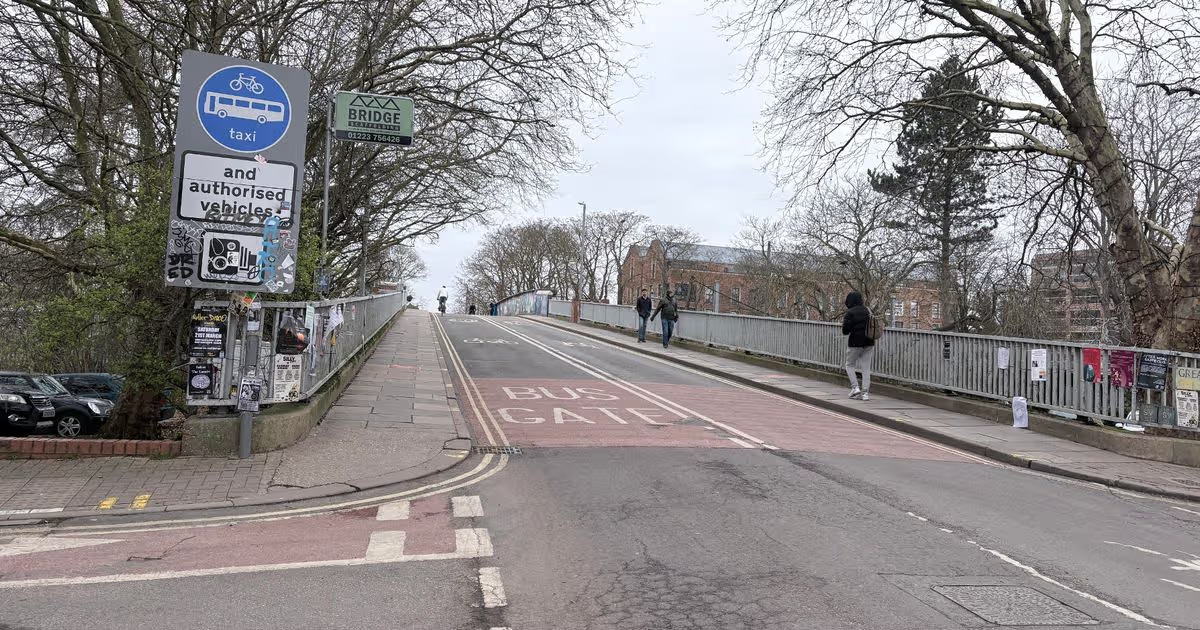
Readers remain divided over the controversial Cambridge bus gate nearly a year after fines began, with strong views on traffic, businesses, and air quality
Cambridgeshire Live readers remain divided over Mill Road’s bus gate, with passionate opinions about traffic, trade, and air quality. The bus gate continues to split opinion nearly 12 months after it became operational.
Cambridgeshire County Council implemented a permanent bus gate on Mill Road in 2025, with penalties initially handed out from March. The bus gate restricts all non-exempt vehicles from passing through, requiring them to take alternative routes.
Anyone who contravenes the bus gate receives a Penalty Charge Notice of £70, reduced to £35 if settled within 21 days. Exemptions allowing passage without incurring a fine include buses, taxis, cyclists, and emergency vehicles.
More than 4,600 penalties were issued during the first seven weeks after the bus gate’s activation, according to a Freedom of Information request submitted by the Local Democracy Service. Some residents argue that the restrictions have improved daily life.
One reader, Timbiscuit remarks: “‘Businesses’ [sic] will always want the bridge open due to the perceived more trade mindset. However, the shops are as busy as ever. I’ve lived on Mill Road for over twenty years. Traffic is less, air is cleaner, roads are safer, and more walking and cycling are taking place.”
Rhodabike adds: “‘The bus gate prevents all non-exempt vehicles passing through, meaning that they must use alternative routes.’ Exactly. Alternative routes are other neighbourhoods, which are now suffering increased congestion, thanks to the selfish demands of a vocal minority who can’t think beyond Mill Road.
“Visibly longer queues. And bus drivers are saying they’re struggling to run on time on other roads due to extra traffic. Plus, there’s the basic fact that cars, being physical objects, don’t disappear into thin air; every car no longer using Mill Road still exists somewhere else.”
Weneedqueenmeghan says: “The few businesses only want it open because it’s convenient for them to drive in and illegally dump their vehicles on the pavement. There are more people than ever shopping on Mill Road; it’s been proven over and over that pedestrianisation of areas increases footfall in shops.
“Remember, they tried to tell us traffic would go elsewhere, laugh! It hasn’t. They tried to tell us shops would lose business, it hasn’t! They tried to tell us drivers were stopping to shop, no, they weren’t, they were only using it as a rat run. Cyclists have been proven right once again.”
In contrast, Lilbec writes: “I don’t know anyone who actually agrees with closing the bridge. And bits [sic] clearly affecting businesses, whether you like it or not. If you don’t like living in an area with traffic, why did you choose to live there in the first place? If there is less traffic now, it’s only because people are abandoning Cambridge as a decent place to visit.”
Arborealfriend says: “I’ve lived off Mill Road for over a quarter century. The bridge restrictions are a huge improvement. I’ve spoken to traders who find the restriction inconvenient for a cash’n’carry run, whilst others – especially café/restaurant owners – appreciate the cleaner air and the way that there is now more passing trade. On foot. Stopping. Shopping. Eating. Drinking. Not driving past polluting. To check the FACTS about traffic, SmartCambridge (DotOrg) have sensors and full data available. No, there ain’t loadsa extra motor traffic on surrounding roads.”
Do you think the scheme is really making Mill Road safer, or is it just shifting the congestion elsewhere? Have your say in our comments section.


















































You must be logged in to post a comment Login