A migrant worker who was killed in an aerial attack on the United Arab Emirates on the first day of the Iran war would not have been outside if he had known the conflict had started, his son says.
Saleh Ahmed, 55, from Bangladesh, was delivering drinking water in the emirate of Ajman when he was struck by debris after an Iranian missile attack.
Speaking from Bangladesh, his son Abdul Haque told Sky News that Saleh was a hard-working man and the family’s sole breadwinner, who would have not risked his life had he known the US-Israeli war with Iran had started.
“My father went to deliver water,” Abdul said in tears. “That’s when an Iranian missile landed on him and his car.”
Advertisement
Ten minutes later, Saleh died at the scene, his son said.
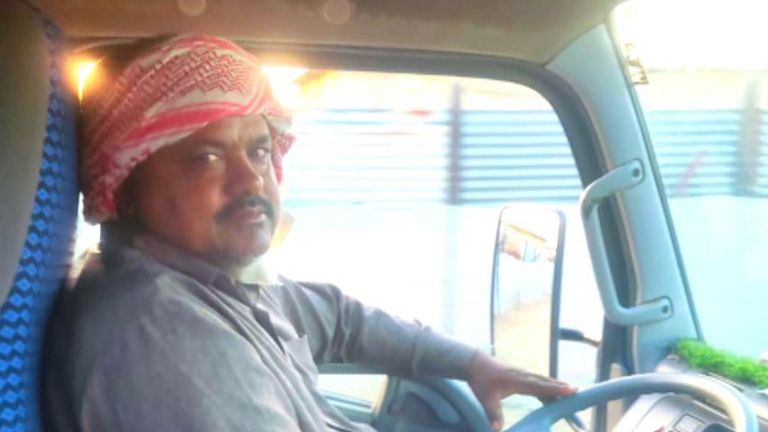
Image: Saleh Ahmed was unaware the war had started when he was killed, his family believe
Saleh lived in the UAE as an expat for 25 years, sending under £500 per month in earnings to Bangladesh for his wife and four children.
His family says the attack took them all by surprise.
“No way, he wouldn’t have known,” Abdul said, when asked if his father was aware of the war.
Advertisement
“If he knew he wouldn’t go out like that. We are hungry people, we have nothing and our family is very big. For sure my father didn’t know about the war, or else he wouldn’t have gone outside.
“If I had known, God willing, I would not have let him go outside.”
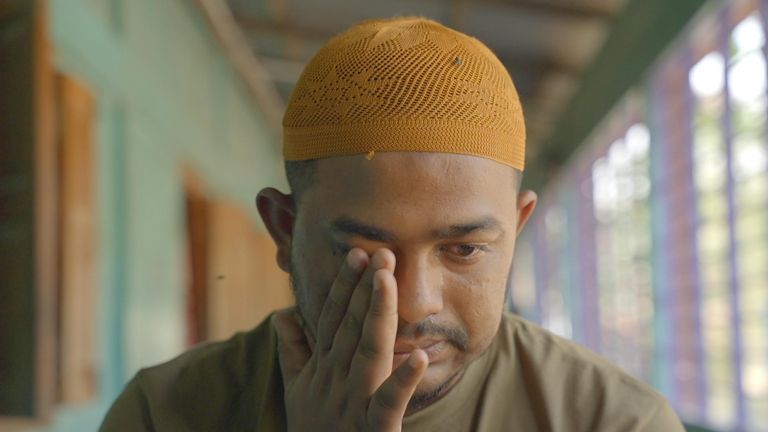
Image: Abdul wiped away tears as he described his father’s ordeal
Image: Saleh was described by his family as a hard-working man
‘You don’t get friends like my dad’
Five years ago, Abdul joined his father in Ajman to work alongside him at the water company.
“As a child, I’d only spend a month or two here and there with him. But for the last five-and-a-half years we were more like friends. Eating together and everything, we did it all together like friends,” he said.
Advertisement
“You don’t get friends like my dad anywhere in the world.”
Saleh’s life mirrors that of millions of South Asian migrant workers who live and work in the Middle East. Many have roles in construction, hospitality, transport and as domestic help.
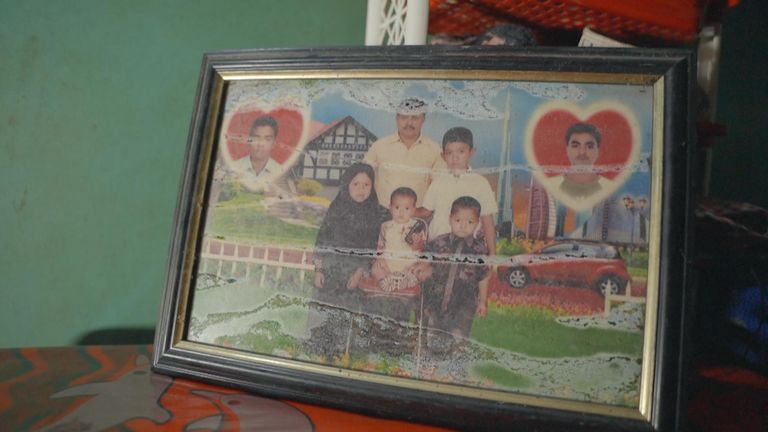
Image: Saleh sent money to Bangladesh for his wife and four children
With roots in the 1960s oil boom, today the migrant workforce is made up of workers from countries like India, Pakistan and Bangladesh, and constitutes a large percentage of the overall population. Their remittances support generations of family back home.
“At the beginning my father really struggled and did a lot of different work. He worked at hotels, he washed cars, cut grass, he did everything,” Abdul said.
“And for the last seven or eight years he had a good position at the water company. He did a good job, it was in the service of people, delivering drinking water to people.
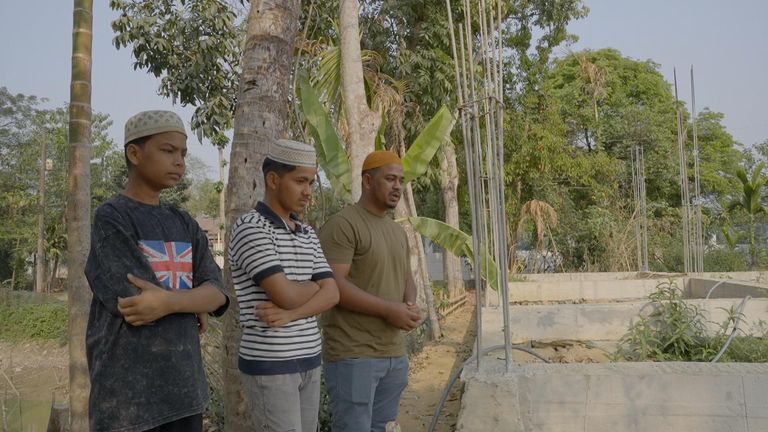
Saleh’s family live in a remote village in Sylhet, in northeastern Bangladesh. With the money he sent to them, they had begun building a house. The site remains incomplete, with a concrete foundation lying bare.
Advertisement
Abdul explains how his father did everything he could for the family to have their own home, right up until he died.
Image: Abdul and his family are mourning Saleh
Saleh was not only supporting his family, but Abdul explains his father would gift meat parcels at Eid to friends and neighbours, give money to charity, and donate funds to the local mosques. He last visited his family four months ago.
Airspace closures over the UAE mean Saleh’s body cannot be flown home for burial until commercial flights resume. Abdul says the delay in being next to his father and laying him to rest only prolongs the family’s sadness.
Advertisement
Advertisement
What happens to Gulf if immigrants want to leave?
Bangladesh’s foreign ministry confirmed Saleh’s death on Monday. It said ensuring the safety and security of more than six million Bangladeshis living in the Middle East remains the government’s top priority.
Meanwhile, there are no plans to evacuate Bangladeshi migrant workers. The government has urged its citizens in the Middle East to “remain vigilant and strictly follow guidance issued by respective host governments”.
“I pray for everyone to come quickly to a resolution,” Abdul said, speaking about the US, Israel and Iran.
Advertisement
“I’m seeing videos of many people dying, and I don’t want someone else to die like my father died. I don’t want any other people to lose their parents like we lost our dad.”
Passengers should stay updated via the National Rail website
Commuters across Cambridgeshire have been urged to check before they travel this Easter weekend. The warning comes as planned engineering works are taking place on parts of the Greater Anglia rail network between Good Friday and Easter Monday (April 3 and 6).
Advertisement
Some trains are set to be cancelled over the Easter bank holiday, causing disruption for passengers. Engineering work over Easter 2026 will cause disruption in Cambridgeshire, specifically affecting services north of Cambridge, reports National Rail.
Due to engineering work closing the lines north of Cambridge, buses will replace trains between Cambridge and Ely. This will also be the case between Cambridge and Bury St Edmunds.
Trains will continue to run between Stratford (London) and Cambridge; Stansted Airport and Cambridge; Bury St Edmunds and Ipswich; Peterborough and Ipswich. Passengers should check National Rail to find out further details.
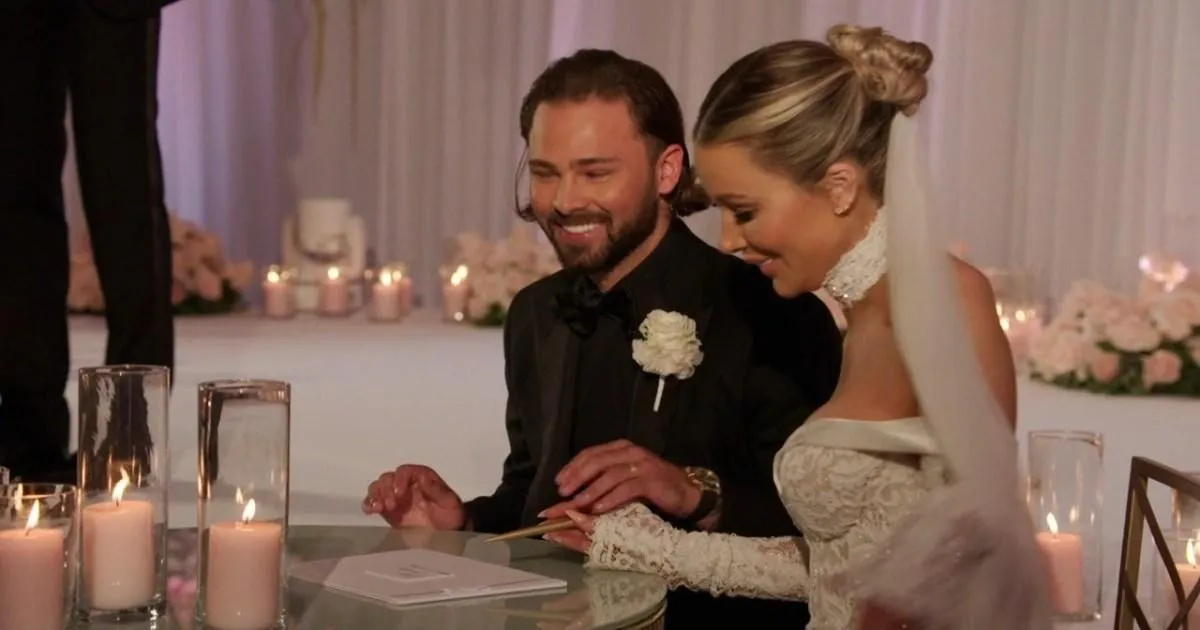
Olivia Attwood and Bradley Dack had a lavish wedding ceremony in 2023 – but they never legally married (Picture: ITV)
After splitting from what the world believed to be her husband earlier this year, it has been revealed that Olivia Attwood was never legally married to Bradley Dack after all.
In January, it emerged that the ITV presenter, 34, and Gillingham footballer, 32, were ‘over for good’ after a 10-year relationship.
Both parties initially remained silent on the reports, but sources alleged that there had been a ‘breach of trust’ from Bradley, leading to Olivia calling everything off.
She later took to Instagram as she updated her followers on the move into her new London pad, which she hadn’t ‘expected’ to be living in alone now. Still, she insisted that she ‘wanted Brad to be happy’.
Advertisement
Now, however, more details have surfaced about their split, shedding light on the reasons why they never actually made their marriage legally binding.
In June 2023, Olivia and Bradley held a lavish wedding at the five-star Bulgari hotel in Knightsbridge, for which she stunned in a £30,000 Galia Lahav gown and adorned the venue with 25,000 individual flowers.
The TV presenter and footballer held their ceremony at the five-star Bulgaria hotel in Knightsbridge (Picture: ITV)
Olivia wore a £30,000 dress for the occasion, filmed for Olivia Meets Her Match (Picture: ITV)
Their special day, and the lead-up, were documented for the 17-part series Olivia Meets Her Match. It aired for three seasons and offered a glimpse inside her new life as a Wag, having relocated to Manchester after finding fame on Love Island.
As a result, cameras were on hand to capture Olivia sitting next to her new husband as she nervously signed the marriage register, with her proud parents watching on.
But it turns out that there is no official record of the marriage, as revealed by the Mail on Sunday, which visited the City of Westminster Archives Centre but found ‘no trace of Olivia Jade Attwood and Bradley Paul Dack anywhere in 2023 or 2022’.
Advertisement
When they did ‘marry’, Bradley’s best pal, Ronnie Vint, and Olivia’s younger brother, Max, acted as witnesses to them signing on the dotted line. But their union was not then logged with the General Register Office, where all marriages and civil partnerships in England and Wales are recorded.
It has also been noted that the document they added their signatures to for the television series was blank.
The Mail proceeded to question whether their nuptials were merely about ‘the cash’, since ITV is said to have thrown mega money at Olivia’s reality show.
However, the couple never legally registered their union, it has now been revealed (Picture: ITV)
Sources claim Olivia uncovered ‘mistruths’ which left her feeling unable to take the legal step (Picture: ITV)
A source claimed it will be ‘very disappointing’ for her fans, who had no reason to believe Bradley might not legally have been her husband.
However, another insider close to Olivia has revealed she ‘uncovered a number of mistruths’, which meant she felt unable to finalise the legalities of their marriage.
Advertisement
‘The Bulgari Hotel, where Olivia and Bradley had their wedding ceremony, didn’t have a wedding licence,’ said the source.
‘Despite her best efforts, the wedding planner was unable to turn one around in time, so an appointment was made six weeks after the ceremony to complete paperwork at a registry office near their home in Cheshire.’
They added: ‘During these six weeks, Olivia uncovered a number of mistruths, which put a stall on following through with the paperwork.’
Still, she was ‘very much in love’ with Bradley for 10 years (Picture: ITV)
Olivia had ‘Till death’ inked on her arm, while Bradley got ‘Do us part’ on his wrist (Picture: Instagram)
But despite being ‘very much in love with one another’, ultimately, Olivia’s ‘inability to trust Bradley forced her hand in not being able to legally bind their union’.
‘Every attempt was made to contractually bind the ceremony on the day itself; alternatively, an appointment was made to sign paperwork in the weeks after. Unfortunately, circumstances put a stall on them progressing with the formalities that were meant to follow.’
Still, the former couple made somewhat of a permanent commitment to one another after appearing to tie the knot, which is now perhaps the only symbol of a marriage left between them.
On their wedding day, Olivia got ‘Till death’ tattooed on her arm, while Bradley got ‘Do us part’ on his wrist.
Bradley’s camp has opted not to comment on the revelations.
Advertisement
This comes after multiple women have come forward, claiming Bradley was unfaithful to Olivia with them.
It was confirmed in January that their relationship had ended ‘for good’ (Picture: Joseph Okpako/Getty Images)
Olivia was spotted kissing best pal Pete Wicks last week in a surprising turn of events (Picture: Ken McKay/ITV/Shutterstock)
As reported by The Sun, he allegedly cheated while Olivia was working abroad. When she rang him, she was unable to reach his phone.
The ups and downs of Olivia and Bradley’s relationship were well documented. When she made her Love Island debut in 2017, she said she applied for the dating show as an act of revenge after he cheated on her for the first time.
Olivia coupled up with Chris Hughes, from whom she split in 2018 and, shortly after, rekindled things with Bradley, remaining together since.
The Kiss FM radio presenters and podcast co-hosts were out with friends at the Flute Bar in Soho, where they were seen locking lips, appearing to confirm that they were now more than friends, having previously shut down speculation that there was a spark between them.
Sources claimed Bradley felt ’embarrassed and upset’ upon seeing the snaps, which led to him unfollowing Olivia on social media.
If you’ve got a celebrity story, video or pictures get in touch with the Metro.co.uk entertainment team by emailing us celebtips@metro.co.uk, calling 020 3615 2145 or by visiting our Submit Stuff page – we’d love to hear from you.
Players and staff from the Senegal national team have paraded the Africa Cup of Nations trophy around the Stade de France just 10 days after being stripped of the title.
The players returned to the field after a 17-minute delay and Brahim Diaz eventually missed the spot-kick in the 24th minute of added time, before a stunning long-range effort from Pape Gueye ended up sealing the victory for the Lions of Teranga in extra-time.
However, the Confederation of African Football’s (Caf) Appeal Board stripped them of the title on 18 March, ruling that Senegal had in fact forfeited the game when they walked off the pitch. A 3-0 win was subsequently awarded to Morocco.
Advertisement
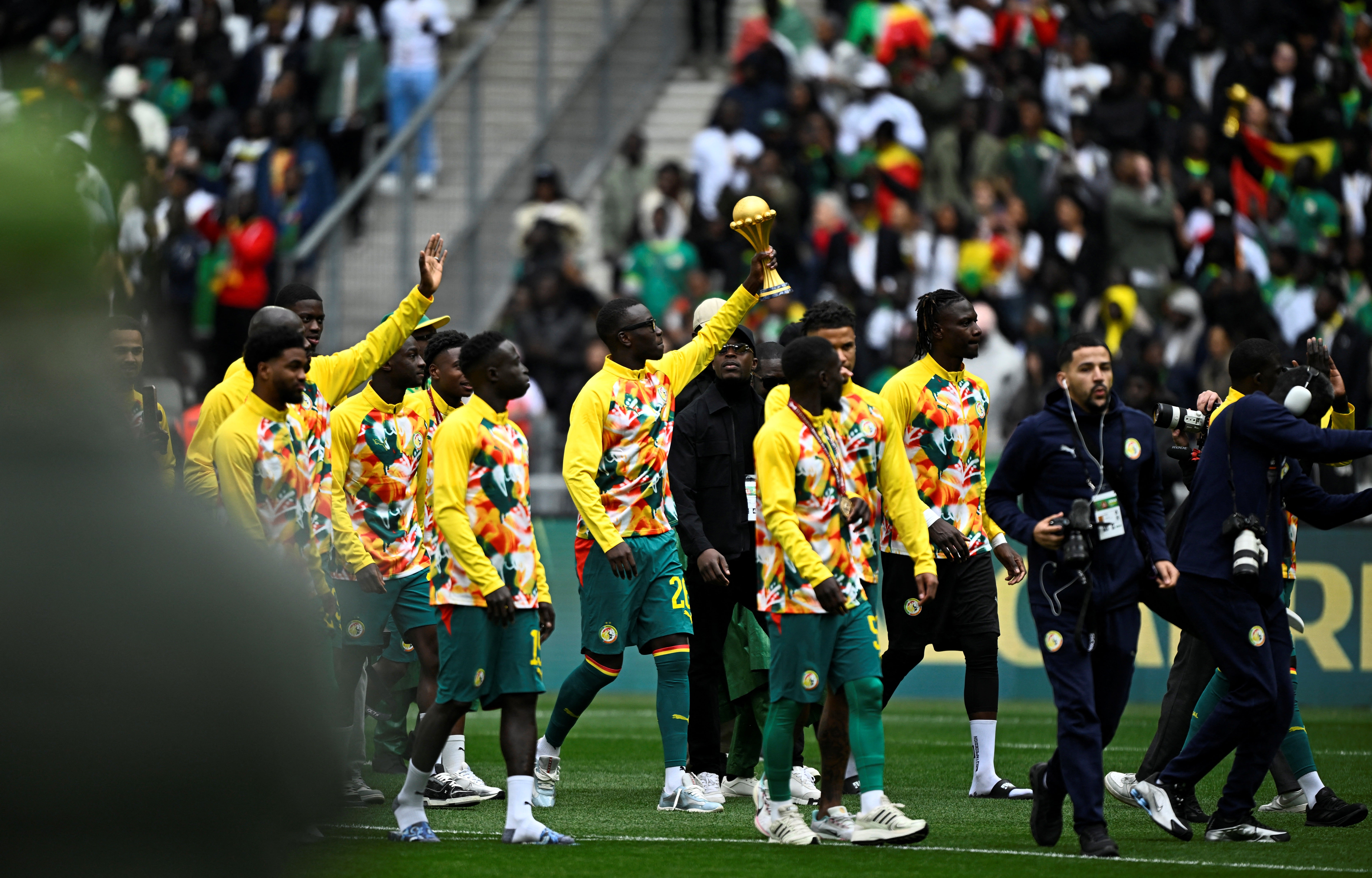
But ahead of a sold-out friendly against Peru at the Stade de France on Saturday, Senegal players presented the Afcon trophy at the Stade de France in front of their fans.
The squad paraded the trophy around the stadium before taking a group photo with it. Cheers were heard as captain Kalidou Koulibaly brought out the trophy and as goalkeeper Edouard Mendy held it aloft.
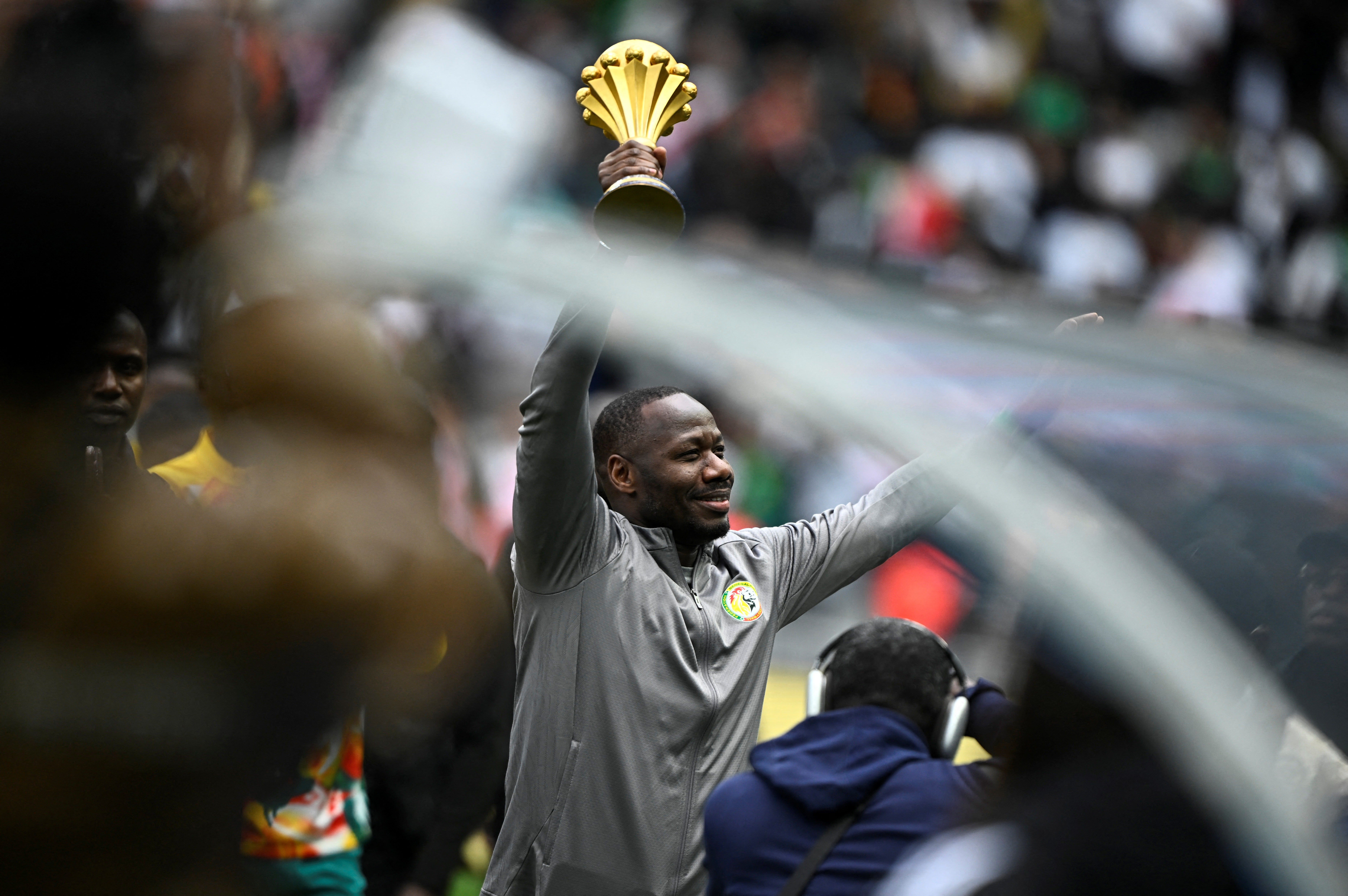
Senegal’s head Coach Pape Thiaw holds the African Cup of Nations trophy aloft at the Stade de France (AFP via Getty Images)
(AFP via Getty Images)
As displayed by the trophy parade, it is understood Senegal still considers themselves to be the champions of Africa, with the decision made to add a second star onto the team’s kits to mark Afcon wins in 2021 and 2025/26.
Meanwhile, president of the Senegal FA Abdoulaye Fall called the Caf decision “the most grossly unfair administrative robbery” in the history of the sport, and Senegal’s Football Federation has lodged a formal complaint against the Afcon decision to the Court of Arbitration for Sport (Cas), though a decision on the matter could take months.
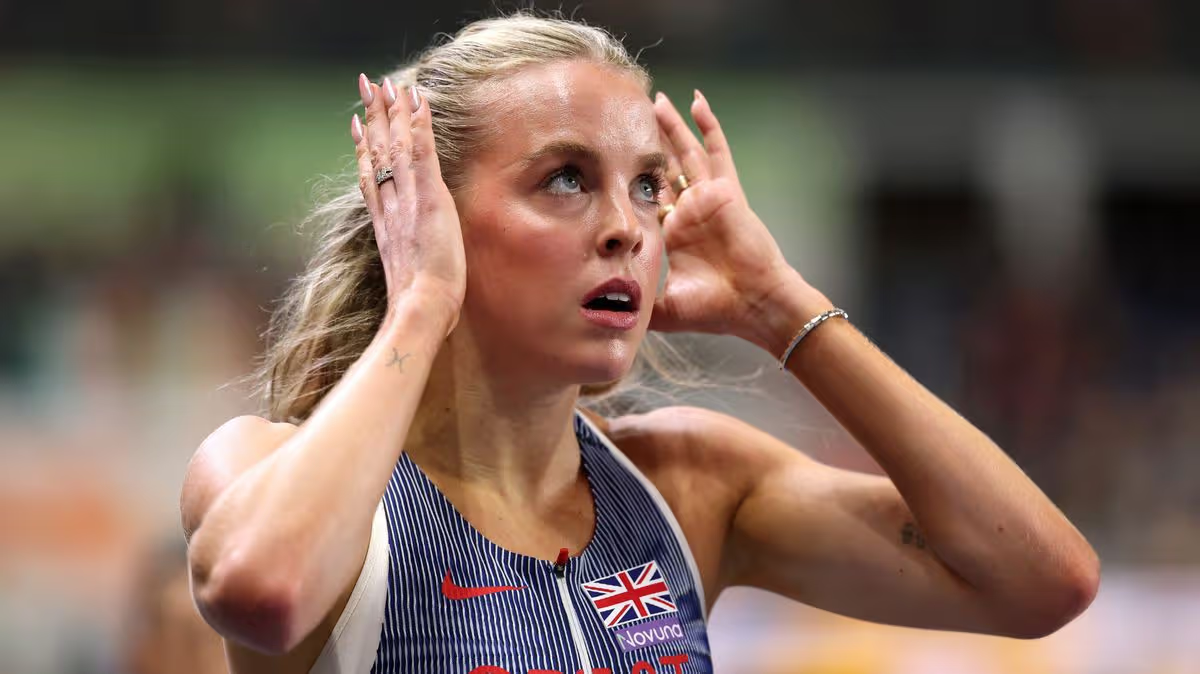
Keely Hodgkinson has doubled down on her comments about the World Athletics Championship being held in London
Mark Whiley Sports Reporter
15:18, 28 Mar 2026
Keely Hodgkinson has taken another shot at West Ham for jeopardising her dream of competing at a major championship on home soil.
Plans have been drawn up to stage the 2029 World Athletics Championship at the London Stadium but the Hammers, who hold a long-term lease at the venue, have reportedly declined to relocate for the proposed September dates. The club have previously stated they have an agreement in place granting them priority use of the ground, which was constructed for the London 2012 Olympics, during the football season.
Advertisement
Hodgkinson provoked a strong response from some West Ham supporters earlier this week with a tongue-in-cheek post on X about the situation. She wrote: “The GB team will bring back more medals to that stadium than west ham have seen in their entire history.”
The 24-year-old, who won Olympic 800m gold in Paris in 2024, has since doubled down on their criticism of the Hammers. The Manchester United fan insisted she enjoyed the reaction to her medals comment.
She posted: “Thoroughly enjoyed the rattled comments under this, but in all seriousness, to have a global championships back in London would be incredible for our sport. I didn’t think we’d get the opportunity again during my career, the British crowd would fill it everyday.”
In a fresh swipe, she pointed out the Hammers were tenants, not owners, of the stadium, which they moved into 10 years after moving from Upton Park.
She added: “Seems silly for London to be taken out of the running, over a football team not compromising on a stadium they pay RENT for when it’s only a few extra away games, everything’s always all about money and never moments. Let us have this moment!!! Pretty please.”
Hodgkinson, who had to settle for bronze at last year’s World Championship in Tokyo after battling back from injury, got her hands on gold again last weekend after storming to victory in the 800m at the World Indoor Championships in Poland.
She posted a championship record time of one minute, 55.3 seconds, the second-fastest indoor performance in history behind the world record she set in Lievin, France last month.
Advertisement
Hodgkinson is in the shape of her life after bouncing back from an injury-plagued 2025. She is brimming with confidence that another world record is a matter of when, not if.
The women’s outdoor 800m record of 1:53.28, set nearly 43 years ago by Jarmila Kratochvilova, is the oldest in track and field. Hodgkinson said: “To have that confidence back in me, I’ve not missed anything. I was like, ‘If you’re beating me, you’re going to run damn fast to do it’.
“I wanted to go out there and put on a bit of a show. I felt like I had the strength. Three rounds in three days is tough, but I did it!”
Advertisement
Get £250 to switch to Virgin Media’s sport packages
This article contains affiliate links, we will receive a commission on any sales we generate from it. Learn more
Virgin Media is paying new customers up to £250 as a bill credit when they switch to one of its TV and broadband packages, several which are packed with hundreds of channels including Sky Sports, Netflix and fibre broadband.
ZiZi Zhang, a Harvard-educated former Wall Street banker, is better known to thousands of people on Instagram as “Ratz-Carlton” – where she offers smart, scrappy personal finance tips for living a full life within your budget.
Zhang, 29, is originally from San Francisco but moved to New York to work in finance and venture capital after graduating with a computer-science degree.
She started Ratz-Carlton as a creative outlet and to share thoughts on financial wellness. Or, in her words, how to enjoy a “Ritz-Carlton” life of luxury but minus the unchecked spending, aka staying “ratty.”
Zhang earns a low six-figure salary, but growing up as one of four daughters of first-generation Chinese immigrants made her cost-conscious and focused on squeezing the value out of every dollar. As an adult, she still heeds some of her parents’ wisdom – but has discarded other beliefs – to come up with a strategy for financial success.
Advertisement
The interview below has been condensed and lightly edited for clarity.
ZiZi Zhang, a Harvard-educated former Wall Street banker, is better known to thousands of people on Instagram as “Ratz-Carlton” – where she offers smart, scrappy personal finance tips for living a full life within your budget (ZiZi Zhang)
Education, education, education
My parents immigrated to the U.S. from China in the Nineties. They came here for graduate school in Oklahoma, where I was born. By the time I was five in 2001, we had moved to the South Bay area of San Francisco, California. By then, we were a family of six living on only my dad’s income as a quality control employee at a pharmaceutical firm.
Our parents made us recognize that our financial resources were scarce and limited, and, as kids, that shaped how we viewed spending and being frugal. My parents did an incredible job with what they had; they were able to save up enough money to send me to college.
Education, financial stability, going to a great school and getting a great job were the top-tier priorities in our family. To accomplish those things, we really had to fight through life in survival mode. Part of that survival mentality was saving money at all costs to achieve financial stability.
Advertisement
Investing in me
My upbringing really instilled in me values of investing in myself through a good education, professional development, and even therapy. I think about therapy as an investment in more deeply understanding myself and my upbringing.
Therapy can be expensive, but it’s one of those things that you can’t really put a dollar value on. Self-knowledge serves me in my personal and professional life, and in all my relationships, all of which are more valuable than money.
In my career, I’ve given myself stability and financial security – two things my parents really valued – by choosing safer jobs.
Advertisement
Lessons from mom and dad
As I decided whether to adopt the financial habits I learned from my parents, I asked myself two questions:
Does this serve the reality I live in now?
Is this a conscious choice of how I want to live, or is this ingrained subconsciously because of how I was raised?
There’s always that tension between ingrained learning and how I choose to live my life now. For example, I’ve very consciously tried to unlearn a major theme from my upbringing: the scarcity mindset (the idea that money is limited, influencing buying decisions and financial planning, and often leading to stress and anxiety).
ZiZi Zhang, middle, with her mother and father in Oklahoma. Zhang says her parents had to be resourceful with spending and finances because they relied on one income to support her and her three sisters (ZiZi Zhang)
In fact, I switched my view from money being limited, to time being limited. I take advantage of the time I spend with my family, friends and partner. That’s something that I can’t pay any amount of money to get back. I’d rather spend my money to buy time back – that’s a very different mentality from how I was raised.
Making that mental change has a lot to do with the fact that I’m privileged now to be in a position where money isn’t as scarce as it was. I’m able to make financial decisions based on multiple options. When you’re focused on survival and providing for a household of six, that’s not even a consideration.
In that sense, it was a privilege to grow up in a family that was fighting to survive financially as opposed to something that I look down on or wish my parents had done differently.
Advertisement
Value propositions
There are other lessons that I learned from my parents that I’ve kept with me and use all the time, and they’ve contributed to the “Ratz-Carlton” mindset.
One of those lessons is having a very clear sense of the value of what it is I’m buying. For example, a basket of strawberries that’s $3 in one store might be $7 in a different store. For me, it’s about the effort and thought to intentionally go to the place where I know that it’s going to be half the cost. That’s something that I retained from my parents and continue to live by to this day.
The lessons from my parents about value play out in many ways. I’m always talking to my [Instagram] followers about cost-per-use and how much quality an item provides compared to its price.
Advertisement
Having that mentality drives me to shop resale stores for new-with-tags, high-end items. I never pay the regular price for designer items. For household items and makeup, I use them until they’re empty or gone, and then replace them.
If I’m splurging, I’m buying expensive jewelry that I know I’ll wear daily instead of a piece of clothing I may only wear once or twice a year.
The comparison trap
When I showed up at Harvard, I think that was the first time I had been exposed to such generational wealth and privilege.
Advertisement
I developed this consciousness of, ‘Wow, there are really different ways that people live and exist, and it’s shaped so much by their upbringing.’
My upbringing has deeply shaped who I am, and other people’s upbringings have deeply shaped who they are. In light of that, I focused on how to communicate across those varying backgrounds.
The lessons from my parents about value play out in many ways. I’m always talking to my followers about cost-per-use and how much quality an item provides compared to its price, says Zhang (ZiZi Zhang)
No one chooses the financial situation that they come into this earth with. Knowing that, I tried to focus on what I could control, not compare myself to the things that are out of my control.
It definitely is a daily practice, because I think it’s just human nature and almost biologically ingrained in us to compare.
Release from the rat race
Advertisement
New York is a pretty open city about keeping up with the Joneses and putting what you have on display.
Something that I realized early on, when I was working on Wall Street and surrounded by high earners, is that just because you earn a lot and work in finance doesn’t mean you’re automatically good with money.
Many people in finance that you would think have a huge safety net are living paycheck to paycheck. A lot of that is because of wanting to keep up with your peers and colleagues. That may have been me if I hadn’t grown up learning what I did from my parents.
At the same time, I think having a deep sense of who I am, where I came from and what my values are helps me step out of the keeping-up-with-the-Joneses mindset.
Advertisement
Time > money
One of my main values is that time is more important than money.I’ve taken my sisters on vacation to show them that time together is important, and that, despite the scarcity mentality we all grew up with, you can spend money on what matters and enjoy it without feeling guilty over how much you spend, provided it’s within your means.
I’m very willing to spend on relationships and invest in them. I’m not as willing to spend on things that would only serve myself, such as buying a coffee, matcha or smoothie, for example.
I would rather save that money, not because I can’t afford those things, but because it’s not necessarily in line with my values of how I want to allocate the resources that I do have.
Advertisement
What matters to you?
Get really clear on your personal values and make them tangible. I started with these questions:
What do I get energy and joy out of?
What is not important to me?
What are my non-negotiables?
What is a need versus what’s nice to have?
Writing down the answers is super helpful because I can always go back and look at them. Sometimes it’s hard to remember those values and opt for the path of least resistance or what’s most convenient.
But having it documented brings this level of foresight, intentionality and planning into my life. It helps me spend based on those values versus going with the flow and reacting to what happens.
We surveyed 1,022 Telegraph readers across the UK* to find out who provided their mobile network and what they thought about the service. Readers provided their verdicts for the three master brands (EE, O2 and VodafoneThree), as well as virtual networks (MVNOs): Tesco Mobile, Lebara, Sky Mobile, BT Mobile and Giffgaff.
We excluded any provider used by fewer than 20 per cent of our readers. In addition, we categorised providers with an average rating of three stars or lower as “below average”.
As well as speed, reliability, value for money and ease of contact, we asked our readers how helpful their providers were once they got through to them, as well as their experiences using data roaming while abroad.
Score: 3/5
Advertisement
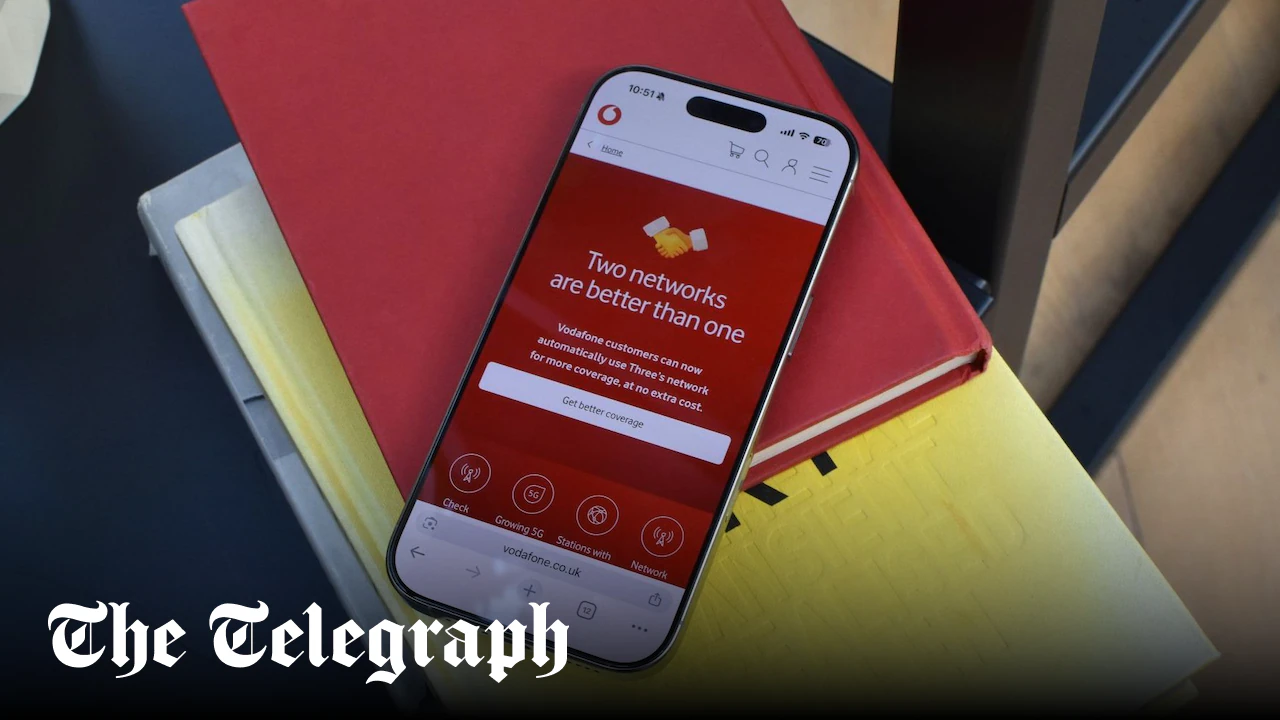
As mentioned previously, Vodafone isn’t the cheapest network. Certainly, if you’re the kind of person who only has a mobile phone for emergencies, you’ll want to look at rivals such as Lebara or Tesco Mobile for far cheaper entry-level deals.
That said, some of Vodafone’s pay-as-you-go SIMs are competitively priced, and the ‘Unlimited Plus’ deal is right up there with the cheapest unlimited data deals. However, that brings us to a gotcha to watch with Vodafone’s contract deals: varying speeds and features.
That Unlimited Plus deal is limited to 100Mbits/sec download speeds. In the real world, that’s unlikely to cause you any problems, but other more expensive tariffs have their speeds uncapped. Other tariffs have device care, extra roaming destinations, unlimited picture messaging (is this still a thing in 2026?) and entertainment subscriptions thrown in. In other words, you need to pick carefully through Vodafone’s huge range of tariffs.
Telegraph readers weren’t blown away by the value on offer. A satisfaction score of 67 per cent was the worst of any network in our round-up. Note: BT Mobile scored lower, but the network is no longer available for new customers.
Advertisement
Speed
Score: 3/5
Vodafone also recorded the worst speed satisfaction score of any network in our test, with only 69 per cent of customers happy.
It’s worth noting that customers of Lebara, which also uses Vodafone’s network, gave a speed score of 85 per cent, so it may be Vodafone customers’ perception of speed is being clouded by cost. It might also reflect that not all Vodafone tariffs offer the fastest possible speeds.
Ofcom’s latest figures put Vodafone’s outdoor 5G coverage at between 51 per cent and 64 per cent of UK premises, so there is also a large chunk of the country that has no access the top speeds yet.
Advertisement
Reliability
Score: 3.5/5
A reliability satisfaction score of 76 per cent is by no means disastrous, but it is again the worst of any of the networks on test. For context, Lebara customers were 94 per cent satisfied, so it may again be a case of customers expecting more for their money when prices are higher.
Customer service
Score: 2.5/5
Vodafone’s customer service scores are pretty dismal, the worst of any provider. Only 58 per cent of the Vodafone customers we surveyed were happy with the ease with which you can reach customer support and the same percentage were satisfied with the quality of the support when you do finally get through. For context, Tesco Mobile scored 94 per cent and 93 per cent on those two metrics.
Advertisement
Roaming
Score: 3/5
Roaming is not a given on Vodafone, as it is with some other networks. The Pay As You Go Plus plans don’t include roaming, for example, meaning you’ll need to pay for “Roaming Extra” add-ons when travelling. On those tariffs, an eight-day pass offering 3GB of roaming data in 52 European destinations costs £9.60. To include countries such as the US and Canada, you’re looking at £18 for only 2GB.
Some of the more expensive pay monthly contracts do include roaming, but you’ll need to check your tariff carefully before signing up. Telegraph readers aren’t exactly blown away by the roaming deals, with 64 per cent satisfied with the value on offer.
The Pupil Equity Team from Southdale Primary School in Armadale have developed the school’s preloved uniform shop to help with the cost of the school day for families.
Pupils from a West Lothian primary have handed over cheques to two charities after working hard at the school’s uniform shop.
Advertisement
The Pupil Equity Team from Southdale Primary School in Armadale have developed the school’s preloved uniform shop to help with the cost of the school day for families.
The children work in the shop after school and have worked hard selling all of their products.
A school spokesperson said: “We presented at Dragons Den in 2025 and won money to help us with the shop. The children have chosen two local charities to give back to the community.
Advertisement
“They were Jaks Den and RiverKids and they came to visit the school to receive the money that we have chosen to donate to them.
“The two local charities were really happy to receive the donation.”
New UK government guidance recommends that screen time for children under two should be avoided, except for shared activities such as video calls. For children aged two to five, a maximum of an hour a day is suggested. The guidance also outlines that watching screens together is better than children viewing alone.
This echoes guidance from the World Health Organization recommending no screen time for infants under two, and no more than one hour per day for older children aged four and under.
The early years, especially from birth to age six, are a critical period for developing social and communication skills. This is when children are learning how to connect with others, communicate their needs and understand the signals people give them. Given the increasing presence of touchscreen technologies in young children’s environments, understanding how these tools influence early developmental trajectories is essential.
Touchscreen technology offers new opportunities for learning and play. But there are also questions about its impact on children’s social development, communication and school readiness. Researchers and health organisations have been working to consider how digital media interacts with children’s development and shapes their early experiences.
Yet the picture is not one-sided. My research with colleagues highlights that early exposure to multi-modal technologies – tools that combine sound, images, touch and movement – can shape children’s social development in both positive and negative ways.
Language skills and collaboration
On the positive side, interactive and engaging uses of technology can foster language development. Studies show that digital platforms encouraging storytelling, role play and collaborative activities can enhance children’s competence in communication.
Touchscreens can also help children to work together on shared tasks. Multi-touch interfaces promote joint problem-solving, turn-taking and dialogue. This can strengthen cooperation and peer relationships.
Advertisement
In classrooms, tablets often become focal points for group activities. Children share knowledge, assist one another and collaborate on projects, which can enhance social interaction skills and confidence.
Touchscreens also create opportunities for social play and communication across distance. Video-communication apps such as Skype and FaceTime allow children to maintain relationships with family and friends, supporting emotional bonds and social connection.
Children can collaborate using screens. Mkosi Omkhulu/Shutterstock
Creative expression is another area where digital tools can shine. Drawing, animation, and storytelling apps encourage children to share ideas and collaborate. This can promote cooperation and social bonding.
Passive use
However, these benefits coexist with significant challenges. Excessive screen time can reduce opportunities for face-to-face interaction, limiting children’s practice of conversational skills and emotional understanding. When children use screens passively or in isolation, they may become less engaged in socialising with others.
Advertisement
Parents’s use of screens is another concern. When parents are absorbed in their own devices, they talk less with their children. This reduces opportunities for educationally meaningful conversations.
Touchscreen use can also affect communication more directly. Studies show that electronic books may shift parents’ attention toward the device rather than the story, displacing meaningful conversation and reducing the quality of shared reading experiences. Some research suggests that heavy touchscreen use may make it harder for children to pick up social and emotional cues. This may affect their ability to decode social situations.
Importantly, the impact of touchscreen use is shaped by several mediating factors. Children learn more effectively when adults or their classmates model how to use touchscreen devices. As the government guidance states, it’s also better if adults watch screens together with their child, rather than their child watching alone.
Parents’ views and wider culture matter too. In research I carried out with colleagues, we found that cultural perceptions about what makes a good childhood shaped parents’ choices. In Portugal and Norway, strong cultural emphasis on outdoor play, social interaction, and connection with nature led parents to prioritise these activities over touchscreen use.
Advertisement
These cultural expectations influence how parents interpret and regulate young children’s digital practices, showing that attitudes toward technology are closely tied to wider national discourses about childhood. Educational settings further influence this. The way technology is integrated into classrooms can reinforce social behaviour.
These findings have important implications for school readiness. Social communication skills, such as turn-taking, listening, expressing ideas, and understanding others, are foundational for success in early education. Touchscreens can support these skills when used interactively and collaboratively. But when screen use replaces conversation, imaginative play or peer interaction, it may hinder the development of the very abilities children need for school and their social lives.
The evidence suggests that the question is not whether children should use touchscreens, but how. High-quality, interactive, and socially supported digital experiences can enrich development. Passive or excessive use can undermine it.
However, it’s vital to recognise that not all digital content is created equal. The quality and context of technology use can have a significant impact. As digital technologies continue to evolve, ensuring that young children’s screen experiences are balanced, meaningful, and socially engaging will be essential.
Scotland resume their preparations for this summer’s World Cup – and play their first game since qualifying for the tournament – as they host Japan at Hampden in the first of two friendlies this week.
Now Clarke will oversee his final camp before naming his final World Cup squad, with Scotland arranging games against Japan at Hampden and the Ivory Coast at Everton’s Hill Dickinson Stadium on Tuesday.
Advertisement
Scotland have stuck with a settled squad as the countdown to that crucial opening game against Haiti on 14 June begins.
Chris Wilson28 March 2026 14:32
Good afternoon
Hello and welcome to The Independent’s live blog coverage of Scotland’s friendly against Japan this evening.
Advertisement
Steve Clarke’s side play their first game since dramatically sealing World Cup qualification against Denmark in November, and this friendly comes against a talented Japanese side that includes the likes of Take Kubo, Ao Tanaka, Daizen Maeda and Karou Mitoma.
This means it will be a suitable test as Scotland begin to intensify their preparations for the World Cup, and we’ll have all the latest build-up, teams news and updates from Hampden right here.
How to watch Liverpool legends v Dortmund charity match on TV for free? | Wales Online
Need to know
Liverpool Legends face BVB in a charity match at Anfield on Saturday with Jurgen Klopp and Steven Gerrard involved, and here’s how to watch on TV and live stream
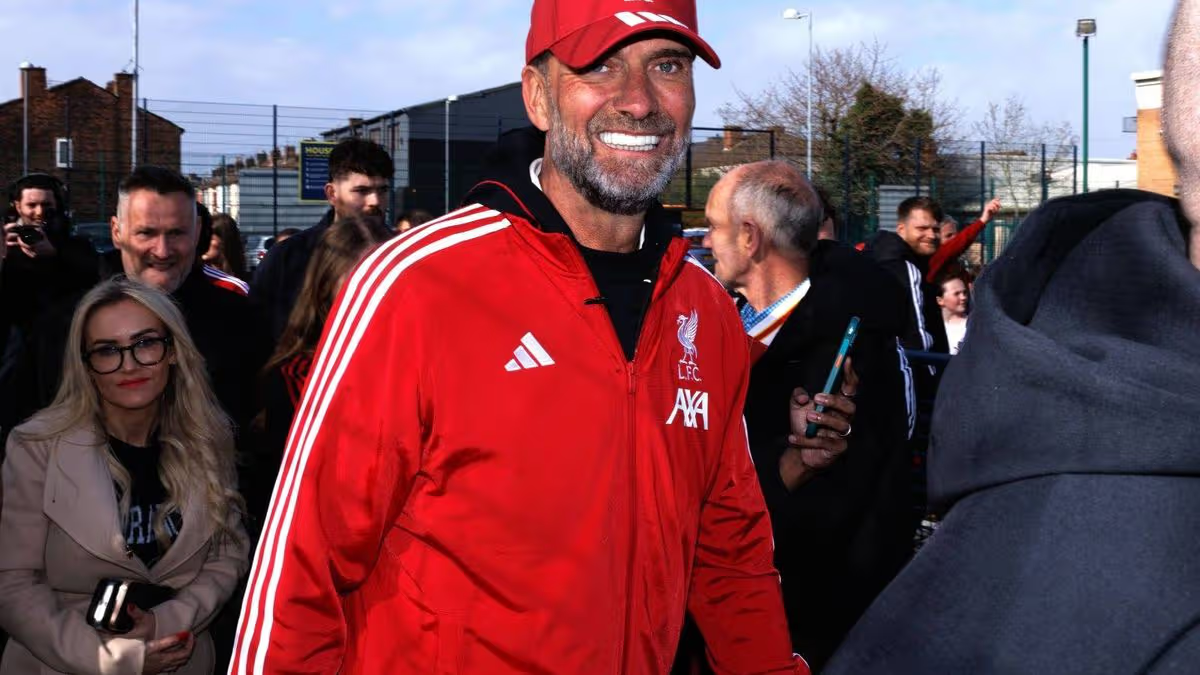
Jurgen Klopp is back at Liverpool(Image: Iain Watts )
Everything you need to know about Liverpool Legends vs Dortmund charity match at Anfield
When and where is the charity match?: The eagerly awaited charity match is set to take place this Saturday, March 28, 2026. The game will be hosted at Anfield.
What time does the match start?: The official start time is scheduled for 3pm GMT. Fans are advised to get there early to enjoy the pre-match celebrations and the presentation of the legendary teams.
UK TV coverage: Supporters in the UK can catch the action live on LFCTV, accessible on Sky and Virgin Media. The live broadcast coverage officially kicks off at 2pm GMT, offering a full hour of build-up, interviews, and nostalgic footage before the game gets underway.
Live streaming: The match can be streamed forfree on Liverpool’s official Facebook, YouTube and TikTok channels. The game can also be watched on LFCTV GO or All Red Video, the latter of which requires a subscription which starts at £4.99 per month.
US coverage: Viewers in the United States can access the match through the LFCTV GO international service, which is available to American subscribers. Given the time difference, supporters on the east coast should be ready for an 11am ET kick-off, while those on the west coast will need to be awake by 8am PT.
Radio channel: Radio coverage in the UK will be delivered by LFCTV’s audio service, which often features live commentary from club legends and local experts. You can listen to the full 90 minutes free of charge by visiting the match centre on the Liverpool FC official website or app.
Who will be there?: The management team for the day boasts a blockbuster line-up including Sir Kenny Dalglish and the return of Jurgen Klopp to the Anfield dugout. They will be guiding a star-studded squad that includes favourites like Steven Gerrard, Peter Crouch, and Pepe Reina.























































You must be logged in to post a comment Login