
News Beat
My son was joy personified – but he died at just 6


As I placed Hugh’s shoes – the ones he wore to run around the garden – gently on the doorstep of Number 10 Downing Street, silence descended.
Reporters didn’t flash their cameras. Police bowed their heads. And my wife and I fought hard to swallow the emotion of the moment.
Because those shoes didn’t just represent my son who, in 2021, died from Rhabdomyosarcoma, a soft tissue cancer at the age of just six, they represented thousands of children like him, and of parents like Frances and I trying to handle their devastating loss.
Before Hugh got sick, he was the brightest, kindest, funniest little boy you could imagine, constantly trying to make his little brother, Raife, laugh.
He was pure joy personified.
We never thought anything bad could happen.
But when he was five the symptoms began. They were small at first – a bit of tiredness, not wanting to eat, a change in his energy – yet within days, his belly had swollen like a football. It was unlike anything I’d ever seen before.

While he never complained and was just a little uncomfortable, I felt it in my bones that something was wrong. My wife called the doctors, who quickly saw him that afternoon and sent him to the local hospital for some tests.
At 3am, my wife and I sat down with the doctors where they told us every parent’s worst nightmare: Hugh had cancer.
I remember seeing Hugh sitting upright in a bed, drinking juice and smiling, completely unaware that the world had just been ripped apart around him.
That night he got in an ambulance with Frances and travelled to hospital.
The doctors did everything they could for him: chemotherapy, radiotherapy, transfusions, over months when the hospital became our second home.

Frances and I slept next to machines on beds that barely fit one of us. We lived off the remnants of a busy M&S, knew the nurses by their first names and the Play team – the unsung heroes of the children’s wards – provided us with much needed moments of sanity so we could leave Hugh to have a wash or a coffee.
Outside of that though, we received no support.
No financial protection. No structured mental health pathway. Nothing that supported our other son at home who didn’t understand why Mum and Dad kept disappearing for days, weeks on end. Nothing that recognised the trauma we were in and what was about to come.
We felt totally alone, isolated, forgotten – not that we ever showed any of that weakness in front of Hugh. The treatments caused him to lose his beautiful blonde hair and weight fell off him, but it never altered his spirit or strength. He was so brave. Braver than I’ll ever be.

And then came the moment no parent can prepare for.
On September 8 2021, the day he was due to go back to school, Hugh fell ill. He was admitted back to hospital, sadly the doctors told us the treatment wasn’t working and he didn’t have long.
I don’t remember much after those words, just the feeling of trying to keep myself upright while the world fell apart and asking the consultant, in desperation, what we should do. He told us to ‘be strong.’
In a world where mental health, male suicide and being kind is at the forefront, I found the prescription of ‘being strong’ insulting – especially for someone who was witnessing the demise of his first born son. I couldn’t believe that was the best they could offer me.
As we walked out of the room where we were told Hugh was going to die we expected a blanket of support and protection to be thrown over us, but we got nothing.

For the next 10 days, Frances and I stayed in the same room as Hugh.
On Saturday 18 September 2021, Frances laid next to him on his left and I sat on his right in a chair holding his hand. We held him, kissed him and, as the machines were turned off, I told him that I love him, he was safe but that he didn’t have to fight anymore. He could rest. He could be free.
At 11.20pm, I felt his pulse beat twice very quickly and then, nothing. He was gone. Free of everything that he had been put through those last 10 months.
The days and weeks after were a blur of grief, silence, and the kind of pain that sits deep in your stomach, making you feel constantly heavy. But we had to keep pushing forward.
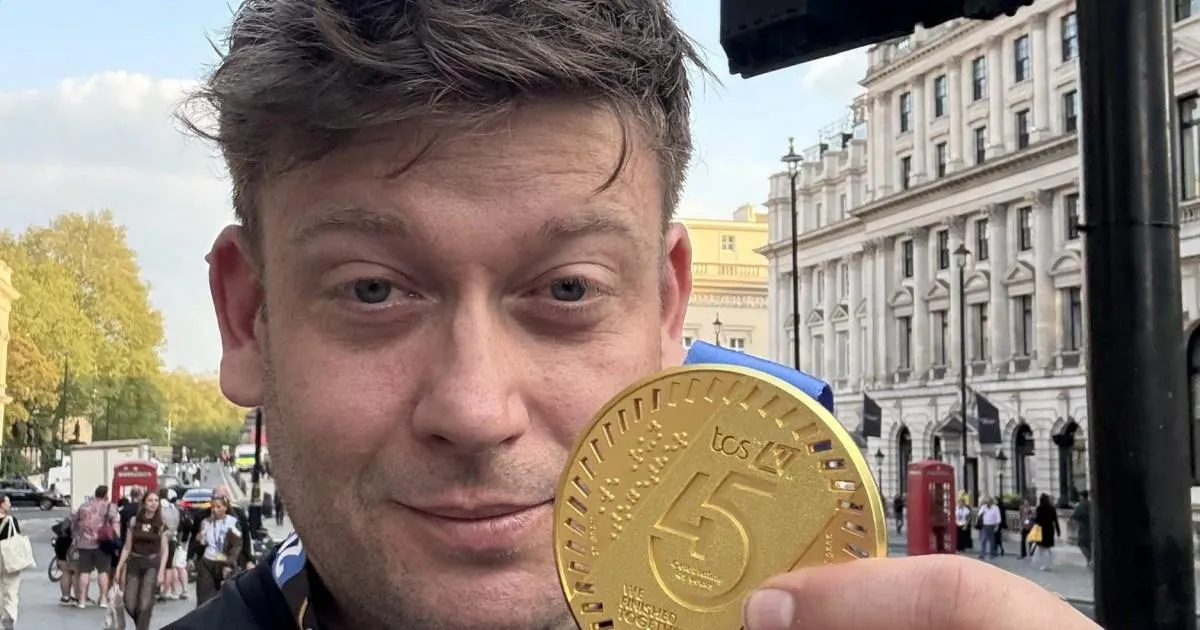
In October, I completed the London marathon for Alice’s Arc, a charity that attempts to find a cure for Rhabdomyosarcoma. I’d promised Hugh I would go ahead with it, and we even buried him with the medal I received around his neck. He would have been so proud.

Not long after, the idea of It’s Never You – a charity providing emotional support and practical help to other parents facing the unthinkable – was founded.
We wanted to ensure that absolutely nobody went through what we did alone. Because throughout Hugh’s illness, and especially after he died, one thing became crystal clear: every parent in a paediatric acute crisis is being failed by the current system.
There’s no mental-health support, no structured pathway, no financial stability, and no help for siblings watching their world disappear. We wanted to change that.
Since then, It’s Never You has grown into a lifeline for families across the country. We’ve supported thousands of parents through crisis, treatment, relapse, remission and grief. We’ve given counselling, community, practical guidance, advocacy, peer support and a place to feel human again.

But we still wanted to do more. We wanted to see real, practical change made at an institutional level.
That’s why, in 2023, I began campaigning for Hugh’s Law.
The idea was simple: if your child is critically ill, you should have the legal right to be with them without losing your job or income. And over the past three years, we’ve worked tirelessly to build a national movement which culminated in that moment in Downing Street.
Across two days in October this year, I carried a 20kg rucksack – which is the same weight Hugh was when he died – while walking over 100km from the hospital he died in to No.10.
It had been emotionally and physically taxing, my legs were shaking and aching when I finally reached the Whitehall gates, but I knew, the moment I put his shoes on the doorstep, it had all been worth it.
Over 150 MPs and Lords united to sign our document asking for support for parents of seriously ill children.
If approved by the government, it could change the landscape of care in the UK, and I hope it will mean no parent walks this path alone ever again.
I just hope that, wherever he is, Hugh is proud of the work we do. Everything I do, everything this charity fights for, is for him.
Do you have a story you’d like to share? Get in touch by emailing Ross.Mccafferty@metro.co.uk.
Share your views in the comments below.
MORE: I revealed my diagnosis to my parents – and confirmed what I feared
MORE: I told him it was in the wrong hole – then I found out why
MORE: I begged doctors to remove my arm – I have the ‘suicide disease’



