The outlet will be an easy drive from Cambridgeshire once complete
A new designer outlet that is easy to reach from Cambridgeshire is set to open in late 2028. The Grantham Designer Outlet Village is expected to attract over 3.9 million visitors a year and become “one of the top 10 best-performing outlets in the UK, by turnover”.
Advertisement
The site will be built across 36 acres and will feature space for both retail and leisure brands. Over 50% of the space has been pre-let or is in active negotiation.
The £140 million project will be led by outlet specialists Rioja Estates and Buckminster Estates and will be found on a new purpose-built junction off the A1. The outlet will be passed by more than 17 million vehicles a day and is described as being in “one of the best outlet locations in the UK”.
The shopping outlet will have connections to both Grantham Town Centre and railway station. Its location on the A1 means it will be easy to reach from Nottingham, Leicester, Lincoln, Peterborough, Derby, and Cambridge. The outlet village is expected to create 1,500 jobs during construction and operation.
Adrian Taylor, Leasing Director at Rioja Estates, said: “Retailers understand that outlets are outperforming traditional retail, so Grantham Designer Outlet Village’s visibility, location, and catchment area make it an exceptionally attractive proposition which explains why we are seeing such strong demand from both UK and international brands.”
Advertisement
To get more breaking news and top stories delivered directly to your phone, join our new WhatsApp community. Click this link to receive your daily dose of CambridgeshireLive content.
We also treat our community members to special offers, promotions, and adverts from us and our partners. If you don’t like our community, you can check out any time you like. If you’re curious, you can read our Privacy Notice.
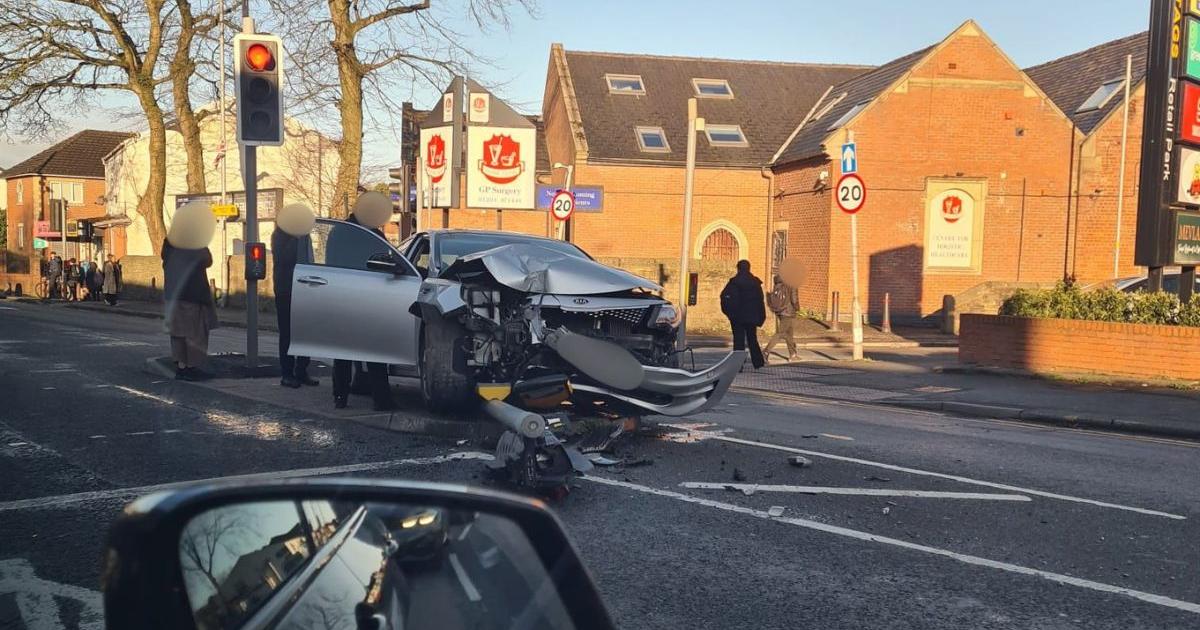
Shortly before 9am, a silver Kia crashed on Wigan Road in Deane and brought down one of the traffic lights with it.
Images taken after the incident show the front bumper smashed in at one side with the lights and a bollard trapped underneath the car at the junction with Hulton Lane and Horsfield Street.
The crash happened on Wigan Road this morning (Image: Public)
Traffic was held up in both directions while the wreck was removed – but this happened quickly and the road was clear around an hour later.
Wigan Road has been the scene of a number of crashes in recent days – most notoriously the crash in January which killed four people.
Advertisement
But Cllr Ayyub Patel, of Rumworth, said this morning’s crash was not on a junction which is seen as an issue, with measures such as traffic lights already in place.
He said: “I would just advise drivers to be aware on the highway network and be mindful and respect pedestrians and other road users.”
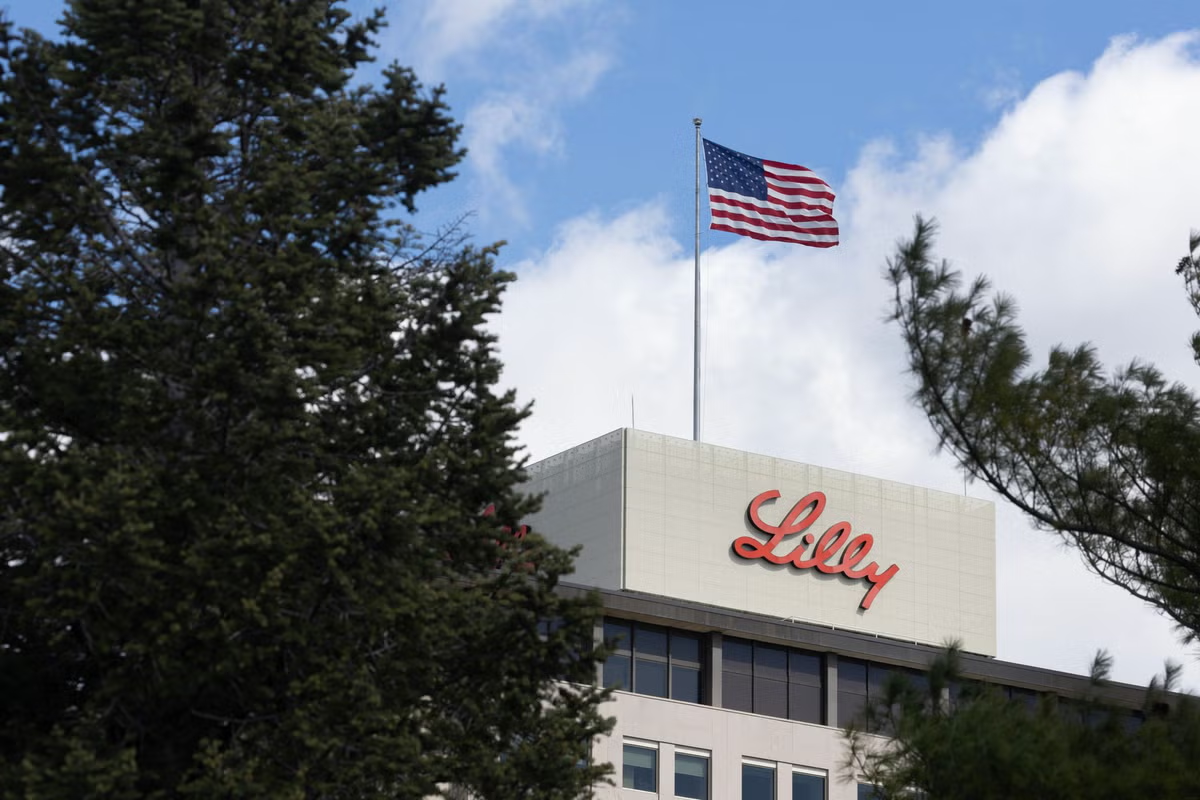
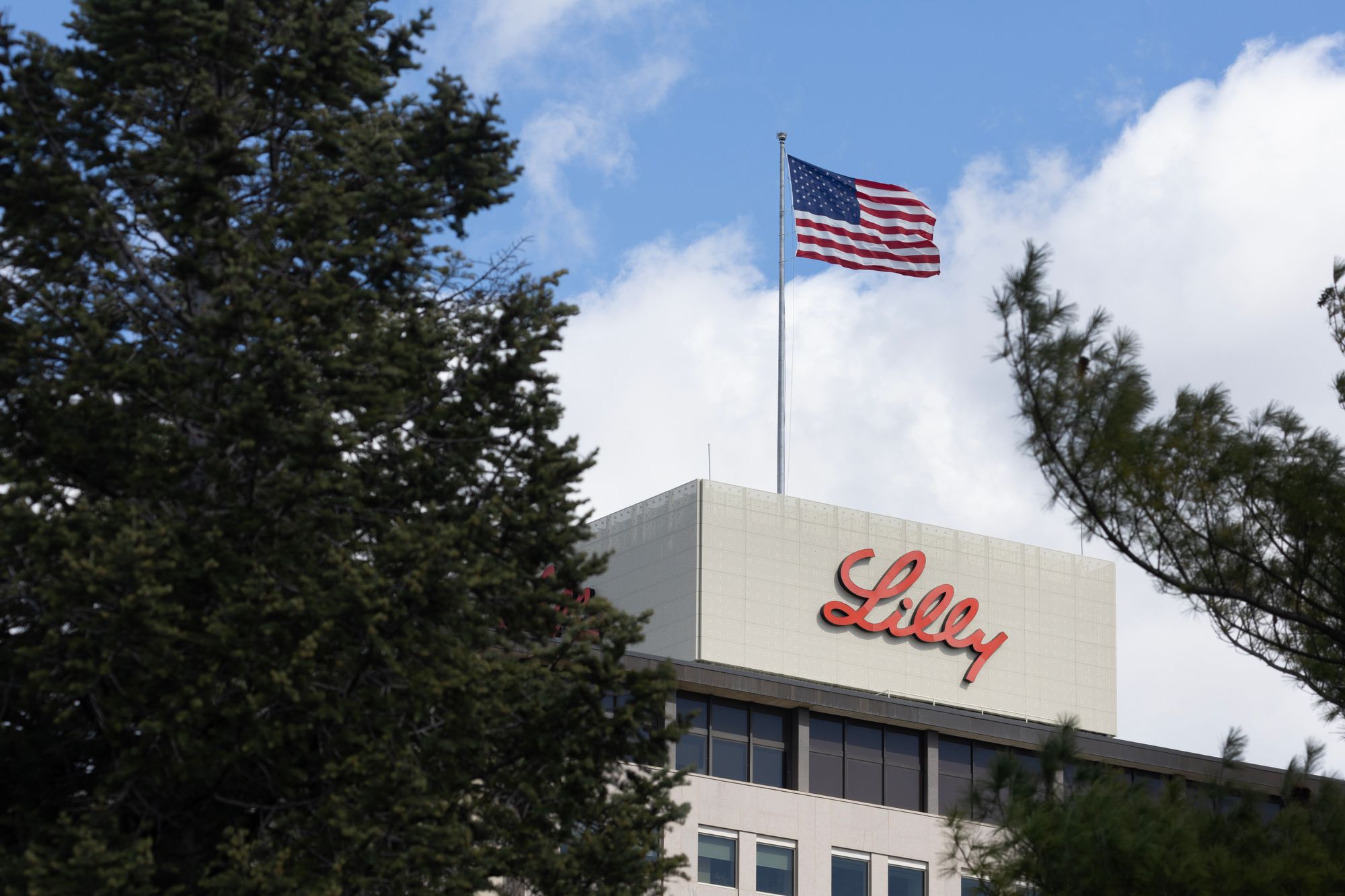
Federal regulators have approved Eli Lilly’s new weight-loss pill, a second daily oral medication to treat obesity and other weight-related conditions.
The FDA granted expedited approval to orforglipron, a GLP-1 drug that works like widely used injectable medications to mimic a natural hormone that controls appetite and feelings of fullness.
The drug, which will be branded as Foundayo, is expected to begin shipping Monday.
The company said people with insurance may be able to get the drug starting at $25 per month with a Lilly discount card. Prices for people paying cash will range between $149 per month to $349 per month, depending on the dose.
Advertisement
The new pill joins drugmaker Novo Nordisk’s oral Wegovy pill, which has spurred more than 600,000 prescriptions in the United States since it was approved in December.
Both the Lilly and Novo Nordisk pills resulted in less weight loss than the average achieved with Lilly’s injectable Zepbound (Getty Images)
The FDA authorized Eli Lilly’s drug as part of a new program aimed at cutting drug approval times. The agency said it reviewed the company’s application in 50 days.
In a clinical trial of more than 3,000 adults with obesity, participants who received the highest dose of orforglipron, 36 milligrams, lost 11.2% of their body weight –- about 25 pounds on average –- over more than 16 months. That compared with a 2.1% weight loss, or less than 5 pounds, in patients who received a placebo, or dummy pill, according to the New England Journal of Medicine.
Both the Lilly and Novo Nordisk pills resulted in less weight loss than the average achieved with Lilly’s injectable Zepbound, which results in a 21% average weight loss, or Novo Nordisk’s injectable Wegovy, which averages about 15%.
Both once-daily pills promise convenience, but orforglipron is a small-molecule GLP-1 drug that can be taken without restrictions. The Wegovy pill, a peptide, must be taken with a sip of water in the morning on an empty stomach, with a 30-minute wait before eating or drinking.
Advertisement
Users of orforglipron also saw improvements in waist circumference, blood pressure, triglyceride levels and cholesterol levels, the study found.
Side effects, mostly gastrointestinal issues, led between 5% and 10% of participants in the orforglipron study to discontinue treatment, compared with nearly 3% in the placebo group.
About 1 in 8 people in the U.S. have used injectable GLP-1 drugs, according to a survey from KFF, a nonprofit health policy research group. But many more have trouble affording the costly shots.
The pill from Indianapolis-based Lilly will be included in a Trump administration deal to lower prices on GLP-1 drugs.
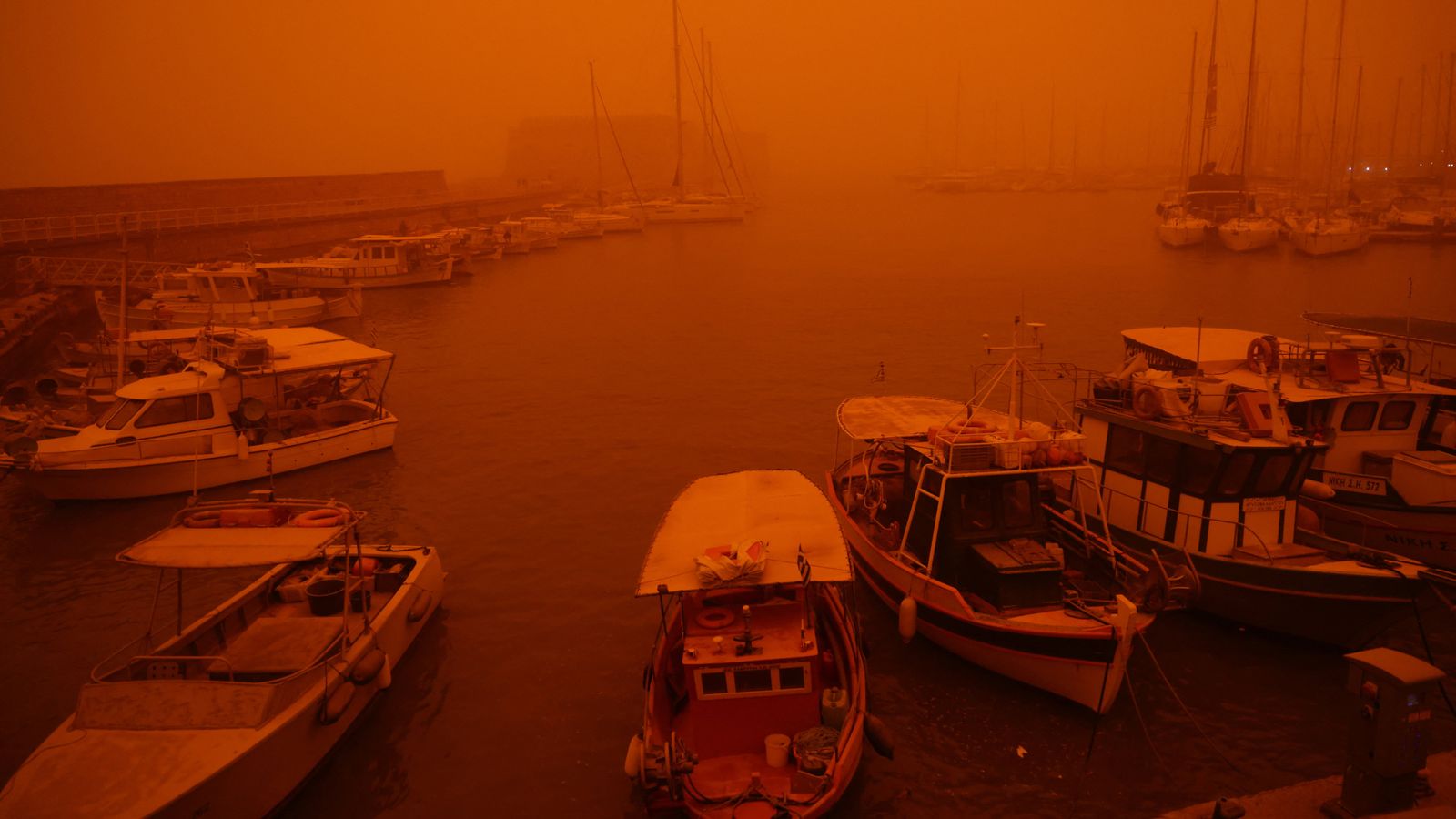
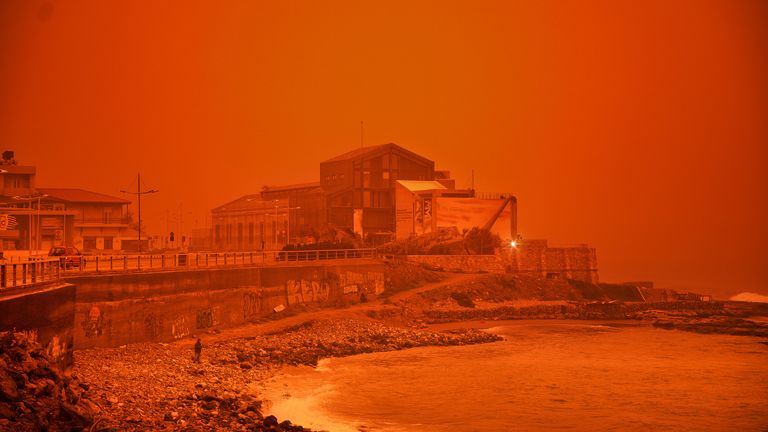
The island of Crete, known for its blue skies, is seeing red – thanks to a cloud of Saharan dust.
A powerful storm has carried the dust from Africa, and the popular holiday destination has turned an apocalyptic shade of red ahead of the Easter break.
Dramatic photographs showed the impact the dust was having on life on the Greek island.
Image: A view of the port in Heraklion, Crete, which is cloaked by red dust from Africa. Pic: Reuters
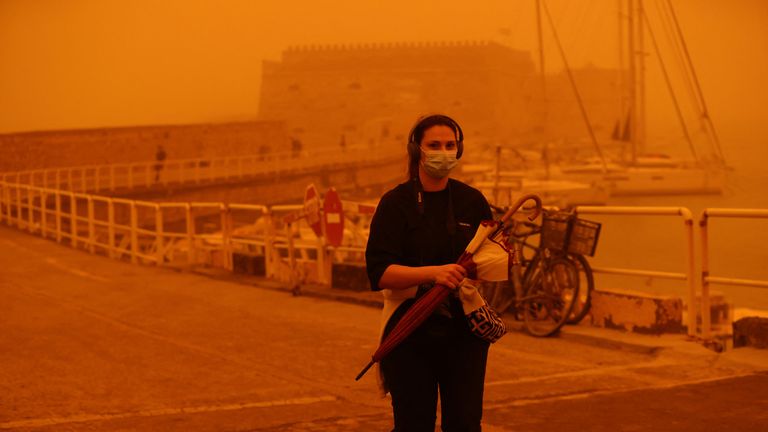
Image: A woman in the port city wearing a face mask. Pic: Reuters
The island has also been battered by extreme weather – strong winds and heavy rainfall – carried by Storm Erminio.
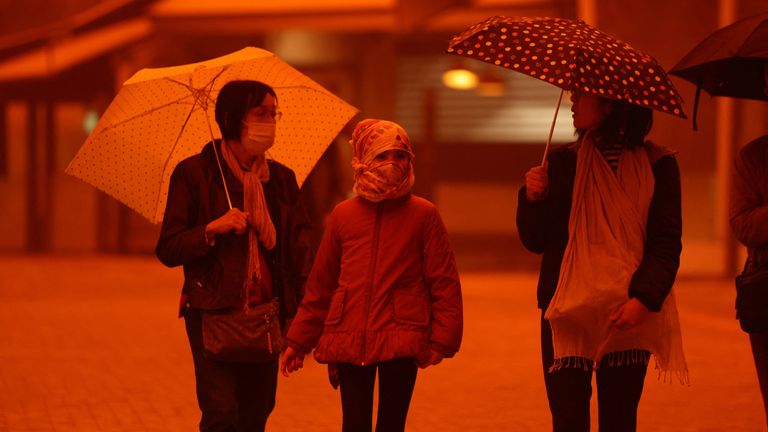
Residents have been wearing face masks to protect themselves from the suffocating dust.
Advertisement
There have also been gale-force gusts on the island, and the rain, mixed with the dust, has created mud which has coated vehicles and buildings.
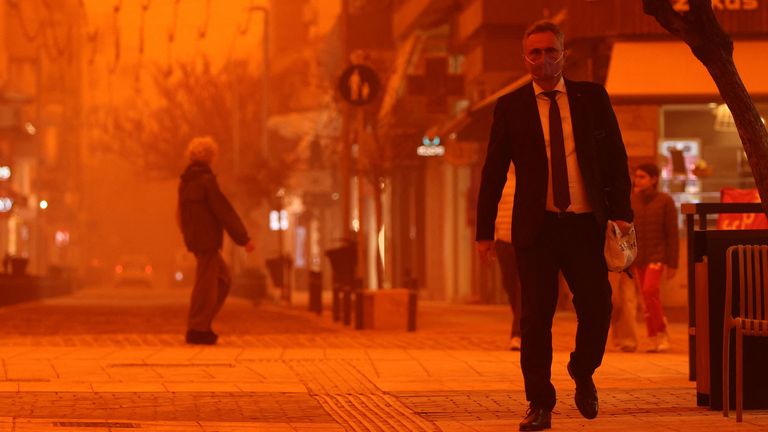
Image: People are continuing to go about their everyday lives amid the haze. Pic: Reuters
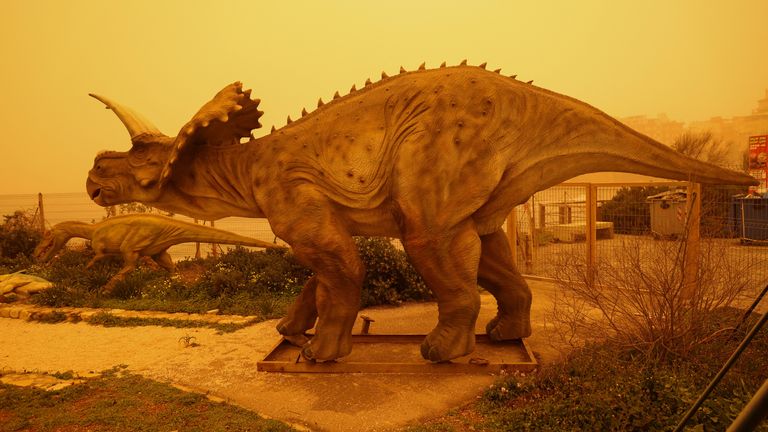
Image: Sculptures of dinosaurs in Heraklion stand among the dust haze. Pic: Reuters
Image: People have been wearing face masks to protect themselves. Pic: Reuters
A red weather warning was in place until late on Thursday.
The storm has affected travel to and from Crete ahead of the Easter holidays, with flights and ferries disrupted on Wednesday.
Image: The beach in Iraklio, Crete. Pic: AP
Mainland Greece has also been hit by the storm, and a man has died near Athens.
He was found under a car in the Nea Makri area, which suffered flooding, early on Thursday, according to the fire department.
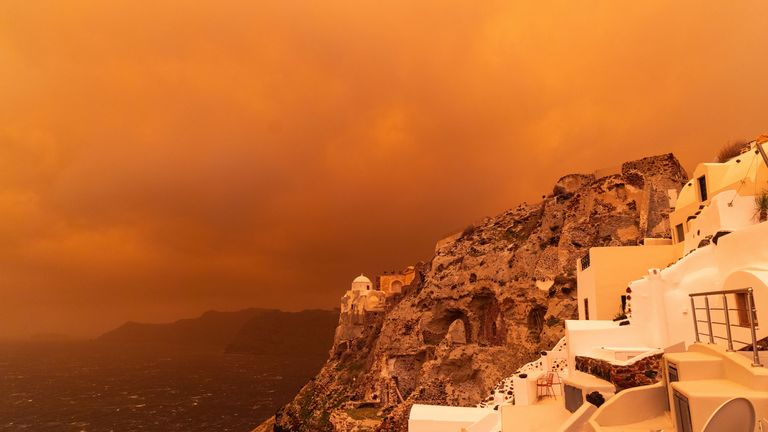
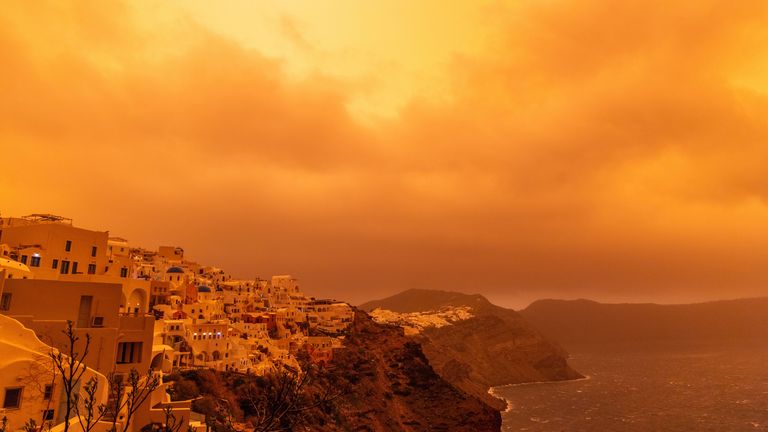
Santorini has also been enveloped in the red dust, which has caused huge disruption on the Greek island.
Advertisement
Image: The skies above Santorini have turned orange-red due to the dust from Africa. Pic: AP
Image: A powerful storm has also caused massive disruption in Santorini. Pic: AP
The cheapest places to fill up with petrol and diesel in Scotland have been revealed. Drivers across the country are looking for ways to save when topping up their tank at the moment.
While we always love a saving, it is especially important at the moment due to the skyrocketing fuel prices amid an ongoing cost of living crisis. Costs at garages have been rising steadily since the first US-Israeli strike on Iran sparked a huge conflict in the Middle East.
And the Iran War has continued to have a massive impact on the price of crude oil and, therefore, the cost of fuel here in the UK. The latest figures from the RAC show that both petrol and diesel increased by record amounts in March.
Advertisement
Petrol surged by 20p across the month, coming out at an average pump price of 152.83p on March 31. The change in diesel was even more dramatic, with a surge of more than 40p to 182.77p on average – almost double the previous record rise after Russia’s invasion of Ukraine in 2022.
Although we haven’t yet hit the all-time highest prices, the recent rise has motorists throughout Scotland and beyond worried about filling up. Especially with the Easter Weekend almost upon us, when the RAC estimates more than 20million car journeys will be made in the UK.
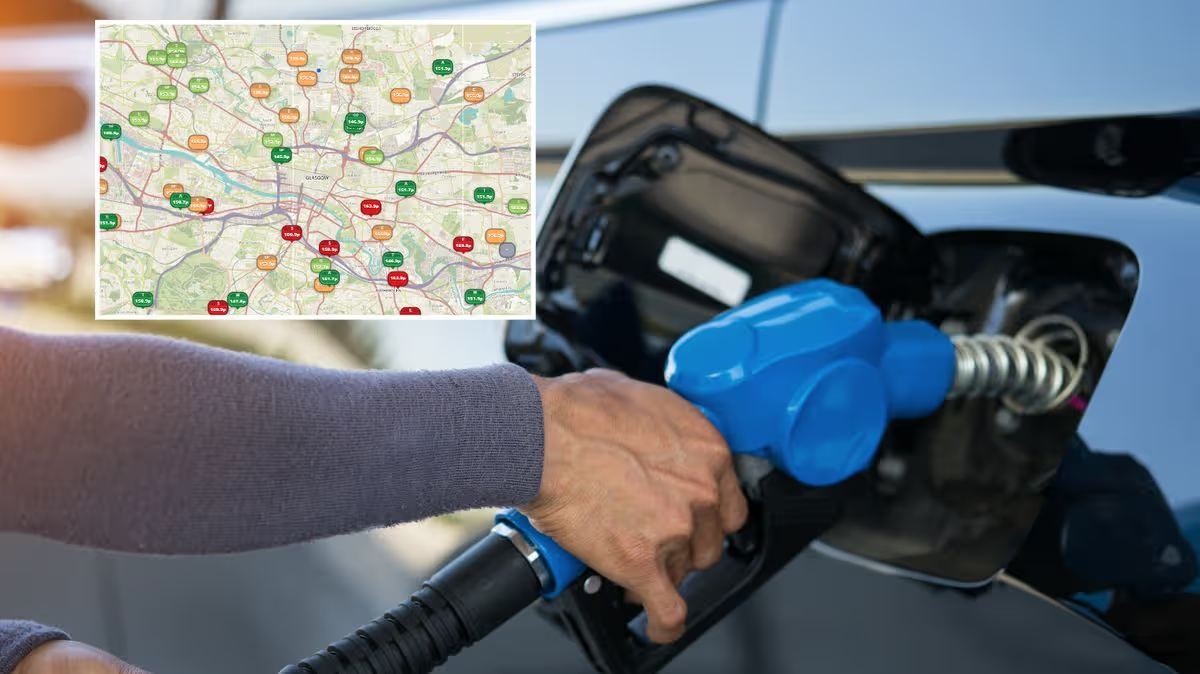
And there is also a relatively recent scheme that can help drivers pick out the best offers in their area – or on their driving route. The UK Government-backed Fuel Finder website has been created to gather and share fuel price data as close to real-time as possible.
Advertisement
Garages across the country are supposed to update their fuel costs within 30 minutes of any change, meaning motorists are able to scan the most up-to-date prices. It is free to use and has a handy, map-based layout.
Users just need to type a location or postcode into the Fuel Finder website, set a distance radius from five to 50 miles, and select their chosen fuel; petrol (e10), diesel (B7), super unleaded (E5), premium diesel, or EV charging points.
The stations within the chosen area should then appear on the map, as well as in a list at the side. The prices will be listed alongside each station, and they are colour-coded on the map, ranging from the cheapest in green, through amber, to the most expensive in red.
Users can also filter their choices by various facilities, such as being open for 24 hours, having toilets, or having a car wash. Launched at the start of February, hundreds of fuel stations across the UK are included – though not all of them have the most up-to-date prices.
Advertisement
To help you out, we have travelled across Scotland on the Fuel Finder map, picking out the best deals for drivers. We haven’t included any stations that haven’t updated their price in the last week, given how quickly the prices have been changing.
In terms of petrol, the cheapest in Scotland at the time of writing is found at Tesco in Cupar and at Costco in Edinburgh, with both charging 144.9p per litre – though the latter is only for Costco members. Burnpark Filling Station in Kilmarnock was next at 146.7pm, with Pace in Cumnock, Tesco in Rutherglen, and Costco in Glasgow all at 146.9p
Asda in Ayr charges 147.7p per litre of petrol, while there are several other supermarkets priced at 147.9p. These include Tesco stores in Dingwall and Ayr, Sainsbury’s in Prestwick, and Morrisons in Ayr. A whopping six of these best-priced locations can be found in Ayrshire.
Advertisement
In terms of diesel, at the time of writing, Gunns Garage in Appin, near Oban, is the best price at just 165.0p. However, this was last updated on March 28, the longest time ago of any forecourt mentioned in this article, so it may have changed since.
Elsewhere, the Gulf Garage in Turriff, Aberdeenshire, charges 168.9p, Central Garage in Alyth, Perthshire, has diesel at 169.9p, and it costs 170.9p at Tesco in Wishaw.
There is a bit of a jump to the next garages, though they do cover a wide area. Tesco in Dingwall (174.9p), Burnpark Filling Station in Kilmarnock (175.7p), Morrisons in Newlands (175.9p), and The Filling Station in Applecross (176.8p) are all at least 5p below the average rate.
To find out the most up-to-date figures on the cheapest petrol or diesel in your local area, or on the route of your Easter holiday, go to the Fuel Finder website.
Scott Mills wrote that he was surprised he had not been fired as a DJ for “saying the wrong thing” or having poor listener stats years before being axed by the BBC
Matt Davies Trendswatch Reporter
13:11, 02 Apr 2026
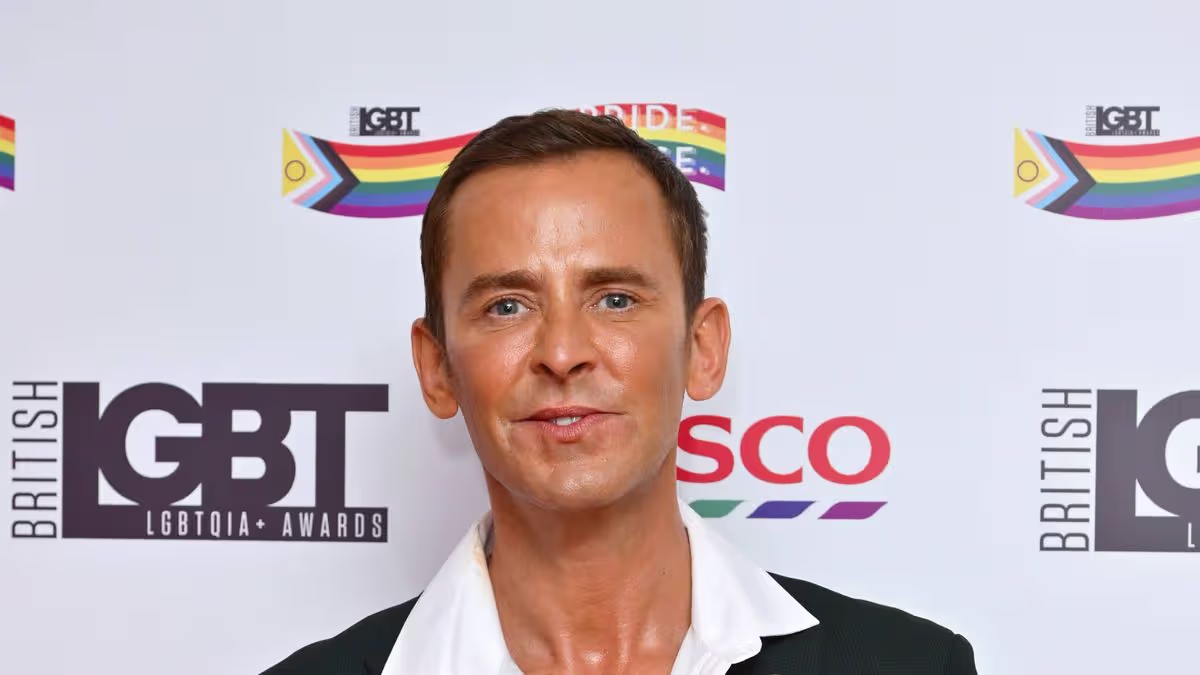
Scott Mills said he was surprised he hadn’t been dismissed as a DJ in remarks made a full 14 years before his sacking. The former Radio 2 presenter was taken off air following his final show on Tuesday, 24 March. Mills had been questioned by police in 2018 over allegations of “serious sexual offences” against a teenage boy under the age of 16 between 1997 and 2000, as part of an investigation that commenced in 2016.
The case was dropped in 2019 after it was concluded that there was insufficient evidence. The Mirror disclosed on Wednesday (1 April) that the BBC was compelled to terminate its star radio presenter’s contract after compelling new information emerged.
Advertisement
Mills subsequently issued a statement, asserting that he had “fully cooperated and responded” to the investigation in 2018, and that the “evidential threshold had not been met to bring charges”. As the story continues to unfold, earlier remarks by Mills have resurfaced regarding his “plan for a quick getaway” should he ever find himself axed from his role as a DJ.
He recalled in his 2012 autobiography, Love You Bye: My Story, beneath a section entitled “Things I have learned”, that hospital radio “was the first and last radio station” to dismiss him. In his opening entry, “plan for a quick getaway”, he wrote: “You may be surprised to learn that hospital radio was the first and last radio station to give me the sack.
“There are so many stories of DJs being escorted off the premises by security for saying the wrong thing, or having a bad set of RAJAR [radio listener stats] results, it seems strange that’s not happened to me. Yet. Being fired as a DJ can be quick and it can be brutal. One programme director famously held a presenter meeting where he played them all their new jingles.
Advertisement
“When one DJ piped up and said, ‘My name wasn’t on there’, the programme director replied, ‘I know. See me in my office after the meeting’.” Mills added: “I’ve never kept many personal items at work for that very reason. If I’m escorted off the premises, I want to make it quick; I’ll shove my mug and my signed photo of George Alagiah [a BBC newsreader who died in 2023] in a cardboard box and be out the door.”
In his statement, issued through Mills’ lawyers to the Mirror, he maintained that the “announcement” had resulted in what he termed the “publication of rumour and speculation”. It read: “The recent announcement that I am no longer contracted to the BBC has led to the publication of rumour and speculation. In response to this the Metropolitan Police has made a statement, which I confirm relates to me.
“An allegation was made against me in 2016 of a historic sexual offence which was the subject of a police investigation in which I fully cooperated and responded to in 2018. As the police have stated, a file of evidence was submitted to the Crown Prosecution Service, which determined that the evidential threshold had not been met to bring charges.
“Since the investigation related to an allegation that dates back nearly 30 years and the police investigation was closed 7 years ago, I hope that the public and the media will understand and respect my wish not to make any further public comment on this matter. I wish to thank from the bottom of my heart all those who have reached out to me with kindness, my former colleagues, and my beloved listeners, who I greatly miss.”
Helm called on the King to ‘send a strong message to the world’
A survivor of Jeffrey Epstein has called on King Charles to meet her and other victims during his state visit to the US this month.
Teresa Helm believes a meeting between survivors and the Monarch would help criminal investigations on both sides of the Atlantic and ‘send a powerful message to the world’.
The campaigner, who was allegedly groomed by Ghislaine Maxwell and sexually abused by Epstein in 2002, said she was disappointed that the King will not be able to meet victims despite a US lawmaker asking him to.
Charles will visit the US with Queen Camilla at the end of April to mark the 250th anniversary of American Independence, where he will meet President Trump and address Congress.
Advertisement
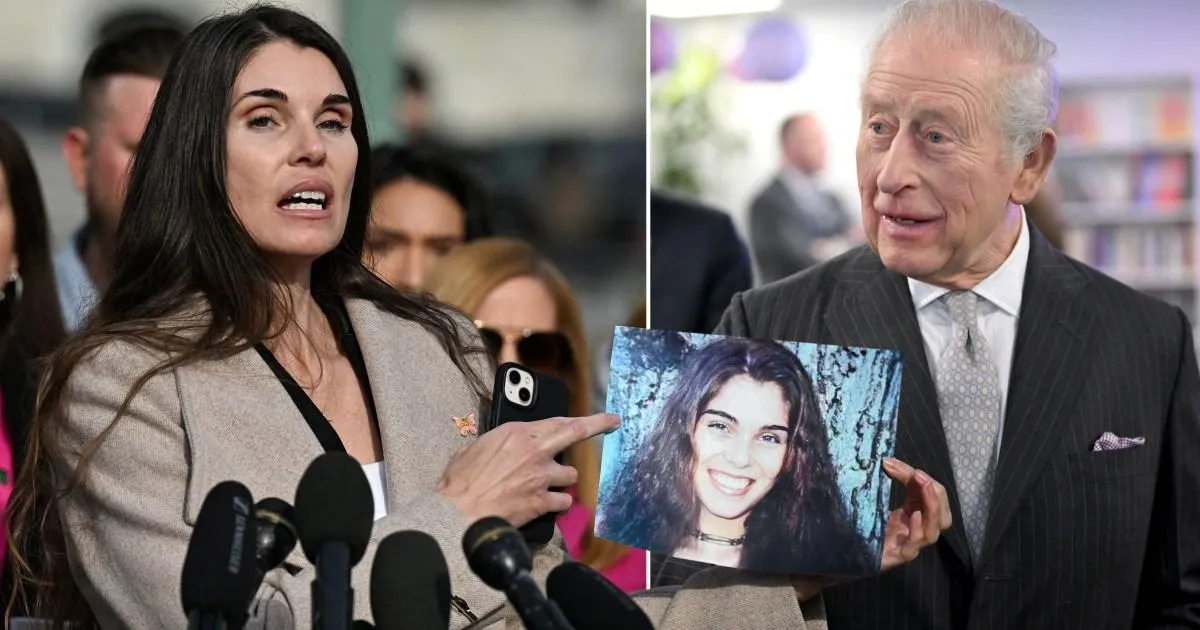
Teresa Helm said a meeting could help police investigations in the UK and US (Picture: REUTERS)
Sign up for all of the latest stories
Start your day informed with Metro’s News Updates newsletter or get Breaking Newsalerts the moment it happens.
Democratic Congressman Ro Khanna, who spearheaded the release of the Epstein Files, wrote to the King this week asking him to meet the sex offender’s victims.
The representative said it would allow the Monarch to hear directly form them about ‘how powerful individuals and institutions failed them’.
Advertisement
The family of Virginia Giuffre, who accused Andrew of sexual abuse, which he denied, also ‘strongly’ urged the King to ‘hear’ what victims ‘have to say’.
Now Helm has become the first Epstein survivor to say she wants to meet the Monarch, alongside other survivors, when he comes to the US.
She told Metro: ‘I do believe that the King should meet with us survivors.
‘Not only could it help with investigations or connecting the pieces, but it would send a strong message around the world that no one is above the law.
Advertisement
‘There is a lot of human dignity that could be demonstrated by meeting with survivors.’
The King will not be ale to meet survivors due to fears it could prejudice police investigations, Metro understands (Picture: Kate Green/Getty Images)
Asked what she would say to the King if she met him, Helm said: ‘I would really encourage him to continue down the path of justice on behalf of all the survivors, on behalf of his family, on behalf of his country.
‘It would take a lot of courage to make sure that there is no stone left unturned as far as any investigation.’
Metro understands the King and Queen’s position is that they will not be able to meet with survivors due to ongoing UK police investigations into matters related to Epstein.
There are fears any Royal meeting with victims would risk prejudicing these investigations into the King’s brother.
Charles said at the time of Andrew’s arrest that law enforcement ‘have our full and wholehearted support and co-operation.’
He added: ‘Let me state clearly: the law must take its course.’
Andrew has always denied any wrongdoing in relation to his friendship with Jeffrey Epstein.
Advertisement
Andrew was arrested on suspicion of misconduct in public office (Picture: REUTERS)
Reacting to the news that the King will not be able to meet survivors, Helm said it was ‘disappointing’.
She added: ‘ It would be such a missed opportunity to set a precedent to showing profound human dignity. The world could really use a healthy dose of that right now.’
The campaigner, who was a close friend of Giuffre before her death almost a year ago, said she did ‘respect the King’ for ‘stating that he supports the investigative process, even of his own brother’.
She added: ‘The decisions that are made in the justice that is sought or not is going to impact many generations to come.’
However Helm, who has become a leading advocate for the full release of the Epstein Files, also called on more pressure to be put on Andrew to testify in front of US lawmakers, which has previously refused to do.
Advertisement
She claimed: ‘Andrew had a very close relationship with Ghislaine.
‘Ghislaine harmed me very directly and personally. In my mind she is pretty much a monster.
‘Jeffrey, Ghislaine and Andrew were very close, and many others. In my mind… they all knew what they were doing because they were all supporting one another in doing it. They were all in each other’s pockets.’
Helm was a lead advocate in the release of the Epstein Files (Picture: Chip Somodevilla/Getty Images)
Helm praised the fact that police forces across the world are investigating people linked with the Epstein files, but questioned why US law enforcement are yet to act over the relevations.
She explained: ‘When I look at other parts of the world where there are arrests and investigations, I am left wondering why we have not seen that in the United States.
Advertisement
‘We’re all just still watching and waiting for some true actual accountability.
‘All these names are being named, there are photos, but there is nothing following behind that to show people are being held accountable.’
While the full details of the King’s visit to the US have not been confirmed, he will meet President Trump during the trip.
‘It will be TERRIFIC!’, Trump said in a post on Truth Social.
Advertisement
The King has also been invited to address Congress during the state visit.
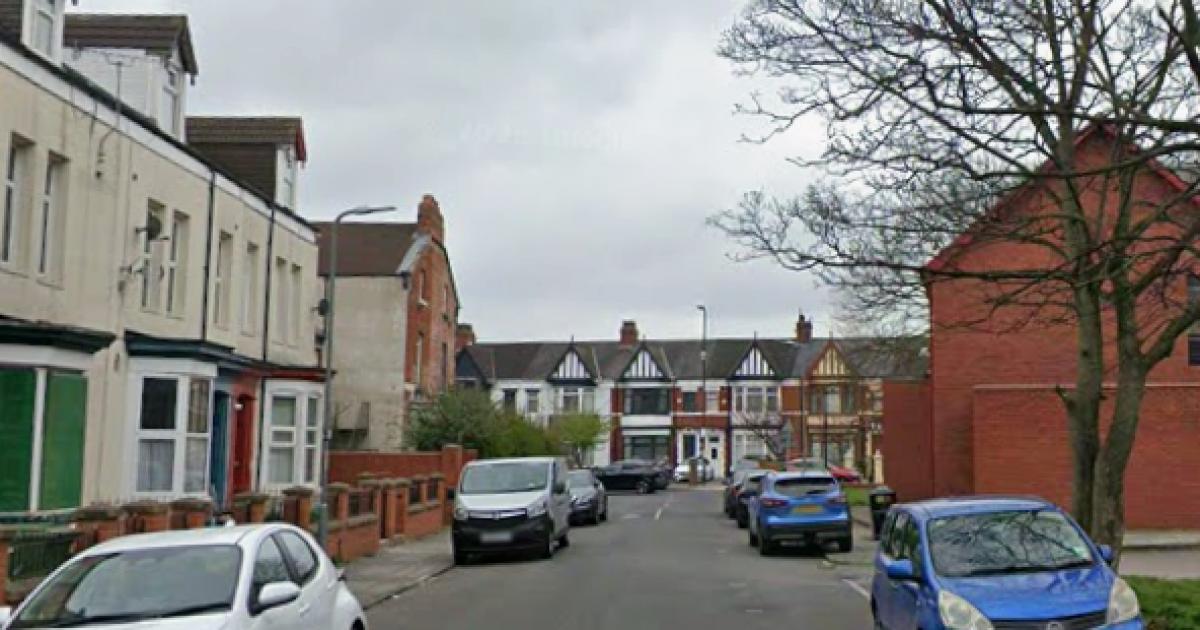
Police were called to a property on Cranbourne Terrace in at around 4.40pm on Wednesday, April 1, after reports of a petrol bomb being thrown at a house and two cars.
An investigation has now been launched to find those responsible and police are appealing for anyone with information to come forward.
Detective Chief Inspector Chris Pringle, from Stockton CID said: “At 4.40pm on Wednesday, April 1, police were called to reports of a petrol bomb thrown at a house on Cranbourne Terrace in Stockton and another at two cars causing minor damage.
Advertisement
“Officers swiftly attended and an investigation is ongoing to establish who is involved.
“We are appealing to anyone with information to call 101 or visit the website quoting reference number 060579.
“You can call Crimestoppers anonymously on 0800555111.”
Packed pullouts and FREE shop bets every day of the iconic Grand National festival from your trusted racing paper – don’t miss out!
The Randox Grand National Festival is a highlight of the British sporting calendar, and over three days, the stars of horse racing line up for a chance to come away as one of the festival’s iconic victors.
Your Daily Mirror has an incredible line up for this huge event! With packed pullouts featuring tips and insights from your trusted pundits and all the information you need on the day’s runners and riders every day of the festival. PLUS you’ll find a £5 FREE shop bet inside your paper EVERY day of the festival to use at any A.McLean Bookmakers – so pick a winner with your Daily Mirror this Aintree!
Advertisement
On Saturday April 11, 34 horses will line up to take on the four and a quarter mile titular race over the Aintree spruce fences before a winner is crowned. It is the one occasion of the year when the public places a bet with millions of pounds set to be wagered on the outcome of the 4.00 race at Aintree on April 11. There is also the small matter of a £1 million prize fund up for grabs, with £500,000 on offer for the winner, making it a potentially lucrative day out for owners and trainers.
Winning is not an easy task, however, and there is lots of competition for the crown of Grand National winner. Last year Willie Mullins pulled off the extraordinary feat of training the 1-2-3 in the race with Nick Rockett, ridden by his amateur rider son Patrick, defeating 2024 Grand National winner I Am Maximus and Grangeclare West. For good measure he also trained the fifth placed finisher.
Last year’s first three are destined to take on the challenge again with billionaire JP McManus, the owner of favourite I Am Maximus, also represented by Iroko and Jagwar near the top of the betting. McManus also owns Johnnywho, a winner at the recent Cheltenham Festival, and Oscars Brother, trained by former champion apprentice Connor King who at 27 will attempt to become the youngest trainer to win the Grand National. Haiti Couleurs, trained in Pembrokeshire, west Wales by Rebecca Curtis, will attempt to add the Grand National to triumphs in the Irish and Welsh versions.
Inside your Daily Mirror from Thursday April 9th
Thursday April 9th, and Friday April 10th: 12 packed pages of racing content from Day One and Two of the festival
Advertisement
Saturday April 11th: Celebrate Grand National Saturday with TWENTY pages of epic tips, features and content from your trusted Mirror pundits
PLUS Get a FREE £5Shop bet with A.McLean Bookmakers inside your paper on Thursday, Friday, AND Grand National Saturday!
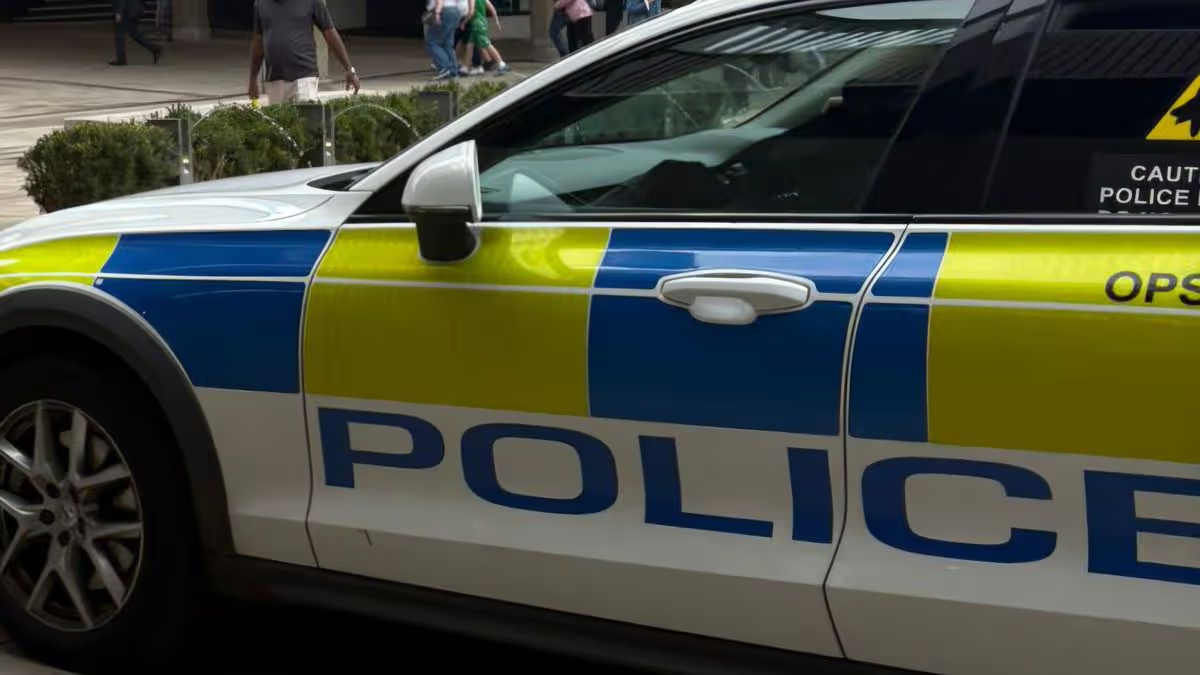
A police officer has been injured after being involved in a crash. Cambridgeshire Police were called to reports of a crash on Gilbert Road in Cambridge at around 8.55am on Thursday (April 2).
Advertisement
The collision involved a car and a police van. One officer was injured during the incident. No arrests have been made.
A spokesperson for Cambridgeshire Police said: “We were called at about 8.55am this morning (2 April) to Gilbert Road, Cambridge, to reports of a collision between a car and a police van.
“An officer suffered minor injuries, there were no arrests and officers remain at the scene.”
To get more news and top stories delivered directly to your phone, join our new WhatsApp community.Click this linkto receive your daily dose of CambridgeshireLive content.
Advertisement
We also treat our community members to special offers, promotions, and adverts from us and our partners. If you don’t like our community, you can check out any time you like. If you’re curious, you can read ourPrivacy Notice.














































You must be logged in to post a comment Login