

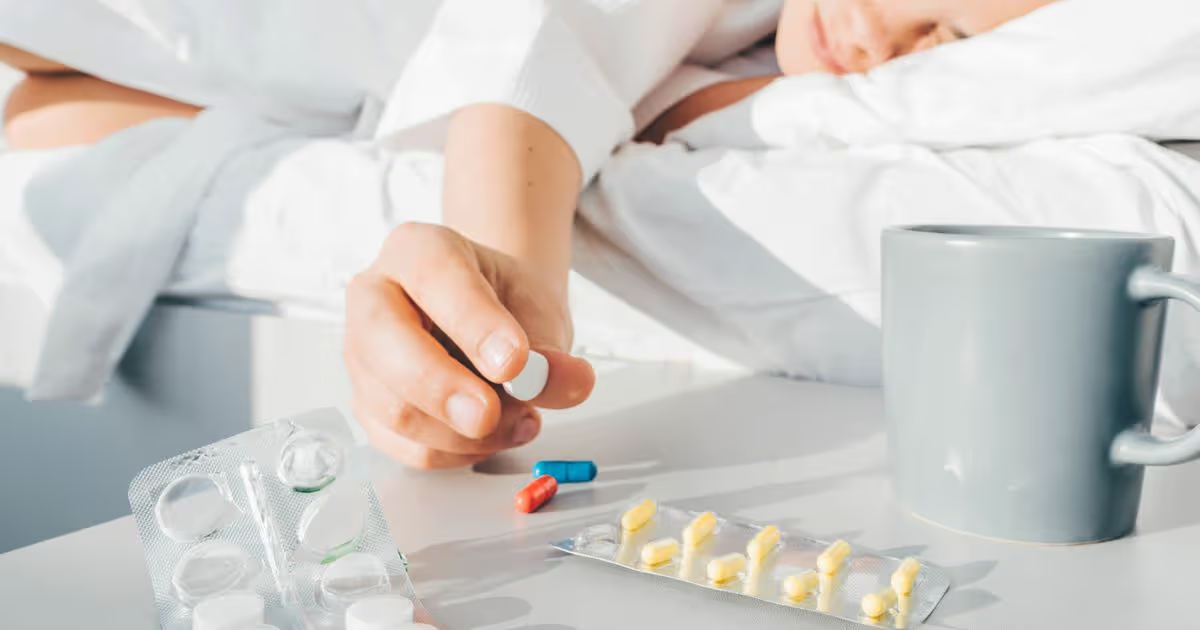
Even common painkillers like ibuprofen could create problems
Anyone with a cold or flu symptoms has been warned that over-the-counter medicine you can pick up in any chemist, high street shop or supermarket, could get you into trouble at work. While over-the-counter remedies help people get through their workday if they have a cold, they can also trigger screening results that raise questions about substances employees never actually used.
Mona Montanino, President of 12 Panel Now, said: “We work with employers across the country, and one of the most common concerns we hear involves employees who test positive despite having no history of drug use. In a lot of cases, the culprit is something as simple as a decongestant or allergy medication they picked up at the pharmacy.”
Montanino says that being aware of which medications pose the highest risk helps both workers and employers to navigate the testing season with fewer complications.
Cold and Flu Remedies
Quite a few popular cold medications contain pseudoephedrine or phenylephrine, decongestants that can cause drug tests to flag for amphetamines or methamphetamine. Multi-symptom formulas are among the most common triggers.
“People don’t realise that the ingredient helping them breathe easier is structurally similar to certain controlled substances,” says Montanino. “The initial screening test can’t always tell the difference, which is why we see false positives spike during cold and flu season.”
Antihistamines
Allergy medications, particularly first-generation antihistamines like diphenhydramine and doxylamine, can sometimes trigger false positives for methadone or PCP.
“Even newer antihistamines have occasionally been linked to unexpected results, though less frequently,” said Montanino.
Pain Relievers
Certain over-the-counter pain medications, particularly those containing ibuprofen or naproxen, have been known to cause false positives for marijuana or barbiturates. Prescription pain relievers containing codeine can also complicate results, as they may metabolise into substances that appear on screening panels.
“The screening technology we use today is highly sensitive, which is good for detecting actual drug use but means it can also pick up on compounds that look similar,” Montanino explains. “That’s why confirmation testing exists.”
What Workers Should Do Before a Drug Test
Disclosure Best Practices
Workers should inform their employer or the testing facility about any medications they’re taking before the test is administered. This includes prescription drugs, over-the-counter medications, and even supplements. Being upfront creates a paper trail that supports the employee if questions arise later.
“We always recommend that workers bring a list of everything they’ve taken in the past week,” says Montanino. “It doesn’t have to be formal, just honest. That simple step prevents most misunderstandings.”
Documentation
Keeping receipts, medication bottles, or prescription records provides additional proof if a false positive occurs. Workers should photograph labels showing active ingredients and purchase dates, creating a backup record that confirms their disclosure.
Timing Considerations
Some medications stay in the system longer than others. Workers who know they have an upcoming drug test should check with a pharmacist or their doctor about how long specific medications remain detectable. In some cases, switching to an alternative medication a few days before testing can eliminate the risk entirely.
“Timing matters more than most people think,” Montanino notes. “A medication you took three days ago might still show up on a test, so planning ahead makes a real difference.”
How Employers Can Reduce Disputes and False Flags
Confirmation Testing
Initial drug screenings are designed for speed and affordability, but they’re not definitive.
“When a test comes back positive, employers should always follow up with a confirmation test, typically a more precise method like gas chromatography-mass spectrometry (GC-MS),” explains Montanino. “This second test can distinguish between actual drug use and false positives caused by legal medications.”
Data suggests 5% to 10% of all drug tests may result in false positives and 10% to 15% may yield false negatives, making confirmation testing an important safeguard for fair workplace practices.
Clear Policy Communication
Employers should provide written policies that outline the testing process, explain what happens if a test comes back positive, and detail the confirmation procedures that follow. Workers who understand the process are more likely to disclose medications upfront and less likely to panic if an initial result is flagged.
“Education reduces conflict more effectively than enforcement,” says Montanino. “When employers take the time to explain how testing works and what protections are in place, workers feel more comfortable being transparent about their medication use.”
Medical Review Processes
Having a medical review officer (MRO) examine test results before any employment decisions are made adds another layer of protection. MROs are trained to identify false positives and can request additional information from employees to verify legitimate medication use.
“When workers know they can be honest about their cold medicine without fear, and when employers commit to confirmation testing before making any decisions, everyone benefits,” Montanino concludes.



