

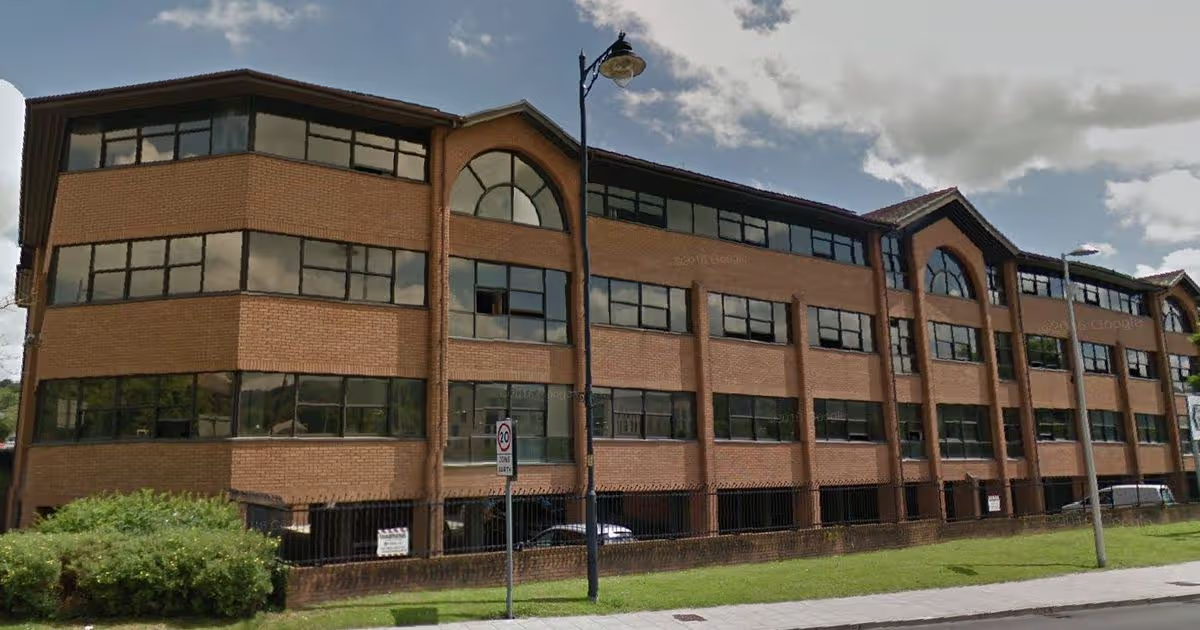
Merthyr Tydfil Council’s budget was voted through by councillors on Monday, February 23
A 4.95% council tax increase has been approved for Merthyr Tydfil residents next year. The council’s £183.69m budget proposals for 2026/2027 were approved by cabinet and full council on Monday, February 23.
On council tax, the budget report said the initial provisional local government settlement would have meant an even higher level of council tax was needed for next year, but in light of the final settlement, a 4.95% was proposed, which will “avoid excessive increases in council tax and maintain as many services as possible.”
This will result in a band D council tax of £2,186.33 for 2026/27, equating to an additional £103.12 for the year, or £1.98 per week.
The weekly increase ranges from £1.32 at the lowest band A to £4.63 at the highest band I. Ensure our latest news and sport headlines always appear at the top of your Google Search by making us a Preferred Source. Click here to activate or add us as Preferred Source in your Google search settings
This results in a net reduction in council tax levy income of £21,000.
The report said that as 84% of the properties within the county borough were valued at bands A to C, a significant proportion of council taxpayers would be liable to payments less than £2,186.33, and it also mentions the council tax reduction scheme.
In terms of cuts, the budget plan includes proposals to remove £3.58m from the revenue budget next year, made up of £1.69m permanent savings, £34,000 in the use of one-off service earmarked reserves, and £1.85m of temporary savings which are not sustainable in the medium or long term.
No additional efficiencies were being asked of schools across Merthyr Tydfil, the report said.
But it added: “Schools across Merthyr Tydfil continue to face significant financial pressure through pay, pension and other costs.
“Due to the ongoing financial challenges faced by local government, the draft budget proposal does not provide the funding required to fully support the schools funding formula.”
The report highlighted the financial pressure schools faced, particularly in relation to the increased number and complexity of additional learning needs.
“Governing bodies, like other council services, will need to consider how they manage these resources and deliver a budget that complies with the scheme for the financing of schools.”
The report also mentioned pay pressures (£534,000) and £2.6m in unavoidable additional demands resulting from service financial pressures such as demographic growth, legislative changes, new initiatives, loss of income and changes to grants terms and conditions.
The final local government settlement from Welsh Government resulted in a funding increase of 4.7% for Merthyr Tydfil, which reduced the budget gap by £7.74m
After taking into account factors including adjustments to the council tax base (£146,000), employee costs reductions (£2.35m), capital financing costs (£1.35m), an accountancy review of assumptions (£1.18m) and the 2025/2026 transformation programme (£354,000), the council is left with a budget gap of £509,000. Stay informed on everything Merthyr Tydfil by signing up to our newsletter here
This will be closed through a variety of means including a 3.4% rise in charges for paid-for council services and the council tax increase.
Councillor Lisa Mytton, Independent, said it was a very difficult decision trying to balance the books and agree on council tax as well.
She said they’d been promised reform of council tax for nearly six years and that was so desperately needed because it was “not fair and it’s not equal.”
Cllr Mytton said the First Minister and Plaid Cymru agreed to a budget designed to protect the most vulnerable and said “we in Merthyr Tydfil aren’t doing that.”
She said other authorities were doing that and that the council tax increase proposed, when they could mitigate it in other areas, was “not necessary” and they could bring it down by at least 1%. She said it went “against the grain and spirit of the national budget and the needs of our community.”
Councillor Geraint Thomas, leader of the Independent group, said: “We did have an opportunity over the last week or so to reduce council tax by 1% and 3.95 was getting closer to the inflation rate which I think was palatable.”
On setting a budget and council tax, he said it was not a great place to be and it was very difficult but they could have gone 1% lower so he wouldn’t be supporting the budget.
Councillor Brent Carter, Labour leader of the council, said: “I’d like to think throughout this process I’ve been open and honest with the public especially during the roadshows where I openly discussed a potential increase of 5% council tax.
“It’s great to say we could have reduced the council tax by 1% and I would have loved to have been able to reduce it by 1%.
“But to say those things you need to tell me and tell us where it’s actually going to come from.”
Councillor Andrew Barry, Reform UK, said they were spending £180m to keep the council going and when the public looked at a settlement figure of £9.1m, pension savings of £2.3m and cost reductions of £3.5m they must be thinking where was that money going.
He said he took the point about it being the most difficult thing to come to residents and continually ask them for council tax and he added: “We’ve done it infinitum and it just says to me that the model is wrong. We have to readdress the model. We have to do it differently.”
He said the cost-of-living crisis was not going away and there was no sign of it going away in the near future which meant they had to change their tack.
Councillor Gareth Lewis, Labour cabinet member for education, said the budget sent a “clear and positive signal about our priorities.”
He said they were investing an additional £2.669m in education, a 3.8% increase recognising the pay, pension and ALN (additional learning needs) pressures schools were facing.
He also said that for the second consecutive year the administration had honoured its commitment not to ask schools for further efficiency savings.
He also mentioned increases in grant funding from the Welsh Government and said: “Together, these measures demonstrate our clear and continued commitment to protecting education, supporting our learners and giving every young person the best possible chance to succeed.”
Councillor Anna Williams-Price, Labour cabinet member for finance, said she believes the budget to be “stable, responsible, forward looking protecting core services, avoiding use of budget reserves and as much as possible keeping financial pressures on residents to a minimum.”
She said that there was no sensible or sustainable route to lower the council tax increase further and if there was she was sure all members would be open to it and support it.
“I completely agree that council tax in its current form is regressive and a priority for the next Welsh Government needs to be reform of that system.”
She said that work had started in some shape or form but local government asked for it to be delayed until 2028.
She said she believed it remained and should remain a priority to reform a system that didn’t work for the current make up of households and communities in Merthyr Tydfil.
Do you think you’re paying too much council tax this year?
Do you think you’re paying too much council tax this year?

















































You must be logged in to post a comment Login