

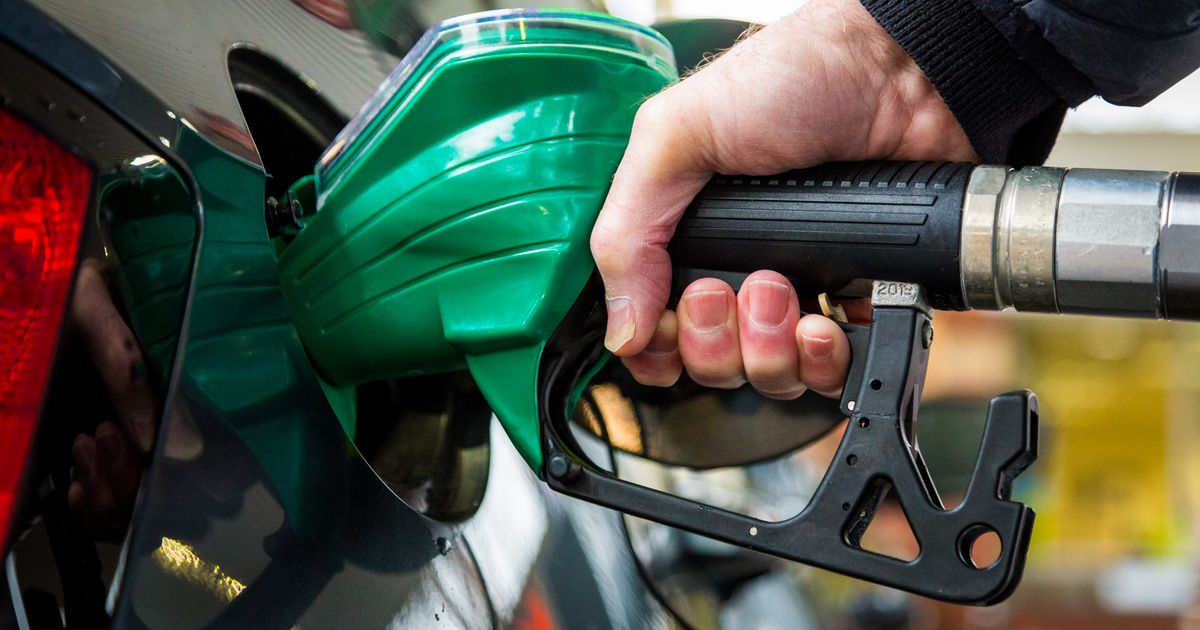
Electric car drivers will also not escaope the increases
The Chancellor has unfrozen fuel duty, put on hold in 2011, meaning the price of petrol and diesel will go up for motorists across the UK. Rachel Reeves said fuel duty would remain frozen for another five months, but would then go up in stages.
Electric car drivers won’t escape taxes as a new pay-per-mile fee is set to come into force in 2028.
Chancellor Rachel Reeves announced the latest fuel duty policy as part of today’s Budget. Ms Reeves was reported to be announcing that she is retaining the 5p cut in fuel duty, which was introduced in 2022, and ensure it does not rise in line with inflation.
But instead, after a short continuation of the freeze, prices will go up. Rachel Reeves will retain the 5p cut in fuel duty until September 2026, when it will be reversed through a staggered approach, according to the Office for Budget Responsibility
Fuel duties are levied on purchases of petrol, diesel and a variety of other fuels. They represent a significant source of revenue for government. In 2025-26, it is expected to raise £24.4 billion. That would represent 2.0 per cent of all receipts and is equivalent to £850 per household and 0.8 per cent of national income.
Fuel duty is levied per unit of fuel purchased and is included in the price paid for petrol, diesel and other fuels used in vehicles or for heating. The rate depends on the type of fuel:
- the headline rate on standard petrol and diesel is 52.95 pence per litre, it has been frozen since 2011-12 and includes a temporary 5 pence cut introduced in 2022-23 and subsequently extended to 2023-24, 2024-25 and 2025-26. This also applies to biodiesel and bioethanol;
- the rate on marked gas oil is 10.18 pence per litre. This mostly represents off-road diesel used for agriculture, rail, non-commercial heating and electricity, and other qualifying purposes;
- the rate on liquefied petroleum gas (LPG) is 28.88 pence per kilogram;
- the rate on natural gas used as fuel in vehicles (e.g. biogas) is 22.57 pence per kilogram; and
- the rate on ‘fuel oil’ burned in a furnace or used for heating is 9.78 pence per litre.
VAT is applied after fuel duty, so, for example, the pump price of a litre of petrol currently reflects the pre-tax price plus 52.95p for fuel duty plus 20 per cent VAT on the pre-tax price and a further 10.59p for VAT at 20 per cent on fuel duty.
A form of petrol duty was first introduced in 1909 at a rate of 3 old pence per gallon. The modern system gained prominence in the 1990s with the introduction of the “fuel duty escalator” in 1993, which increased duty rates annually by a set percentage above inflation. This policy led to a significant rise in prices and major public protests in 2000.
The escalator policy was suspended, and the main rate of fuel duty was largely frozen at 57.95 ppl in 2011. This freeze has largely remained in place for over a decade, with successive Chancellors cancelling planned inflation-linked rises. In response to soaring global oil prices following the 2022 invasion of Ukraine, a 5 pence per litre temporary cut was introduced. This has been extended multiple times
The UK’s fuel duty is high compared to many other nations, particularly for diesel. The UK has the highest duty on diesel compared to EU member states and the ninth highest on petrol. The UK rate is significantly higher than the EU average (around 6p per litre more for petrol and 16p more for diesel).
Malta has one of the lowest duties in the EU at around 31p per litre for petrol and 28p for diesel, while The Netherlands generally has the highest duty on petrol in the EU.
The total tax proportion (duty and VAT) in the UK is a major component of the pump price, a system that differs significantly from countries like the United States, where total federal and state fuel taxes are much lower per litre.



