

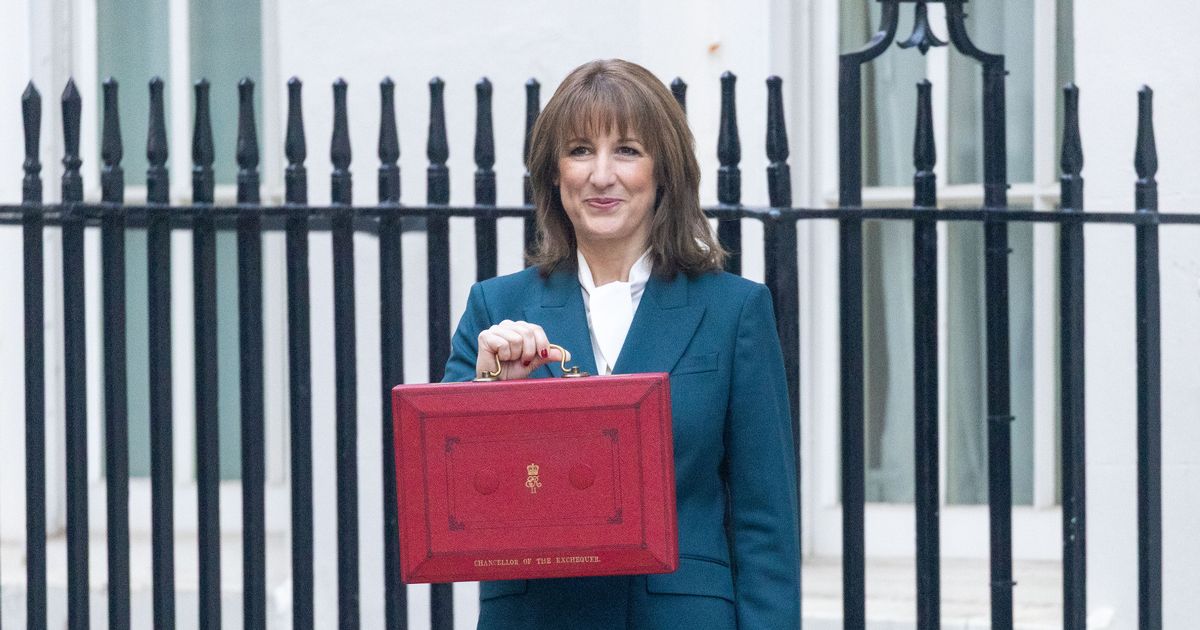
The much respected Institute for Fiscal Studies has given its verdict on the Budget and warned Labour will struggle to keep to its spending plans ahead of the next general election
Households may face a “truly dismal” increase in what they have left to spend in the coming years, a leading think tank has warned.
Analysis in the wake of this week’s Budget suggests average disposable incomes will grow by just 0.5% a year during this parliament. “This is truly dismal, especially when compared to the more than 2% per year we achieved across every parliament from the mid-1980s to mid-2000s,” said Helen Miller, director the Institute for Fiscal Studies.
It came as the highly respected body branded Chancellor Rachel Reeves’ Budget “underwhelming”. In its much-anticipated diagnosis, the IFS summed the Budget up as spending being front-loaded in the next three years, meaning higher borrowing, after which there would be bigger tax rises to build up a forecast £22billion buffer to cope with future shocks.
Increasing this so-called “headroom” was among “bright spots” singled out by the IFS, along with a potential £7billion plan to tax electric cars, and more clarity on how to fund special educational needs and disabilities (SEND). The IFS also praised the lifting of the two-child limit on welfare, saying it was a “cost-efficient means” to reduce child poverty.
But it warned Labour would struggle to stick to its spending plans ahead of the next general election. Ms Miller said Labour’s plans were “predicated on spending plans that would involve near-heroic restraint in an election year, and a back-loaded set of tax rises that almost entirely delay the pain. It’s reminiscent of the fiscal fictions of recent years. I hope this is a government able to deliver on its plans. But I have my doubts.”
Ms Miller also claimed that Labour’s decision to extend the income tax threshold freeze for another three years, to 2031, amounted to a breach the party’s manifesto pledges. The freeze will mean many more people paying more in tax, but is central Labour’s Budget plans to tackle a black hole in the public finances.
PM Sir Keir Starmer insisted Labour had stick to its pre-election promise to voters, telling Sky News: “We kept our manifesto in terms of what we promised but I accept the challenge that we’ve asked everyone to contribute.”
The IFS analysis confirmed previous forecasts that this would be the largest tax raising parliament on record.
Among its other findings were that nearly 70% of those hit with the new “mansion tax” – on properties worth over £2million – would be in London and South East. Nearly a quarter will be in just three London boroughs, Kensington and Chelsea, Westminster, and Camden.
The IFS also warned that the boost from an energy bill cut in the Budget would be short-lived. The government put the savings at £150, but the IFS suggested it would be more like £131 on average, and would drop to just £39 from 2029/30.
It also repeated criticism of this and other governments for not opting for wholesale shake-up of the UK’s tax system, calling what was announced “sticking plaster solutions that treat the symptoms rather than the underlying cause.”



