
News Beat
Road test review: Toyota C-HR Plug-in Hybrid

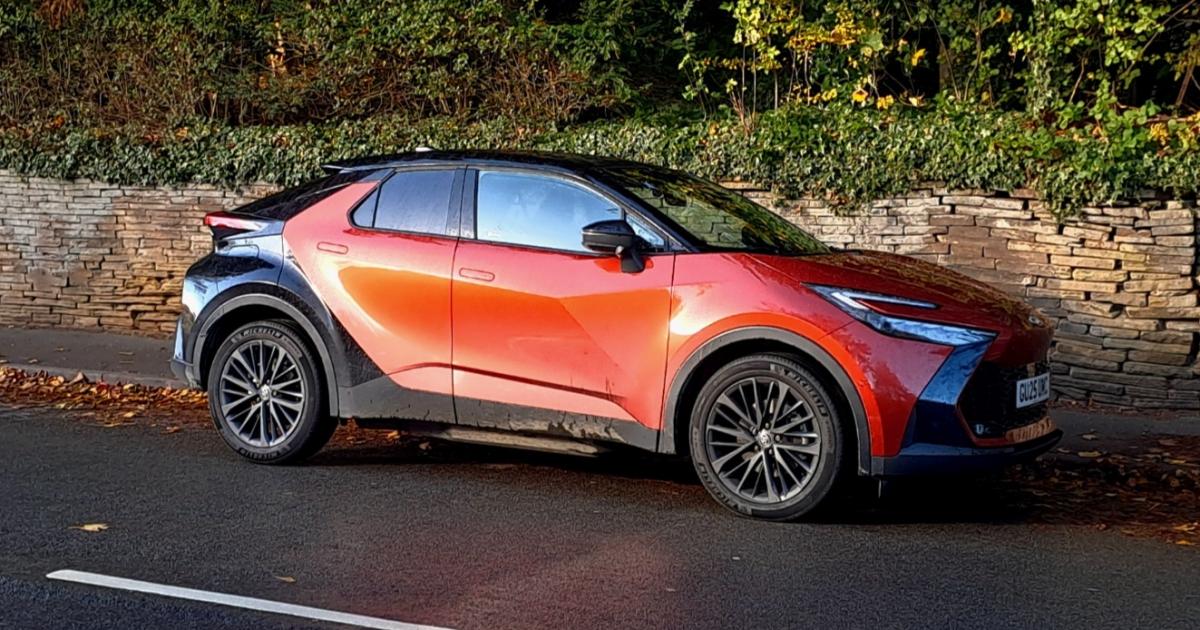
The original C-HR was a breakthrough model for Toyota, selling more than 840,000 units in Europe since its launch in 2017. This new version builds on that success with a sharper, more confident design. The coupe-like silhouette is retained but enhanced with a wider stance, a 25mm reduction in front overhang, and larger alloy wheels – up to 20 inches – that give the car a more planted, athletic look. Flush-fitting door handles, diamond-cut character lines and a hammerhead front design with full LED headlights add to the visual drama. At the rear, the model name is now integrated into the LED light bar, which is a rather nice design flourish.

Inside, the cabin has been upgraded with premium materials and thoughtful design touches. Ambient lighting offers 64 colour options, and the optional panoramic roof gives the cabin an airy feel. Storage space has been increased, and the overall layout feels more driver-focused and refined.
Under the bonnet, Toyota offers three electrified powertrains: a 1.8-litre hybrid electric, a 2.0-litre hybrid electric, and a 2.0-litre plug-in hybrid electric (PHEV). I tested the PHEV version, which is the most powerful of the trio. It combines a 2.0-litre petrol engine with a 161bhp electric motor and a 13.6kWh lithium-ion battery, producing a total system output of 220bhp. That’s enough to propel the C-HR from 0-62mph in 7.4 seconds – quicker than rivals like the Kia Niro PHEV and Mazda MX-30 R-EV.

The PHEV’s official electric-only range is 41 miles, which is slightly further than those competitors and enough to cover the average daily distance driven by UK motorists. When the battery is depleted, the car seamlessly switches to hybrid mode, using Toyota’s fifth-generation hybrid tech to maintain efficiency. Fuel consumption is rated at up to 353.1mpg, with CO₂ emissions from just 19g/km – impressive figures that make the C-HR one of the most efficient vehicles in its class.
Toyota’s Predictive Efficient Drive system adds another layer of intelligence, using geo-fencing and route learning to optimise battery usage based on traffic and road conditions. Regenerative braking offers a ‘one-pedal’ driving feel, with three selectable levels of braking force, making city driving more intuitive and less tiring.
Charging is straightforward, thanks to a 6.6kW on-board charger. Using a wallbox, the battery can be fully charged in under two-and-a-half hours.

On the road, the C-HR PHEV is generally smooth and easy to drive. The updated platform provides increased body rigidity and reduced weight, while the revised suspension – MacPherson struts at the front and a strengthened multi-link setup at the rear – delivers a comfortable ride. It’s a relatively quiet cruiser, especially at motorway speeds, where engine revs have been reduced by up to 500rpm to improve acoustic comfort.
However, while the C-HR excels in refinement and efficiency, it’s not the most engaging car to drive. The steering lacks feedback, and body control can feel a little lax when cornering enthusiastically. Under hard acceleration, the engine becomes noticeably noisy, which detracts from the otherwise composed driving experience. In short, it’s not much fun to drive – but that’s unlikely to bother most buyers in this segment.
Where the C-HR does shine is in its ease of use. It’s intuitive, predictable and relaxing to drive, with a smooth power delivery and well-calibrated controls.
Overall, the new Toyota C-HR Plug-in Hybrid is a stylish and sensible choice for drivers seeking electrified mobility with a premium edge. It may not thrill keen drivers, but it delivers on comfort, usability and low running costs – and it looks good doing it.
Toyota C-HR
PRICE: £39,355
ENGINE: 2.0-litre plug-in hybrid
POWER: 220bhp
TRANSMISSION: e-CVT
PERFORMANCE: 0-62mph in 7.4 seconds and max speed of 112mph
ECONOMY: From 353mpg and emissions from 19g/km



