

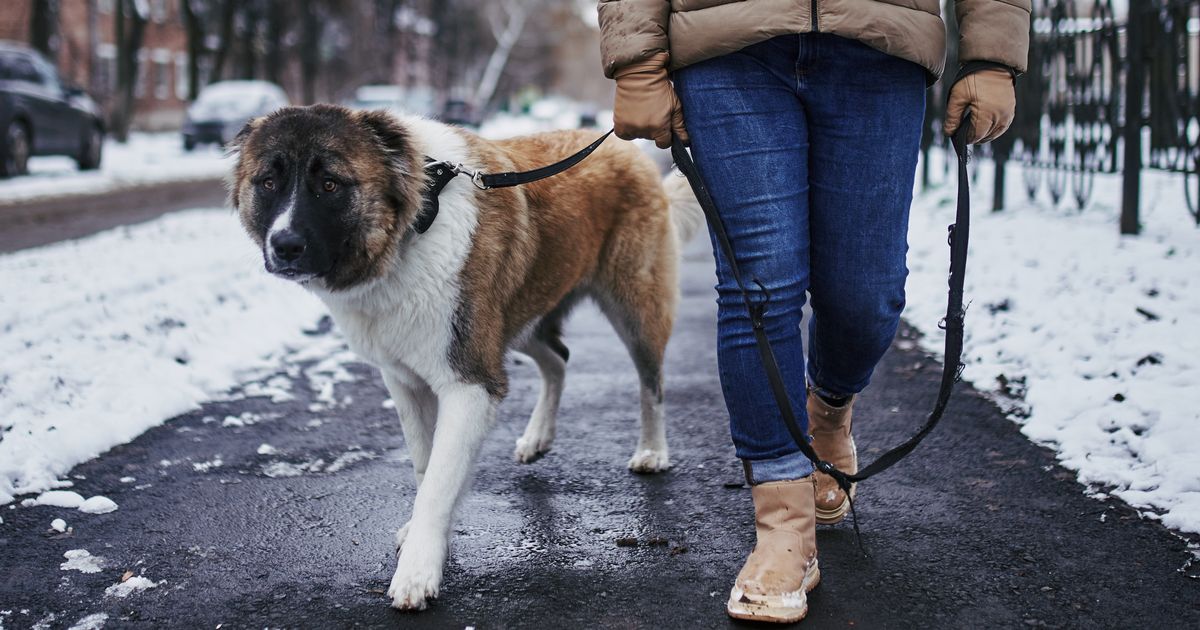
The animal welfare charity has shared advice for keeping dogs safe in cold weather
Dog owners have been advised to take one simple step to help prevent a potentially painful winter issue. This straightforward solution helps to stop ice from forming in your pet’s fur.
As the UK temperatures start to plummet, many of us are beginning to feel the chill. However, it might not have crossed your mind that your beloved canine could also be feeling the cold.
The Royal Society for the Prevention of Cruelty to Animals (RSPCA) has shared some advice on its website about how to keep dogs safe in cold weather. The charity stated: “Dogs feel the cold. Winter can impact their health and behaviour, as well as expose them to outdoor poisons.”
As part of its guidance, it suggested trimming the fur around their paws and ears. “This prevents ice balls from forming, which are heavy and painful,” said the RSCPA.
“If they’re medium-haired or long-haired dogs, trim the fur around their back legs and bum, too.” How your dog is affected by the cold will depend on its breed and age.
The RSPC added: “Even though all dogs feel the cold, different dogs are comfortable in different temperatures. Certain dog breeds come with a ready-made coat; some with a double coat (two layers of fur), meaning they’re better adapted to cold weather months. Dogs with no fur or a thin or short coat are more susceptible to the cold and cold-related illness.
“The size of the dog also affects their tolerance to the cold. Smaller dogs lose body heat faster than larger dogs – bigger breeds are more insulated and higher above the ground, so they stay warmer for longer.
“Puppies aren’t built for cold weather, either, as their ability to regulate temperature hasn’t fully developed. Elderly dogs, sick dogs and dogs who aren’t acclimatised to the cold also struggle.”
The RSPCA notes that you might observe dogs consuming more food or sleeping longer during winter months to preserve energy, or displaying increased activity levels as a method of staying warm. However, you’ll understand your companion best.
Consequently, if they’re displaying other peculiar behaviours, such as reluctance to go on walks or losing their appetite, you should consult your vet. Additional essential advice for maintaining your dog’s wellbeing during winter includes:
- Maintain their exercise routine
- Ensure the dog has a microchip
- Keep the dog noticeable with reflective or LED equipment
- Towel them down and clean them after outdoor walks
- Clean their paws and belly to eliminate grit, antifreeze and rock salt following walks
- Stay away from frozen ponds
- Never abandon them in a vehicle
- Purchase them a dog jacket
- Create a warm, comfortable area inside
For additional details, visit the RSPCA website here.



