

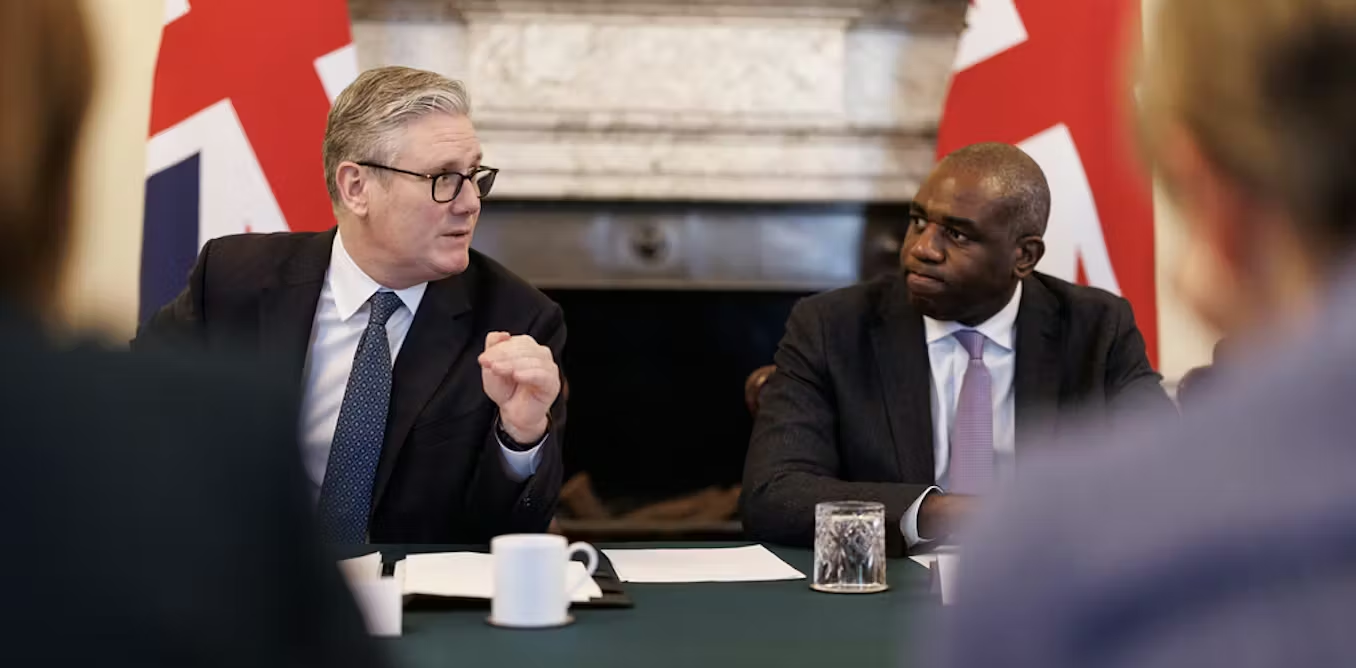
A prime minister who led a party to win 412 seats in an election held only 18 months ago might be expected to have the full support of his party and the public throughout the entire term of government. Yet rumours continue to swirl about Keir Starmer’s position.
The next general election isn’t scheduled until 2029, so why is there already so much speculation about Starmer potentially being replaced?
It’s well known in Westminster that there’s an optimum majority size – big enough to pass legislation easily, but not so big that you can’t keep everyone in the party moderately happy. Having 404 MPs (as it currently stands) means it is difficult to run a tight ship. Labour is also a broad church, so different factions will try to capitalise when policy decisions don’t go their way.
A prime example are the 49 Labour MPs who rebelled to vote against the government’s welfare bill in July and were suspended from the party as a result. This type of whip-defying rebellion is often seen with large majorities, partly because it’s not as costly for an MP’s party when they abstain or vote with their constituency – the vote will likely go through anyway.
But this kind of action by a vocal minority can exaggerate a feeling of disquiet. And during Starmer’s government, we’ve already seen an entire new political party established by one of the MPs he suspended.
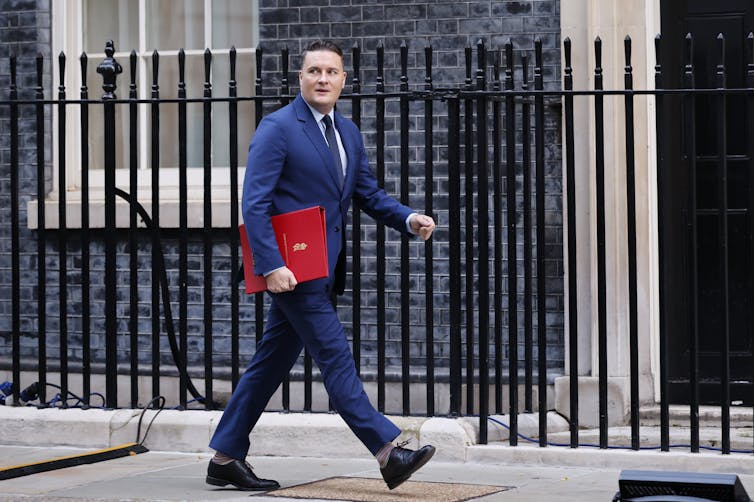
Adding another layer are those who have leadership ambitions, such as health secretary Wes Streeting. Members of the parliamentary Labour party will speak to each other and these potential candidates about their aspirations. It only takes a few names and a handful of rebellions to rustle up rumours that someone else could do the top job better.
Lots of seats, not much public support
Labour won what has been called a “loveless landslide” in 2024 on just 34.6% of the vote in Great Britain. The low turnout meant that 40% of people didn’t vote, and nearly two-thirds of those who did opted for a party other than Labour. Though the electoral system delivered a large majority, it was always more precarious than the seat total made it look.
Some evidence suggests public support may have weakened further. The proportion of people who say the PM is doing badly has increased 33 percentage points since August 2024. The proportion of those saying he’s doing well has more than halved, from 36% to 15%. And people are becoming more certain about this opinion – in the early days after the election, a fifth of people said “don’t know” in this polling, whereas now that’s just 9%.
EPA/Tolga Akmen
This comes against a backdrop of polling that reflects both fragmentation and uncertainty. The latest YouGov poll, commissioned by The Times and Sky News, shows Reform in the lead but still on just 26% – a very low figure for a party on top.
Labour is trailing at 19% and equal to the Conservatives. The Green party, newly led by Zack Polanski, is on 16% and the Liberal Democrats are on 14%. Among five parties, there’s only 12 points between the one polling highest and the one polling lowest.
The public is not congregating around one or even two parties. And importantly, the proportion of people who say they don’t know who they’ll vote for is high, at 14%.
The rate of uncertainty is highest for those who voted Labour in 2024 (19%) and lowest for those who voted for the Greens or Reform (6% and 7% respectively). This tells us that many people could still opt for Labour in a general election, but the traditionally smaller parties have more stable support. And also that the undecided 14% could change everything if a general election really were held tomorrow.
Despite all this, the conversation around voter uncertainty is rarely mentioned in headlines and rumours, so it looks like Starmer’s Labour government is doing very badly, and that Reform is a key challenger. This too can artificially inflate the sense that something needs to change.
Elections ahead
Away from speculative polling, there have been real votes cast since Labour came to office – in the 2025 local elections and in council byelections. Both Labour and the Conservatives dropped councillors in these contests, while Reform has been the main beneficiary along with the Liberal Democrats and Greens. This follows a trend from the previous few years – smaller parties and independents have been steadily gaining, while Labour and the Conservatives have been declining.
À lire aussi :
UK local elections delivered record-breaking fragmentation of the vote
The councils up for election in 2025 were largely in Conservative-heavy areas. Those coming up next May are geographically challenging for Labour. There are at least 72 councils, including all 32 London boroughs, up for reelection and around two-thirds are being defended by Labour. If Reform continues its recent byelection successes and eats into Labour territory, it will give more credence to its challenger status.
That elections are also taking place in Scotland and Wales for devolved parliaments means Labour is facing a nationwide test. Poll ratings suggest the party will perform badly in both countries.
A big set of losses will be interpreted as a sign Starmer’s government is failing, even though the elections are likely to be low-turnout contests that actually represent the public’s continued diversity of opinions.
It’s expected that the Greens will also do fairly well, meaning Labour could be fending off opposition from both ends of the ideological spectrum. We may then see some Labour MPs calling for a leftward shift, and others for a move to the right. Those calling to stay the course will be the quietest.
There’s no denying Labour’s time in office has been difficult. But there have been successes too – notably, delivering on workers’ rights, housing and NHS appointment numbers. But a diverse and uncertain electorate, plus a large majority of MPs to satisfy, makes Labour’s job very difficult.
If the local elections go as expected, somebody could make a leadership challenge. But at the moment, it may be better the devil they know than face greater uncertainty under a new leader.



