Connect with us

NewsBeat

‘Selfish’ driver led police on chase through Cambridge putting ‘innocent’ people at risk

Published

on

Cambridgeshire Live

The driver was found to have no insurance, MOT, or tax

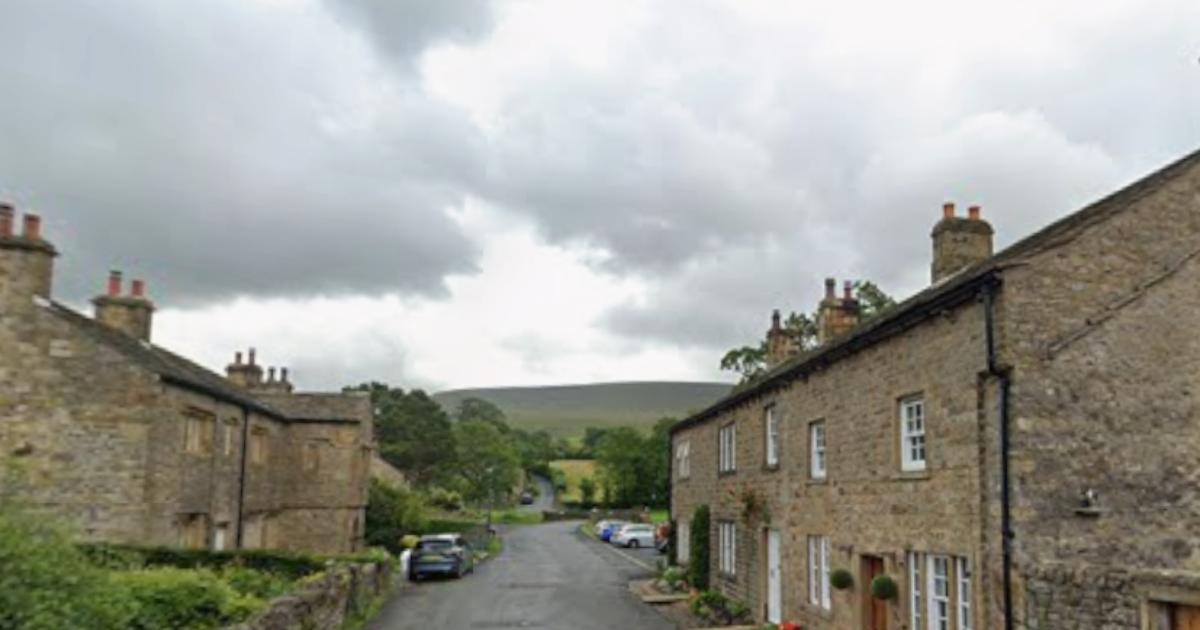
A dangerous driver who led police on a pursuit has been disqualified from driving. David Russell, 40, fled from officers in Newmarket Road, Cambridge, on November 25, 2025.

Advertisement

Russell, of Ditton Fields, Cambridge, drove along a bus lane, weaved through traffic, ignored a red light, and reached speeds of about 40mph in a 20mph pedestrian zone. The 40-year-old eventually stopped in Ditton Fields, where he was arrested.

Following police checks, he was also found to have no insurance, MOT, or tax. Russell pleaded guilty to dangerous driving, failing to stop, driving without a licence, and driving without insurance and MOT at Cambridge Magistrates’ Court on Monday (February 9).

He was disqualified from driving for two years and ordered to complete 12 months of unpaid work. PC Oliver Wadsworth, who investigated, said: “Russell’s driving put innocent members of the public at risk, which is selfish given he could have simply stopped when indicated to do so.”

Do you want more of the latest Cambridgeshire news as it comes in from across the county? Sign up to our dedicated newsletter to make sure you never miss a big story from Cambridge or anywhere else in the county. You can also sign up to our dedicated Peterborough, Traffic and Crime newsletters for the latest updates on the topics you are most interested in .


Advertisement

Source link

Continue Reading
Click to comment

Leave a Reply

Your email address will not be published. Required fields are marked *

NewsBeat

Bangladesh’s new prime minister sworn in

Published

on

Bangladesh’s new prime minister sworn in

DHAKA, Bangladesh (AP) — Bangladesh’ s new prime minister was sworn in on Tuesday after his party’s landslide win in last week’s parliamentary elections, the country’s first since the massive 2024 uprising and a vote billed as key to the nation’s future political landscape after years of intense rivalry and disputed polls.

Prime Minister Tarique Rahman, whose term will last the next five years, is the son of former Prime Minister Khaleda Zia and former President Ziaur Rahman. He is also Bangladesh’s first male prime minister in 35 years. Since 1991, when Bangladesh returned to democracy, either Rahman’s mother or her archrival Sheikh Hasina had served as prime ministers.

The country’s figurehead President Mohammed Shahabuddin administered the oath of office for Rahman. Dozens of Cabinet members and members of the new government were also being sworn in on Tuesday.

The Bangladesh Nationalist Party and its partners won 212 seats in the 350-memebr Parliament while an 11-party alliance led by the Jamaat-e-Islami party, the country’s largest Islamist party, won 77 seats to be the opposition.

Advertisement

A new party — the National Citizen Party, or NCP — formed by the student leaders who led the 2024 uprising was part of the 11-party alliance led by Jamaat-e-Islami. The NCP secured six seats.

In Bangladesh, voters elect 300 members of Parliament directly while the remaining 50 posts are reserved for women and distributed proportionately among the winning parties.

Rahman, 60, who returned to the country in December — after 17 years in self-exile in London and shortly before his mother’s death — has promised to work for democracy in Bangladesh, a country of 170 million people.

An interim government led by Nobel Peace Prize laureate Muhammad Yunus that took over after Hasina was toppled, oversaw the election. The vote was largely peaceful and deemed as acceptable by international observers.

Advertisement

Foreign dignitaries and diplomats attended the ceremony Tuesday. Maldives President Mohamed Muizzu, Bhutanese Prime Minister Tshering Tobgay and an Indian delegation were among the guests, as well as dignitaries from Nepal, Sri Lanka and other countries.

Earlier on Tuesday morning, head of the election commission A.N.M. Nasir Uddin administered the oath of office separately to all the newly elected lawmakers.

Rahman’s main rival Bangladesh Awami League party headed by Hasina — who was ousted in the 2024 mass uprising — was banned from the race. The Yunus-led administration had also banned all activities of Hasina’s party, which had ruled the country for 15 years.

From her exile in India, where she has lived since Aug. 5, 2024, Hasina slammed the vote as unfair to her party, which still remains a major political force. At home, Hasina was sentenced to death on charges of crimes against humanity because of hundreds of deaths involving the uprising.

Advertisement

She denied the allegation and termed the court as a “kangaroo court.”

Source link

Advertisement
Continue Reading

NewsBeat

Harrogate BID appoints a new Chef Executive Officer

Published

on

Harrogate BID appoints a new Chef Executive Officer

Jason joins the organisation with extensive experience in place leadership, regeneration and business engagement, having spent more than seven years leading Stockton BID and most recently working within the Economic Growth team at Hartlepool Borough Council.

Harrogate BID says across his career, Jason has developed a strong track record of delivering town-centre improvements, securing investment, and building effective partnerships with businesses, local authorities, police and regional stakeholders.

During his time at Stockton BID, Jason founded Stockton Street Angels, a volunteer-led initiative supporting the evening economy and improving town-centre safety, and established Stockton MET, a business network designed to encourage collaboration and investment.

Advertisement

RECOMMENDED READING:

Harrogate BID Chair, Simon Midgley, said: “Jason was an exceptional candidate and brings with him a wealth of experience in BID leadership, economic development and partnership working.

“His proven ability to deliver practical results for businesses and communities makes him an excellent fit for Harrogate as we continue implementing our Business Plan and supporting the town centre’s long-term success.”

Jason Maxwell said: “I’m delighted to be taking over the role of CEO of Harrogate BID. Harrogate has such a proud reputation, and I’m looking forward to working closely with both businesses and partners to ensure that the town centre continues to thrive for many years.” 

Advertisement

Jason will succeed Gemma Rio, who has served as Interim CEO since June. During her time in the role, Gemma has overseen key projects, partnerships and initiatives supporting Harrogate’s business community and strengthening the town’s position as a leading destination.

Gemma took over from Matthew Chapman who resigned for “personal reasons” in May 2024. Matthew became Harrogate BID Manager in 2021 before changing his role to Chief Executive in November 2023.

Simon Midgley added: “We would like to thank Gemma for her professionalism, commitment and leadership over recent months. Her contribution has been invaluable, and we wish her every success for the future.”

Advertisement

Source link

Continue Reading

NewsBeat

Red UK passport holders warned ahead of summer 2026 holidays

Published

on

Daily Mirror

UK holidaymakers still using old red passports are being warned

British holidaymakers still using old red passports are being warned ahead of summer holidays. If you’re planning a sunshine escape this year, it’s crucial to check your passport before departure due to strict entry requirements abroad.

Advertisement

Many countries demand your passport remains valid for a further six months before you set off on international travel. Known as the ‘six-month validity rule’, many people still holding pre-Brexit red passports may find their documents don’t have sufficient time remaining.

Some countries, including all within the Schengen area, have a three-month passport requirement. This means travellers can enter these destinations if their passport remains valid for at least three additional months.

If you’re still carrying a red passport it’s important to check its expiry date. Since Brexit, your passport must be less than 10 years old upon arrival in the EU, with its expiry date falling at least three months beyond your planned departure from the EU.

Most people, quite reasonably, presume an adult passport lasts a decade, but if yours was issued before October 1, 2018, additional months may have been added to its expiry date if the previous passport was renewed before it completely expired.

Advertisement

You can check whether your passport meets the validity requirements for your journey on GOV.UK. Simply search for your destination country and select ‘entry requirements’, as reported by Wales Online.

Additionally, you’re limited to a maximum stay of 90 days within any six-month period. During Britain’s EU membership, there were no such time restrictions on stays.

Some of the countries with a six-month passport rule include the USA, Thailand, United Arab Emirates, Australia, China, and Indonesia.

Source link

Advertisement
Continue Reading

NewsBeat

How to set up your sewing machine, according to a Sewing Bee winner

Published

on

How to set up your sewing machine, according to a Sewing Bee winner

Now, there are just a few key things to check before you get start sewing. Firstly, look at your sewing pattern and make sure that you have selected the right stitch, length and width. Stitches tend to be illustrated in some way on the machine, and your instructions will explain the function of each one. Make sure you have the right needle type and sewing foot on your machine, too.

Then, check your tension. This is important as it is the difference between loose and secure stitching. Often, the average tension is indicated on the dedicated dial. It tends to sit between three and five and denotes the best setting for a normal piece of cotton. A lower number gives less tension, and higher provides more tension. Your sewing pattern instructions will explain if this needs to be set in a specific way for your project, otherwise it’s a case of playing around to see what settings your chosen fabric needs (more on this below).

Just before I start sewing, I also like to check the teeth to make sure there aren’t any trapped threads, old fabric or lint. These are often the main culprits for your machine getting jammed, or tension that’s not quite right.

Advertisement

Step 6: Test on a scrap piece

Before you start your project, always test your chosen settings by stitching on a big scrap of the fabric with which you are going to work. Fold it in half so that it is the same thickness as when you sew two pieces together. This allows you to check that your tension, in particular, is correct.

Look for flat stitches on both sides. If the thread is looping, it’s worth checking that everything is correctly threaded. You can also change the dial: if the bobbin thread is visible from the right side (top) of your fabric, decrease the tension or if you can see the upper thread on the wrong side (bottom), go up a number or two.

Once you’re happy, it’s time to get started on your project. Don’t be scared of your sewing machine. You will make mistakes, but you can always unpick your stitching. And remember, if anything on your machine seems different to what I’ve described here, please check your instruction manual. Everything will be in there that you need.

Source link

Advertisement
Continue Reading

NewsBeat

Jesse Jackson, who led the Civil Rights Movement after King’s assassination, has died

Published

on

Jesse Jackson, who led the Civil Rights Movement after King's assassination, has died

CHICAGO (AP) — The Rev. Jesse L. Jackson, a protege of the Rev. Martin Luther King Jr. and two-time presidential candidate who led the Civil Rights Movement for decades after the revered leader’s assassination, died Tuesday. He was 84.

His daughter, Santita Jackson, confirmed that Jackson died at home, surrounded by family.

As a young organizer in Chicago, Jackson was called to meet with King at the Lorraine Motel in Memphis shortly before King was killed and he publicly positioned himself thereafter as King’s successor.

Jackson led a lifetime of crusades in the United States and abroad, advocating for the poor and underrepresented on issues from voting rights and job opportunities to education and health care. He scored diplomatic victories with world leaders, and through his Rainbow/PUSH Coalition, he channeled cries for Black pride and self-determination into corporate boardrooms, pressuring executives to make America a more open and equitable society.

Advertisement

And when he declared, “I am Somebody,” in a poem he often repeated, he sought to reach people of all colors. “I may be poor, but I am Somebody; I may be young; but I am Somebody; I may be on welfare, but I am Somebody,” Jackson intoned.

It was a message he took literally and personally, having risen from obscurity in the segregated South to become America’s best-known civil rights activist since King.

“Our father was a servant leader — not only to our family, but to the oppressed, the voiceless, and the overlooked around the world,” the Jackson family said in a statement posted online. “We shared him with the world, and in return, the world became part of our extended family. His unwavering belief in justice, equality, and love uplifted millions, and we ask you to honor his memory by continuing the fight for the values he lived by.”

Despite profound health challenges in his final years including a rare brain disorder that affected his ability to move and speak, Jackson continued protesting against racial injustice into the era of Black Lives Matter. In 2024, he appeared at the Democratic National Convention in Chicago and at a City Council meeting to show support for a resolution backing a ceasefire in the Israel-Hamas war.

Advertisement

“Even if we win,” he told marchers in Minneapolis before the officer whose knee kept George Floyd from breathing was convicted of murder, “it’s relief, not victory. They’re still killing our people. Stop the violence, save the children. Keep hope alive.”

Calls to action, delivered in a memorable voice

Jackson’s voice, infused with the stirring cadences and powerful insistence of the Black church, demanded attention. On the campaign trail and elsewhere, he used rhyming and slogans such as: “Hope not dope” and “If my mind can conceive it and my heart can believe it then I can achieve it,″ to deliver his messages.

Jackson had his share of critics, both within and outside of the Black community. Some considered him a grandstander, too eager to seek out the spotlight. Looking back on his life and legacy, Jackson told The Associated Press in 2011 that he felt blessed to be able to continue the service of other leaders before him and to lay a foundation for those to come.

“A part of our life’s work was to tear down walls and build bridges, and in a half century of work, we’ve basically torn down walls,” Jackson said. “Sometimes when you tear down walls, you’re scarred by falling debris, but your mission is to open up holes so others behind you can run through.”

Advertisement

In his final months, as he received 24-hour care, he lost his ability to speak, communicating with family and visitors by holding their hands and squeezing.

“I get very emotional knowing that these speeches belong to the ages now,” his son, Jesse Jackson Jr., told the AP in October.

A student athlete drawn to the Civil Rights Movement

Jesse Louis Jackson was born on Oct. 8, 1941, in Greenville, South Carolina, the son of high school student Helen Burns and Noah Louis Robinson, a married man who lived next door. Jackson was later adopted by Charles Henry Jackson, who married his mother.

Jackson was a star quarterback on the football team at Sterling High School in Greenville, and accepted a football scholarship from the University of Illinois. But after he reportedly was told Black people couldn’t play quarterback, he transferred to North Carolina A&T in Greensboro, where he became the first-string quarterback, an honor student in sociology and economics, and student body president.

Advertisement

Arriving on the historically Black campus in 1960 just months after students there launched sit-ins at a whites-only diner, Jackson immersed himself in the blossoming Civil Rights Movement.

By 1965, he joined the voting rights march King led from Selma to Montgomery, Alabama. King dispatched him to Chicago to launch Operation Breadbasket, a Southern Christian Leadership Conference effort to pressure companies to hire Black workers.

Jackson called his time with King “a phenomenal four years of work.”

Jackson was with King on April 4, 1968, when the civil rights leader was slain at the Lorraine Motel in Memphis, Tennessee. Jackson’s account of the assassination was that King died in his arms.

Advertisement

With his flair for the dramatic, Jackson wore a turtleneck he said was soaked with King’s blood for two days, including at a King memorial service held by the Chicago City Council, where he said: “I come here with a heavy heart because on my chest is the stain of blood from Dr. King’s head.”

However, several King aides, including speechwriter Alfred Duckett, questioned whether Jackson could have gotten King’s blood on his clothing. There are no images of Jackson in pictures taken shortly after the assassination.

In 1971, Jackson broke with the Southern Christian Leadership Conference to form Operation PUSH, originally named People United to Save Humanity. The organization based on Chicago’s South Side declared a sweeping mission, from diversifying workforces to registering voters in communities of color nationwide. Using lawsuits and threats of boycotts, Jackson pressured top corporations to spend millions and publicly commit to diversifying their workforces.

The constant campaigns often left his wife, Jacqueline Lavinia Brown, the college sweetheart he married in 1963, taking the lead in raising their five children: Santita Jackson, Yusef DuBois Jackson, Jacqueline Lavinia Jackson Jr., and two future members of Congress, U.S. Rep. Jonathan Luther Jackson and Jesse L. Jackson Jr., who resigned in 2012 but is seeking reelection in the 2026 midterms.

Advertisement

The elder Jackson, who was ordained as a Baptist minister in 1968 and earned his Master of Divinity in 2000, also acknowledged fathering a child, Ashley Jackson, with one of his employees at Rainbow/PUSH, Karen L. Stanford. He said he understood what it means to be born out of wedlock and supported her emotionally and financially.

Presidential aspirations fall short but help ‘keep hope alive’

Despite once telling a Black audience he would not run for president “because white people are incapable of appreciating me,” Jackson ran twice and did better than any Black politician had before President Barack Obama, winning 13 primaries and caucuses for the Democratic nomination in 1988, four years after his first failed attempt.

His successes left supporters chanting another Jackson slogan, “Keep Hope Alive.”

“I was able to run for the presidency twice and redefine what was possible; it raised the lid for women and other people of color,” he told the AP. “Part of my job was to sow seeds of the possibilities.”

Advertisement

U.S. Rep. John Lewis said during a 1988 C-SPAN interview that Jackson’s two runs for the Democratic nomination “opened some doors that some minority person will be able to walk through and become president.”

Jackson also pushed for cultural change, joining calls by NAACP members and other movement leaders in the late 1980s to identify Black people in the United States as African Americans.

“To be called African Americans has cultural integrity — it puts us in our proper historical context,” Jackson said at the time. “Every ethnic group in this country has a reference to some base, some historical cultural base. African Americans have hit that level of cultural maturity.”

Jackson’s words sometimes got him in trouble.

Advertisement

In 1984, he apologized for what he thought were private comments to a reporter, calling New York City “Hymietown,” a derogatory reference to its large Jewish population. And in 2008, he made headlines when he complained that Obama was “talking down to Black people” in comments captured by a microphone he didn’t know was on during a break in a television taping.

Still, when Jackson joined the jubilant crowd in Chicago’s Grant Park to greet Obama that election night, he had tears streaming down his face.

“I wish for a moment that Dr. King or (slain civil rights leader) Medgar Evers … could’ve just been there for 30 seconds to see the fruits of their labor,” he told the AP years later. “I became overwhelmed. It was the joy and the journey.”

Exerting influence on events at home and abroad

Jackson also had influence abroad, meeting world leaders and scoring diplomatic victories, including the release of Navy Lt. Robert Goodman from Syria in 1984, as well as the 1990 release of more than 700 foreign women and children held after Iraq’s invasion of Kuwait. In 1999, he won the freedom of three Americans imprisoned by Yugoslav President Slobodan Milosevic.

Advertisement

In 2000, President Bill Clinton awarded Jackson the Presidential Medal of Freedom, the country’s highest civilian honor.

“Citizens have the right to do something or do nothing,” Jackson said, before heading to Syria. “We choose to do something.”

In 2021, Jackson joined the parents of Ahmaud Arbery inside the Georgia courtroom where three white men were convicted of killing the young Black jogger. In 2022, he hand-delivered a letter to the U.S. Attorney’s Office in Chicago, calling for federal charges against former Chicago Police Officer Jason Van Dyke in the 2014 killing of Black teenager Laquan McDonald.

Jackson, who stepped down as president of Rainbow/PUSH in July 2023, disclosed in 2017 that he had sought treatment for Parkinson’s, but he continued to make public appearances even as the disease made it more difficult for listeners to understand him. Earlier this year doctors confirmed a diagnosis of progressive supranuclear palsy, a life-threatening neurological disorder. He was admitted to a hospital in November.

Advertisement

During the coronavirus pandemic, he and his wife survived being hospitalized with COVID-19. Jackson was vaccinated early, urging Black people in particular to get protected, given their higher risks for bad outcomes.

“It’s America’s unfinished business — we’re free, but not equal,” Jackson told the AP. “There’s a reality check that has been brought by the coronavirus, that exposes the weakness and the opportunity.”

___

Former Associated Press writer Karen Hawkins, who left The Associated Press in 2012, contributed to this report. Associated Press writer Amy Forliti in Minneapolis contributed.

Advertisement

Source link

Advertisement
Continue Reading

NewsBeat

Will How To Get To Heaven From Belfast Get A Season 2? Here’s What We Know

Published

on

Will How To Get To Heaven From Belfast Get A Season 2? Here's What We Know

With critics describing it as “hilarious” and “brilliant”, if you’ve already binged through all eight episodes of Lisa McGee’s new crime caper, How To Get To Heaven From Belfast, you’ll likely be itching for news about whether another season is on the horizon.

Created and written by the mastermind behind Derry Girls, the Netflix comedy caper follows three childhood friends as they investigate the unexpected death of the estranged member of their once tight-knit group.

In the days surrounding its debut, the show won glowing reviews from critics and made its way to the top of Netflix UK’s most-watched, meaning plenty of viewers will already have their fingers crossed in the hopes of another series.

Here’s what we know so far about the future of How To Get To Heaven From Belfast…

Advertisement

Will there be a How To Get To Heaven From Belfast season 2?

At the time of writing, a second season of How to Get to Heaven From Belfast has not been announced by Netflix yet.

It’s fair to say that the streaming giant has a bad habit of not renewing shows, pulling the plug on recent favourites like Kaos and Boots.

However, How To Get To Heaven From Belfast quickly ascended to the most-watched shows on Netflix’s UK chart the week of its release, which is a hopeful sign considering Lisa McGee recently admitted viewing figures will impact whether her latest TV offering gets a second series.

Advertisement

The series has also been a hit with critics, currently sitting with an impressive 91% score on Rotten Tomatoes – although it’s worth pointing out that glowing reviews regrettably didn’t save Kaos or Boots from getting cancelled.

What could How To Get To Heaven From Belfast be about?

While the first series mostly tied up all the loose ends about Greta’s death, explaining more about all four women’s tragic past, the eighth and last episode ended on a cliffhanger.

Advertisement

Saoirse, Robyn, and Dara end up left with a mysterious pink bag near a dead body, and we never find out what’s inside.

The season finishes with Robyn declaring, “We are not, under any circumstances, getting involved in this.”

This loose thread leaves things open for a season two, and could introduce audiences to a new mystery for our central trio to explore.

What has the creator of How To Get To Heaven From Belfast said about a potential season 2?

Advertisement

While a second season has yet to be confirmed, Lisa McGee has made no secret of her hopes to write more, and told Deadline that she has already started thinking about the follow-up.

“I’ve left it open for a second series but it’s all completely down to how many people watch,” she told the outlet in February 2026. “I’d love to do one.”

How To Get To Heaven From Belfast has been a hit with critics and Netflix users

She also told The New York Times that she has been inspired by another crime show that ran for more than a decade.

“I really wanted to do our Murder, She Wrote kind of thing. I’ve always wanted to do that and do it kind of our way, here — and with three women who aren’t good at it,” she explained.

Advertisement

All eight episodes of How To Get To Heaven From Belfast are now available on Netflix.

Source link

Advertisement
Continue Reading

NewsBeat

British skiers killed in Alps avalanche named | UK News

Published

on

Stuart Leslie and Shaun Overy. Pics: LinkedIn/Facebook

Two British skiers who died in an avalanche at a French Alps ski resort last week have been named.

Stuart Leslie and Shaun Overy were among three people killed in the snow slide at Val d’Isere, a village in southeastern France. The other victim was a French national.

In a tribute posted on Facebook, a friend of Mr Leslie, Craig Hunter, said he lived life to the “absolute maximum” and “squeezed everything out of every moment”.

Advertisement

France’s national weather forecaster, Meteo-France, had issued a red avalanche warning for the Savoie region, which borders Italy, the day before the tragedy unfolded.

It warned “very heavy snowfall” in the Alps had triggered “exceptional avalanche conditions”, and advised “extreme caution” for all mountain activities.

The risk level was scored four out of a possible five.

Read more from Sky News:
Actor Robert Duvall dies
Hundreds arrested for stealing phones

Advertisement

A spokesperson for the resort’s slope management department said the Britons were in a group of five people and a professional instructor who did not see the ​danger as it approached.

The French victim was higher up the mountain and skiing alone, Cedric Bonnevie said. An inquiry into the disaster was launched shortly afterwards.

Advertisement

The deaths of the Britons were confirmed by the Foreign Office.

“We are in contact with the local authorities and stand ready to offer consular assistance,” a statement added.

It came just a month after another British skier was killed in an avalanche in a French Alps resort.

Advertisement

Source link

Continue Reading

NewsBeat

Rudy’s Pizza to open in Harrogate and give away 3000 pizzas

Published

on

Rudy's Pizza to open in Harrogate and give away 3000 pizzas

Rudy’s Pizza will be opening in the former Banyan Bar & Restaurant in John Street.

To mark the launch, Rudy’s will be giving away 3,000 free pizzas to those who register their details at https://www.rudyspizza.co.uk/location/harrogate/

The arrival to Harrogate follows openings in Manchester, Leeds, Sheffield and in York, where the restaurant opened in July 2024 in the former Shoe Zone on High Ousegate.

Advertisement

The York venue has proven popular with the reviews website Tripadvisor awarding 4.6 stars out of five, based on 190 reviews, ranking the restaurant 119th out of 776 York restaurants. Google awards the York restaurant 4.5 stars out of five based on 405 Googler reviews.

RECOMMENDED READING:

The new Harrogate pizzeria will be set across 2800 square-foot with approximately 120 covers in the pizzeria and 35 covers outside.

Neal Bates, managing director of Rudy’s Pizza, said: “From speculation in the press to excited comments across social media, the Harrogate community’s enthusiasm to welcome Rudy’s to the neighbourhood has been fantastic.

Advertisement

“We’re pleased to now be able to confirm our opening as we prepare to welcome current Rudy’s lovers and soon-to-be fans to our new pizzeria.

“Harrogate is renowned for its brilliant food and drink scene, vibrant visitors and unique culture, spanning everything from music to crime writing festivals, which Rudy’s is very excited to be part of.

“With 3,000 pizzas available to claim on us, we’re delighted to open with a bang and be offering a true authentic Neapolitan experience right here in Harrogate.”

Recruitment for 20 staff is underway, including highly skilled pizzaiolo roles, offering training at Rudy’s in-house academy to teach both experienced chefs and first time pizzaioli the Rudy’s signature Neapolitan style.

Advertisement

Looking to recruit across the board, with a particular focus on experienced supervisors and assistant manager roles, the award-winning employer will be holding recruitment days for both full and part time positions closer to the opening date.

Rudy’s makes authentic Neapolitan-style pizzas, including classic recipes such as Marinara, Margherita and Calabrese.

There will also be a bar offering Italian spritzes, Italian and local lagers, and cocktails.

Since launching in 2015, Rudy’s has grown from one base in Manchester to 36 pizzerias nationwide. The Harrogate pizzeria will be its second opening this year, with more plans in the pipeline for the rest of 2026.

Advertisement

To apply for roles at Rudy’s go to: https://careers.wearemissionmars.com/rudys

Source link

Advertisement
Continue Reading

NewsBeat

Ancient bacteria from 5,000-year-old ice reveals clues to fighting superbugs

Published

on

Ancient bacteria from 5,000-year-old ice reveals clues to fighting superbugs

A team of Romanian scientists drilled a 25-metre ice core from the Scǎrișoara Cave in search of clues for developing new medicines. The 5,000-year-old ice yielded samples of ancient bacteria.

Laboratory analysis revealed something remarkable. These bacteria, undisturbed for thousands of years, were able to grow in a variety of harsh environments. They thrived in extreme cold and high salt levels; settings that would normally prevent bacterial growth.

The scientists also discovered that the ancient bacteria were resistant to ten modern antibiotics, including powerful broad-spectrum treatments such as ciprofloxacin – drugs designed to kill many types of bacteria. In other words, the antibiotics that would normally kill bacteria or halt their growth were largely ineffective against this strain.

How can bacteria evolve resistance to antibiotics long before scientists have created them or doctors have prescribed them?

Advertisement

The answer to this apparent conundrum lies in the fact that all modern antibiotics trace their origins back to nature. For billions of years, bacteria have been engaged in an evolutionary struggle with each other. They have produced formidable chemical attack-and-defence mechanisms as a result.

A deeper understanding of these mechanisms has the potential to help scientists discover new antibiotics to treat dangerous infections. The natural environment is densely packed with bacteria and other microbes. There is strong competition for the limited space and nutrients it provides.

Many species produce chemical compounds that kill or suppress nearby rivals. This gives them an advantage in the struggle for these resources. But the defensive chemicals they generate drive adaptation. Bacteria must protect themselves from their own toxins. Meanwhile, competitors evolve ways to withstand them.

Over billions of years, this arms race has generated an enormous reservoir of resistance genes and antimicrobial compounds.

Advertisement

The number of biological processes inside bacteria that antibiotics can target is limited. Yet the diversity of this natural resistance is so great that some scientists argue genes capable of resisting all future antibiotics may already exist in the environment.

The samples recovered from the Romanian ice cave offer a powerful example of this idea. The bacteria had been sealed off from the outside world for 5,000 years. Yet they were still able to demonstrate resistance to several important modern medicines. This included those used to treat severe and potentially fatal infections like tuberculosis.

Scarisoara Ice Cave in Romania.
Paun V.I.

There is no evidence that the microbes from the cave are harmful to humans. But bacteria do not exist in isolation. They have a remarkable ability to share useful traits with one another by exchanging small pieces of DNA, even between unrelated bacterial species. This means that resistance genes preserved in environmental bacteria do not necessarily stay there. There is a risk that if these genes pass to disease-causing bacteria, existing drugs could become less effective.

Rising temperatures are accelerating the melting of global land ice. There is a danger that long-dormant microorganisms and their genetic material could be released into the soil and water systems.

Advertisement

If resistance genes that have been preserved for thousands of years re-enter modern microbial communities, they could contribute to the spread of global antibiotic resistance. This would make the treatment of both common and serious bacterial infections much more difficult.

Nature’s hidden pharmacy

However, the same evolutionary pressures that drive resistance also lead microbes to produce molecules capable of killing rival bacteria.

In laboratory tests, chemicals produced by the ice cave samples were able to kill or inhibit 14 different types of bacteria known to cause human disease. This included several that are on the World Health Organization list of high-priority pathogens.

These compounds could provide starting points for the development of new antibiotics. They could help overcome existing drug resistance in harmful bacteria.

Advertisement

Many of today’s antibiotics were originally discovered by studying natural microbes. Penicillin is one example.

Most bacteria preserved in ancient environments remain unstudied. They may represent an important and largely untapped source of new antimicrobial compounds.

The ice cave bacteria’s DNA also contains numerous genes with no clearly identified role. These unknown sequences may represent biochemical capabilities that have never been characterised.

They offer potential not only in medicines discovery, but also in areas as diverse as industrial biotechnology. For example, enzymes that enable the bacteria to function in extreme cold could be adapted for use in industrial processes that run at lower temperatures. This could improve energy efficiency and reduce costs.

Advertisement

The bacteria preserved in Romanian ice illustrate how deeply rooted antibiotic resistance is within the natural world. They also demonstrate how much of nature’s chemical diversity remains unexplored.

Ancient microbes may contain potentially harmful antibiotic resistance genes that warrant careful global monitoring. But they also contain a vast store of biochemical tools that could provide us with new medicines.

As antimicrobial resistance continues to rise worldwide, understanding these ancient microbial systems may prove increasingly important.

Advertisement

Source link

Continue Reading

NewsBeat

Plans to cut speed limit on Cambridgeshire road after ‘tragic’ fatal motorcycle crash

Published

on

Cambridgeshire Live

A Cambridgeshire County Council report said cutting the speed limit would improve the safety of Bates Drove after a fatal collision.

The speed limit along Bates Drive near Littleport could be cut to try and improve safety after a fatal crash. Cambridgeshire County Council is proposing to cut the speed limit on the road from 60mph to 50mph.

Advertisement

A report published by the authority highlighted that a “tragic” fatal motorcycle collision occurred along the road in June last year, with another “serious” motorcycle collision taking place just eight days later.

The report added that a further two incidents where people had been injured had been recorded along the road in recent years. Following these incidents a multi-agency investigation was launched to assess the safety of the road.

The report said: “The investigation team undertook several site visits and conducted a thorough review of the traffic conditions. Their assessment concluded that the existing speed limit is inappropriate for the road’s structure and environment.

“Bates Drove is characteristic of Fenland infrastructure, it is undulating due to subsidence, narrow in places, and visually deceptive in terms of safety, particularly for powered two-wheeled vehicles. Additionally, sections of the nearby A1101 are straight and encourage higher speeds, further increasing the risk of serious collisions.

Advertisement

“Many surrounding Fen roads are already subject to a 50mph limit, reflecting the unique challenges posed by the terrain and road layout. Reducing the speed limit on Bates Drove would bring it in line with these roads and enhance safety for all road users, especially vulnerable groups.”

However, concerns have been raised about the plans to cut the speed limit to 50mph. A consultation undertaken by the county council received five objections, with many arguing that repairing the roads would be a better option.

One objector said: “The road surface is more of an issue than the speed limit. The new speed limit won’t be enforced and so won’t make a difference. The council is proposing speed limit changes purely as it’s cheaper than sorting the road.”

The county council report said road maintenance is “undertaken according to the authority’s asset management plan”. It added that cutting the speed limit would not be a substitute for ongoing maintenance, but would be a “proportionate and evidence-based measure to address specific risks identified by a multi-agency investigation”.

Advertisement

In the report council officers recommend going ahead with the speed limit reduction. It said: “Reducing the speed limit to 50mph was considered the most proportionate, cost-effective, and evidence-based intervention.

“It aligns with vision zero principles, addresses the immediate safety concerns identified by the investigation, and harmonises Bates Drove with similar Fen roads already subject to 50mph limits.”

A decision on whether to cut the speed limit along Bates Drove is due to be made on February 18.

To get more breaking news and top stories delivered directly to your phone, join our new WhatsApp community. Click this link to receive your daily dose of CambridgeshireLive content.

Advertisement

We also treat our community members to special offers, promotions, and adverts from us and our partners. If you don’t like our community, you can check out any time you like. If you’re curious, you can read our Privacy Notice .

Source link

Continue Reading

Trending

Copyright © 2025