A man who punched and stamped on another man in a pub has been jailed. Kyle Harry, 36, was at the Wheatsheaf Inn in Church Terrace, Wisbech on December 23, 2025.
Advertisement
He and a woman were involved in an argument with another man in the outside area of the pub. The victim was punched multiple times and stamped on while he was unconscious.
Cambridgeshire Police were called and the victim was taken to hospital for treatment for cuts on his face and head. Harris, of Prince Street, Wisbech, was found nearby by later that day and arrested.
In Cambridge Crown Court on Wednesday (February 25), he was jailed for 14 months. DC Lauren McKeever said: “There is no place for violence like this in Wisbech.
“Harris’ actions were shameful. I’m pleased he was apprehended nearby and has now appeared in court to answer for his behaviour.”
Fury, 37, most recently walked away from the sport in January 2025 after suffering a second successive defeat to Ukrainian icon Oleksandr Usyk. The former two-time heavyweight world champion is due to face hard-hitting Russian contender Arslanbek Makhmudov on Saturday night in London.
He insists he still has what it takes to hold his own against the sport’s biggest names, and a win over Makhmudov could potentially set up a blockbuster bout with fellow British heavyweight Anthony Joshua.
With Fury firmly back in the spotlight, the Manchester Evening News takes a closer look at his personal life, including his temporary separation from wife Paris, his net worth, and his extensive family.
Watch Fury vs Makhmudov with free Netflix subscription
Advertisement
This article contains affiliate links, we will receive a commission on any sales we generate from it. Learn more
Tyson Fury has come out of retirement to face Russian boxer Arslanbek Makhmudov in a heavyweight clash in London on April 11. The fight will stream live on Netflix, which fans can get for free with Sky’s £15 Essential TV bundle or £24 Ultimate TV bundle, the latter of which also includes HBO Max and Disney+.
Why did Tyson Fury and Paris split?
Tyson and Paris have enjoyed 18 years of marriage after meeting as teenagers, yet their wedding almost never took place. In her 2021 memoir, Love and Fury, Paris candidly revealed how the couple clashed over their wedding date, nearly bringing their relationship to an end.
Advertisement
While Paris had her heart set on a November wedding, their “schedule was thrown into the air” when Tyson failed to secure his place at the Olympics and pushed to move the date forward.
“My fiancé clearly didn’t understand the amount of planning and organisation that went into a wedding,” Paris wrote.
“I was beginning to realise how incredibly impulsive he was, the sort of person who lived life in the moment and liked to make decisions on the hoof. In Tyson’s world, our big day could be rescheduled on a whim, just like one of his boxing matches. I was having none of it, though, and refused point-blank to change the date.
“As tensions simmered between us, I soon found myself reaching breaking point. It was one conflict after another and after an ugly slanging match with him outside mam’s house, I decided to call time on the wedding and our relationship.
“He thought I was joking and when I dropped the big bombshell, then he realised I was deadly serious. I simply couldn’t take any more, I told him. As far as I was concerned, we were done. Our courtship was over.”
After six months apart, Tyson reached out. Paris recalled: “He sent me an emotionally-charged text. He told me he couldn’t believe I’d abandoned our relationship so easily, and he couldn’t bear the thought of me meeting somebody else.”
Tyson persisted in his efforts to win Paris back, ultimately succeeding when the couple encountered one another again. Finally, in November 2008, they wed at St Peter-In-Chains Roman Catholic Church in Doncaster, surrounded by friends and family.
Advertisement
Who’s in the Fury family?
The Fury family stand as one of boxing’s most formidable dynasties. Tyson and Paris are parents to seven children: Venezuela, 16, Prince John James, 13, Prince Tyson II, eight, Valencia, six, Prince Adonis Amaziah, five, Athena, three, and Prince Rico, two.
The family offered supporters an insight into their world through the 2023 Netflix series At Home with the Furys, which featured numerous other relatives from their extended family. Former Love Island contestant and boxer Tommy is Tyson’s half-brother and John Fury’s son.
The duo are two of John’s five offspring, alongside half-siblings Shane and Roman, who are also boxers. Shane and Roman are frequently seen at prominent boxing occasions backing Tyson.
Advertisement
Tyson’s cousin, Hughie Fury, has similarly established himself within the boxing world. Meanwhile, Peter Fury, Tyson’s uncle, may ring a bell for those remembering Tyson’s formative years when he assisted in coaching ‘The Gypsy King’, particularly during the victory over Wladimir Klitschko in 2015.
Buy Fury v Makhmudov tickets from Ticketmaster
This article contains affiliate links, we will receive a commission on any sales we generate from it. Learn more
Fury v Makhmudov VIP tickets are out now from Seat Unique.
What is Tyson Fury’s net worth?
Tyson is estimated to possess a net worth of approximately £120million. To date, he has earned at least £188m through guaranteed purses and pay-per-view bonuses.
Advertisement
A substantial share of his fortune derives from his 2024 bouts, including an estimated £81.2m for the initial Usyk fight and £40m for his encounter with Francis Ngannou.
Tyson Fury Ltd, which oversees his boxing and commercial ventures, doubled its assets from approximately £82m in 2023 to more than £161m in 2024.
Despite the company’s staggering valuation, Fury drew a relatively modest salary and dividend of approximately £100,000 that year. He also supplements his earnings through his Netflix series At Home with the Furys, book deals, and his energy drink brand, Furocity.
Advertisement
Fury is set to face Makhmudov on Saturday in a 12-round contest at Tottenham Hotspur Stadium in London, with the bout broadcast live on Netflix. The main card is scheduled to begin at 7pm, with Fury anticipated to make his ring walk at around 10:30pm.
Dubbed a “landmark building” by council leader Councillor Shabina Qayyum, the building will be converted into new shops and accommodation. Peterborough residents have shared what they would like to see the building replaced with.
William Elmore said it is “time for change” with the building set to be demolished. He said: “I think it’s important there is something different.
“We’ve got a awful lot of vape shops and takeaways. We’re also trying to café culture thing, but we need to trim the trees down so some sunlight gets through. It needs to be something nice, something that suits the town. An independent shop would be good.”
Advertisement
David Miller and Roseanne Holmes have fond memories of when the building was Woolworths. David said it was a “good shop”.
On its future, he added: “We have a lot of cafés, so an indoor market would be great, with local produce and things like that. It’s a huge space, and it’s sitting there doing nothing. There are lots of people out there that make stuff.”
Advertisement
Roseanne also liked the idea of a market. She said: “If they’ve got a market, then people can make a bit more money.”
David added: “It’s very cultural around here, so it would be great for all cultures.”
One woman, who asked to remain anonymous, said it is “such a big building”, that it would be “nice to put something in a bit different”.
Advertisement
She added: “Maybe another high end clothes shop? Or it would be nice to have a proper market. I remember when the market was near the old Wilko’s. It used to be popular. It would be nice to have somewhere for everyone to go to.”
Frank Golding said Woolworths was his “favourite” shop. He said: “It was so good for its bargains. It was sent when it turned into a TK Maxx and it was ok, but I didn’t go there as much. It’ll be nice to see something finally done with it.
“Maybe something a bit more cultural, like some different food shops. There is a lot of culture in Peterborough, why not show it off?”
Mary Whittaker would like to see some independent shops added to the city centre. She said: “It’s such a big building to knock down.
Advertisement
“The homes will be good, being in the centre of the city. I do wonder what shops they’ll put in, maybe some independent shops? That’s what Peterborough is lacking I feel, more of a space for more niche things.”
Peterborough City Council bought the former TK Maxx building in 2020 for £4 million. The shop was then moved into the Queensgate Shopping Centre, where it remains today.
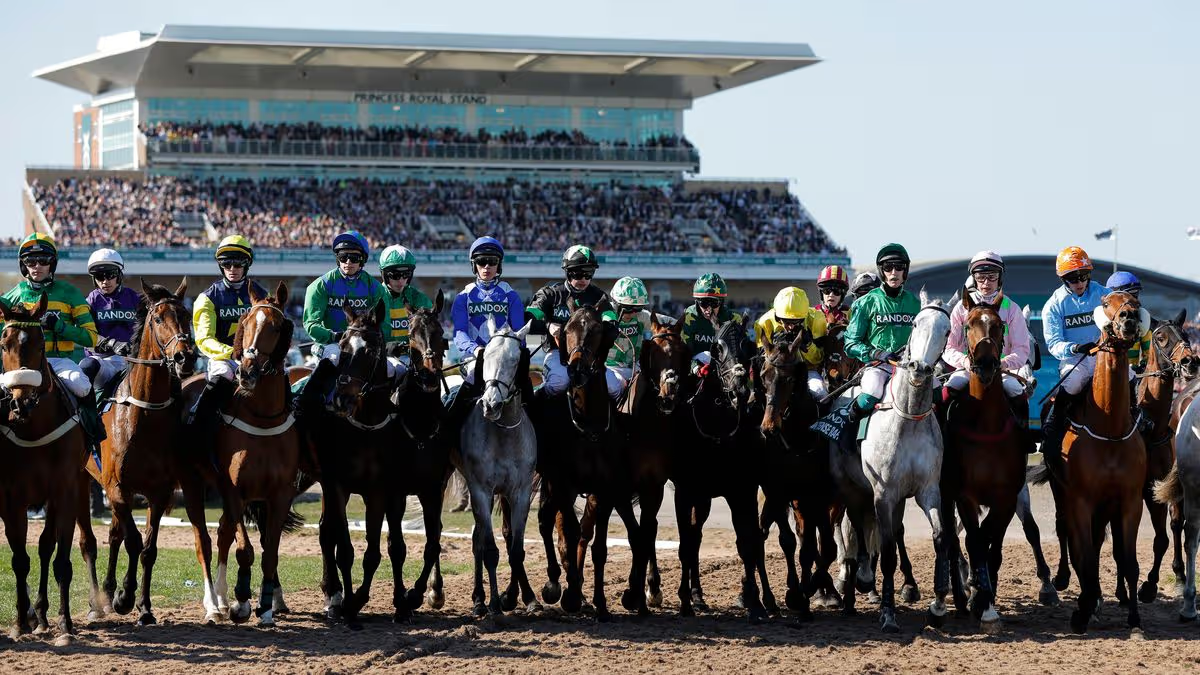
The wait is finally over. Today, the eyes of the racing world turn to Aintree for the 2026 Grand National.
This edition looks set to be unforgettable, featuring a line-up of 34 runners preparing to tackle 30 formidable fences in a true examination of endurance and courage.
After an exciting 2025 contest in which I Am Maximus just failed to secure consecutive wins, finishing a brave second to Nick Rockett – who will not compete this year after withdrawing due to coughing – today’s narrative centres on redemption.
Will the previous champion take back his title, or could a fresh name rise from the Merseyside mist? To guide you toward picking the winner of the world’s most renowned steeplechase, ITV Racing’s chief commentator and analyst, Richard Hoiles, has crunched the form and assessed conditions to deliver his final 1-2-3-4-5 prediction – featuring a huge outsider that may appeal to each-way bettors.
Advertisement
Hoiles suggests the green and gold colours of a famous owner might hold the answer to this year’s contest. The legendary JP McManus brings a powerful team to the Aintree spectacle and the ITV expert is watching his top selections closely.
“JP McManus has a really strong hand headed by I Am Maximus who proven record round here makes him preferred to Percival Legallois who looks overpriced,” he said. “Imperial Saint is another outsider who can run well whilst Monty’s Star and Johnnywho can make the frame.”
Richard Hoiles’ Grand National 1-2-3-4-5:
I AM MAXIMUS (15/2)
PERCIVAL LEGALLOIS (25/1)
MONTY’S STAR (11/1)
JOHNNYWHO (10/1)
IMPERIAL SAINT (50/1)
Explaining his selection for first place, Hoiles said of I Am Maximus: “Winner in 2024 and runner up last year. Campaigned in Grade 1 races since then and has lots of class. Choice of Paul Townend and will make a bold bid to regain his crown.”
On the chances of Percival Legallois, he noted: “Was sent off as short as 10-1 for the race last season when falling at Valentines first time. Made late ground at Tramore on New Years Day and very much appeals as a lively outsider with Harry Cobden booked.”
Regarding Monty’s Star, the expert added: “Ran well for a long way in the Irish Gold Cup. Would be suited by any further rain but looks well handicapped and one of the leading contenders.”
Discussing Johnnywho, he sad: “Runs off the same mark as when beating Jagwar (Iroko behind) in the Ultima at the Festival. Appears much more versatile ground wise these days and after a quiet season the yard are finishing it well. Definitely one to consider.”
Advertisement
Finally, pointing to a massive outsider in Imperial Saint, he wrote: “Promoted reserve who has run well several times here on the Mildmay course. Got badly hampered at Cheltenham before making good late headway. Runs in the family colours of former Champion Jockey Richard Johnson who never won the race. Can outrun his odds.”
Sky Sports, HBO Max, Netflix and Disney+ with Ultimate TV package
This article contains affiliate links, we will receive a commission on any sales we generate from it. Learn more
Sky has upgraded its Ultimate TV and Sky Sports bundle to now include HBO Max, Netflix, Disney+, discovery+ and Hayu, as well as 135 channels and full Sky coverage of the Premier League and EFL.
Sky broadcasts more than 1,400 live matches across the Premier League, EFL and more with at least 215 live from the top flight alongside Formula 1, darts and golf.
The ongoing conflict in the Middle East between the US, Israel, and Iran has resulted in a recent spike in fuel prices.
Several major airlines have already responded to this spike by increasing fares, adding or increasing fuel surcharges, and cutting flights.
UK airline Skybus announced last week it had ceased all flights between Cornwall and London due to “the huge rise in the global cost of fuel” and “a significant drop in new passenger bookings”.
More major airlines cut flights and increase prices amid rising fuel costs
Three more major airlines have now cut flights and increased prices due to the rising cost of fuel caused by the ongoing conflict in the Middle East:
Air India
Air India this week announced it was increasing its fuel surcharge on domestic and international flights.
These revised fees came into effect for UK flights on Friday (April 10), although the airline assured passengers who have already booked tickets will be unaffected by the change.
Air India said: “For the avoidance of doubt, tickets that have already been issued prior to the above times will not attract the new surcharge unless customers seek date or itinerary changes that require a recalculation of the fare.
Advertisement
“Air India will review its surcharges periodically and make appropriate adjustments as the situation requires.”
Air India announced this week it was increasing its fuel surcharge. (Image: Getty Images)
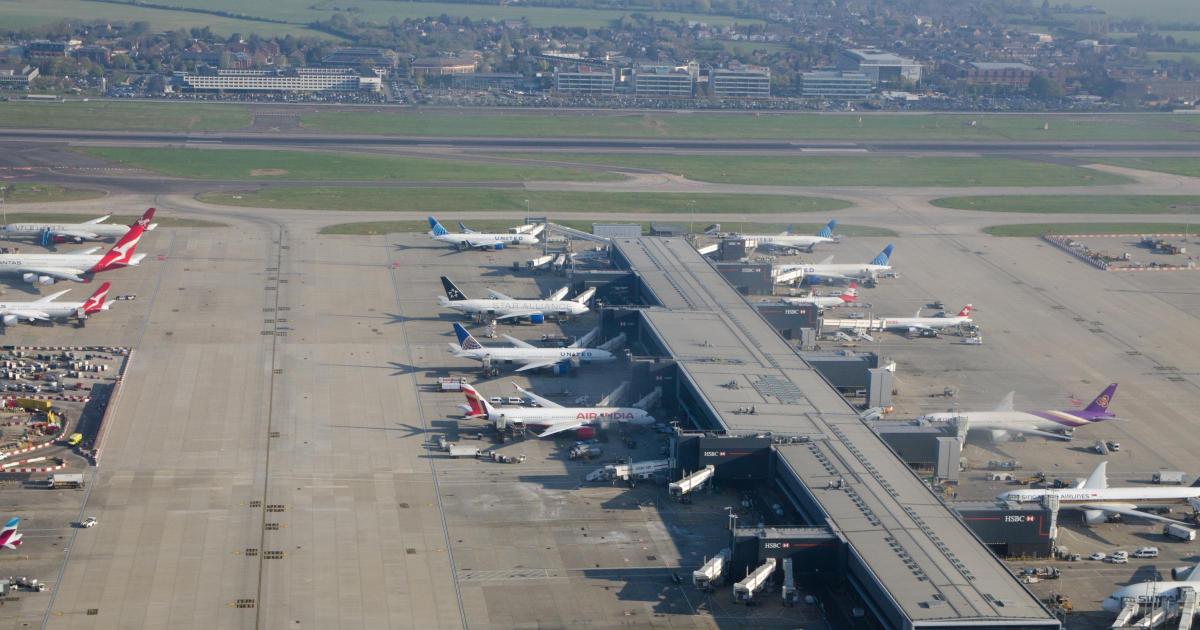
Air India usually operates more than 60 weekly flights between India and the UK, connecting cities like Delhi, Mumbai, Bengaluru, Ahmedabad, and Amritsar to London (Heathrow and Gatwick) and Birmingham.
Air New Zealand
Air New Zealand has been forced to cancel more flights due to the conflict in the Middle East, with routes in and out of Auckland, Wellington, and Christchurch impacted, according to the BBC .
These flight cancellations follow several others made by the airline last month.
However, Air New Zealand said earlier this week that the “vast majority” of its customers affected by the cancellations were being offered alternative flights on the same day.
An airline spokesperson, via the BBC, said: “Like airlines globally, we’re experiencing jet fuel prices that are more than double what they would usually be.”
Advertisement
Air New Zealand serves the UK through a combination of codeshare partner flights and booking options from Heathrow and Manchester.
It works with partner airlines, including Singapore Airlines, British Airways, and United Airlines, to connect passengers via major hubs.
Delta Airlines
Delta Airlines also announced this week that it was cutting back the number of seats on its flights due to the rising fuel costs, The Independent reported.
The Airline, which operates numerous daily nonstop flights from London Heathrow (LHR), London Gatwick (LGW), and Edinburgh (EDI) to various US destinations, has already increased the price of its checked bag fee by US$10 (£7.45).
Advertisement
Now, reduced seat numbers on Delta flights could result in airfare prices rising.
The 3 airlines that have entered liquidation or administration in 2026 (so far)
The Street reported the airline has “officially gone dormant” after retiring two of its A340 planes.
Advertisement
UK travel companies that have closed in 2026 (so far)
Four UK travel companies have also ceased trading in 2026, resulting in the cancellation of flights and holiday packages to destinations around the world.
All four have ceased trading, according to Companies House, and have lost their Air Travel Organiser’s Licence (ATOL).
Have you been impacted by the recent flight cancellations or airfare price hikes caused by increased fuel prices? Let us know in the poll above or in the comments below.
There’s no shortage of well-known walks in this part of Lancashire.
On a clear weekend, Rivington Pike draws steady streams of walkers climbing for the view, while nearby beauty spots fill quickly with cars and day-trippers.
But just a short drive away, on the edge of Bolton, there’s a route that offers much of the same landscape, and far more peace.
Wayoh Reservoir, tucked beneath the West Pennine Moors near Turton, is easy to overlook.
Advertisement
(Image: Joseph Charnock)
Built in the 1870s to supply water to Bolton’s mills, it has long since settled into a quieter role.
Today, it’s a place of still water, soft woodland and big skies — the kind of setting that doesn’t shout for attention, but rewards those who find it.
(Image: Joseph Charnock)
The walk itself is simple and satisfying: a circular route of around three miles that hugs the reservoir for much of its length.
The path is largely flat and well-maintained, making it accessible for casual walkers, families and anyone looking for an easy escape into nature.
Advertisement
From the car park, the route quickly draws you alongside the water.
(Image: Joseph Charnock)
On calm days, the reservoir reflects the surrounding trees and hills with near-perfect clarity; in cooler months, a light mist can drift across the surface, giving the whole place a quiet, almost cinematic feel.
The path moves between open stretches and pockets of woodland, with glimpses of the moors rising beyond.
(Image: Joseph Charnock)
While other local routes can feel busy and well-trodden, here there’s space to walk at your own pace, without the constant flow of people passing by.
Advertisement
A short distance from the reservoir lies Entwistle, a village so small you could easily miss, but it has one thing that walkers have been seeking out for generations.
At its heart is the Strawberry Duck, a traditional pub that has become a destination in its own right.
(Image: Google Maps)
For many, it’s as much a part of the walk as the reservoir itself.
After a loop of fresh air and steady miles, the appeal is obvious: a pint, something to eat, and a place to sit and take in the surroundings.
Advertisement
On weekends especially, you’ll find walkers arriving in ones and twos, boots muddied, ready to round off the route in proper Lancashire fashion.
After JD Vance claimed UK electricity prices are “four, five, six times” higher than in the United States, The Independent examined the accuracy of the US vice president’s statement more closely.
Latest figures show the average monthly electricity cost in the US is about $150, roughly £110, while in the UK a typical monthly energy bill is around £79, roughly $106.
Vance also argued that Europe is “completely dependent on unreliable energy sources.”
Advertisement
In reality, more than half of the UK’s energy is produced domestically, reducing reliance on imports and exposure to global disruptions.
It means anything less than a winning return to top-flight action this weekend will prompt alarm bells in some quarters, despite Arsenal sitting nine points clear of City at the top of the table.
The Gunners need momentum, because City appear to be building up a head of steam ahead of their final eight league games of the captain.
Date, kick-off time and venue
Arsenal vs Bournemouth is scheduled for a 12.30pm BST kick-off today, Saturday, April 11, 2026.
Advertisement
The match will take place at the Emirates Stadium in north London.
Where to watch Arsenal vs Bournemouth
TV channel: In the UK, the game will be televised live on TNT Sports 1, with coverage starting at 11am BST.
Live stream: TNT Sports subscribers can also catch the contest live online via the HBO Max app and website.
Advertisement
Live blog: You can follow all the action on matchday via Standard Sport’s live blog, with expert analysis from Matt Verri at the ground.
Arsenal vs Bournemouth team news
Piero Hincapie is likely to remain out, along with long-term absentee Mikel Merino.
Bournemouth are set to welcome Eli Junior Kroupi back for the trip to the Emirates, with Alejandro Jimenez and Tyler Adams also in contention.
Advertisement
Justin Kluivert and Lewis Cook are still out, while Julio Soler could be on the bench.
Boost: Eberechi Eze
Arsenal FC via Getty Images
Arsenal vs Bournemouth prediction
Arsenal will need to be at their clinical best against the Cherries, who are stalemate specialists after a remarkable five draws in a row in the Premier League – including three goalless draws.
Advertisement
It will be interesting to see how much Mikel Arteta rotates against a Bournemouth side who are capable of beating any team on their day.
One eye will surely be on the visit of Sporting in the Champions League next Wednesday, but the Gunners head coach will not want to jeopardise the title chances in any way.
Expect a strong Arsenal team as they look to put the game to bed before Arteta takes off more senior stars. But Arsenal are not a team blessed with the creativity required to rack up a big score.
Holly Dyson turned her life around after a stark warning from doctors
Blaise Cloran, PA and Ashlie Blakey Live and breaking news reporter
08:00, 11 Apr 2026
A woman who was told she had six months left to live after drinking two litres of gin a day has turned her life around and is now running a half marathon.
Holly Dyson battled alcohol dependency for six years throughout her 20s. The 28-year-old, from Southport, felt unable to leave the house without taking a bottle of wine.
She had to go to hospital several times and was told she had ‘severe’ liver disease. Holly said at one point, she ‘accepted the fact she was going to die’.
Advertisement
Get MEN Premium now for just £1 HERE – or get involved in our WhatsApp group by clicking HERE. And don’t miss out on our brilliant selection of newsletters HERE.
But now, as she approaches three years alcohol-free, Holly helps others with addiction for her job. She is set to run the London Landmarks Half Marathon on Sunday for the charity Alcohol Change UK after turning her life around.
Just hours before speaking to the PA news agency, Holly was leading a walking group as part of her career as a support worker for Change Grow Live, where she uses her experience to help others. Yet previously, after having a traumatic time at university, Holly did not drink any other liquid apart from alcohol for three years and was no stranger to starting her day with a pint of cider.
Holly said: “I truly, wholeheartedly was going to die. I was told I was going to die. I believed it and I had no hope.
Advertisement
“But here I am, nearly three years later, working in addiction and running a half marathon. These are all things that I could only dream of and now I’m actually doing it.”
Holly’s dependency on alcohol escalated rapidly in her mid-20s and she turned from drinking prosecco with her family in the evenings to experiencing physical withdrawals if she went without a drink. “If I was going out, I’d have to take a bottle of wine and I would put it into three smaller bottles so I could hide them in a bag and I was just living in fear every single day,” she said.
“I went to hospital numerous times, I had severe liver disease and then, in 2023, I went in again and I was really unwell this time. I’d been vomiting blood and all sorts, and they said to me there, you are going to die in six months if you carry on like this.
Advertisement
“But even that didn’t stop me. It upset me but I didn’t care. I’d kind of accepted the fact I was going to die because I can’t stop this.”
Holly said negative stereotypes surrounding alcohol addiction prompted her to speak out. “I’m not your stereotypical alcoholic,” she said.
“I was a young girl when I got trapped in that cycle and I think stereotypes can be a barrier to people seeking and getting help. Equally, I don’t think alcohol addiction is spoken about enough. I think there’s so much stigma and stereotypes attached to it and the stigma’s awful.”
Advertisement
Holly lost her fitness while dependent on alcohol as she would spend large amounts of time lying in bed and drinking and Sunday’s half marathon is a testament to her recovery. “When I was drinking, I did nothing.
“All I’d do is lie in bed and drink. So, when I got sober, getting my fitness back was really important and I’ve always, always loved running,” she said.
Holly said the half marathon was more than a physical challenge and is a way to give back, raise awareness, and show that recovery is possible. To sponsor Holly and the Alcohol Change team, visit: justgiving.com/campaign/alcoholchangeuklandmarkshalf2026.
To lengthen the leg, it’s also a good idea to pair your Capris with some kind of heel or sandal — think flip-flops (which also had a moment last year) or even a heeled shoe. Small London brand Realm does a number of lovely, Nineties-inspired minimalist heeled sandals, as does everybody’s cool-girl staple, Vagabond. Or, if you want to hide your toes, then a nice ballet flat is always a good option. For extra statement points, consider investing in a pair of the Speedcat Sneakerinas, which will round off the entire look nicely.
Great Britain, the 2025 semi-finalists, had been the underdogs heading into the tie, as they were without four players ranked inside the singles top 100 – Emma Raducanu, Katie Boulter, Fran Jones, and Sonay Kartal.
But they overcame the disparity in ranking and experience to reach the finals for the third year in a row.
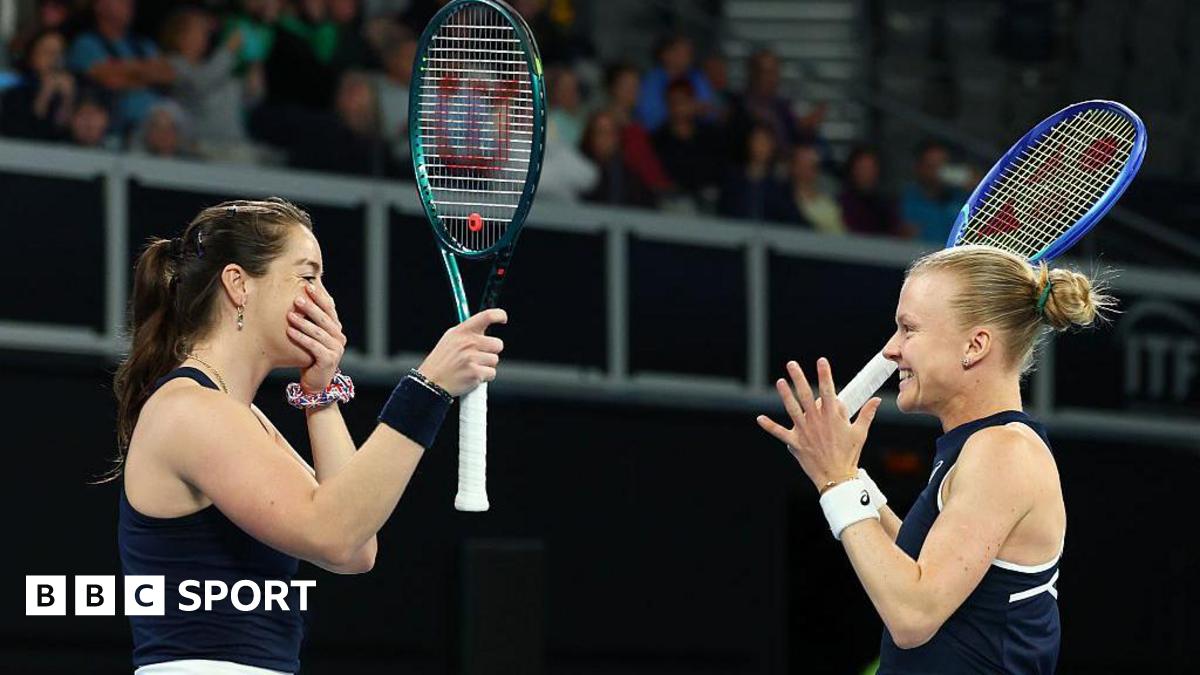
After being broken in their opening service game and slipping to a 3-1 deficit, Dart and Burrage roared back with a run of five games to take the first set.
All four players struggled with their serves in a topsy-turvy second set, with four consecutive breaks en route to 3-3. Great Britain then made the decisive break in the ninth game before Burrage held her nerve to secure the win.
Advertisement
“They’re two great players. They play a lot of doubles and it was our first time playing together,” said Dart.
“It’s crazy actually because we played pretty well and to be able to make the finals is just kind of surreal.”
Great Britain are the second team to qualify for September’s eight-team finals in Shenzhen, joining hosts China, and have reached the last four at the past two tournaments. Losers Australia will compete in November’s play-offs.


























































You must be logged in to post a comment Login