
News Beat
Social Media Ban For Under-16s: Parents And Experts Share Their View

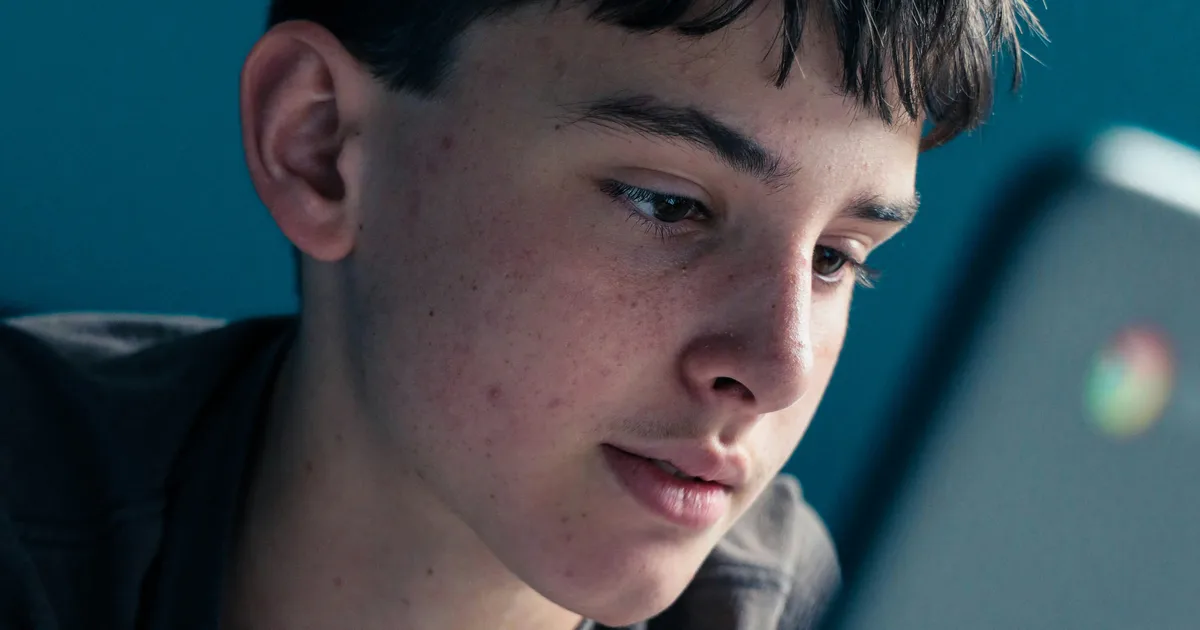
After Australia made moves to ban under-16s from using social media, both the UK and France are considering a similar move.
The UK government has now launched a consultation on children’s use of technology, including social media, and said it’s seeking views from parents, young people and civil society – with a response expected this summer.
Over the weekend, more than 60 Labour MPs wrote to prime minister Keir Starmer urging him to back a ban, while members of the House of Lords are set to vote on a cross-party amendment to the Children’s Wellbeing and Schools Bill this week to raise the age of social media access to 16.
Esther Ghey, the mum of Brianna Ghey who was murdered by two teenagers, has lent her support to the amendment, saying it is a “vital step in better protecting children online”.
What do parents and experts think of a social media ban for young people?
In December 2025, a YouGov poll of 5,000 people found 39% of respondents “strongly supported” and 35% “somewhat supported” a ban on under-16s having social media accounts. In contrast, just 15% “somewhat opposed” and 4% “strongly opposed” it.
A separate survey by The Good Growth Foundation found 66% of respondents backed a social media ban for young people, while a petition calling for a ban on social media access for under-16s has been circulating in parent Whatsapp groups – at the time of writing, it had 65,000 signatures.
Dr Tracy King, is a chartered clinical psychologist who has a 13-year-old autistic daughter. She told HuffPost UK that from a parental and professional perspective, she supports stronger regulation and safeguards, but she is cautious of an outright ban.
“Social media can expose teenagers to real risks, including comparison culture, grooming, algorithm-driven distress, and constant nervous system activation,” she said.
“I see this particularly affecting neurodivergent young people, who may be more vulnerable to social overwhelm, rejection sensitivity, and online manipulation.
“At the same time, for many autistic teenagers, social media can provide connection, identity exploration, and a sense of belonging that is harder to access offline.”
The psychologist suggested a blanket ban risks “removing one of the few spaces where some young people feel socially competent or understood, without addressing the underlying issues of platform design, moderation, and digital literacy”.
What she wants most is not just restriction, but protection paired with education and realistic, age-appropriate boundaries. “That education has to extend to parents, as I see many who have no idea of online risks happening behind the bedroom door,” she added.
Lucy Whitehouse, who has a three-year-old and is CEO of sex education charity Fumble, noted that pressure should be put on social media platforms to “clean up their act”, rather than banning young people.
“Social media has a lot of negative content, but it is also the place that young people go to in lieu of any inclusive and accessible sex education at school to find answers to the questions that they have and to connect and to learn,” she added.
One month after the ban in Australia took effect there was mixed reaction from teens, according to CNBC – while some expressed relief at being free of the distraction, others admitted to finding ways to circumvent the ban.
Lee Chambers, founder of Male Allies who has three children aged 13, 11 and two, believes this would happen in the UK too: “If you ban social media, young people will find another way in.”
He also noted that it’s hard to know where a line is drawn in terms of what constitutes ‘social media’.
“Roblox is a social platform where a lot of negative content is being shared. Will the government ban this, too? What about Whatspp? When does the banning stop?” he asked.
“What we need to do is to put real regulation and rules around these platforms that the social media giants must adhere to.”
He added that young people need help navigating the online world – “it’s not something that we can just switch off, it’s everywhere, and with AI things are only going to get worse”.
The government is said to also be looking at options including implementing phone curfews to avoid excessive use and restricting potentially addictive design features such as ‘streaks’ and ‘infinite scrolling’.
Technology Secretary Liz Kendall said: “Through the Online Safety Act, this government has already taken clear, concrete steps to deliver a safer online world for our children and young people.
“These laws were never meant to be the end point, and we know parents still have serious concerns. That is why I am prepared to take further action.”
Since the Online Safety Act came into play, children encountering age checks online has risen from 30% to 47% – and 58% of parents believe the measures are already improving children’s safety online.
Nova Eden, who has three children aged 14, 11 and six, and is one of the leading voices in the Smartphone Free Childhood campaign, added: “The harm being caused to young children is a public health emergency.
“There is an urgent need for UK leaders to step up and implement meaningful, accelerated change for the next generation. It is time to prioritise children’s mental health and wellbeing over the profits of Big Tech.”



