

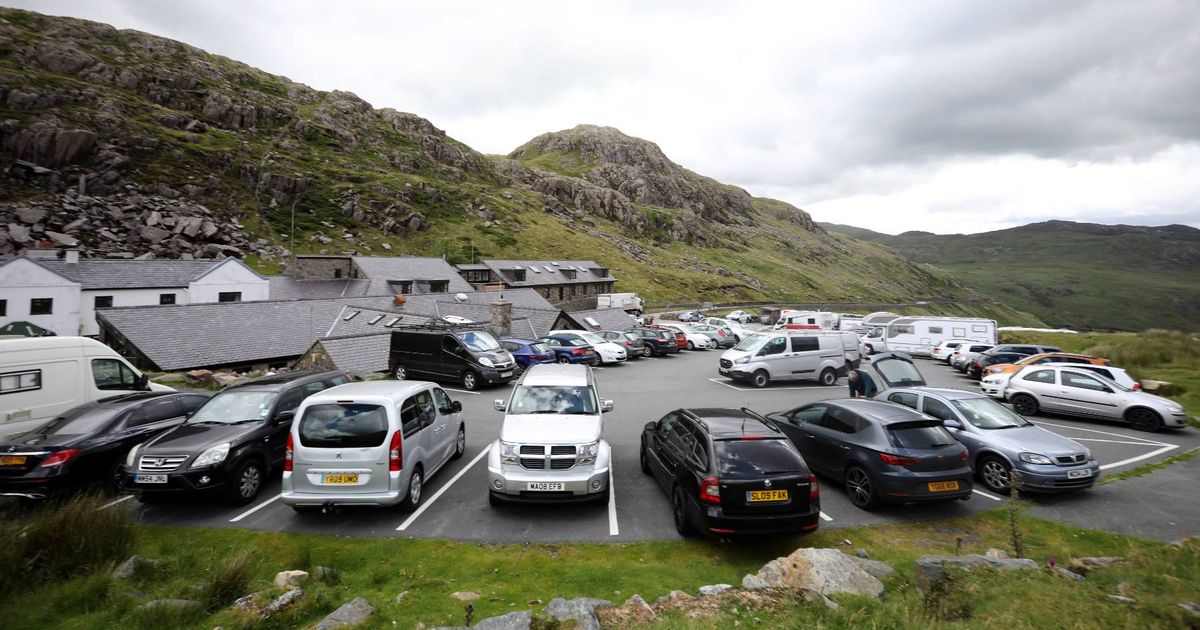
The proposed car park strategy would involve raising tariffs, implementing different tariff systems, and utilising automatic number plate recognition (ANPR) to deter unauthorised parking.
A national park has estimated it could raise an additional £500,000 by implementing higher car parking charges. Eryri National Park Authority’s financial strategy also included expanding retail opportunities at visitor centres, whilst staff redundancies were described as “a last resort”.
Operating within “a challenging financial context”, the authority revealed its current year’s budget shortfall of £635,850 was expected to “significantly increase”. A report titled “Addressing the Financial Challenge”, presented at a meeting last Wednesday, indicated that in the short term increasing car parking fees offered “by far the biggest potential” for boosting income, and raising charges should be “a top priority”.
Measures to tackle the baseline budget deficit had included boosting income, cutting non-staff expenditure and reducing staff numbers. But the report emphasised that “reducing the number of staff is regarded as a last resort”. For the biggest stories in Wales first, sign up to our daily newsletter
“The authority’s main strength is of course its staff, and we are fortunate to have a pool of very talented and committed staff,” the report reads. “Therefore, whilst the perilous nature of the financial situation and its implications are fully understood, we will do our utmost to avoid compulsory redundancies.”
Amongst the strategies to address the financial challenges was a review of car parking fees and enhancing retail income at visitor centres. The report emphasised that the authority had to do something and revenue from car parks would play “a critical role”.
The report indicated “officers considered with a degree of confidence” that short-term income could reach £540,000, primarily through car park revenue and retail.
The proposed car park strategy would involve raising tariffs, implementing different tariff systems, and utilising automatic number plate recognition (ANPR) to deter unauthorised parking. The strategy would also evaluate the need for new or expanded car parks, including investment in new facilities.
“It is forecast that the authority can generate an additional car parking income of £500,000 per annum from 2026/27,” the report revealed.
“While car parking income carries a degree of risk (due to various external factors such as visitor numbers, weather, economy etc), it is considered that this could make a significant contribution (about 63%) to addressing the financial challenges that the authority faces.”
Among other strategies, the report proposed a reorganisation of its visitor centres, including Beddgelert and Pen Y Pass, to generate an additional £40,000.
The report stated: “In the short term (one-two years) it is considered there is some limited potential for increased income generation at the authority’s information centre in Betws-y-Coed and the ‘hwb’ at Pen-y-pass.” This increase could be achieved by reviewing internal structures and potentially increasing the floor space at Pen-y-Pass, it said.
However the “income generation opportunities” from Beddgelert and Aberdyfi centres were considered to be “limited”.
The meeting heard also that a “significant uplift” in the planning fee income in the next year could contribute to the overall financial strategy.
The “positive state” of the pension fund, money from buildings and information centre upgrades, investment in a new commercial manager role and the chance of Welsh Government funds uplift could also help.
At the meeting members agreed to recommendations to support principles forming part of the authority’s financial strategy for 2026/27.
They included agreeing to the principle of increasing car parking tariffs and greater enforcement to bring in an additional £500,000 per annum and to set a target of an additional £40K per annum from retail income.



