Connect with us

NewsBeat

Spire Washington patient speaks over surgeon Leslie Irwin

Published

on

Spire Washington patient speaks over surgeon Leslie Irwin

David Render underwent numerous procedures carried out by consultant orthopaedic surgeon Leslie Irwin between 2018 and 2022.

Mr Irwin practised at Spire Washington Hospital and Sunderland Royal Hospital during that period.

David said several procedures were often carried out during a single operation, leaving him at times unsure “exactly what had been done”.

David Render (Image: SUPPLIED)

On two occasions, he claims screws were left protruding from his fingers following surgery, requiring emergency removal.

Advertisement

He first sought medical treatment in 2017 after damaging his wrists in a fall.

Initially treated by another surgeon, he was referred to Mr Irwin the following year.

Over the next four years, he underwent repeated operations at Spire Washington Hospital on his wrists, fingers and elbows, including extensive tendon and ligament surgery.

Since then, David, from Washington, says he has struggled with daily life.

Advertisement

Leslie Irwin (Image: SUPPLIED)

Once a keen photographer, he has been unable to return fully to his hobby and says ongoing pain and restricted movement in his arms make everyday tasks difficult.

He also believes the physical and emotional toll of repeated procedures contributed to the breakdown of his marriage.

Although he regarded Mr Irwin, who has since been banned from practising by Spire, as his “saviour”, David was contacted unexpectedly last year by Spire Washington Hospital, raising concerns about some of the procedures he had undergone.

Following an investigation into Mr Irwin’s work, Spire acknowledged there had been “no clinical indication” for at least one of David’s operations.

Advertisement

Sunderland Royal Hospital (Image: Stuart Boulton)

Concerns were also raised about the standard of surgery, including the use of a thermal wand, described as a technique not accepted practice, which caused damage to his wrist.

“I honestly thought Mr Irwin was amazing, I worshipped him,” David said.

“I believed things would have been far worse without all the operations he carried out.

“When he did several procedures in one go, I thought he was saving time and money, and I trusted him completely to fix what was wrong.

Advertisement

“But knowing what I know now, it feels very different. It has been such a shock, especially as nothing has actually been put right despite all those operations.

“When Spire contacted me, I assumed it was routine. Finding out what had happened made me very angry. I thought he was a brilliant surgeon and a lovely man. To discover there are so many others affected is awful.”

Mr Irwin who worked for the South Tyneside and Sunderland NHS Trust between 2001 and 2023, retired in 2022, but a selection of his patients have been contacted directly by Spire over potential issues with his work. 

Mr Irwin relinquished his role with the General Medical Council (GMC) in May 2025. 

Advertisement

Spire Healthcare suspended Mr Irwin in August 2023 and withdrew his practising privileges in September 2024.

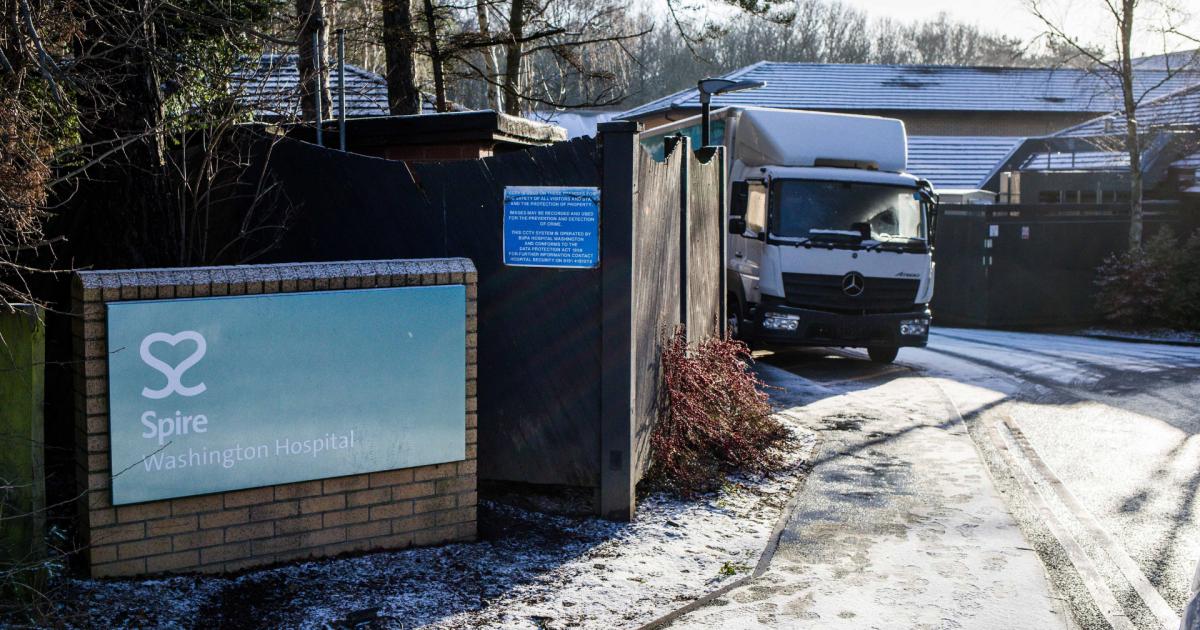
Spire Hospital in Washington (Image: Stuart Boulton)

The private practice started recalling patients who were operated on by Mr Irwin during his time at Spire Washington Hospital in the summer of 2025.

The South Tyneside and Sunderland NHS Foundation Trust said that it had “liaised with Spire to understand the scale of their patient recall and to help inform our next steps as a Trust”.

A spokesperson for the Trust added: “We are currently working through the details of which patients we may need to review and will contact those people directly and as a matter of priority.”

Advertisement

The Care Quality Commission (CQC) confirmed that it inspected Spire Washington Hospital in October last year after concerns were raised with it, and would be publishing its findings in due course.

Mr Render said he had always believed he was receiving the best possible care and, even after the incidents involving screws protruding from his fingers, would “never have dreamed of complaining”.

“Had Spire not contacted me, I would never have known,” he said.

“I would have assumed this was the best outcome I could expect after my accident. I am grateful for their openness and transparency.

Advertisement

“But there are still so many questions, for me and for other patients and for me. We need to understand what happened and why things have gone so terribly wrong.”

David is being supported by law firm Slater and Gordon, which has been investigating cases involving Mr Irwin for several months. An increasing number of former patients are said to have come forward.


Ayesha Hussain, a clinical negligence solicitor representing David, said: “David placed his full trust in his surgeon, as any patient would, believing he was receiving the highest standard of care.

“To discover that this may have fallen significantly short has been devastating for him, particularly given the regard in which he held his doctor.

Advertisement

“He is entitled to answers about what happened and why, and we will support him in seeking those answers.

“This is an extremely concerning situation, and we are hearing from a significant number of people with similar concerns. We would urge anyone worried about their treatment to come forward.”

Spire Washington says they have been in touch with patients and are reviewing specific procedures undertaken by Mr Irwin. 

A Spire spokesperson previously said: “We are currently reviewing specific procedures that were provided to a select cohort of patients of Mr Leslie Irwin, a consultant orthopaedic surgeon who previously practised at Spire Washington Hospital. 

Advertisement

“We are in direct contact with all relevant patients to review their care and offer support. 

“The review is being run in accordance with NHS England’s National Quality Board: Recall Framework, which Spire Healthcare helped to develop.” 

Mr Irwin has not responded to requests for comment by The Northern Echo.

Advertisement

Source link

Continue Reading
Click to comment

Leave a Reply

Your email address will not be published. Required fields are marked *

NewsBeat

Trump’s approach to Iran is a departure from containment policy of his predecessors

Published

on

Trump’s approach to Iran is a departure from containment policy of his predecessors

The joint US-Israeli combat operation against Iran, and the killing of its supreme leader, Ayatollah Ali Khamenei, is a watershed moment in the US-Iran relationship. Bilateral interactions have been tense since 1979 when a revolution ousted Iran’s pro-American Shah, Muhammad Reza Pahlavi, and replaced him with an Islamic theocracy opposed to the US.

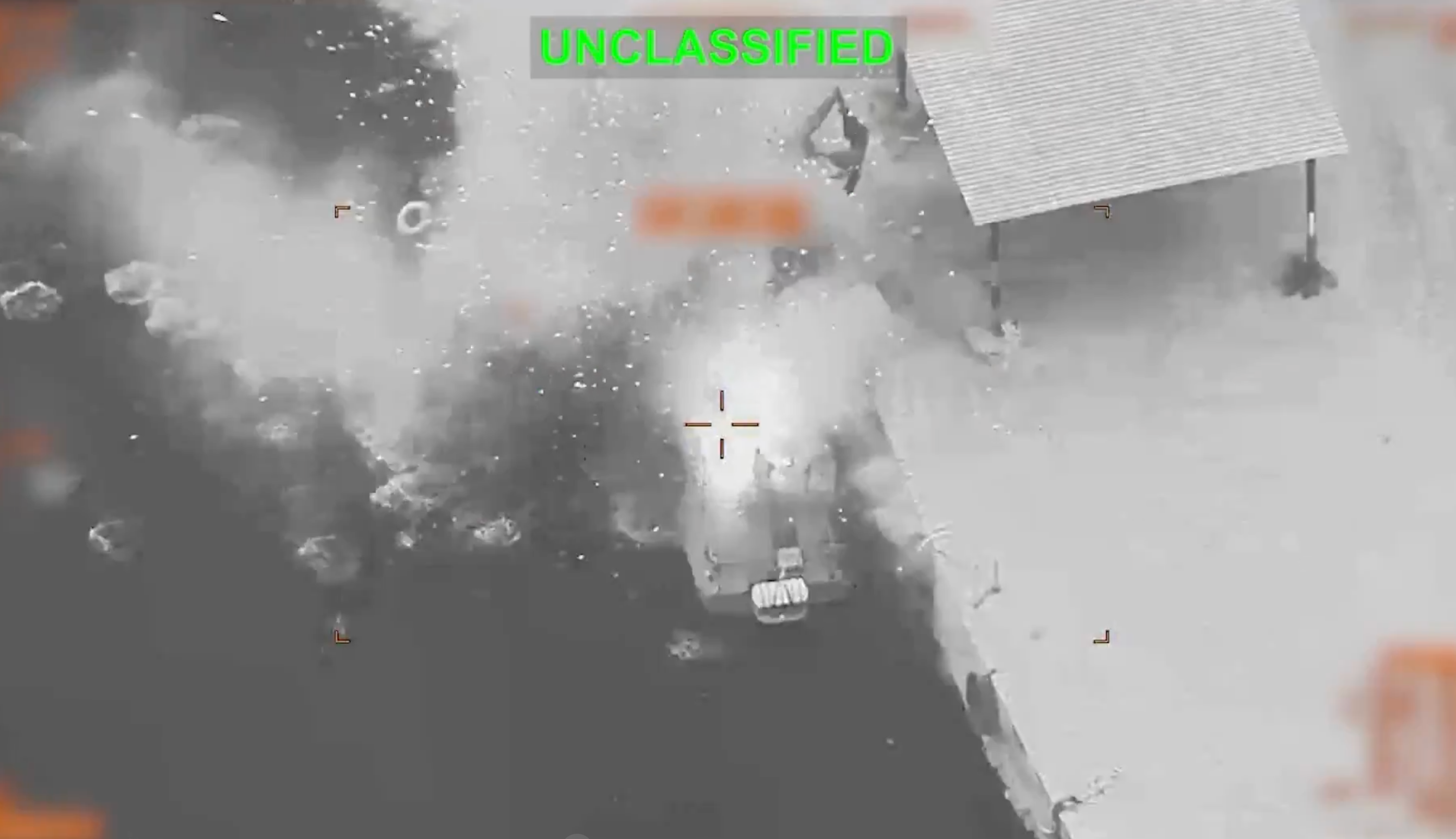
However, these tensions have now bubbled over into direct conflict. The US and Israel have bombed Iranian cities, which Tehran has responded to by launching strikes across the region. Hostilities have now spread to Lebanon, with the Iran-backed Hezbollah group launching missiles and drones towards Israel in retaliation for Khamenei’s killing.

In a video statement posted on social media shortly after the US-Israeli intervention began, Trump appeared to justify his approach by saying the Iranian government’s activities “directly endanger the US, our troops, our bases overseas and our allies”. His actions signal a departure from a stated American foreign policy approach to Iran that has stood since the 1990s.

Consecutive US presidential administrations had developed a strategy of containing Iran, focused on trying to prevent its government from expanding its reach and influence across the Middle East. This has taken two forms. Presidents have either sought to isolate the country on the world stage or negotiate with its leadership to temper Iran’s expansionist tendencies.

Advertisement
People walk past the Gandhi hospital in Tehran, which was hit by an Israeli airstrike on March 1.
Abedin Taherkenareh / EPA

Bill Clinton coined the approach and applied its two facets. His White House appropriated the idea from the stated US stance towards the Soviet Union and its allies during the cold war. Officials in his administration initially referred to Iran as a “rogue state” that was opposed to American interests and global stability.

In 1995, Clinton signed two orders strengthening the economic sanctions on Iran that had been in place since the 1979 revolution. The first forbade American companies from investing in the Iranian oil industry. And the second banned all US firms from conducting business in Iran. Clinton also pledged to impose sanctions on any firm or organisation outside the US that traded with the country.

But after the 1997 election of a reformist Iranian president in Mohammad Khatami, Clinton offered to negotiate with Tehran. To pave the way for diplomatic dialogue, his secretary of state, Madeline Albright, even publicly admitted to the CIA’s involvement in steering a coup in 1953 that resulted in the removal of the Iranian prime minister, Mohammad Mosaddegh.

Clinton’s apparent u-turn, which also saw US economic sanctions relaxed to pre-1995 levels, yielded next-to-no tangible results. As supreme leader, Khamenei overruled Khatami’s attempts to engage with the US diplomatically.

Advertisement

George W. Bush emulated his predecessor’s initial approach to Iran. Whereas Clinton regarded Iran as a rogue state, Bush took this framework one step further in his 2002 State of the Union address. Due to the Iranian government’s supposed links to and support for terrorist groups, he referred to Iran as a member of the “axis of evil” – a nation that needed to be challenged and contained.

However, despite Bush’s tough rhetoric, his other foreign policy actions while in office benefited Iranian regional interests. In removing the Taliban from power in Afghanistan and Saddam Hussein from Iraq, the Bush administration eliminated two of Iran’s key rivals. The next decade saw Iranian-backed proxy groups grow in prominence across Iraq, Syria and Lebanon.

Barack Obama adopted Clinton’s latter approach towards the country. His administration negotiated with the Iranian government over its nuclear programme, which resulted in the 2015 Joint Comprehensive Plan of Action. Iran pledged to limit its uranium enrichment and agreed to intensive monitoring.

The Obama administration sought to use the prospect of global inclusion and the lifting of economic sanctions to persuade Iran to check its regional expansionist aspirations. Joe Biden, who was US president between 2021 and 2024, sought to resurrect the Joint Comprehensive Plan of Action after Trump’s abandoning of the treaty in his first term.

Advertisement

Containment to confrontation

In targeting Iran’s leadership and military infrastructure, the Trump administration has departed from this well-established strategy. Trump has shifted American policy towards Iran from one of containment to confrontation. This is an approach the White House has worked towards for the past year, despite also engaging Iranian officials in talks.

Trump’s backing of Israel in its victories over Iranian-backed paramilitary groups like Hamas and Hezbollah tempered Tehran’s regional reach. His support for Israeli strikes on Iran during the 12-day war in 2025 culminated in the shattering of Iran’s air defences and intelligence infrastructure. Subsequent US air strikes on Iranian nuclear facilities also halted the country’s enrichment programme.

Donald Trump wearing a red baseball cap.
Trump’s approach towards Iran marks a sharp break from that of his predecessors.
Will Oliver / EPA

Whether the killing of Iran’s political and religious leadership will result in a less belligerent Iran remains to be seen. While the Islamic Republic’s figurehead has been removed, the power structures that maintained Khamenei’s power remain intact. All indicators are that the Islamic Republic will implement a succession plan and double down against US-led incursions and encroachment.

Trump is pushing for regime change. In his statement announcing the strikes, the president urged Iranians opposed to the Islamic Republic to take to the streets. Yet he did not go as far as endorsing the installation of the exiled crown prince, Reza Pahlavi, who enjoys considerable support among the Iranian diaspora.

The Trump administration is clearly on a path that has pushed the US towards direct confrontation with Iran. Whether or not this approach ultimately leads to an Iran that is more amenable to Israel and less antagonistic towards the US’s Gulf allies, it has brought decades of containment to an abrupt end.

Advertisement

Source link

Continue Reading

NewsBeat

Six games in 19 days to make or break Man City dreams this season

Published

on

Manchester Evening News

Manchester City have six games across four competitions in a spell of 19 days this month that will be critical for their season

Advertisement

Pep Guardiola is not a man for counting chickens. Ask him what he expects to happen in any given game or season and he will refuse to take anything for granted or accept the most likely outcome.

It is how the Manchester City manager has won as much as he has a coach, and how in his tenth year in English football he is still fighting at the very top of the game. It also means that when he does speak about what is to come it is worth listening and taking notes.

Such a moment came after the 1-0 win over Leeds, a hard-fought battle that showed his team have the potential to push Arsenal all the way in the Premier League title race. It was no different to their other recent wins really, except that it moved them two points off top spot with just 10 games to go and into March.

FOLLOW OUR MAN CITY FB PAGE! Latest news and analysis via the MEN’s Manchester City Facebook page

Advertisement

Even for the ultra cautious like Guardiola, moving into spring with real hopes of winning a league title is a big thing. Being in with a chance of winning four trophies is monumental, and arguably makes the season a success whatever happens to be able to show such consistency over the first two-thirds of the campaign; for all the amazing teams Guardiola has previously had at the Etihad, they have only managed to get to this position in two of the last nine seasons.

And yet, coming so far only increases the pressure and expectation on City – and indeed Arsenal, who are also in contention to win four trophies and can say they are better placed to win in each of the four. They lead in the Premier League, have a much easier draw in the Champions League (after finishing top of the first stage) and have a much gentler schedule before facing City in the Carabao Cup final.

That Wembley match comes on March 22, and is at the end of a two-and-a-half week stretch for the Blues that could have them dreaming of glory this season or see their hopes shattered. For all the optimism of City and Guardiola heading into spring, six games across four competitions in the next 19 days will be critical.

It starts this Wednesday with the home visit of Nottingham Forest in the Premier League, which along with West Ham away a week on Saturday makes up the two matches with the lowest profile. They are both games that City should win though which means any slips will leave a painful taste – particularly because after the West Ham game the table will stay untouched until the second week of April.

Advertisement

Newcastle away was a tough draw to get in the FA Cup, particularly because it comes before the first leg of the Champions League last-16 tie away from home that also happened to be the toughest option in Real Madrid. Two good results in these two games plus the home return against Real will result in two quarter-finals and soaring confidence, but lose and it will knock the momentum out of City’s season.

Five days after the home leg against Real, it is Arsenal at Wembley in the Carabao Cup final in a game that will not only influence the title race but also be a major topic of conversation for the next fortnight while club football is parked. The winner will be boosted while the loser will have to try and use it as motivation.

It is a brutal schedule if City want to arrive in April with their hopes of multiple trophies still alive, with the possibility that they could be cut out of three this month. Whichever exits can be avoided will only make them stronger for what is left for the final two months.

Find the best flights and hotels for Champions League games

Advertisement
This article contains affiliate links, we will receive a commission on any sales we generate from it. Learn more
Content Image

Various Prices

Booking.com

See the deals here

Booking.com provides countless deals on flights and accommodation across Europe so Man City fans can follow the team on their Champions League campaign.

Ensure our latest sport headlines always appear at the top of your Google Search by making us a Preferred Source. Click here to activate or add us as Preferred Source in your Google search settings

Source link

Advertisement
Continue Reading

NewsBeat

Northern Ireland in for hot spell this week as Met Office says temperatures to hit 18C

Published

on

Ipso logo

We are set to see the best of the sunshine on one particular day this week

Northern Ireland is set for some warmer weather this week following a washout winter.

Temperatures are set to reach 18C this week as meteorological spring begins. High pressure will build on Tuesday, with maximum temperatures of 14C, rising to 16C on Wednesday and peaking at 18C on Thursday, which could be the hottest day of the year so far, the Met Office said.

Met Office meteorologist Kathryn Chalk said: “Tuesday will be fine and settled for most, with the best of the sunshine across Northern Ireland, north England and Scotland, but more mixed to the south with sunny spells and drizzly showers.

Advertisement

“Temperatures peaking at 14C in the south.”

Wednesday will be a fine day for most, with the best of the sunshine across Wales and England, cloud and rain across Northern Ireland and south-west Scotland, and temperatures reaching 16C.

Temperatures will peak on Thursday, with a high of 18C across the south east, Ms Chalk said.

The sunshine will be focused across the south east of England, while the west of the UK could see outbreaks of rain in parts.

Advertisement

Last week, temperatures reached 18.7C in Kew Gardens, which was the hottest day of the year so far, and there is a possibility Thursday could beat it, the forecaster said.

Friday will be mostly dry with maximum temperatures of 14C, Ms Chalk added.

Meanwhile, it was revealed this winter was the wettest on record for the counties of Cornwall, Leicestershire and the West Midlands, according to provisional figures from the Met Office.

Dorset and Warwickshire had their second wettest winter since comparable records began in 1836, while southern England experienced its fourth wettest.

Advertisement

In the past three months a string of low-pressure weather systems moved across the UK from the Atlantic, with repeated outbreaks of wet and windy conditions.

Three named storms in January – Goretti, Ingrid and Chandra – all brought downpours to many areas, leading to flooding and widespread travel disruption.

The rain persisted for much of February, although drier and sunnier conditions arrived towards the end of the month.

Want to see more of the stories you love from Belfast Live? Making us your preferred source on Google means you’ll get more of our exclusives, top stories and must-read content straight away. To add Belfast Live as a preferred source, simply click here.

Advertisement

Source link

Continue Reading

NewsBeat

Co Antrim pensioner died quickly after fire started by smoking in bed, inquest hears

Published

on

Belfast Live

The 82-year-old was described by a neighbour as being a “funny, outgoing gentleman”

A pensioner who passed away in a house fire at his Co Antrim home last year would have “died quickly” after the accidental blaze was started by smoking in bed, an inquest has heard.

Advertisement

Matthew (Matt) Johnston passed away in the early hours of the morning on February 11, 2025, after a fire at his home in the Oakglen area of Antrim.

At an inquest into his death held at Belfast Laganside Court on March 2, Coroner Anne-Louise Toal said an emergency call was made from a neighbour’s house at approximately 3.50am, with the Northern Ireland Fire & Rescue Service arriving within ten minutes.

READ MORE: Andrew Murphy: Man found on Co Down beach died soon after last CCTV sighting, inquest hearsREAD MORE: Inquest date set for man who ‘died a hero’ in River Lagan incident

Despite this quick response, however, a “substantial fire” had unfolded on the first floor of the property. Mr Johnston was found in his bed in the front bedroom, and was sadly pronounced dead at the scene, with the coroner adding he was “beyond help.”

Advertisement

The 82-year-old was last seen at his home at around 7.30pm on February 10 by his neighbour, Stephen Emerson. In a statement from Mr Emerson read to the inquest, he said Mr Johnston was a “funny, outgoing gentleman” who had been “in good spirits” that evening.

Mr Emerson brought his neighbour dinner, and as he was leaving, Matthew had been “lying on his bed, listening to the radio and singing.” He added that the pensioner had been “spening more time in bed recently as he said he was sore.”

Shortly before 4am on February 11, Mr Emerson recalled being woken up by a bang on his door from another neighbour, telling him “Matt’s house is on fire.” Stephen ran next door to Mr Johnston’s house, but said he could only go so far as the stair lift due to the flames upstairs.

He tried to put the flames out but couldn’t, and when the fire service arrived, informed them Matthew was in his bedroom upstairs.

Advertisement

Forensic pathologist, Dr Huddleston, told the inquest he conducted a postmortem examination of Mr Johnson’s body two days after his death, on February 13. He said Matthew had a range of pre-existing medical conditions including osetoperosis, COPD, pre-diabetes, and had a pacemaker fitted due to a “severe” cardiac issue, and had previously sufferred a heart attack.

Just before his death, Mr Johnston had reported feeling unwell, with Dr Huddleston finding evidence of pneumonia. Noting his cause of death to be due to inhaling fire gases, including carbon monoxide, Dr Huddleston said Matthew’s pre-existing conditions exacerbated his passing.

The pathologist added it’s “reasonable” to suggest Matthew would have passed away from inhalation of toxic gases quicker than a “fit and healthy person.”

Mr Johnston’s sister, Elizabeth Shergold, told the inquest her brother was in “quite poor health” and before his death had damaged his hip due to a fall, which impacted his mobility. She said she last saw him at the end of January 2025, and spoke to him over the phone a week before his passing.

Advertisement

Ms Shergold said her brother took to his bed around five days before he passed away, nothing that he was a heavy smoker, and would regularly smoke in bed including during the night.

NIFRS Station Commander McCann told the inquest the cause of the fire was deemed to be “accidental” with a lighter found in Mr Johnston’s bed and smoking materials located in his bedroom.

On arrival at the scene, Station Commander McCann explained that fire crews saw “visible smoke coming from the front bedroom on the first floor.” They found Mr Johnston in his bed, and moved him downstairs, first into the hallway then into the living room once it was determined he was deceased.

Ms McCann said there was one smoke alarm in the property, located downstairs, but this did not appear to be working. She said cigarette fires can be smouldering fires, often not taking hold for a few hours, and its spread would depend factors such as bedsheet materials.

Advertisement

“Given Matthew’s mobility issue, smoking in bed put him at a greater risk,” she added. Commander McCann highlighted that smoking in the home is a leading cause of fire deaths in Northern Ireland.

She also noted that Matthew’s bedroom door was open, which caused the fire to spread out into the hallway. Ms McCann added: “A closed internal door can give you up to 30 minutes of extra time in a fire.”

She higlighted the NIFRS free fire safety check, alvailable for those aged 50 and over, and urged anyone eligible to take part in this life-saving initative.

Coroner Toal expressed her condolences to Matthew’s family. Delivering her findings, the coroner said smoke inhalation would have led to “rapid unconsciousness” with Mr Johnston’s pneumonia and pre-existing conditions exacerbating this.

Advertisement

She added: “Matthew was smoking in bed, which acidentally ignited a fire from which an elderly man could not escape. He was alive when the fire commenced, but died rapidly, with his cause of death noted as smoke inhalation.”

Coroner Toal said it is her role to outline ways in which such deaths can be prevented in the future, adding that “most fire deaths are preventable.”

“This case highlights the danger of smoking in bed, which has been outlined as a leading cause of fire death,” she added.

“Please check smoke alarms are working, and closing internal doors can give you mre time. I would encourage members of the public to take up the offer of a free home check to ensure these deaths are prevented.”

Advertisement

To ensure you don’t miss out on all the latest from Belfast Live, be sure to make us your preferred source on Google.

Source link

Continue Reading

NewsBeat

Vicky Moss returns to William Birch & Sons of York

Published

on

Vicky Moss returns to William Birch & Sons of York

The 150-year-old business says the appointment strengthens its strategic focus on commercial performance, disciplined growth and long-term sustainability.

Vicky previously worked within the business as Supervising QS and returns following a period of wider industry experience, where she further developed her expertise in commercial strategy, contractual leadership and financial governance.

Managing Director Paul Goyea said: “Vicky understands our business, our values and our long-term vision.

Advertisement

RECOMMENDED READING:

“Her appointment reinforces our direction and positions us strongly for the next phase of growth.

“We’re also delighted to further strengthen greater diversity at senior levels within construction, bringing broader perspectives and stronger outcomes for our customers and teams alike.”

Vicky said: “I am proud to be returning to a business with such a strong legacy and clear direction.

Advertisement

“What excites me most is the opportunity to be involved in such a broad range of projects and clients across Yorkshire – from complex, high-profile refurbishment and restoration schemes to regionally significant new developments that contribute to the strength and character of our varied region.

“I look forward to playing a key role in the company’s continued success and supporting its next phase of growth.”

Source link

Advertisement
Continue Reading

NewsBeat

Parents of nursery abuse victims to meet Bridget Phillipson

Published

on

Parents of nursery abuse victims to meet Bridget Phillipson

Alison Millar, head of the abuse team at Leigh Day, said: “We have only recently begun investigating what happened at Bright Horizons Finchley Road Nursery but already we are hearing from parents that they raised concerns about staffing and supervision and the concerning way that the individual perpetrator was interacting with children; however, these concerns were not addressed.

Source link

Continue Reading

NewsBeat

Call made for new arts centre at Ballynafeigh, Ormeau Road

Published

on

Belfast Live

A proposal has also been made calling for the NI Executive to introduce a Basic Income for Artists

A call is being made for a new arts centre to be created at Ballynafeigh at Ormeau Road in South Belfast.

Advertisement

The SDLP have forwarded a motion calling upon Belfast City Council to fund a feasibility study to examine the potential for a dedicated arts and culture space in Ballynafeigh.

The motion, forwarded to the council’s recent monthly meeting of its Standards and Business Committee, states: “Belfast City Council acknowledges the thriving and inclusive arts and cultural scene in Ballynafeigh and the benefits this brings not just to the local area, but to the city and region more widely.

READ MORE: Alliance questions DUP proposal for “fair” access to funding for faith-based groups in Belfast

READ MORE: South Belfast residents claim they haven’t been consulted about planned GAA pitch in South Belfast

Advertisement

“It notes the growing aspiration in the community, particularly emerging through the Open Ormeau Community Visioning project which took place in 2025, for a dedicated arts and cultural space in Ballynafeigh.

“It recognises the strong local interest in the arts, music and culture, and the area’s increasing status as a destination for both residents and visitors to Belfast, and therefore agrees to fund a feasibility study to examine the potential for a dedicated arts and culture space in Ballynafeigh, working with Open Ormeau and the local community.”

The item was referred to the council’s City Growth and Regeneration Committee, which will meet next week.

The SDLP also tabled another arts-related motion at the committee, calling for the NI Executive to introduce a Basic Income for Artists scheme, as has been introduced in the Republic of Ireland. This motion will go to the March meeting of the full council for debate.

Advertisement

It states: “The arts, culture and creative sectors are central to Belfast’s social fabric, wellbeing, identity, and local economy. Many artists, performers and creative workers in Belfast and across the North continue to experience insecure, low and irregular incomes, worsened by the long-term impacts of COVID-19 and the ongoing cost of living crisis.

“The Irish Government introduced a Basic Income for Artists pilot in 2022, providing an unconditional weekly payment to artists and creative workers, which has been independently evaluated as improving financial stability, wellbeing, and time spent on creative practice. The Irish Government has now committed to making this scheme permanent, recognising the structural precarity faced by those working in the creative industries.”

The motion adds: “This council believes that artists and creative workers should not be forced out of their professions due to financial insecurity. It believes Belfast’s creative sector is a vital public good, contributing to community cohesion, regeneration, tourism, mental health, youth engagement and cultural life.

“A Basic Income for Artists scheme in the north would help protect creative livelihoods, retain local talent, and strengthen the city’s cultural ecosystem.”

Advertisement

If passed, Belfast Council will call on the Executive to introduce and fund a Basic Income for Artists scheme, modelled on the Irish Government’s programme, to “provide regular, unconditional income support to eligible artists and creative workers.”

The council would request that the Minister for Communities lead on the development of the scheme, in partnership with the Department for the Economy and the Department of Finance, “engaging directly with the arts and creative sectors in its design” and treating it “as a priority within the Executive’s Programme for Government and budget-setting process.”

Want to see more of the stories you love from Belfast Live? Making us your preferred source on Google means you’ll get more of our exclusives, top stories and must-read content straight away. To add Belfast Live as a preferred source, simply click here.

Source link

Advertisement
Continue Reading

NewsBeat

Professor Paul Boyle appointed Chair of The Conversation UK

Published

on

Professor Paul Boyle appointed Chair of The Conversation UK

The Conversation UK is delighted to announce the appointment of Professor Paul Boyle, Vice-Chancellor of Swansea University, as the new Chair of its Board of Trustees.

Professor Boyle succeeds Professor Sir Nishan Canagarajah, Vice-Chancellor of the University of Leicester, who stepped down in December 2025.

Professor Boyle has been Vice-Chancellor of Swansea University since 2019. Prior to this, he was President and Vice-Chancellor of the University of Leicester, and formerly Chief Executive of the Economic and Social Research Council (ESRC), the UK’s largest funding agency for social science research. He has recently completed a nine-year term as Vice-President of the European University Association, which represents over 800 universities in 48 countries, and eight years as a UUK Board Member. He has previously served as International Champion of Research Councils UK, with responsibility for international strategy across all seven UK research councils, and as President of Science Europe, representing over 50 European funding agencies.

A Fellow of the Learned Society of Wales, the British Academy and the Academy of Social Sciences, Professor Boyle currently chairs Jisc, the not-for-profit organisation providing digital services and solutions to the UK’s higher and further education sector, the British Council Wales Advisory Committee and the UKSA’s Research Accreditation Panel.

Advertisement

Dr David Levy, Deputy Chair of The Conversation UK, who has chaired the Board in the interim, said: “Following a wide search process, the Board was extremely impressed by Paul’s vision for The Conversation and his deep understanding of the challenges and opportunities facing UK Higher Education. He is the right leader to guide us through the next phase of our development, and we’re thrilled to welcome him.”

Chris Waiting, Chief Executive of The Conversation UK, said: “I’m delighted by Paul’s appointment. His experience spanning research funding, university leadership and international collaboration makes him uniquely placed to champion The Conversation’s mission to make research accessible. I’m looking forward to working with him as we continue to evolve and expand our impact.”

Stephen Khan, co-founder and Editor-in-Chief of The Conversation UK, said: “Since we launched in the UK in 2013, The Conversation has grown into a critical international channel for taking academic knowledge direct to the public. Paul joins us at a key moment, and his combination of research leadership and deep roots in UK higher education makes him a fantastic person to help us shape what comes next.”

Professor Paul Boyle said: “The Conversation is an organisation that I have long admired, and it is a privilege to take on this important role. At a time when universities face unprecedented challenges, The Conversation has a critical mission in connecting research with new audiences and demonstrating the real-world value of academic expertise is vital to the UK Higher Education sector; I therefore very much look forward to the opportunities ahead.”

Advertisement

Professor Boyle will join the Board in May 2026.

About The Conversation

The Conversation is the world’s largest platform for public engagement with research, transforming how universities share knowledge with society. Launched in the UK in 2013, it is now part of a global network of ten editions reaching more than 40 million readers each month.

The Conversation connects academic expertise with public understanding, working with researchers across the UK Higher Education sector and a team of professional editors to produce rigorous, accessible journalism that shapes public debate, informs policy and drives social change. It is funded by more than 90 university members across the UK, Ireland, Sweden, Italy, the Netherlands and Germany, as well as through grants from UKRI, Research England and Medr, and reader donations. All content is freely available and republished under a Creative Commons licence.

Advertisement

Source link

Continue Reading

NewsBeat

Win flights to Canada at York Stage’s Come From Away show

Published

on

Win flights to Canada at York Stage’s Come From Away show

York Stage has announced its biggest-ever theatre giveaway, in partnership with Heritage Collection Travel, as part of its upcoming production of Come From Away which will run at the Grand Opera House from April 10 to 18.

Every ticket holder will be automatically entered and the winner will be revealed live at the end of one of the performances.

York theatre plans ‘Golden Seat’ giveaway offering flights to CanadaA Golden Seat moment will take place at the Grand Opera House York. (Image: York Stage)

One seat in the auditorium will be randomly selected in advance, and whoever is physically sitting in that chair on the night will win return flights for two to St. John’s, Newfoundland in Canada.

The prize is being gifted by independent York-based travel company Heritage Collection Travel, known for its personalised service and strong roots within the local community, as part of a unique local partnership with York Stage.

Advertisement

It is in celebration of the show’s powerful true story and its real-life connection to Newfoundland.

Come From Away is a musical that tells the true story of 7,000 airline passengers who were unexpectedly diverted to the small town of Gander, Newfoundland on 11 September 2001, and the extraordinary kindness shown by the local community.

In the following days, the people of Gander opened their homes, schools and halls to complete strangers. Lifelong friendships were formed. Annual reunions began. Many of those stranded passengers returned to Newfoundland years later to say thank you. What started as an emergency response became a global example of humanity at its best.

The ripple effect of that kindness has continued ever since, inspiring countless pay it forward moments around the world.

Advertisement

York Stage says the Golden Seat giveaway is their way of continuing that legacy.

Nick Briggs, producer and director at York Stage, said: “Come From Away is a story about strangers helping strangers.

“It’s about compassion when it’s needed most. The kindness shown in Gander didn’t stop when the planes left. It created a ripple effect that’s still felt today. The Golden Seat is our way of paying that forward and giving something meaningful back to our own community.”

Kevin Coundon, marketing director at York Stage, said: “This production is about more than what happens on stage. It’s about real people, real places and real acts of generosity. Partnering with Heritage Collection Travel allows us to connect York directly to Newfoundland in a tangible way. We hope this moment inspires people to carry that spirit of kindness beyond the theatre.”

Advertisement

Tickets for Come From Away are selling quickly, making it one of York Stage’s fastest-selling productions to date.

Michael Davies, managing director of Heritage Collection Travel, said: “As a local independent business, supporting initiatives that bring people together is

incredibly important to us. The story of Gander is one of humanity and hope. We’re proud to gift this prize in conjunction with York Stage and help send one l lucky audience member to experience Newfoundland for themselves.”

The Golden Seat performance will be pre-selected before the run begins, with the winner announced live during the show.

Advertisement

Tickets re available via the Grand Opera House York website.

Source link

Advertisement
Continue Reading

NewsBeat

Clash over overnight motorhome parking ban in Scarborough and Whitby

Published

on

Clash over overnight motorhome parking ban in Scarborough and Whitby

​The proposed introduction of a permanent order prohibiting the overnight parking of motor caravans in Sandsend and North Bay in Scarborough has divided coastal councillors.

​It comes as an “overwhelming” portion of responses to North Yorkshire Council’s (NYC) consultation on its Experimental Traffic Regulation Order (ETRO) objected to the scheme.

​At a meeting in Whitby, councillors said the scheme had successfully addressed issues caused by an “unacceptable level” of motorhomes using certain streets, including impacts on visual amenity and safety.

Advertisement

​Cllr Janet Jefferson said it was a “relief to not get texts and messages every weekend about the number of campervans, which had started to look like a shantytown”.

​Speaking at the Scarborough and Whitby Area Committee on Monday (March 2) Cllr Eric Broadbent added that the number of emails he received had “halved because a majority were complaints saying that too many motorhomes are parking on Marine Drive”.

​​However, since its introduction, thousands of residents have reportedly also complained about the “displacement effects” of the order.

​Cllr Rich Maw said that the ban “doesn’t remove demand, it displaces it” and that his email inbox was “stacked out with correspondence”.

Advertisement

​He told the meeting: “I have received volumes of complaints, I’ve held public meetings and raised these concerns, but I’m not being heard.

​“The campervans are relocating to residential areas, and locals are waking up to campervans outside their windows, disposing of grey water, and hanging up laundry on their hedges.”

​He added that “the more proportionate response would be to reinstate parking with charges, police distances, generate revenue, and allow enforcement while protecting residential amenity.

​“We need to ask if we’re solving the original issue or just displacing the problem.”

Advertisement

​The ​ETRO was introduced to restrict overnight parking at Sandsend, Royal Albert Drive, and Cayton Bay, ​but the council has not been able to use data from the latter location as signs at Cayton Bay were subjected to vandalism.

​Cayton division councillor, Roberta Swiers, said: “In my area, my emails have doubled, the number of photos I’m getting has doubled, and obviously it’s not been a success.”

​​North Yorkshire Council has been undertaking a consultation on the “impacts of the prohibitions and needs” to determine a way forward in advance of the ETRO expiring in May.

​A decision on the future of the scheme will be made in April .

Advertisement

​“With more than 3,000 responses to the consultation, there are many subject matters covered which are outside the scope of the ETRO and the decision whether it should be made permanent,” according to a report prepared for the meeting.

​Richard Marr, a council area manager for highways, said the authority would look at the displaced parking in future parking reviews.

​He added: “There are plans to examine how we identify impacted locations, and rather than a piecemeal approach that pushes parking to the next street, we are considering a wider view to how we deal with motorhomes across the county”.

​“We need to consider this with the council’s tourism department, because there’s quite a strong demand from the motorhome caravan fraternity and there are many benefits as well”.

Advertisement

​Councillors echoed that they did not want Scarborough to have a reputation of being “anti-motorhome because they bring money and investment and we do need to ask, where will they go”.

Source link

Advertisement
Continue Reading

Trending

Copyright © 2025