
News Beat
Super-strong robots with human-like hands to start working in Hyundai factories | News Tech

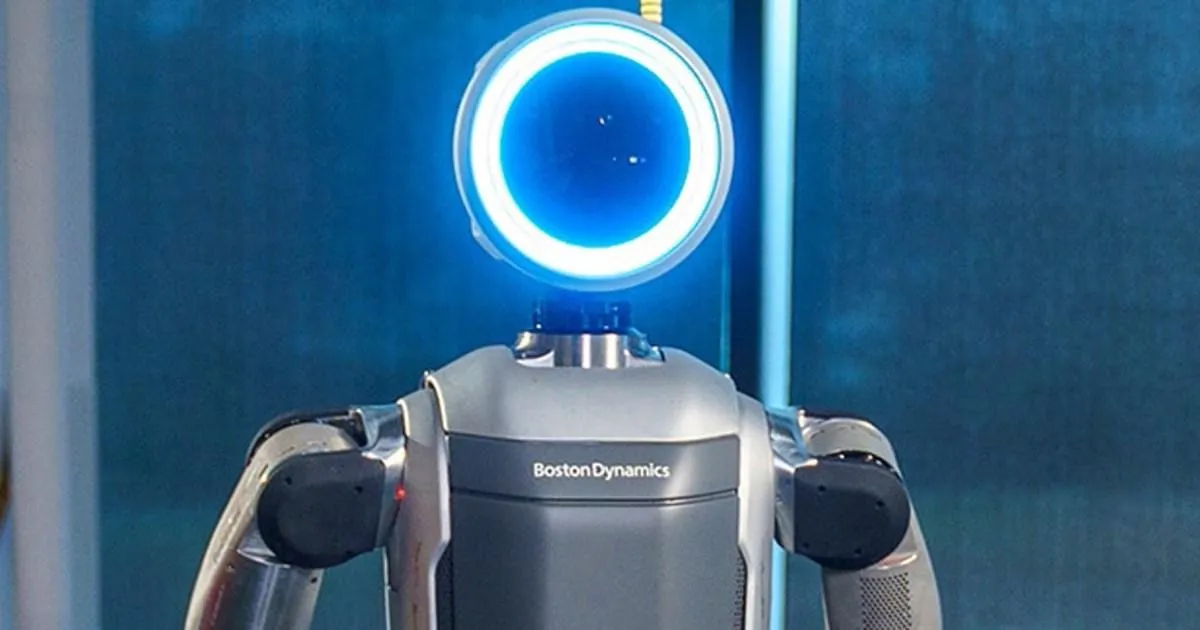

If you buy a car from Hyundai in future, there’s a good chance it will have been made by human-like robots which will start staffing their factories.
The South Korean giant announced it will begin using humanoid robots for mass production from 2028.
They will use the Atlas model from Boston Robotics, a firm which they aquired a majority stake for in 2021.
Unveiling their strategy to integrate robotics much more at the Consumer Electronics Show (CES) in Las Vegas, they said it was part of a ‘bold roadmap for advancing human-robot collaboration’.
It plans to plans to ‘integrate Atlas across its global network’, including Hyundai Motor Group Metaplant America in Savannah, Georgia, where hundreds of immigrant workers were arrested in September last year.
At first, the robots will be doing ‘labour-intensive or high-risk tasks, allowing human workers to focus on training the robots and providing oversight’.
But in the longterm, they think the robots will ‘naturally integrate into everyday life, generating new value and enriching human experiences’.
The future looks like ‘large-scale robot commercialisation’ in a world where ‘humans and robots coexist and collaborate seamlessly, according to Hyundai.
Although humanoid robots have been historically difficult to deploy, due to their balance issues and ‘uncanny valley’ perception by actual humans, Hyundai says they are developing to fast they will become ‘the largest segment of the physical AI market’.
Are you ready to coexist and collaborate seamlessly with robots?
They will start off in plants by performing tasks with proven safety profiles, like parts sequencing.
They will then move towards tasks with repetitive motions, heavy loads and ‘complex operations’.
Romain Moulin, the founder of robotics company Exotec, previously told Metro that he could not see humanoid robots becoming widespread in industrial settings.
‘Payload, autonomy, and safety are the biggest challenges,’ Romain explained.

‘If you increase the performance of your robot and you want it to lift heavier things, you are creating more chance to hurt someone.’
Exotec makes the Skypod robot, a functional piece of tech serving companies including Gap, Carrefour, Uniqlo and Decathlon.
Mr Moulin said that when it comes to warehouses and factories, humanoid robots are destined for the scrapheap.
‘Nobody has a convincing answer on why you would have legs instead of wheels for an industrial environment,’ he said. ‘Why would you want legs on a flat concrete floor? You will save half of your robot price by removing them.’
As well as Hyundai, companies including Tesla, Amazon, and Chinese car maker BYD have all said they will be trying out humanoids in their factories.
Get in touch with our news team by emailing us at webnews@metro.co.uk.
For more stories like this, check our news page.
MORE: Two Cabinet ministers ‘stripped to a bikini’ by Grok AI
MORE: Ofcom ‘in urgent talks’ with Elon Musk’s X after Grok ‘undressed hundreds of people’
MORE: The small CV change that increases your chances of landing the job



