

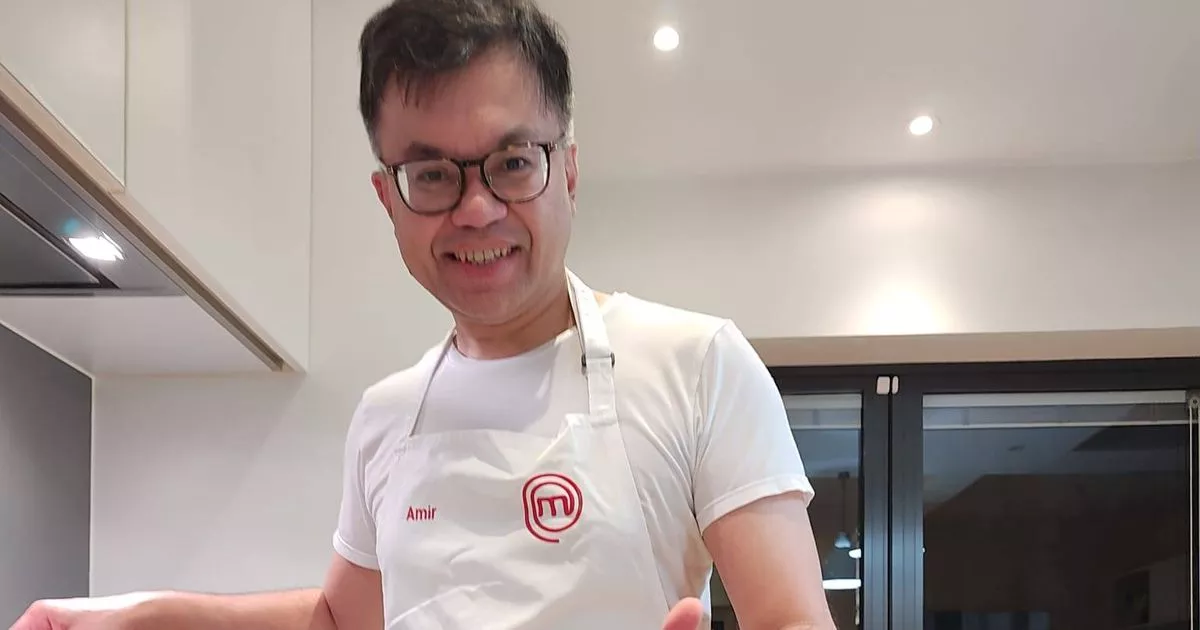
An eye surgeon who noticed a blind spot underwent emergency treatment to save his sight
An eye surgeon, who has carried out thousands of operations, found himself on the other side of the table after he discovered a blind spot in his right eye. And shockingly, it could have resulted in permanent vision loss if he hadn’t acted fast.
Amir Hamid has successfully carried out over 10,000 cataract and laser refractive surgeries and unexpectedly became the patient. The 51-year-old is now warning others what to look out for, as the earlier they spot the signs, the better their chances are of saving their vision.
“At the end of July, I noticed that there was a blank patch in the field of vision in my right eye and immediately realised that it could be the start of a detached retina,” Amir told PA Real Life.
According to the NHS, a detached retina can happen when the thin layer at the back of your eye (retina) becomes loose. The experts stress that this needs quick action and fast thinking to prevent permanent damage to your sight.
“I very quickly went down to the hospital to get my eyes tested and scanned and also spoke to one of the retinal surgeons that I know very well,” Amir, who is chief medical officer for eye hospital group Optegra, recalled.
“I am very short-sighted, and a detached retina can be common in myopic eyes. We tend to have very big eyes, and the retina at the back of the eye is thinner at certain points.
“This means the vitreous solution – the fluid inside the eye – can detach more easily and pull on the retina. It can pull on the weak part of the retina, which may then tear and detach.”
Thankfully, the ophthalmic surgeon’s quick thinking allowed him to receive vitreo-retinal treatment on the same day. “Within three hours, I was scheduled for surgery on my right eye, and only then did I tell my wife I’m going to have an operation in a few hours,” said Amir.
“As an eye surgeon, it could have been a very stressful and frightening time, but I know some very good surgeons, and I trusted the process.
“I was very lucky as it was an inferior tear, which means it was very slow-moving and did not affect my central vision. I had the treatment done in time to preserve all my sight and after a couple of weeks’ recovery, I could go back to work with no issues at all.”
Amir said that a potential side effect of the treatment can be the onset of a cataract. This typically occurs after several years, however in his case, this happened within a few months.
“In November, I started noticing my right eye distance vision was changing and was not as good as it was before, but my near vision was getting much, much better, which is something we call a myopic shift,” said Amir. “That is when I realised it must be a cataract.
“I only work in a two millimetres by 10 millimetres space when I do my surgeries, so I need to be able to see well and react well in that small space,” said Amir. “So I couldn’t wait for my vision to be impaired before I did something about it.”
Amir swiftly arranged surgery on his affected right eye, which took place on December 19 at the Optegra Hospital in Hampshire. The operation, which took place during the festive period, was performed by his trusted colleague Alastair Stuart, a medical director at Optegra.
Together, they decided not only to operate on the problematic right eye but to take the opportunity and eliminate Amir’s need for glasses by performing lens replacement surgery on his left eye simultaneously.
“Within 20 minutes, I was out of the theatre having had both eyes done,” said Amir. “It was interesting being on the other side.
“It was interesting being on the other side. I was not nervous going into it, but the heart rate monitor which was attached to my fingers was going off very quickly during the procedure. But I was told that I was a good patient, and it went very smoothly and it was completely pain-free.”
After more than 40 years of wearing glasses, Amir was amazed by the results. “I was immediately like wow, this is crazy. The next day my eyesight got even better in terms of my distance vision. I couldn’t believe how crisp, how sharp and how colourful things were.
“I tell my patients all the time that they will have great results, but when it happens to you it really validates the things that you’ve been saying. Seeing is believing.
“I couldn’t really describe the joy that I felt. It was great to be able to have an experience that I’m able to impart to my patients. It was a real full-circle moment.”
Following his own journey, Amir is now encouraging anyone suffering from a cataract to schedule the surgery, highlighting its potential to transform lives.
“With a cataract, you’ll start to notice your vision getting blurred for different distances and it’s important to get a diagnosis, because cataracts are completely reversible.
“Cataract surgery is one of the best procedures that has ever been created because it can actually make your vision better than it was before.”
“It has been great to be able to just play around with my daughter, who likes to jump on me, without having to worry about my glasses breaking,” said Amir, who has a 16-year-old son and a seven-year-old daughter.
Not only is his vision now better than ever. But so is hos cooking. “I cook most of the time for the family, and I am also part of this Facebook group where we cook and present our dishes to each other”, Amir revealed.
“I really enjoy plating my food so that it looks its absolute best and the standard on the online group is pretty high, in fact two guys in the group have gone on MasterChef.
“It’s so much fun, and so precise, and having brilliant vision is vital. You certainly shouldn’t ignore the symptoms of retinal detachment, because it can lead to loss of vision, and if it’s left too late, it may be difficult to recover that vision,” said Amir.
“Key symptoms to look out for are flashing lights and floaters in your field of vision. You may also get a black curtain coming into your field vision which can come from the bottom, top or from the side.”
Amir has also observed a rise in patients with advanced cataracts since the pandemic, and therefore encourages everyone to have regular eye tests.
“Sometimes people are scared and try and deny that they have a problem and then wait until it’s too late. Remember that it’s always better to have a diagnosis, because then we know what it is and how we can fix it.
“The older population in particular are often more accepting of certain changes or compromises in their lifestyle and health, but that shouldn’t be the case because things can be done.”



