A car suspected of being used in hare coursing has been seized after being stopped by police in Whittlesey. Cambridgeshire Police had information that it had previously been used for hare coursing.
Advertisement
Police stopped the car in Briggate West in Whittlesey on Saturday February, 14 at around 8.45am where police found seven occupants inside the car.
The car was seized and the driver was reported for having no insurance, no licence and for carrying passengers in a manner than was likely to cause harm.
A spokesperson for Cambridgeshire Police said: “Hare coursing remains a priority for us, and we will continue to address the issue by targeting offenders and working with our rural communities. If you believe hare coursing is taking place, always call 999.”
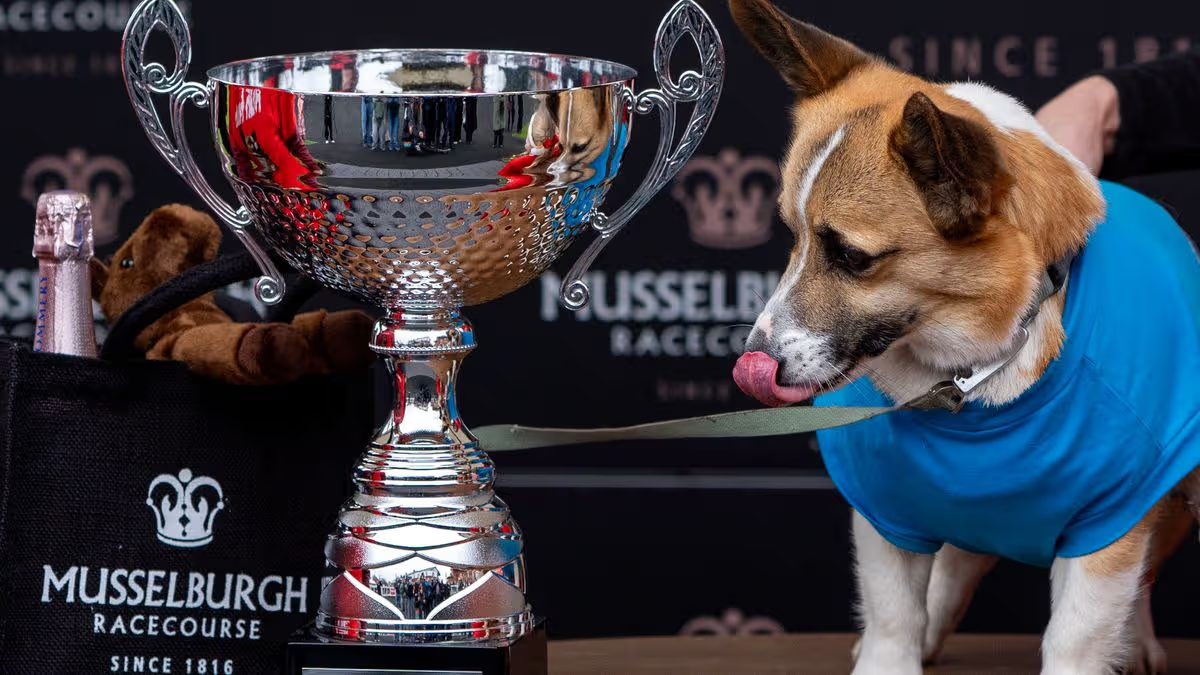
Originally from New Zealand, three-year-old Islay was crowned the winner of the annual Easter corgi derby.
The promise of hot dogs at the finish line was enough to spur on a Pembroke Welsh corgi to victory in the annual Easter corgi derby at a Scottish racecourse. Three-year-old Islay, which was born in New Zealand, romped to victory in the race at Musselburgh Racecourse.
Advertisement
Owner Carolyne Ricardo, a vet at the University of Glasgow, said: “It’s a bit of surprise because we only found out two weeks ago she had been accepted for the race but I am delighted.” Ms Ricardo, originally from New York, added: “She likes a nap and is a slow starter in the morning but if she comes across a squirrel it’s a goner.”
Dogs from across the world competed in the race including Sadie, which travelled with her owner from Newquay, Cornwall, and Naomi, which lives in Glasgow with her owners, but was born in China. The annual race is in its fifth year and was created in honour of Queen Elizabeth II’s platinum jubilee in 2022.
Advertisement
Musselburgh Racecourse head of marketing and business development, Aisling Johnston, said: “Our Virgin Bet Scottish sprint cup race day is a fixture featuring lots of high quality horse racing with more than £300,000 on offer – but it’s no exaggeration to say our little, four-legged friends do their best to steal the show.”
Get more Daily Record exclusives by signing up for free to Google’s preferred sources. Click HERE.
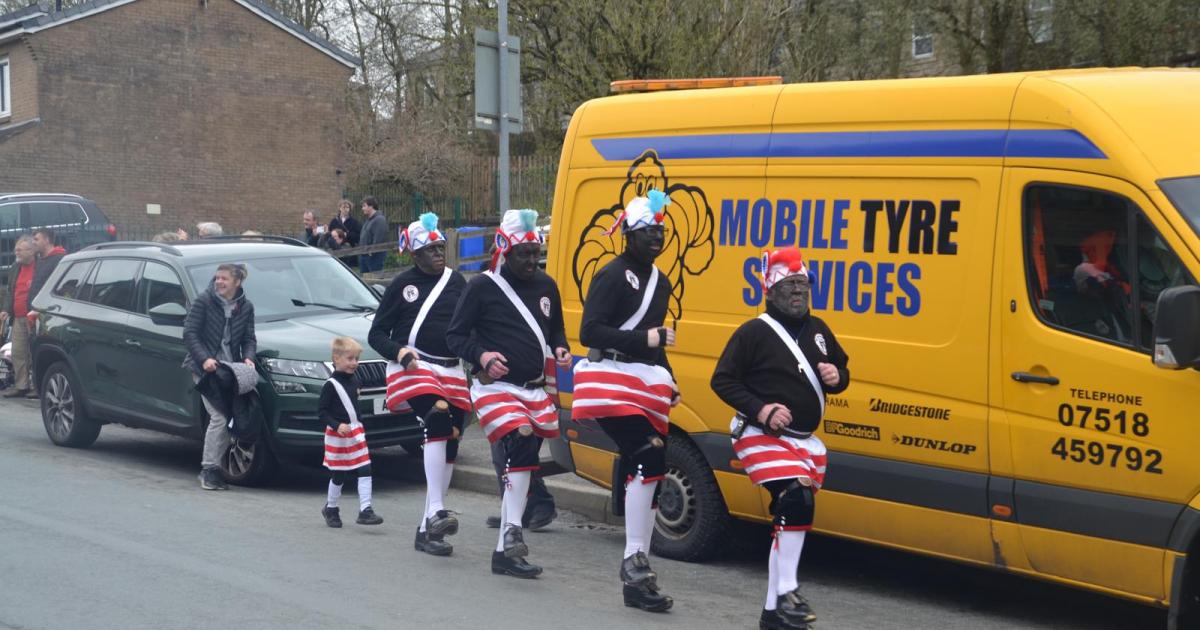
The dancers, joined by the Stacksteads Band, set off from the Old Travellers Rest in Britannia just after 9am before following their seven‑mile route through Bacup and Stacksteads to finish at the Glen Service Station in Waterfoot.
This year, the team dedicated their efforts to raising funds for ANDYSMANCLUB, a men’s mental health charity that offers free peer‑to‑peer support groups across the UK.
A message on the group’s website said: “We’re incredibly proud to support ANDYSMANCLUB this year. The message that it’s okay for men to talk about their mental health is such an important one, and we’re glad to play our part by helping raise awareness.”
Video by Phil Taylor shows the dancers performing at a man’s window in Stacksteads
Advertisement
Despite the drizzle, locals and visitors lined the streets to cheer as the dancers made their way through town to the sound of drums and clogs.
Among the onlookers were Anne and Graham Ireland, both from Bacup, who have watched the event for decades.
Anne said: “We come to it every year, we live in Bacup. We enjoy coming to it. My dad was in it for 26 years.
The dancers in Irwell Terrace, Bacup (Image: NQ)
“It’s silly, the controversy. They’ve done it for 150 years and it’s only recently there’s been any controversy. It’s a good event that brings the community out.”
Advertisement
The Coconutters’ website describes the event as “a magical day filled with pride, cheer and laughter” that draws supporters from across the region to celebrate a piece of Lancashire history dating back to the 19th century, when Cornish tin miners are thought to have brought the dance to Rossendale.
Another spectator, Tom Carver, said: “You can’t help but get swept up in it – the music, the energy, the sense of tradition. Whatever people think about it, there’s no denying it’s part of Bacup’s identity.”
The troupe’s trademark blackened faces have, however, drawn criticism in recent years, with some saying the look is racially insensitive.
The dancers made several stops along the 7-mile route (Image: NQ)
The Britannia men maintain that the colouring stems from their 19th‑century mining roots, when soot was used to disguise the dancers’ faces, and that it now forms part of the costume representing “Moorish pirates.”
Advertisement
The group left the country’s main Morris organisation in 2020 after it urged dance teams to drop full-face black makeup.
The dancers says the focus of the day remains on charity, community, and keeping one of Lancashire’s enduring traditions alive for another generation.
Literature expresses complex and nuanced ideas – the powerful feelings that define us as human beings and the detailed observations that illuminate all aspects of our lives. It does so with words put together with consummate skill.
So, surely silence is a nothingness, an affront to the communication of both rational argument and strong emotion – literature’s opposite, even its anathema?
Well, no. In my new book Silence: A Literary History, I’ve set out to show that, over 1,200 years, English literature has spoken to us – and spoken to us eloquently – through silences as well as through words. Without silences, both formal and thematic, we wouldn’t have the exquisite hush of medieval lullabies, the suspenseful secrets of the realist novel, or the jagged fragmentation of modernist poetry.
We would lose implicitness, a good deal of ambiguity, much precision, a powerful mode of protest and a variety of moods. Iago would explain exactly why he wanted to destroy Othello in Shakespeare’s play. The dog would bark in the night time in The Hound of the Baskervilles, by Arthur Conan Doyle. And D.H. Lawrence’s sex scenes would come with a running commentary.
Advertisement
The start of silence
If silence has a starting point in English literary history, it’s a man at sea. The 9th-century poem The Wanderer, composed in the Old English language of the Anglo-Saxons, communicates the sheer strangeness of silence via an alien grey seascape in which the protagonist is utterly alone.
This silence is composed not of complete noiselessness – the hail beats on the waves and a seabird occasionally mews – but of an intense and total absence of human voices.
A reading of The Wanderer.
The poem conveys the difficulty of this silence – its wretched, aching loneliness and its perpetual reminder of lost happiness. But it also portrays silence as a duty, the mark of a seasoned warrior forged by Graeco-Roman stoicism, the Germanic hero ethos and Christian asceticism.
Advertisement
And it confronts readers, here at the very beginnings of English literature, with a silent inner voice: the necessary basis of an interior life.
Scroll on 1,200 years. En route, we will take in the tongue-tied silences of Renaissance love poetry, the green silences of 18th-century pastoral scenes and the dumbfounded wonder of the romantic sublime.
We will pause, awestruck, at Tennyson’s great epic of speechless grief, In Memoriam. We will relish the social silences of the Victorian novel, from the hilariously awkward to the emotionally profound.
The fascism-bordering silences of Modernism will make us shiver, before we ponder 20th-century experiments with visual, acoustic and dramatic silences. And we will arrive at the genre-defying, multimedia poetry collection that is Jay Bernard’s Surge (2019).
Advertisement
Voices that we cannot hear
In 2016, Bernard took up a residency at the George Padmore Institute in London, an archive dedicated to radical Black history in Britain. The New Cross fire, which in 1981 had killed 13 young Black people, was playing on their mind. And then on June 14 2017, as Bernard puts it: “Grenfell happened”.
Bernard was sickened by the similarities: “The lack of closure, the lack of responsibility and the lack of accountability” at the centre of both conflagrations.
Surge’s response takes its title from a remark by the Black activist Darcus Howe, one of the organisers of the Black People’s Day of Action in 1981: “When you surge and you don’t deal with the question, barbarism expresses itself.”
Advertisement
Jay Bernard talks about their work.
Speaking over the barbarism, Surge registers a gamut of other silences as it winds between the New Cross and Grenfell fires, and historic and ongoing injustices to Black people.
There is the “muffling” of the New Cross fire by the police, and the details that were literally “tippex’d out” of the file. The silence of the media cannot dispel the weighty silences of the ghostly dead. Then there are the silences that surround transness: hiddenness, rejection and defiance of conventional categories.
With this last issue, we can scroll back up the centuries again. The 13th-century romance Silence, written in Old French by a Cornishman, Heldris de Cornualle, relates the legend of a girl-child being brought up as a boy called Silence because women are forbidden to inherit their parents’ estates. This causes a furious argument between the characters of Nature and Nurture, which anticipates our own age’s differences over transness by eight centuries.
“They have insulted me,” complains Nature, “by acting as if the work of Nurture / were superior to mine!”
Advertisement
But Reason, on behalf of Nurture, urges Silence to resist Nature’s blandishments, or “you will never train for knighthood afterwards. / You will lose your horse and chariot.”
Nature is the winner in the story, but the poem is able to accommodate Silence as both male and female – effortlessly embracing apparent contradictions in such lines as “he was a girl”.
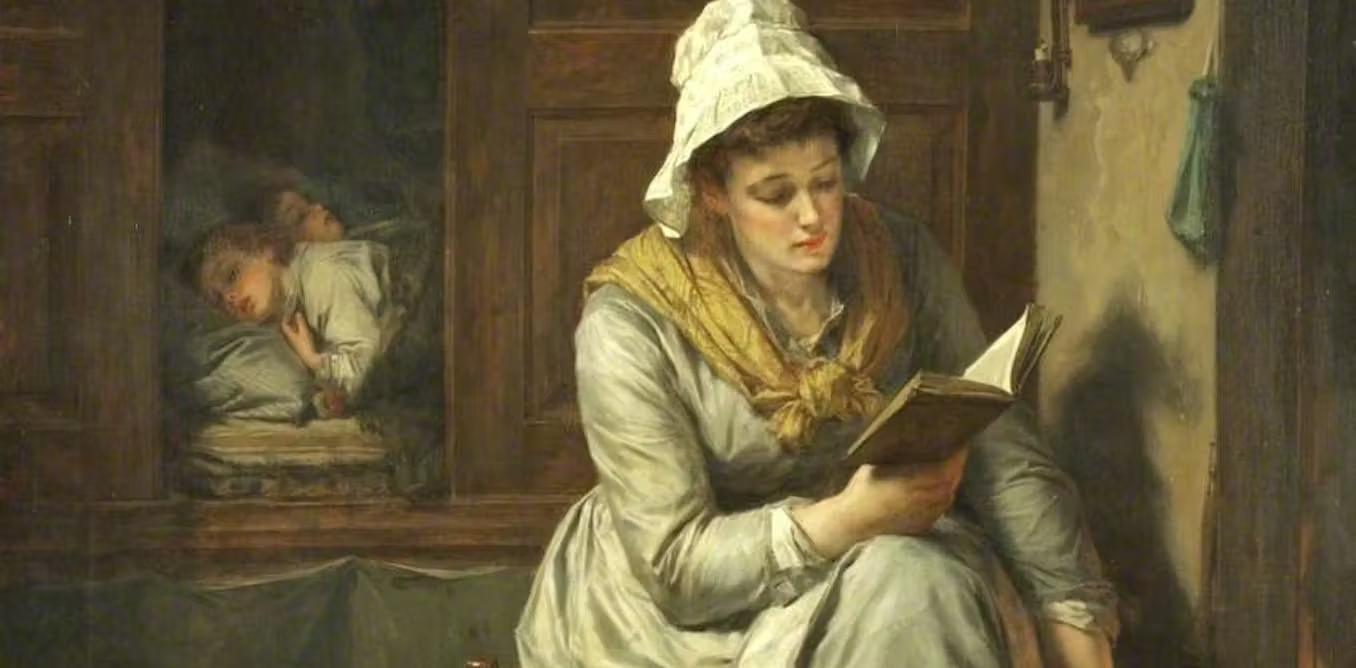
Woman Reading in the Reeds, Saint-Jacut-de-la-mer by Édouard Vuillard (1909). The Fitzwilliam Museum
I believe noticing silences in literature makes us better readers. We come to recognise that some things are better left unsaid – indeed, that some things can’t be said. As a result, our antennae become attuned to literature’s stock-in-trade: the indirect and the inexplicit.
Importantly, we become aware of who hasn’t spoken. All this means we gain a better understanding of what communication is, and how we interact with other people. As our reading acquires a new, slower tempo and a new rhythm, our interpretations change.
Advertisement
What can silences speak to us about? Some of the profoundest aspects of our existence: our understanding of what makes a self; our sense of sacredness; our most powerful and intimate feelings; our place in the natural world; our capacity for wonder. All we have to do is notice.
The excerpt from Silence: A Thirteenth-Century French Romance was translated by Sarah Roche-Mahdi. This article features references to books that have been included for editorial reasons, and may contain links to bookshop.org. If you click on one of the links and go on to buy something from bookshop.org The Conversation UK may earn a commission.
After losing at Brighton two weeks ago, Liverpool and Slot would have hoped that the international break would have provided the reset required before one final push until the end of the season.
The announcement that Mohamed Salah will leave in the summer, while significant, was not a surprise and had the potential to galvanise fans and players alike to give a club legend a memorable send off.
On top of that, the return of club-record signing Alexander Isak to team training after more than three months out provided another boost.
But 92 minutes in Manchester quickly did for any such optimism, with the number of potential trophies that might garnish Salah’s farewell swiftly halved.
Advertisement
Even a consolation goal was beyond them as Salah saw his second-half penalty saved – a moment Slot admitted “probably sums us up today and probably large parts of our season”.
“To get embarrassed like they did today is going to stick with them,” ex-Aston Villa striker Dion Dublin added on BBC Radio 5 Live.
Difficult as it is, though, Slot must find a way to rally his players before kick-off in Paris on Wednesday evening.
Another abject defeat could end Liverpool‘s hopes of progressing even before the second leg, at which point the season would become solely about trying to scrape back into the Champions League next season.
Advertisement
For all the mitigation that Slot can point to for the issues this season – injury problems, a severely disrupted pre-season, an unbalanced squad and, above all, the tragic death of Diogo Jota – failure to do so would leave him extremely vulnerable.
“We have to react to this defeat and this disappointing season,” he said. “There is a chance for us on Wednesday. We have shown today for only 35 minutes that we can compete.
“We can take positives from those 35 minutes but if we defend like the 20 minutes afterwards we will have a big problem. That is what we have to address.”
Time is fast running out for Slot to find those solutions and salvage something from Liverpool‘s season.
Advertisement
What that means for his future remains to be seen but those joyous scenes of last spring certainly seem a long time ago now.
Donald Trump Jr. and Bettina Anderson could tie the knot at the White House, according to a new report (Getty Images)
“In the Ballroom case, the Judge said we have to get Congressional approval. He is WRONG!” he wrote Tuesday. “Congressional approval has never been given on anything, in these circumstances, big or small, having to do with construction at the White House.”
A White House wedding could also have political implications for the president’s son, one source told People.
“This would set them up for future political roles, whether Don Jr. goes after the presidency or something else,” they said. “This is a consideration.”
The Independent has contacted the White House and Trump Jr.’s office for comment.
Advertisement
Trump Jr. and Anderson announced their engagement in December at a White House event.
“I want to wish all of you guys an incredible holiday season, a merry Christmas, a very happy New Year and to thank Bettina for that one word, ‘yes’,” Trump Jr. said.
Trump Jr. and Anderson announced their engagement late last year at a White House Christmas party (Getty)
Anderson added: “This has really been the most unforgettable weekend of my life, and I get to marry the love of my life, and I feel like the luckiest girl in the world.”
Trump has spoken often about the ballroom he wants to build at the White House (REUTERS)
Trump Jr. later dated Kimberly Guilfoyle, who was once married to California Governor Gavin Newsom and currently serves as the U.S. ambassador to Greece. The pair even got engaged in 2020, but in December 2024, Page Sixreported they had broken up.
“Kimberly and I will never stop caring for each other and will always keep a special bond,” Trump Jr. told Page Six at the time.
Advertisement
Kimberly Guilfoyle now serves as the U.S. ambassador to Greece (Getty Images)
“I’m happy for Don,” she said. “I wish him, of course, all the best.”
Former President Joe Biden’s granddaughter Naomi Biden and Peter Neal were the last couple to get married at the White House. The pair exchanged vows on the South Lawn in November 2022.
Rory McColl, from Edinburgh, was only hours into his trip to Thailand when he accidentally picked up a woman’s phone in a bar – now his family says he is unable to come home and faces jail
A dad is facing jail in a Thai hellhole prison after he accidentally picked up a woman’s phone in a bar, his family said.
Advertisement
Rory McColl, from Edinburgh, told how he confused the woman’s phone with his own and picked it up just hours after arriving for a holiday in Bangkok on March 9.
The 37-year-old owned up to the mistake but was accused of theft and spent the first two nights of his trip in a filthy cell, the Daily Record reports.
After forking out £1,000 in bail money to be released from jail, cops seized Rory’s passport. He has now been stranded in the south-east Asian country for almost a month as he waits for a court date.
His sister Joanna McLaughlin fears her brother will be sentenced to jail time.
She said: “Rory was arrested on the first night of his holiday due to a misunderstanding. He normally keeps his phone in his pocket and had forgotten that he had a travel waist bag where he was keeping his valuables.
“At some point, he went to get his phone, couldn’t find it in his pocket and saw the same phone as his sitting on the bar. He picked it up thinking it was his and put it in his pocket.
“The girl whose phone it actually was saw him taking it and involved the police, thinking he had stolen it. By the time Rory realised his mistake, the police were arresting him and taking all his belongings.”
Advertisement
Rory claims he was subjected to “horrendous conditions” in a Thai jail cell for two nights. Joanna said after his release, he went to the Embassy but was advised that they can’t get involved in criminal cases.
Rory, who works at Buck’s Bar in Edinburgh, is now awaiting his fate in a cheap hotel in Pattaya. Grim Thai prisons include Klong Prem Central, which has a brutal reputation, while another possibility is high-security and the overcrowded Bang Kwang Central.
Loved ones have set up a GoFundMe appeal to cover living costs and legal fees.
Joanna said: “A lawyer will be very expensive. He has already had to pay £1,000 bail money and various payments to the police.
Advertisement
“His travel insurance won’t cover the costs of missing his flight home and he hadn’t budgeted to pay for hotels for all this time.
“As a family, we are desperate to get Rory home. He has to get back for his son and his work. We are also extremely concerned that the police are still talking about jail sentences when he is innocent of the crime of theft.”
Chelsea are without Enzo Fernandez, who has been dropped for two games as a result of recent comments that cast doubt on his future at the club. Skipper Reece James is also still sidelined as Liam Rosenior ponders his selection against a Port Vale side who are all but certain to be back in the fourth tier next term, sitting 15 points adrift of safety with eight games left.
From soap star Beverley Callard to former football manager Harry Redknapp, the South African camp will see a group of famous faces take on even more challenges.
With the trials in South Africa being described as even tougher than those in Australia, you might be wondering how you can watch all the action in the new series.
I’m A Celebrity South Africa lineup 2026
The series, which is the second to be filmed in South Africa, will feature the following stars:
Former football manager Harry Redknapp
Reality star Gemma Collins
Soap actress Beverley Callard
Olympian Sir Mo Farah
Former Gogglebox star Scarlett Moffatt
Champion boxer David Haye
Actor Adam Thomas
Former Pussycat Doll Ashley Roberts
Comedian Seann Walsh
Pop star Sinitta
Red Dwarf star Craig Charles
Ex-footballer Jimmy Bullard
How did the lineup do in previous I’m A Celeb series’?
Scarlett Moffatt was crowned Queen of the Jungle back in 2016, while Harry Redknapp won the show in 2018.
Winners of I’m A Celebrity… Get Me Out of Here
David Haye made it to the final in 2012, but Jimmy Bullard had a less successful run in the camp in 2014 and was the first campmate to be voted off.
Advertisement
Is I’m A Celeb South Africa pre-recorded or live?
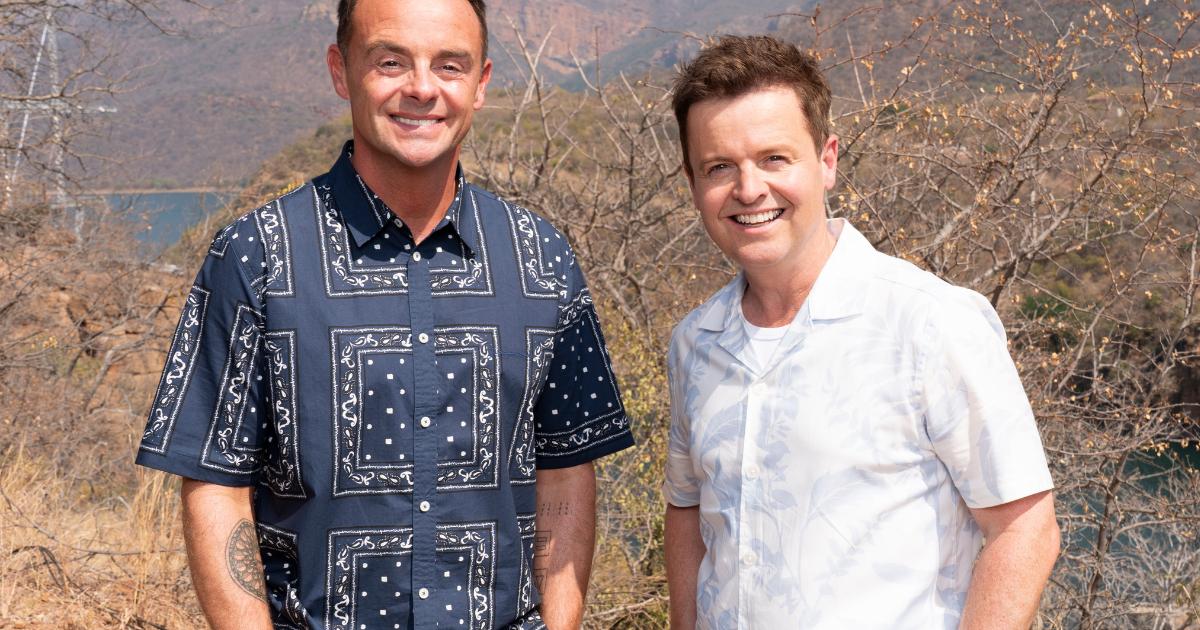
I’m A Celebrity South Africa is pre-recorded, so the show has already been filmed, unlike the Australian series, which sees Ant and Dec present it live with some pre-recorded elements.
Recommended reading:
However, ITV will include a live episode for the final of the show so viewers can vote for the winner of the series, according to the Radio Times.
How to watch I’m A Celeb’s new South Africa series
I’m A Celebrity South Africa’s first episode will air on Easter Monday (April 6).
ITV1 will broadcast the pre-recorded episode from 9pm until 10.30pm or you can watch it on ITVX.
Advertisement
What has been your favourite I’m A Celebrity series so far? Let us know in the comments below.
Olivia is now 6 weeks postpartum and has stepped back into the ring
18:32, 04 Apr 2026
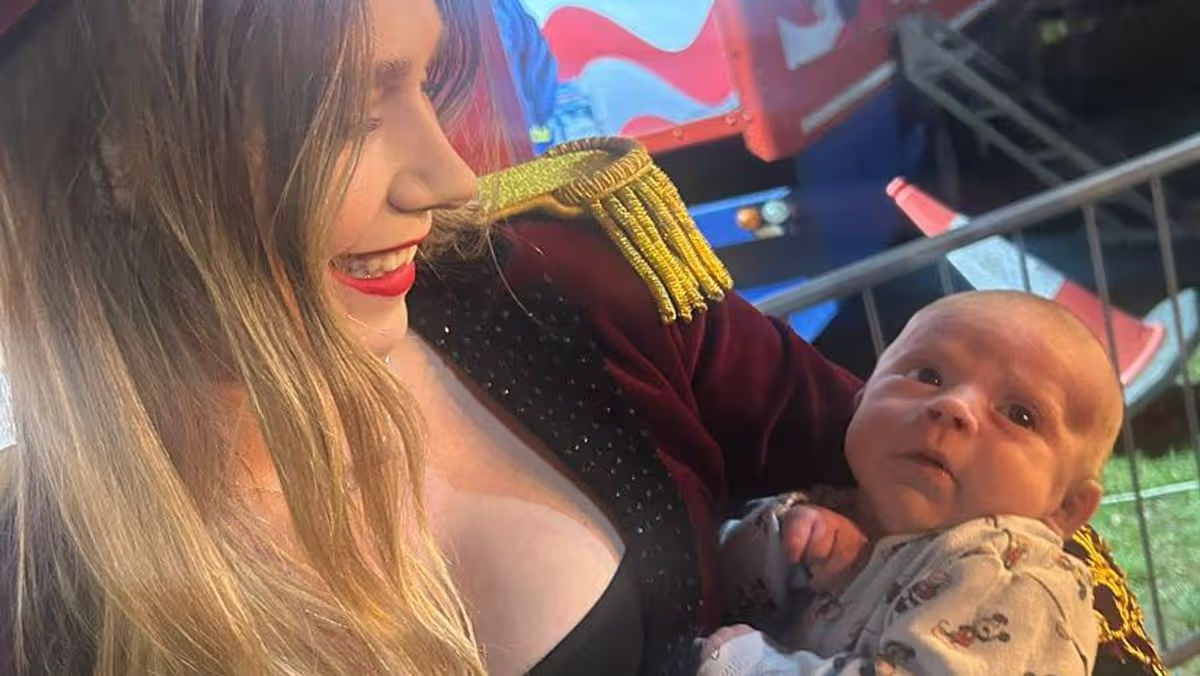
Olivia is the Ringmistress for Circus Vegas
The circus has arrived back in Belfast, and it has a brand new member in tow. Ringmistress, Olivia Mulvaney, 26, gave birth to baby Luca just over 6 weeks ago.
Belfast Live caught up with her to find out how she is finding the balancing act of motherhood with an incredibly unique job.
Advertisement
Olivia’s family has been running circuses for almost 20 years. Her grandfather and brothers started a circus over two decades ago, and then they all split off and started their own circuses, and Circus Vegas officially began in 2004.
The main attractions at Circus Vegas are the motorbike stunt team, which includes their FMX riders and globe of death riders. They also have a brand-new clown, ‘Lupino’, who is a real crowd-pleaser. There are no animals at all used in this circus, and it focuses on thrills, stunts and laughter to keep everyone entertained.
A Ringmistress or Ringmaster would oversee the day-to-day running of the circus as well as the flow of the show to keep the audience engaged. On top of this, she will work with each act to ensure everything is safe and that the artists are happy to perform. She has the final say on whether an act can actually go on, so it carries a lot of responsibility.
Advertisement
Typically, in most portrayals, we see it as a Ringmaster, so it is quite rare to see a woman step into the role. However, Olivia said it is becoming much more common to see women in the job across Ireland.
Olivia enjoys the leadership aspect of the role and said that “it’s nice to see more women being involved in it”.
However, at 6 weeks postpartum, she has stepped back into the ring. It’s a “nice feeling coming back”, and she believes she is in a lucky position, being able to work with her baby by her side.
She added that it is “unusual to live and work with your whole family”, most of whom work in the circus in some capacity. But sees the benefits because she has her support system with her at all times, and they can help lighten the load even at work.
Advertisement
It goes beyond family, and everyone who works in the circus has come together to support her and baby Luca. Olivia also added that “without them, it would be difficult”.
“He’s been absolutely amazing”, says Olivia about how Luca has been doing, especially in the mix of a busy circus environment. She believes he got used to the loud noises during the pregnancy and even falls asleep to the sound of motorbikes, finding it soothing.
There’s more to the circus than the performances we see on stage, Olivia says. With an almost entirely new cast each year, it allows her to meet new people from all walks of life.
She said it also brings in new cultures and different personalities, and she’s even managed to learn a few words in other languages. One of her favourite parts of the job is being able to “socialise with people from all over the world”.
Advertisement
Circus Vegas has returned to Boucher Road Playing Fields in Belfast until April 12. Tickets are on sale now.
A picturesque Cambridgeshire village with a 500-year-old pub has been named one of Britain’s poshest. Hemingford Abbots was included in a list published by the Telegraph.
Advertisement
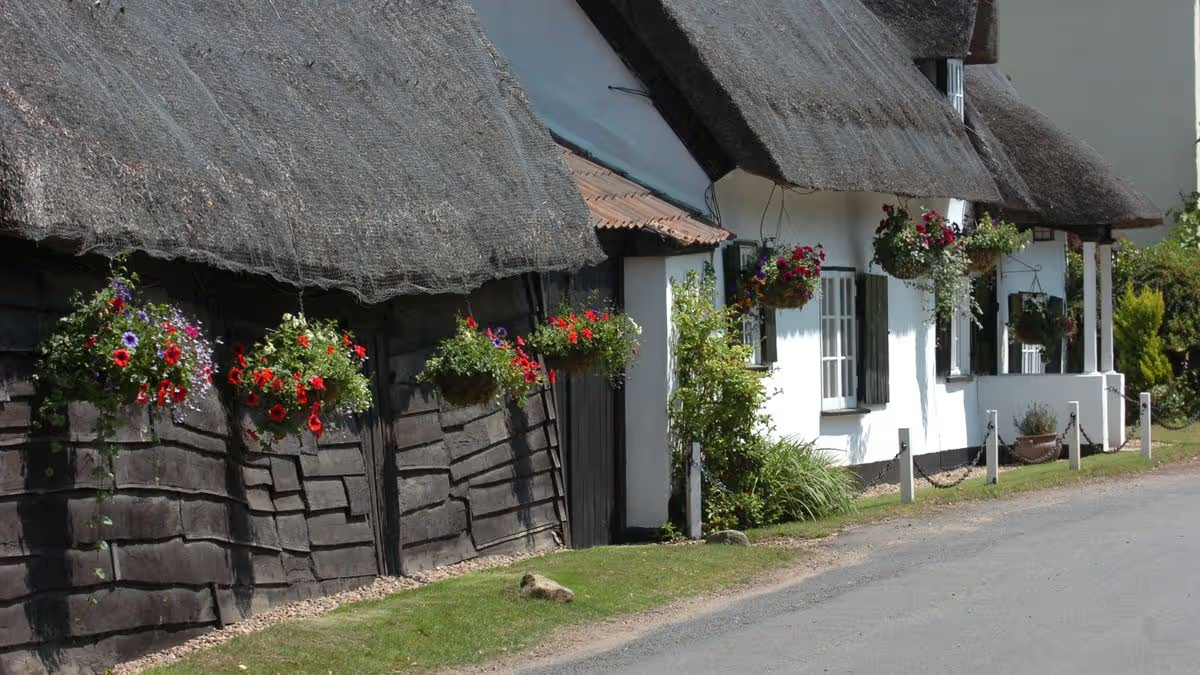
The tiny village is just a few miles to the east of nearby Huntingdon and sits against the banks of the River Great Ouse. The stunning village is perhaps best known for its thatched cottages, wildflower meadows, historic pub and large playing fields.
It was the county’s only entry in the Telegraph’s listing of posh villages, which they compiled having reviewed house prices, community assets, the location and whether it has classic village features including a green, duck pond and thatched cottages.
The Telegraph wrote of Hemingford Abbots: “This small, historic village three miles east of Huntingdon traces its roots to Roman times. It sits proudly in a conservation area on the banks of the Great Ouse where the annual Hemingford Regatta, the oldest village rowing regatta in the UK, is held in July, featuring races and riverside picnics.
“There’s a 500-year-old pub (Axe and Compass), a village hall and a sports pavilion with cricket teams, tennis and bowls. The children’s novelist, Lucy M Boston, based her beloved ‘Green Knowe’ books on a 12th-century manor house in the village.”
Advertisement
The village shares numerous facilities with bordering Hemingford Grey, including a shop, post-office, primary school and sports pitches. It is also well-connected with its walks, containing routes that can take people through St Ives, Godmanchester Nature Reserve, Houghton Mill and its beautiful wildflower meadows.
At the heart of the village is the Axe and Compass pub, which dates back to the 15th century. It is the only one of its kind in the village. providing a lovely country pub atmosphere with a garden that’s perfect for a relaxing day out.
The pub has continued to survive into 2026 against the backdrop of challenges towards pubs nationally. It remains incredibly popular with a 3.9 rating out of five from more than 400 reviews on Tripadvisor.
But the area’s key selling point is its thatched cottages and enormous houses in large gardens, which helps the village earn its posh factor. The Telegraph state the average house price in Hemingford Abbots as being £1.037m, although Rightmove lists it at even higher and £1.7m.



















































You must be logged in to post a comment Login