News Beat
Syrian military claims Kurdish guards abandoned al-Hol camp

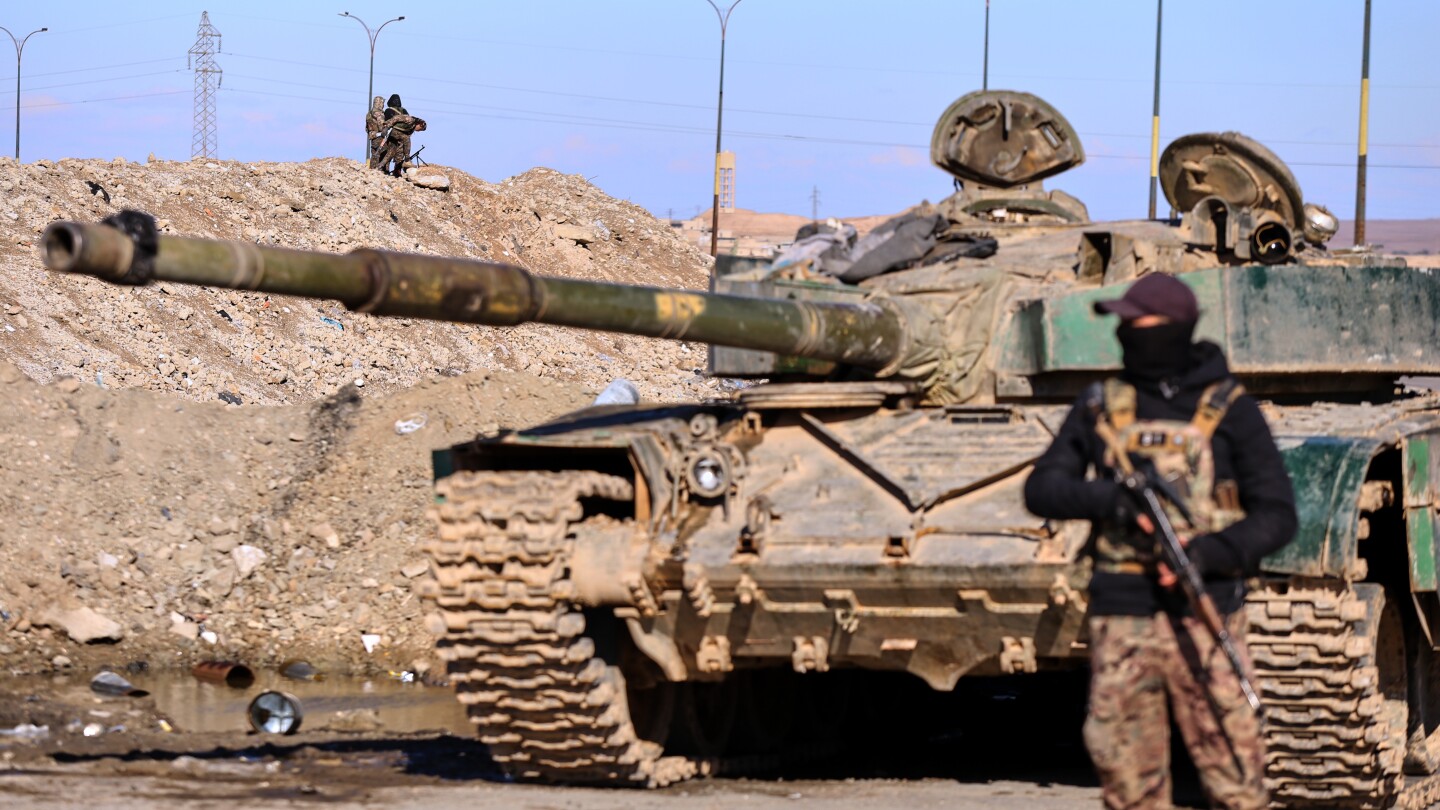
RAQQA, Syria (AP) — The Syrian military claimed Tuesday that guards from the Kurdish-led Syrian Democratic Forces had abandoned a camp in northeast Syria housing thousands of people linked to the Islamic State group, allowing the detainees to escape.
The al-Hol camp houses mainly women and children who are family members of IS members or accused of being otherwise affiliated with the group. Thousands of accused IS militants are separately housed in prisons in northeast Syria.
The SDF subsequently confirmed that its guards had withdrawn from the camp, blaming “international indifference toward the issue of the ISIS terrorist organization and the failure of the international community to assume its responsibilities in addressing this serious matter,” using another abbreviation for IS.
It said its forces had redeployed “in the vicinity of cities in northern Syria that are facing increasing risks and threats” from government forces.
Representatives of the U.S. military did not immediately respond to requests for comment.
Earlier Tuesday, Syria’s ministry of interior said Tuesday that 120 Islamic State members escaped from a prison in northeast Syria a day earlier, amid clashes between government forces and the SDF, which guards the prison.
Security forces recaptured 81 of the escapees, “while intensive security efforts continue to pursue the remaining fugitives and take the necessary legal measures against them,” the statement said.
The SDF and the government have traded blame over the escape from a prison in the town of Shaddadeh, amid the breakdown of a ceasefire deal between the two sides.
Also Tuesday, the SDF accused “Damascus-affiliated factions” of cutting off water supplies to the al-Aqtan prison near the city of Raqqa, which it called a “blatant violation of humanitarian standards.”
The SDF, the main U.S.-backed force that fought IS in Syria, controls more than a dozen prisons in the northeast where some 9,000 IS members have been held for years without trial. Many of the detained extremists are believed to have carried out atrocities in Syria and Iraq after IS declared a caliphate in June 2014 over large parts of Syria and Iraq.
IS was defeated in Iraq in 2017 and in Syria two years later, but the group’s sleeper cells still carry out deadly attacks in both countries.
Under a deal announced Sunday, government forces were to take over control of the prisons from the SDF, but the transfer did not go smoothly.
On Monday, Syrian government forces and SDF fighters clashed around two prisons housing members of the Islamic State group in Syria’s northeast.
The clashes came as SDF chief commander Mazloum Abdi was said to be in Damascus to attempt to solidify a ceasefire deal reached Sunday that ended days of deadly fighting during which government forces captured wide areas of northeast Syria from the SDF.
Abdi issued no statement after the meeting and the SDF later issued a statement calling for “all of our youth” to “join the ranks of the resistance,” appearing to signal that the deal had fallen apart.
Interim President Ahmad al-Sharaa postponed a planned trip to Germany Tuesday amid the ongoing tensions in northeast Syria.
Since toppling Bashar Assad in December 2024, Syria’s new leaders have struggled to assert their full authority over the war-torn country. An agreement was reached in March that would merge the SDF with Damascus, but it didn’t gain traction.
Earlier this month, clashes broke out in the city of Aleppo, followed by the government offensive that seized control of Deir el-Zour and Raqqa provinces, critical areas under the SDF that include oil and gas fields, river dams along the Euphrates and border crossings.
———
Sewell reported from Beirut.