A Mexican immigrant was taken to a Minneapolis hospital earlier this month after bones in his face and skull were broken while he was in federal custody.
Immigration and Customs Enforcement agents initially claimed Alberto Castañeda Mondragón had tried to flee while handcuffed and “purposefully ran headfirst into a brick wall,” according to court documents filed by a lawyer seeking his release.
But staff members at Hennepin County Medical Center determined that could not possibly account for the fractures and bleeding throughout the man’s 31-year-old’s brain, said three nurses familiar with the case.
“It was laughable, if there was something to laugh about,” said one of the nurses, who spoke to The Associated Press on the condition of anonymity because they were not authorized to discuss patient care. “There was no way this person ran headfirst into a wall.”
Advertisement
Here’s what to know about the case, which offers an example of recent run-ins between immigration officers and health care workers that have contributed to mounting friction at Minneapolis hospitals.
Injuries appeared inconsistent with ICE account
The AP interviewed a doctor and five nurses who work at HCMC, who spoke on condition of anonymity to talk about Castañeda Mondragón’s case. AP also consulted with an outside physician, and they all affirmed that his injuries were inconsistent with an accidental fall or running into a wall.
ICE’s account of how he was hurt evolved during the time that federal officers were at his bedside. At least one ICE officer told caregivers that Castañeda Mondragón “got his (expletive) rocked” after his Jan. 8 arrest near a St. Paul shopping center, the court filings and a hospital staff member said. His arrest happened a day after the first of two fatal shootings in Minneapolis by immigration officers.
Advertisement
The Department of Homeland Security, which includes ICE, did not respond to repeated requests for comment on his injuries. A deportation officer skirted the issue in the court documents, saying that during the intake process at an ICE detention center, it was determined he “had a head injury that required emergency medical treatment.”
Who is the injured man?
Gregorio Castañeda Mondragón said his older brother is from Veracruz, Mexico, and worked as a roofer. He has a 10-year-old daughter living in his hometown he helps support.
According to his lawyers, Castañeda Mondragón entered the U.S. in 2022 with valid immigration documents. Minnesota incorporation filings show he founded a company called Castaneda Construction the following year with an address listed in St. Paul. He appears to have no criminal record.
Advertisement
His lawyers told a court that Castañeda Mondragón was racially profiled during the crackdown, and that officers determined only after his arrest that he had overstayed his visa.
“He was a brown-skinned, Latino Spanish speaker at a location immigration agents arbitrarily decided to target,” his lawyers wrote in a petition seeking his release from ICE custody.
What we know about how he was injured
Castañeda Mondragón was initially taken to an ICE processing center at the edge of Minneapolis. Court records include an arrest warrant signed upon his arrival by an ICE officer, not an immigration judge.
Advertisement
About four hours after his arrest, he was taken to a hospital emergency room in suburban Edina with swelling and bruising around his right eye and bleeding. A CT scan revealed at least eight skull fractures and life-threatening hemorrhages in at least five areas of his brain, according to court documents. He was then transferred to HCMC.
Castañeda Mondragón was alert and speaking, telling staff he was “dragged and mistreated by federal agents,” though his condition quickly deteriorated, the documents said.
The following week, a Jan. 16 court filing described his condition as minimally responsive and communicative, disoriented and heavily sedated.
On Saturday, more than two weeks after Castañeda Mondragón was arrested, a U.S. District Court judge ordered him released from ICE custody.
Advertisement
To the surprise of some who treated him, Castañeda Mondragón was discharged from the hospital Tuesday. The hospital spokeswoman said she had no information about his current condition or location.
On Wednesday, lawyers for the Justice Department filed documents affirming to the judge who ordered Castañeda Mondragón’s release that he is no longer in federal custody.
His younger brother said Castañeda Mondragón has no family in Minnesota and that coworkers have taken him in. Has has significant memory loss and a long recovery ahead. He won’t be able to work for the foreseeable future, and his friends and family worry about paying for his care.
“He still doesn’t remember things that happened. I think (he remembers) 20% of the 100% he had,” said Gregorio Castañeda Mondragón, who lives in Mexico.
Advertisement
What’s happening inside the hospital?
ICE officers have entered the hospital with seriously injured detainees and stayed at their bedside day after day, staffers said. The crackdown has been unsettling to hospital employees, who said ICE agents have been seen loitering on hospital grounds and asking patients and employees for proof of citizenship.
Hospital staff members said they were uncomfortable with the presence of armed agents they did not trust and who appeared to be untrained.
The nurses interviewed by AP said they felt intimidated by ICE’s presence in the critical care unit and had even been told to avoid a certain bathroom to minimize encounters with officers. They said staff members are using an encrypted messaging app to compare notes and share information out of fear that the government might be monitoring their communications.
Advertisement
The hospital reminded employees that ICE officers are not permitted to access patients or protected information without a warrant or court order.
“Patients under federal custody are first and foremost patients,” hospital officials wrote in a bulletin outlining new protocols. The hospital’s written policy also states that no shackles or other restraints should be used unless medically necessary.
“We have our policies, but ICE personnel as federal officers don’t necessarily comply with those, and that introduces tension,” said a doctor who spoke on condition of anonymity because they were not authorized to comment for the hospital.
Hospital spokeswoman Alisa Harris said ICE agents “have not entered our facilities looking for individuals.”
Advertisement
___
Mustian reported from New York, and Biesecker reported from Washington.
Officers from Greater Manchester Police’s Operation Venture team carried out intensified activity across parts of Wigan borough, including Atherton and Tyldesley, which border Bolton.
The operation resulted in 33 arrests, the seizure of multiple weapons and drugs worth thousands of pounds being taken out of circulation.
During the activity, officers recovered knives, machetes, a sword and BB guns, as well as more than £6,000 worth of drugs and £2,000 in cash.
Advertisement
A total of 35 vehicles were also seized.
In Atherton and Tyldesley, officers made several arrests linked to robbery, drug supply and weapons offences.
One key incident saw a man arrested on suspicion of possession with intent to supply after police uncovered around 86 wraps of suspected heroin and cocaine.
In Tyldesley, officers also carried out a foot chase, which ended with a man being detained and a knife recovered.
Advertisement
Police said the activity focused on known hotspot areas, aiming to tackle serious violence and protect young people from harm.
Sergeant Mohammed Waqas, of GMP’s Operation Venture team, said the results showed the force’s commitment to tackling crime.
He said: “Across Rochdale and Wigan during our intensification deployments, we have seized and destroyed over £6,000 worth of drugs, recovered £2,000 in cash, and removed multiple weapons from the streets.
“These results show our commitment to tackling organised crime and anti-social behaviour to keep communities safe.”
Advertisement
Operation Venture, launched in December 2022, has made hundreds of arrests across Greater Manchester and removed more than 300 weapons from the streets.
Police say the initiative will continue to target serious violence and knife crime, with ongoing patrols and enforcement activity planned in areas bordering Bolton and beyond.
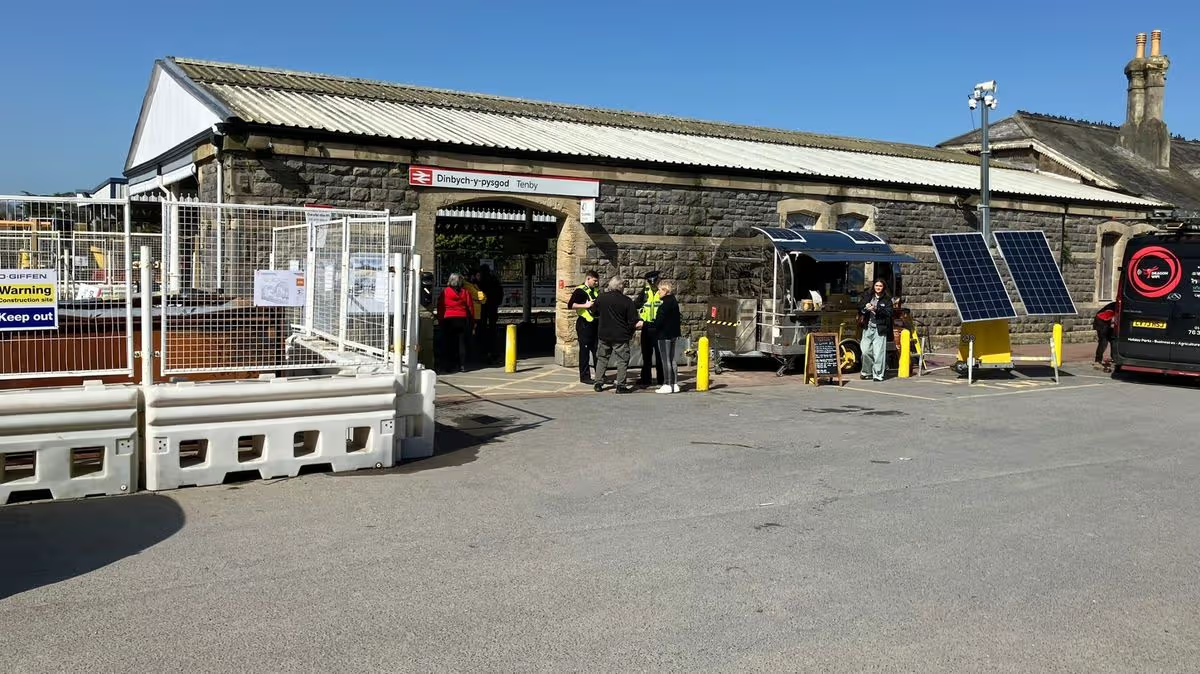
Police said four teenagers aged between 13 and 17 were stabbed outside Tenby railway station on Tuesday evening
Police have issued an update after four teenagers were stabbed when “disorder” broke out in a Welsh seaside town. The incident took place outside Tenby railway station late on Tuesday evening, with Dyfed-Powys Police later confirming two males had been arrested.
On Wednesday afternoon, British Transport Police (BTP) provided an update on the investigation into the incident.
Superintendent Jon Cooze said officers were called to a fight involving a group of youths at Tenby station shortly before 10pm.
Four of the group – aged between 13 and 17 and from the Pembroke area – sustained stab wounds during the incident. They were taken to hospital to be assessed and have since been discharged, he said.
Advertisement
The latest update also confirmed that the two males arrested on suspicion of GBH in connection with the incident – a 16-year-old boy and a 19-year-old man – remain in police custody at this time.
The force also said that there will be an increased presence of officers in the area to provide reassurance to passengers. For the biggest stories in Wales first sign up to our daily newsletter here
A “thorough” investigation into the full circumstances of what happened is ongoing.
Superintendent Jon Cooze from BTP said in a statement: “We were called to reports of a fight at Tenby station at around 9.50pm last night, involving a group of youths.
Advertisement
“Four of the group – aged between 13 and 17 from the Pembroke area – sustained stab wounds during the violence, and were taken to hospital for assessment.
“Thankfully their injuries are not considered to be life-threatening or life-changing and they have already been discharged from hospital.
“Due to the quick actions of our colleagues at Dyfed Powys Police arriving on scene, a 16-year old boy and a 19-year-old man were arrested on suspicion of Grievous Bodily Harm (GBH) and remain in police custody.
“We understand the concern an incident of this nature will have caused in the community, and while we believe it to be an isolated incident, passengers will notice an increased presence of officers in the area who are there to provide reassurance.
Advertisement
“We’ve launched a thorough investigation into the full circumstances of the incident and are keeping an open mind as to the background of what has happened. We’re aware of footage circulating online and would ask people not to share this or speculate while detectives concentrate on the investigation.
“Lastly – I’d urge anyone who witnessed what happened or the events leading up to it to contact BTP by texting 61016 or calling 0800 40 50 40 quoting reference 916 of 07/04/26.”
Information can also be provided to Crimestoppers anonymously 0800 555111.
Get daily breaking news updates on your phone by joining our WhatsApp community here. We occasionally treat members to special offers, promotions and ads from us and our partners. See our Privacy Notice.
The incident happened at junction four westbound, near Whitburn.
Part of Scotland’s busiest motorway has been closed after a car burst into flames. Emergency crews rushed to the scene on the M8 just before 2pm on Wednesday, April 8.
Advertisement
The road was closed at junction four westbound, near Whitburn. It is unclear if anyone was injured as a result of the blaze.
Drivers faced delays of up to 90 minutes as the fire service worked to extinguish the flames. Traffic Scotland announced at 3.45pm all lanes on the road had been fully reopened but warned motorists to expect further delays of around 30 minutes.
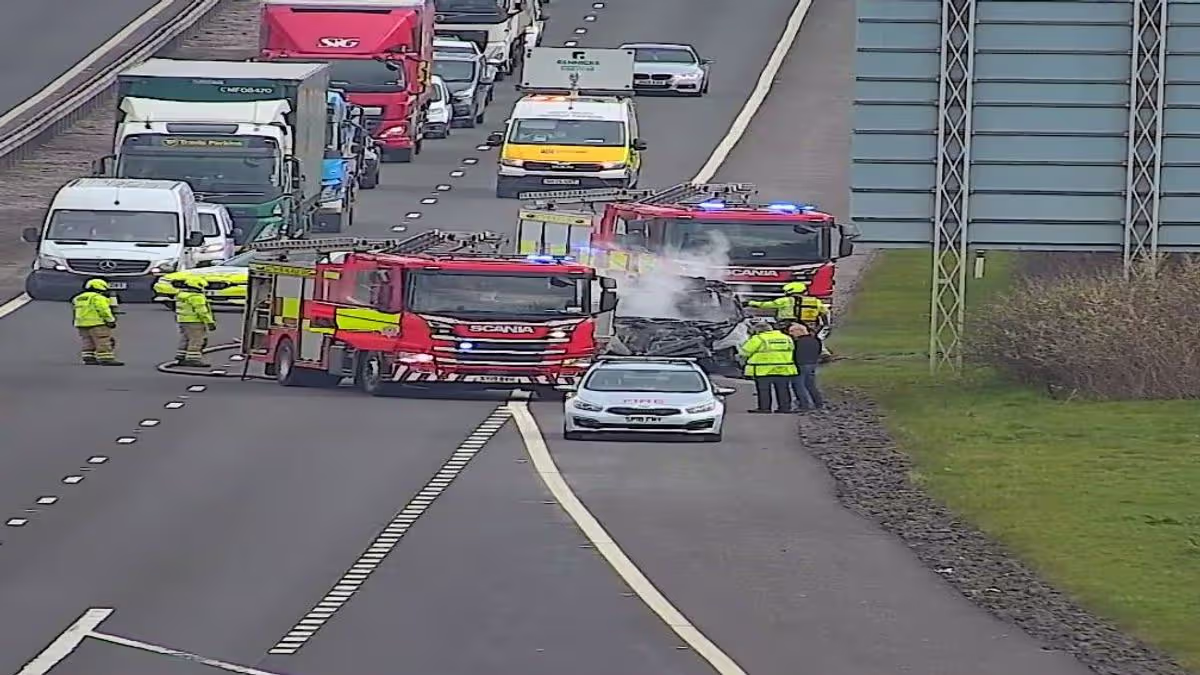
Pictures from the scene show two fire appliances and two police cars at either side of the vehicle. Smoke can be seen billowing out of the mangled wreck as fire officers stand nearby, with traffic building up behind them.
Another image taken later in the afternoon shows cones on the road blocking off one lane as a recovery vehicle removes the car from the road. A Traffic Scotland spokesperson said: “The M8 is currently closed westbound between junctions 4- 4A due to a vehicle fire.
“Emergency services are at the scene. Delays are expected. Alternative routes are recommended.”
Police Scotland has also been approached for comment.
Get more Daily Record exclusives by signing up for free to Google’s preferred sources. Click HERE
Chloe Short kissed a 15-year-old boy she was supposed to be helping. She has now been struck off the professional care worker register
17:45, 08 Apr 2026
Advertisement
A support worker convicted of having a “sexualised kiss” with a vulnerable 15-year-old boy she was supposed to be helping, has been struck of the professional care worker register.
Chloe Short also engaged in text conversations with the child during which the pair expressed their love for each other, Swansea Crown Court heard when she was sentenced in December 2025. Now she has been stripped of her registration with Social Care Wales [SCW].
Short, who was 28 at the time of her conviction, was not represented and not present for a virtual professional standards hearing about her case on April 8. Make sure you never miss Wales’ biggest updates by getting our daily newsletter.
The SCW fitness to practise panel found all allegations against the former care worker proved and removed her name from the register. Short may not apply to be re-registered for five years and even then would have to convince a committee to do so.
Advertisement
Committee chair Steve Jones said the case was too serious to warrant any sanction other than striking off. She had been unable to work anyway as an interim prohibition order had already been in place.
Short did not engaged in the SCW’s inquiry or process and had not expressed any insight, remorse or remedial work, Mr Jones said. There was nothing to indicate she may not pose a risk to vulnerable people if she was allowed to remain on the register.
The panel found it proved that whilst registered with SCW as a domiciliary care worker Short was convicted at Swansea Crown Court on December 3, 2025 of of intentionally touching a 15 year-old boy sexually and that her fitness to practise with SCW is therefore impaired.
“The offence is so serious there will always be the risk with Miss Short working with vulnerable people,” said Mr Jones.
Advertisement
He added that her actions had brought the entire profession into disrepute. Miss Short’s case was referred to the SCW in August 2024 by her former employer, Touchstone, which had dismissed her, the panel heard.
During her sentencing hearing last year a judge told Short her behaviour had been “very inappropriate” and that she had rejected the trust which had been placed in her by virtue of her job.
Ian Wright, prosecuting, told Swansea Crown Court that Short was working for an organisation which provided support for families and children in need of assistance, and as such was “in a position of considerable trust”.
He said the defendant was assigned to support a vulnerable 15-year-old boy and carried out a series of home visits which led to “communication with him” in a “wholly inappropriate manner”. The court heard that in the messages, the defendant and the child said they loved each other, and Short told the teenager she “missed him every second” and was “obsessed with him”.
Advertisement
The matter came to light when Short’s girlfriend became suspicious about her behaviour and looked through her phone. After finding messages on the device the woman alerted Short’s employers who then contacted the police. An investigation was launched during which a short video recorded on a phone was recovered showing the defendant and the boy kissing.
The court heard that the teenager had not provided an account of what happened between him and the defendant and has “never co-operated” with the prosecution.
Short, of Sycamore Court, Bargoed, who was aged 28 at the time of her conviction, had previously pleaded guilty to sexual activity with a child when she appeared in the dock for sentencing. She has no previous convictions and had no previous matters before her with SCW.
Rose Glanville, for Short, told Swansea Crown Court that the defendant had not followed a career in the support sector to exploit the access it afforded but rather “in a flawed attempt to repair the damage from her childhood”.
Advertisement
With a 20 per cent discount for her guilty pleas Short was sentenced to 10 months in prison suspended for 18 months, and was ordered to complete a rehabilitation course and a mental health treatment requirement. She was told she also had to do 150 hours of unpaid work in the community.
She will be a registered sex offender for the next 10 years and the court also made her subject to a sexual harm prevention order for the same length of time.
Get daily breaking news updates on your phone by joining our WhatsApp community here. We occasionally treat members to special offers, promotions and ads from us and our partners. See our Privacy Notice.
Two people were seriously injured after a crash closed a road on the Cambridgeshire border for over 10 hours. Lincolnshire Police were called to a crash just after 6.30am on Tuesday (April 7) on the B1166 Hulls Drove, near Crowland.
Advertisement
One vehicle was involved, which was a red Ford Kuga. Two people were taken to hospital with serious injuries.
An East of England Ambulance Service spokesperson said: “We were called just after 7am on Tuesday, April 7, to a road traffic collision on the B1106 near Crowland. We attended the incident jointly with the East Midlands Ambulance Service, with both services dispatching numerous resources including critical care teams.
“These included the East Anglian Air Ambulance and The Air Ambulance Service’ (TAAS). Three patients were taken to hospital, including two with serious injuries.”
The road remained closed until 4.25pm while recovery work took place. A police spokesperson said: “We are appealing for witnesses to the collision or anyone who has any recorded footage that will assist the investigation to get in touch.”
Advertisement
Anyone with information should email the investigating officer on SCIUinvestigators@lincs.police.uk or call 01522 212316.
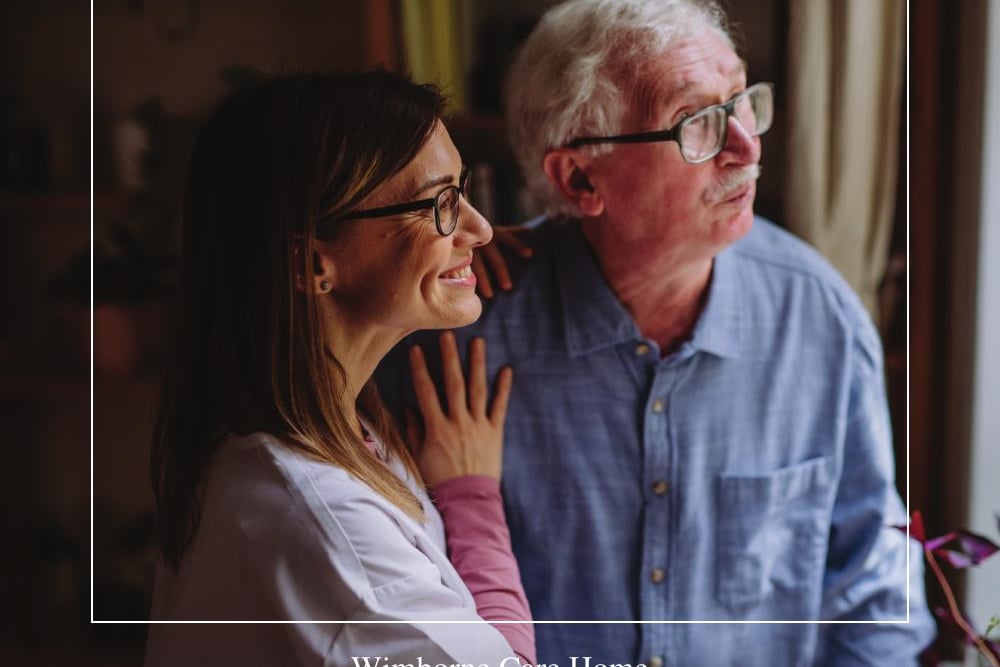
Wimborne Care Home on Hayling Island understands just how important it is to plan ahead and feel confident about the future – for both yourself and for those you love.That is why they are delighted to invite readers to a free informative talk on ‘Power of Attorney’ The talk is being delivered by Michael Wilson of Wilson Wakefield Solicitors on Hayling. The talk is designed to help you make the most of one of life’s most important decisions.
Barca, meanwhile, made light work of Newcastle United, but they needed home advantage to do so, after a tense 1-1 draw at St James’ Park, where Lamine Yamal’s penalty late on saved them from a first-leg defeat. In the reverse fixture, however, they decimated the Magpies, pulling them apart to emerge 7-2 victors. Stay tuned with all the latest from the Nou Camp this evening with our live blog below.
Future plans for renewable energy are emerging as a key issue in the election for Wales’s parliament, the Senedd, on May 7.
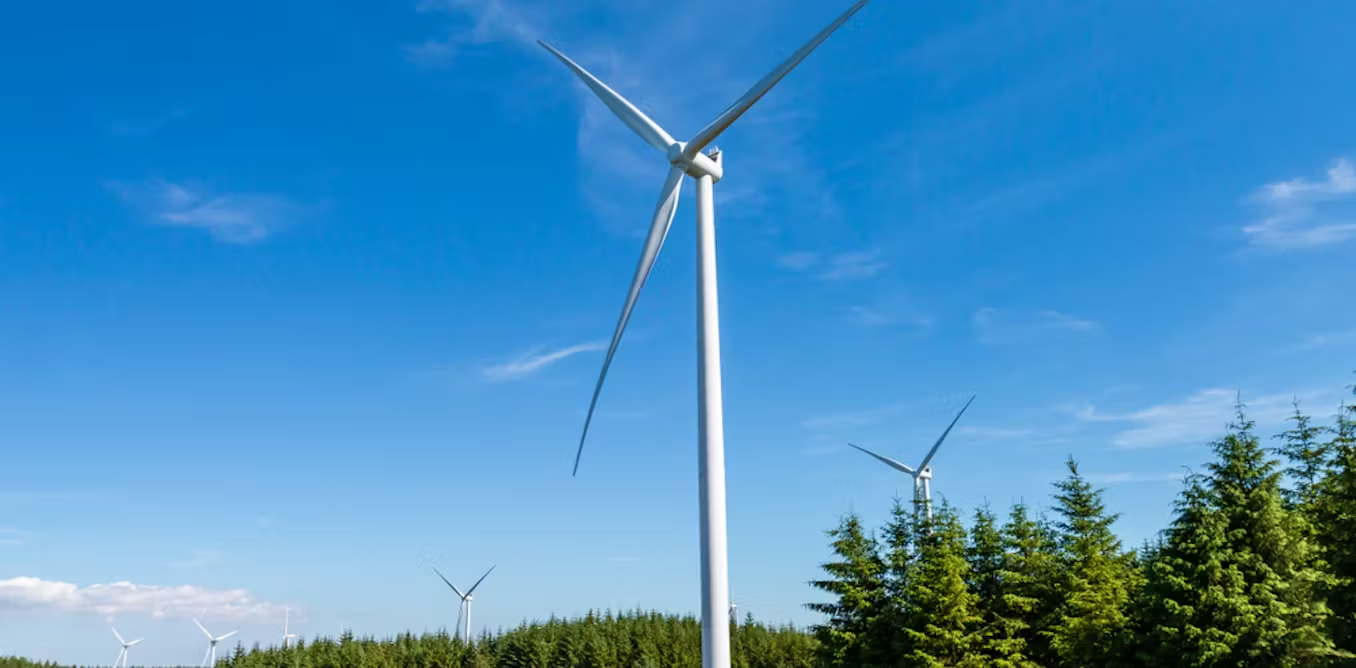
Proposals for new infrastructure, including windfarms and pylon lines, required to meet targets for low carbon energy are facing opposition in many parts of rural Wales, with campaigners suggesting that the issue will influence how some people vote in the election.
With a far greater divide among parties over green issues than in past elections, windfarms and pylons have shot up the political agenda.
The Labour-run Welsh government signed a new deal in March to speed up progress towards its target of 100% of Wales’s electricity consumption being met from renewable sources by 2035. Meeting this target requires a significant expansion of on- and off-shore windfarms, solar parks and tidal energy schemes, prompting an increase in proposals. New power lines are also needed to carry the electricity generated to consumers in cities, with current proposals for new transmission lines across Carmarthenshire and Powys, largely to be carried above ground by steel pylons.
Advertisement
The Conservatives made opposition to new pylon lines a focal point of their 2024 general election campaigns in Carmarthenshire and Powys, with former Welsh secretary Simon Hart featuring anti-pylon symbols on his signs in the Caerfyrddin constituency. This position is reiterated in the party’s 2026 Senedd manifesto, which calls for a “bury cables first” approach as well as a moratorium on industrial wind and solar energy developments.
Reform UK, currently running second in the polls in Wales, is also calling for new onshore wind to be banned and for solar farms to be banned on “productive arable land” and cables to be buried underground where possible.
For right-wing parties, opposition to windfarms and pylons is consistent with their broader scepticism towards net zero. This issue is challenging for Plaid Cymru, currently leading in the polls and the Liberal Democrats, who generally back action on climate change, but see local opposition to pylons and windfarms in several of their traditionally stronger rural electoral areas in mid and west Wales.
Windfarms have operated in Wales since the 1990s. By 2024, 865 onshore wind power sites produced 3,152 gigawatt-hours of electricity. In 2024 renewable electricity generation was equivalent to 54% of Welsh electricity consumption.
Part of the conflict is because wind turbines are prohibited in Wales’s national parks, clustering projects in other parts of rural Wales.
Protesters cite a perceived over-concentration of wind turbines in areas such as Radnorshire.
Advertisement
Expanding capacity for renewable energy involves not only new windfarms (and solar farms and tidal power), but also new transmission lines to the carry the electricity produced in rural Wales to cities. Several lines are proposed, including the Tywi Teifi and Towy Usk networks in Carmarthenshire and south Powys, mostly carried by pylons up to 30 metres high.
What is not yet clear is whether voters will prioritise local concerns around windfarms and pylons or worries over climate change. A survey by the Countryside Alliance in 2025 suggested that 93% of respondents in Wales opposed pylon construction in their area. But a YouGov poll for Friends of the Earth in March found that 60% of Welsh voters were worried about climate change and 65% had a positive view of onshore wind.
Advertisement
Conservative campaign sign in Caerfyrddin constituency, 2024 General Election. Michael Woods.
Challenges for power line planning
Current Welsh government planning guidance states that “where possible” new power lines “should be laid underground”. However, it also allows that “that a balanced view must be taken against costs which could render otherwise acceptable projects unviable”. Plaid Cymru plans to remove this caveat. Reform UK pledges to maintain the current guidance.
In practice, not putting transmission lines underground has been justified on grounds of access, construction disruption, and above all cost. The Independent Advisory Group on Future Electricity Grid for Wales quotes evidence that the cost is 2.2 – 2.8 times greater for underground 132Kv cables installed by digging open trenches, but notes that differentials vary by voltage and technique.
Plaid Cymru has not been clear how the additional costs would be met. Increased project costs are typically passed on to billpayers, which can be a deterrent for companies to underground cables, especially as they have a legal obligation to deliver value for money to consumers. However, any effect on the price of electricity may become more acceptable if rising oil and gas prices lead to renewable sources being considered more cost effective by the public.
Advertisement
Impact on climate goals
There are concerns that increasing costs or cancelling or delaying projects will affect Wales’s ability to take necessary action on climate change. Labour has criticised Plaid Cymru for its policy changes and for rowing back on a pledge to make Wales’s carbon emissions net zero by 2035. Labour’s manifesto reaffirms its targets, outlines policies to make approval easier for renewable energy projects, and does not mention pylons.
The Green party also sees renewable energy as an issue that differentiates it from Plaid Cymru. The Welsh Green leader Anthony Slaughter told journalist Will Hayward that Plaid had “tied themselves in knots over the discussion about infrastructure. This is infrastructure that’s needed to deliver the renewable energy revolution that Wales needs, and that is a key area.”
The Greens’ manifesto states that: “Renewable energy must be developed responsibly. Infrastructure such as pylons and grid upgrades will be carefully planned to avoid damage to sensitive ecosystems and protected landscapes”.
The difference between the Greens and Plaid on this issue may become more significant if the two parties need to form a coalition after the election, as some commentators predict.
The pair are taking part on the All Stars version of the Ant and Dec ITV series
I’m A Celebrity South Africa’s Seann Walsh has revealed the shocking moment he experienced while taking on a trial on the ITV series with Gemma Collins.
Advertisement
The comedian first took part in the Ant and Dec reality show back in 2022, which was the first to be held in Australia after several seasons were held in Wales due to the pandemic. Seann was a late arrival in the series which boasted Culture Club singer Boy George and former Coronation Street actress Sue Cleaver.
Get MEN Premium now for just £1 HERE – or get involved in our WhatsApp group by clicking HERE. And don’t miss out on our brilliant selection of newsletters HERE.
Seann, who also competed on Strictly Come Dancing, was a popular presence in the camp. After several weeks in the jungle, Seann finished in fifth place as former footballer Jill Scott was eventually crowned the queen of the jungle.
Four years on from his first I’m A Celebrity experience, Seann can currently be found on the second series of the All Stars version of the series. Filmed last year in South Africa, Seann’s campmates include football legend Harry Redknapp, Emmerdale star Adam Thomas and Beverley Callard.
Advertisement
On Wednesday (April 8), Seann joined The Chris Moyles Show on Radio X to talk about all things I’m A Celebrity South Africa. Early on in the interview, Chris brought up how the first time he was in the jungle he crawled through a ditch with former Secretary of State for Health and Social Care Matt Hancock.
As viewers will recall, Seann and Matt, who came third in the 2022 series, formed an unlikely friendship. Chris also took part in the series which divided viewers.
“I crawled through a ditch, and Matt Hancock then serenaded me with an Ed Sheeran song again. Again, that doesn’t happen every day, Dom! So, that wasn’t there this time.
“And I don’t know if he’s still… He’s probably still in Australia, isn’t he? He’s probably still in the jungle there. Hasn’t left,” he said.
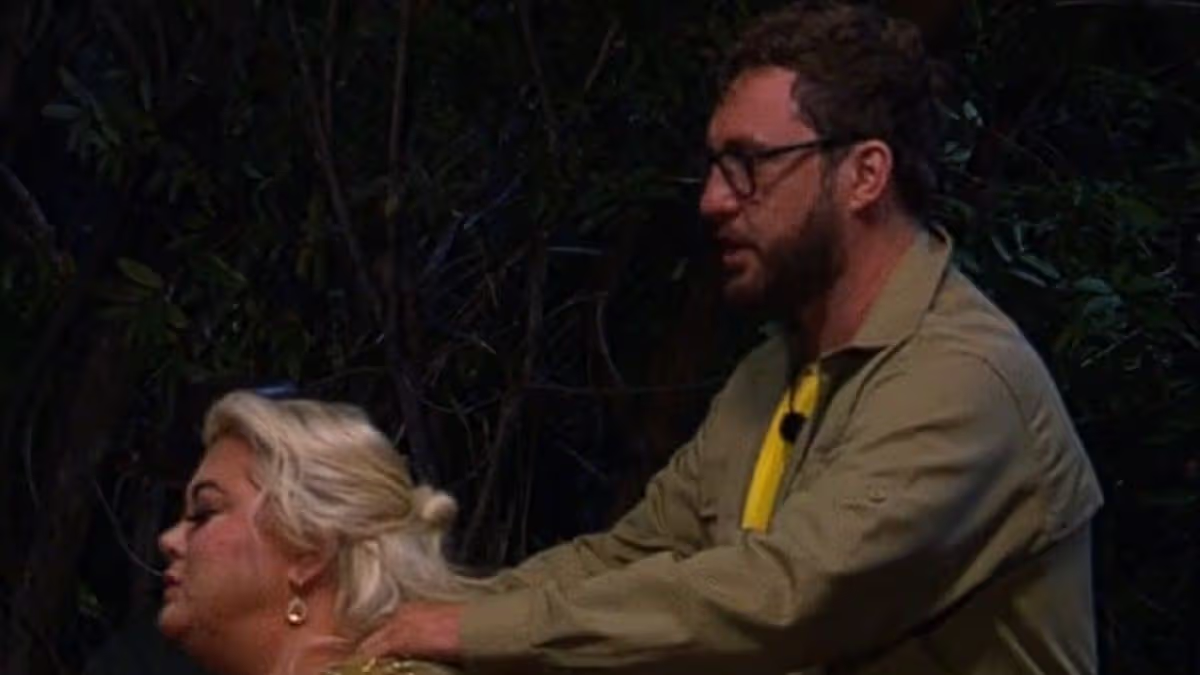
Chris’ co-host Dominic Byrne proceeded to bring up that he received a text informing him that Seann had given TOWIE icon Gemma a massage in the jungle. To which Seann jokingly replied: “Oh, did they air that? Have they got cameras in my house?”
Elaborating what actually happened, Seann continued: “She was doing a trial, and then she just went, ‘To get through this I need a massage. Come on, Seann!’ and just insisted that I massaged her.
“I don’t know if I was massaging the GC or Gemma Collins. One of them. I was massaging one of them.”
Advertisement
Having famously quit I’m A Celebrity after 72 hours in 2014, Gemma revealed prior to heading to South Africa that she’s determined to do better on the All Stars series.
“Going on All Stars is a real moment for me in my career – it’s redemption. To be able to do this again is the greatest honour ever. I am going to be the best campmate and get those stars. None of us will be starving under my watch,” she told ITV.
Gemma continued: “My soul told me it was right for me. I’ve never been to South Africa before. I think that is why they made a show on Essex people, because none of us have really left Essex! The fact I am now here is amazing.”
Tune into The Chris Moyles Show on Radio X weekdays from 6:30am – 10am and on Global Player
Peering into the disturbed lives of a group of middle-class suburban teenagers, Sam Levinson’s series overwhelmed audiences in the best way possible.
The deal was simple – strap into this rollercoaster of rampant drug abuse and hypersexualisation in a world that has failed young people, and prepare to be entertained.
However, despite my high expectations for the release of season three, this latest installment of Euphoria has not only lost its way: it’s become a bizarre parody of its former self.
Advertisement
Picking up the action five years after season two, Rue (Zendaya) works as a drug mule across the Mexican border, smuggling golf-ball sized wrappers of cocaine in her stomach, before she lands a job for strip club owner Alamo (Adewale Akinnuoye-Agbaje).
Nate (Elordi), meanwhile, struggles as a construction business owner to pay for his obscenely expensive wedding to Cassie (Sweeney), who flirts with the idea of becoming an OnlyFans star.
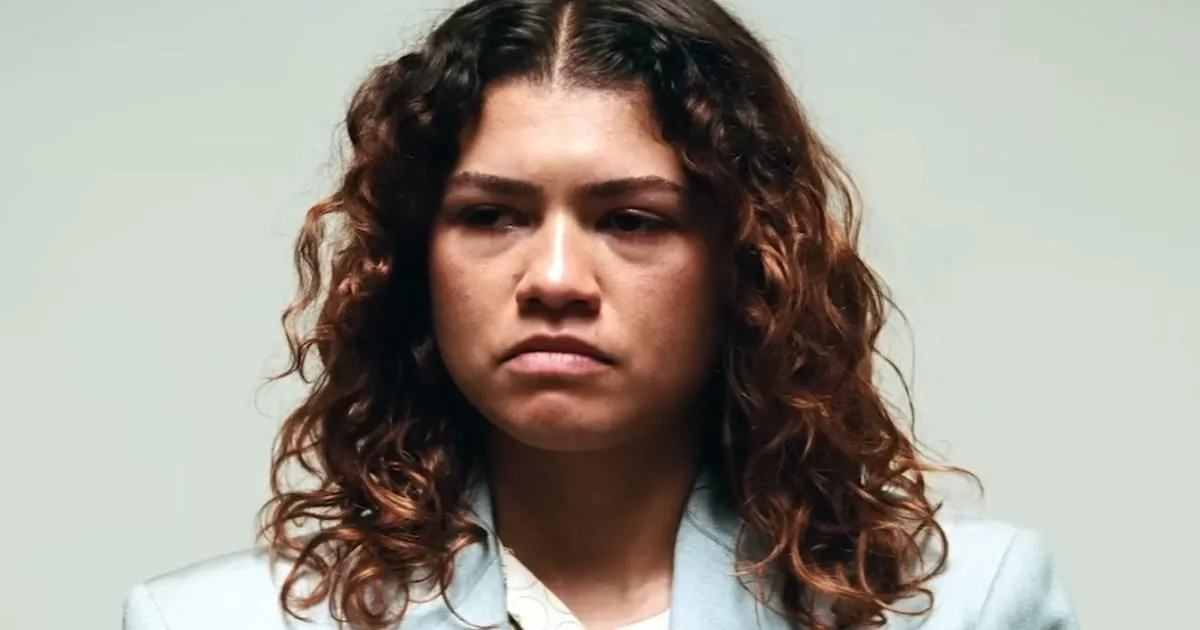
Zendaya continues to shine as Rue in a lackluster season three (Picture: HBO)
Euphoria season three sees Rue become a drug mule (Picture: HBO)
Rounding out the rest of the cast, Jules (Hunter Schafer) works as a high-profile escort while Lexi (Maude Apatow) tries out a career in the TV industry.
On the surface, this updated storyline sounds as though it should be interesting, especially if you were a fan of the previous seasons like me. However, the transfer across to the world of adulthood falls short of its own high expectations.
A far cry away from the days when these characters could bump into each other down the school corridor, their new separate lives and the rather clumsy attempts to try and link them all back together feels tired and artificial.
Advertisement
Euphoria season 3: Key details
Creator: Sam Levinson
Synopsis: Euphoria Season 3 follows the characters as young adults navigating life after high school. The season centers on Rue managing debt to Laurie in Mexico, an engaged Cassie and Nate living in the suburbs, Jules in art school and Lexi navigating Hollywood.
Starring: Zendaya, Hunter Schafer, Jacob Elordi, Sydney Sweeney, Alexa Demie, Maude Apatow, Eric Dane, Colman Doming, Chloe Cherry
Run time: 8 episodes
Advertisement
Where to watch: Sky, NOW and HBO Max
Cassie and Nate’s story in particular feels like it walks down a heavily-trodden path as they clash over her potential OnlyFans career.
Advertisement
Not only do their conversations not have any anything new or interesting to say about the industry, but it feels at odds compared to where we last left off in season two, when Cassie appeared to be so infatuated with Nate that money didn’t matter.
Now, she is enraged at not being able to have $50,000 worth of flowers at their wedding.
At one point, Cassie’s character is told how she is a ‘big fish in a small pond’, and I couldn’t help but feel like that is the perfect analogy for this series.
Nate and Cassie’s storyline lacks any real compared to previous seasons (Picture: HBO)
Sydney Sweeney reprises her role as Cassie (Picture: HBO)
When the storyline was set back in high school, all of these character’s stories felt so huge and dramatic, as we witnessed a groundbreaking performance by Zendaya as a self-sabotaging drug addict.
But here, in this strange Western cowboy re-framing of the story, where neo-Nazis accidentally lace ecstasy with fentanyl, what made them once so fascinating has been lost, and with it any and all drama has been sucked out.
Advertisement
Whereas the previous two seasons effortlessly glided between each character and storyline, everything feels so melodramatic and unnatural here.
Verdict
The start of Euphoria season 3 certainly has its moments, but this latest installment strangely lacks any real bite. It’s like Euphoria with all of its teeth taken out.
Advertisement
Zendaya’s performance revealing Rue’s struggles is a shining light in this disappointing return.
Schafer, similarly, as Jules provides hope for the remaining episodes as each of the characters’ lives begin to become intertwined – which is when the show has previously been at its best.
It would also be unfair to say that this series is not at times entertaining.
Even if the lines that this star-studded cast are saying feel contrived, the likes of Elordi, Sweeney and Schafer are absolute superstars and it’s great to see them back in TV.
Advertisement
The soon-to-be-married couple fight over wedding expenses (Picture: HBO)
One moment has sparked concern for Rue (Picture: HBO)
Additionally, there are some moments of humour throughout, despite them at times being demented.
Levinson behind the camera clearly has an eye for oddball, quirky characters and his vision for these bizarre, surrealist moments, coupled alongside his stunning cinematography, is at times magnetic.
But for every step forward that this season takes, it feels like there’s a misplaced moment, that’s unsure of what it actually wants to say, just waiting around the corner.
Previous seasons have been slow towards the beginning, so there is a chance that a stunning finale could save the day.
But even with strip club cowboys and dicey business adventures, I can’t help but feel like this latest outing – which is believed to be the last – is forced and unnatural.
Advertisement
Season 3 of Euphoria premieres this April on Sky, NOW, and HBO Max.
Got a story?
If you’ve got a celebrity story, video or pictures get in touch with the Metro.co.uk entertainment team by emailing us celebtips@metro.co.uk, calling 020 3615 2145 or by visiting our Submit Stuff page – we’d love to hear from you.






































You must be logged in to post a comment Login