
News Beat
Teenage Cancer Trust: Help a young person with cancer this Christmas

A hospital ward is never quiet, even in the middle of the night, but walking the cancer ward at 2 am on Christmas Day morning is a sobering affair.
Two years ago, I was in the hospital with my teenage son, Jack. He was undergoing chemotherapy for a rare form of bone cancer.
We’d hoped to be able to go home to spend Christmas Day with the rest of the family, but circumstances had conspired against us.
Anyone who has undergone cancer treatment will know that a high temperature of 38C (100.4F) or higher is classed as a medical emergency. Chemotherapy weakens the immune system, and a temperature spike could signal a life-threatening infection.
A few weeks earlier, Jack had spent time in intensive care when an infection developed into sepsis. It was terrifying to see how quickly he went from complaining about what seemed like a minor headache to needing 24-hour care and life support.
So, we knew all about the dangers of a high temperature.
Hospital protocol dictates that when a cancer patient has a high temperature, they need three subsequent days of normal readings before they can be allowed home.
On December 22, when Jack’s temperature hit 40C (104F), I knew we wouldn’t be going home. It was a horrible feeling to think we wouldn’t be there to open the presents on Christmas morning or to enjoy a traditional turkey lunch, especially as Jack had invested so much hope in spending Christmas at home. He still believed that he’d be well enough to leave on December 24, but I knew better.
Staff on the children’s cancer ward at the Royal Victoria Infirmary in Newcastle go above and beyond to make the best of things.
Patients who can go home do so, while the few left behind are treated to Christmas decorations, special food, staff in fancy dress, presents and good cheer.
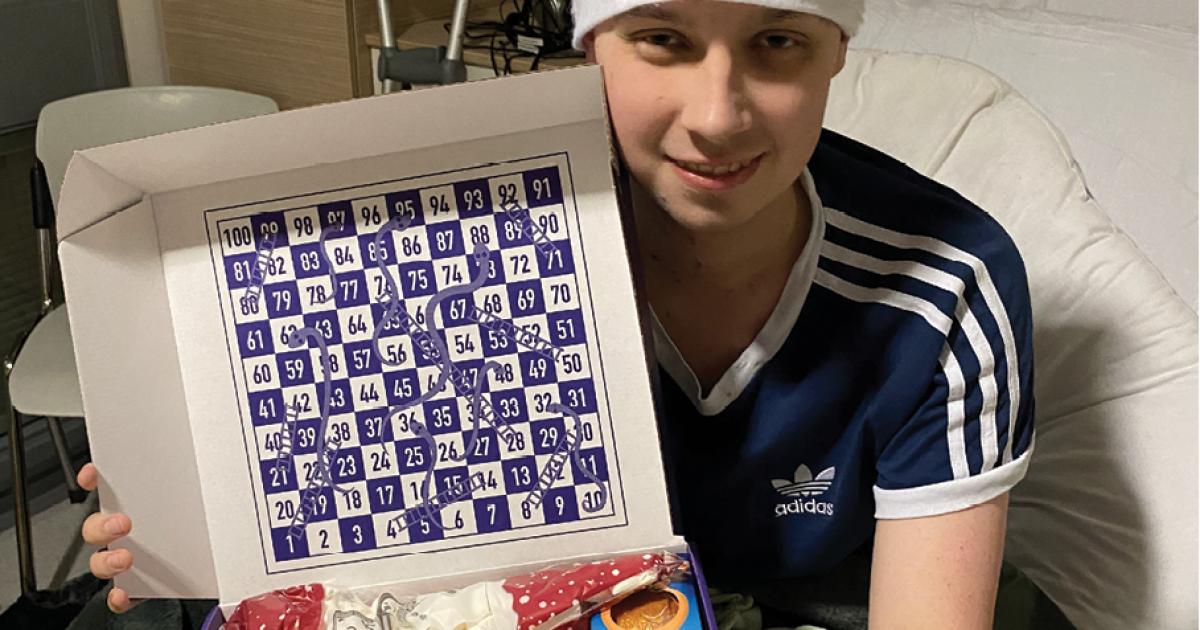
On Christmas Eve, a nurse came round with a parcel from elderly volunteers who had put together a Yuletide hamper filled with treats. The kindness of strangers who provide gifts for children battling a life-threatening illness still brings a tear to my eye. Just to see Jack smiling as he opened the gift box and rummaged around inside was priceless to me. People who go out of their way to do something kind for a child they may never meet should know that their selflessness makes a real difference.

The hamper was an unexpected bright spot on an otherwise depressing Christmas Eve when both of us sat in Jack’s small hospital room and thought about what we would be missing.
At about 10.30 pm, Jack dozed off.
I say dozed because getting a full night of unbroken sleep is almost impossible.
Some cancer patients – including Jack – have to be hooked to CADD pumps, which dispense medication and hydration in controlled measured doses directly into the bloodstream. The pumps are both battery and mains powered, but the plastic bags that contain the medicines are finite, and when they run low, the machines emit a piercing alarm to alert nurses that they need attention.
Jack’s hydration meant he needed the toilet every couple of hours as well, so a good night’s sleep was a luxury neither of us enjoyed. Even now, more than a year after Jack finished his treatment, I can’t sleep soundly through the night. I inevitably snap awake two or three times in the early hours, thinking I can hear the shriek of a CADD pump alarm.
So, it was no surprise to me as the clock ticked over from Christmas Eve to Christmas Day that I found myself walking the ward corridors to fetch a glass of water.
Tinsel festooned the ceilings, twinkling fairy lights were everywhere, and no one was to be seen, apart from the duty staff manning the nursing station at the very end of the corridor.
One of the nurses had told me about the notes left on Christmas Eve as I walked past rooms where the youngest patients were being looked after.
They are the letters to Father Christmas, some written by nurses, others by mums and dads, a few in the spidery writing of a very young – and very poorly – child. Short notes asking for Santa to spare the time to stop by the hospital and leave some presents because they can’t be at home this year.
In that moment, I felt the rage and hopelessness of every parent who has a child facing cancer. It seemed so cruel that children so young should be fighting a disease we normally associate with old age.
Thankfully, the very youngest children have no real notion of what is happening to them.
The same cannot be said for teenagers and young people who understand what a cancer diagnosis means but still find themselves helpless in the face of such a pernicious disease. Cancer care on the NHS simply isn’t designed with young people in mind.
That’s why the Teenage Cancer Trust exists.
It is the UK’s leading charity supporting 13–24-year-olds with cancer, providing specialist hospital units, expert nurses, and youth support workers who help tackle the unique challenges of cancer during these formative years. The trust ensures young people get tailored care, stay connected, and can rebuild their lives afterwards.
Jack benefited enormously from the help and support he received from specialist nurse Amy and youth support co-ordinator Emma. Their help, advice and support were invaluable for us both and helped Jack get through a very dark period in his life.
But the trust cannot do the amazing work it does without YOUR help. Donations from the public make a massive difference by ensuring that young people with cancer get the help they need.
So please, this Christmas, help make a young person with cancer just a little more comfortable by donating to the Teenage Cancer Trust. Please take a few minutes to scan the QR code on this page and donate as much as you can spare.
In January, I wrote about Jack’s illness. That feature kicked off a 12-month Newsquest-wide campaign to raise funds for the Teenage Cancer Trust. It’s only right that things come full circle and I write a personal piece to bring the fundraising year to a close.
Jack is now in remission from cancer. He has recovered from the debilitating effects of his chemotherapy, his left leg (which had to be rebuilt beneath the knee after a 10-hour operation) is regaining strength and this September he started university. God willing, he can now look forward to the rest of his life with confidence.
I’m proud that the company I work for made the Teenage Cancer Trust its charity for 2025 and that the work we did helped to raise awareness about the amazing things the Teenage Cancer Trust does.
But the fight doesn’t end here.
At least 37,000 young people aged between 15 and 24 will hear those chilling words, ‘I’m afraid you’ve got cancer’ over the next 15 years.
So the Teenage Cancer Trust’s mission is more important than ever – and will go on being so.
Please spare a thought for young people with cancer spending this Christmas in hospital.



