
News Beat
The best juicers for juicing fresh fruits and vegetables, tried and tested at home

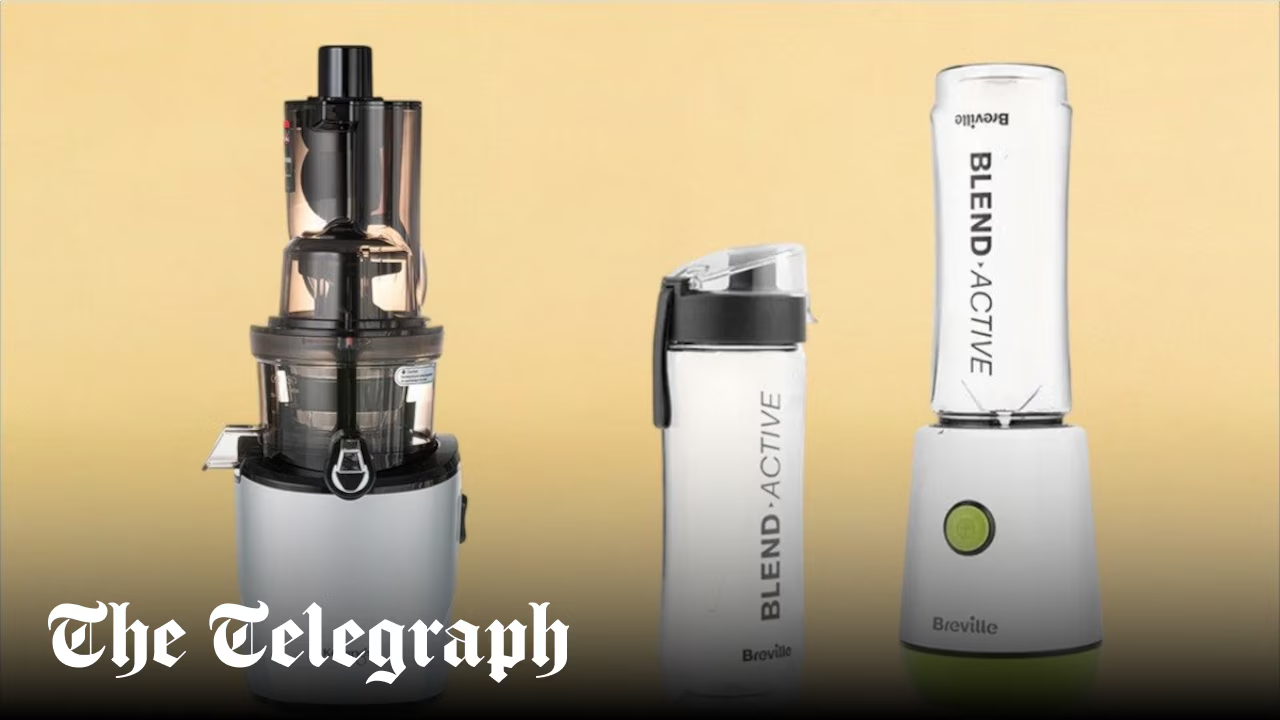

I love kicking off the day with freshly squeezed juice, whether a simple orange juice or a more intricate concoction filled with all sorts of fruits and vegetables. Juicers differ from blenders in that they extract the liquid rather than mixing it all together, while food processors are geared towards the preparation of uncooked ingredients – chopping, dicing, slicing, kneading and so on.
Juicing machines let you chuck in fruits, often whole or without peeling, into a receptacle and grind it down into juice, with the pulp deposited into a container to be discarded or composted. It’s a good way to get in your five a day, provided you don’t drink too much juice, which can be bad for your teeth – the NHS recommends a maximum of 150ml per day. The easiest way to avoid expensive shop-bought options, which may have added sugar, is to have one of the best juicers at home.
I’ve tried all the latest juicers from big names like Nutribullet, Sage and Philips in order to find the best home juicer. My full reviews can be found further down this feature, followed by answers to your FAQs. If you’re in a hurry, here are my top five.
The best juicers: At a glance
How to choose the best juicer
There are two main types of juicer: centrifugal and slow juicers. Cold press juicers, sometimes referred to as slow or masticating juicers, function by breaking down the fruit or veg into smaller particles before grinding it into juice. “The result of this is more juice extracted without the internal elements generating heat, but at a much slower pace,” says Elias Ebert, managing director of iSqueeze, which provides professional juicing machines to hotels and restaurants.
Centrifugal juicers, by contrast, have a blade spinning at a high speed to extract the juice much more quickly than slow juicers. The downside is that the juice tends to froth up, and they can be less effective with leafy greens. Though it was once thought that centrifugal machines ruin the nutrients, due to the heating, this has been debunked by household juicer specialists UK Juicers. Centrifugal juicers tend to be cheaper.
Finally there are citrus juicers, which do what they say on the tin. Unlike more high-tech juicers, all you need to do here is slice your chosen citrus fruit in half, then push the fleshy half onto a rotating press.
The main thing to look for in all types of juicers is something sturdy and robust, not too bulky and capable of making the amount of juice you’ll need. “The process of juicing can ask a lot of a machine so it really needs to be robust if using every day at home,” says Ebert. Spending a little extra money can go a long way in the long run.



