News Beat
The best running buggies, tried and tested (with the help of a giggling two year-old)

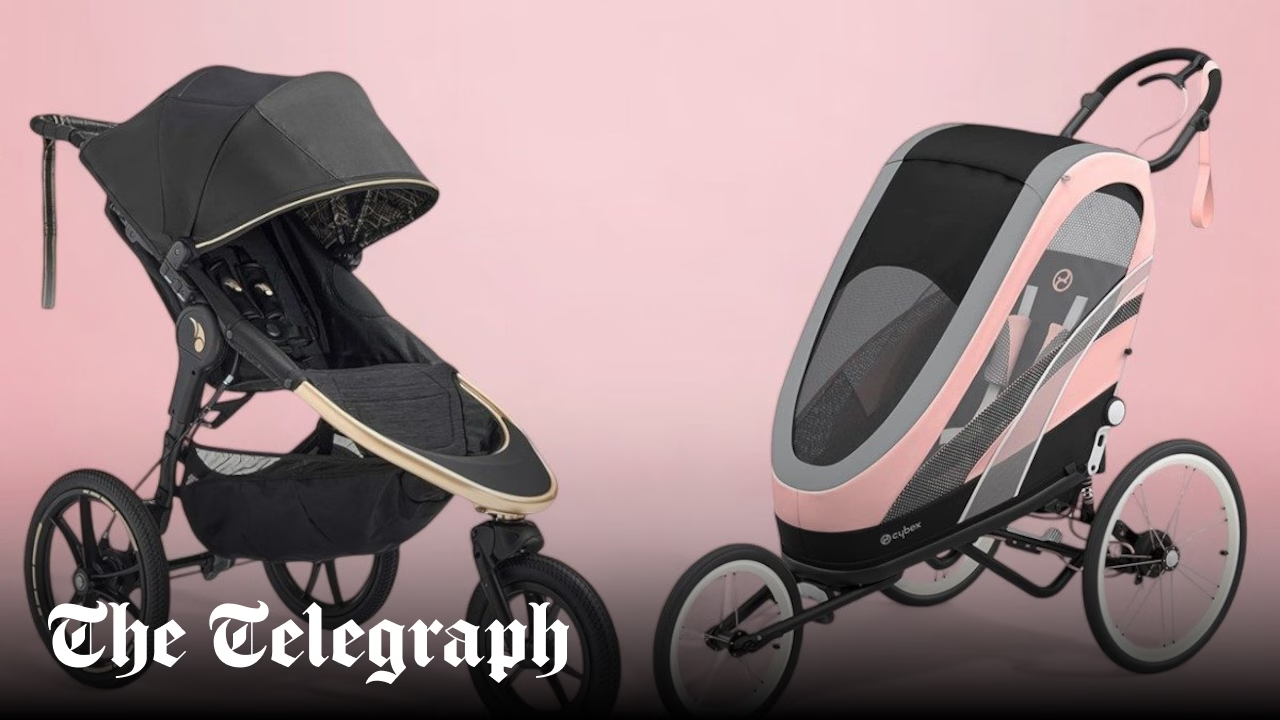

As a mum of two little boys, staying fit and active has become increasingly important to me. I lost a lot of strength after my second son was born, and finding the best running buggy meant an opportunity to get back to my previous fitness levels.
Getting to my usual spin class isn’t always possible, and working out at home is often affected by other factors such as how long my son naps. That’s why the concept of a running pram or buggy appeals: it lets me go for a run, but is also an effective way of calming an unsettled baby or toddler. (On one tricky day, running was the only thing that stopped my 18-month year old from crying).
If you’re asking, ‘What is a running buggy?’ it’s similar to a traditional pram, but has three wheels that are larger in size. The front wheel often locks for added suspension and control. Most have a brake at the handlebar. It’s worth pointing out that no strollers are actually sold for full-on running: the safety standard (EN1888, if you’re interested) applies to jogging only, with babies over nine months. If they’re between six and nine months, you should only be strolling.
Hence most running buggies are designed to switch between being used for jogging and day-to-day life. I’ve tested this year’s crop and you can read my full reviews below, followed by answers to some frequently asked questions about them. But if you’re in a hurry, here’s a quick look at my top five:
The best running buggies: At a glance
How to choose the best running buggy
A running buggy is not simply a pushchair you can run with; it is a piece of specialised fitness equipment designed to ensure your baby’s comfort and protection at speed.
As qualified Personal Trainer Sarah Campus attests: “I absolutely love buggy running. It’s a great way for us all to work out together and get outdoors which is a huge benefit on my mental health and a great way to fit in a run without needing childcare.”
To make this possible, key features are non-negotiable. According to Sarah, “A running buggy should have suspension, large air-filled tyres, a front wheel that can be fixed straight and adjustable handlebar height.” Superior suspension and air-filled (pneumatic) tyres are crucial to absorb the impact and jolts from the ground, safeguarding your child’s head and neck. The lockable or fixed front wheel prevents dangerous wobbles and ensures stability, which is vital when running.
For the parent, a lightweight design and adjustable handlebar height are equally important for maintaining proper running form and reducing strain. Sarah’s final practical advice is to look for a lightweight buggy, as it will make the significant weight of the child and gear far easier to push over the miles.