

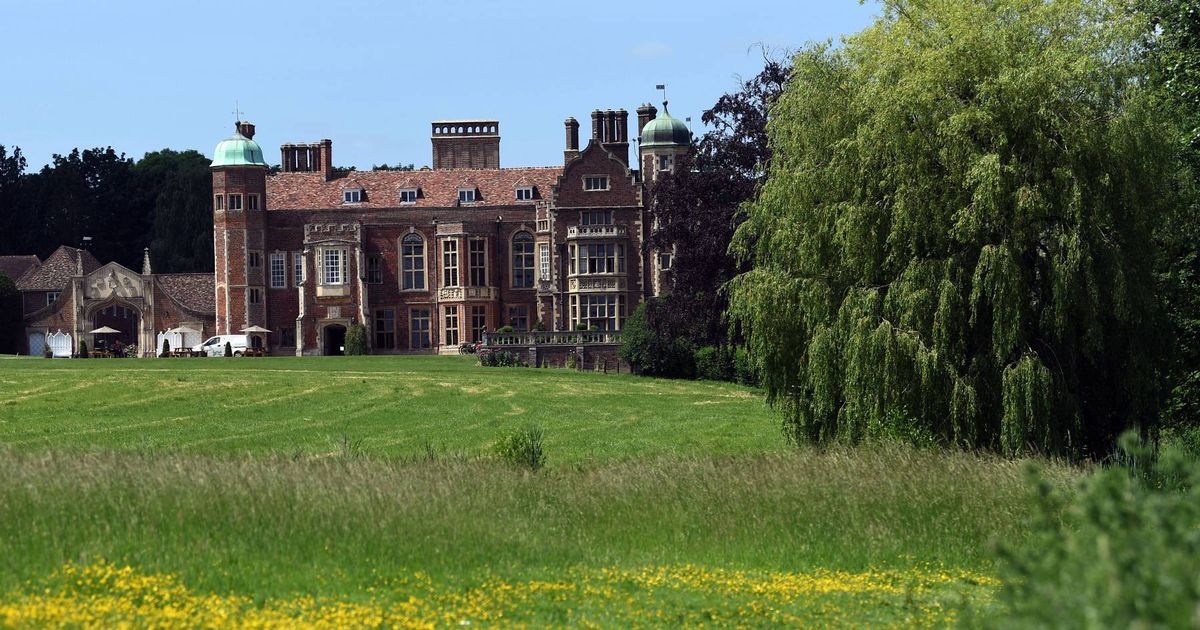
It is home to pretty thatched cottages, an American Cemetery with 3,811 WWII burials and a historic hall where Prince Edward VII once lived
Madingley, a small village on the north-western outskirts of Cambridge, is known for its historic hall and significant war cemetery. Despite its size, this charming spot is one of the county’s most distinctive villages.
The Three Horseshoes, a historic thatched pub boasting two AA rosettes, serves as the village’s local watering hole.
The village church, dating back to the 12th century, provides ample habitat for one of the country’s largest toad colonies, according to Madingley Church. In August, when the young toads typically emerge from ponds, they can be spotted throughout the village.
But there’s more to Madingley than its amphibious residents. The village is dotted with picturesque thatched cottages, green lawns, and shady woodlands.
Just beyond the village boundaries lie farmlands blanketed in golden wheat fields. Since the 16th century, Madingley has been home to Madingley Hall, an impressive Tudor estate with stunning gardens spanning eight acres. The hall even once housed a Royal resident.
In the 18th century, Sir John Hynde Cotton initiated the expansion of the hall into the village, closing the medieval village street to keep villagers’ houses out of sight from the hall. Fortunately, the expansion didn’t extend much further.
In 1861, the Prince of Wales – later known as King Edward VII – resided at Madingley Hall during his studies at the University of Cambridge. However, his stay was cut short due to the unexpected demise of his father, Prince Albert.
A Royal Coat of Arms was subsequently installed in the local church at Madingley in memory of his brief residency.
Presently, the Hall, along with its encompassing park and farmland, serves as the base for Cambridge University’s Institute of Continuing Education. The Hall hosts residential and non-residential courses, conferences, and summer programmes for professional groups and the wider public.
Yet, this isn’t the only notable feature in the quaint village. In 1956, a significant portion of the village, spanning 301⁄2 acres, was converted into the Cambridge American Cemetery and Memorial.
The cemetery is the final resting place for 3,811 American military personnel who lost their lives in the Second World War, with an additional 5,127 names etched on the Wall of the Missing.
It stands as a poignant tribute to those who sacrificed their lives in the war and holds the distinction of being the only WWII American war cemetery in the UK.



