

Military experts have warned that five flashpoints across the globe could escalate into major conflict in 2026, with tensions rising in Europe, Asia and the Middle East
Experts have identified five potential flashpoints that could spark global conflict in 2026 as fears grow over Russia’s next move.
Vladimir Putin’s brutal war in Ukraine will have dragged on for four years come February, with no end in sight – and concerns have been more recently raised over the massing of hundreds of thousands of his troops on NATO borders in Belarus.
The Kremlin has also been accused of a number of provocations over the last 12 months, including disruptive drones at airports and military sites across Europe, menacing naval demonstrations, and hardline rhetoric from close Putin allies.
But there are also number of other potential crisis spots around the world that could play host to the outbreak of war, reports the Daily Star.
1. Caribbean Sea
Warships, fighter jets and even B-52 bombers have been sent into the Caribbean Sea in recent months by Donald Trump as part of his dispute with Venezuelan dictator Nicolas Maduro, who he has accused of heading a ‘drug cartel’ and allowing hundreds of thousands of migrants to enter the US illegally.
The US president has also been commanding strikes against suspected drug smugglers in the Central American waters.
Reflecting on the risk of escalation in the year to come, former senior British Army intelligence officer Philip Ingram told The Sun: “Donald Trump is building up one of the largest naval and military forces we’ve seen in the region for a long time.
“The build-up there is something that you don’t do unless you’re going to use the military capability that Donald Trump is putting into the region.”
The ex-spy added that the Caribbean Sea region “could flash up very quickly indeed”.
2. Gulf of Finland
This narrow waterway nestled between Finland, Estonia and Russia has been one of Putin’s favourite targets in Europe outside of Ukraine.
In recent times, underwater communication lines have been severed, unmanned aircraft have been dispatched, and military escorts for “shadow fleet” oil tankers evading sanctions have been carried out in the strategically important gulf.
Mr Ingram predicted Putin will exploit this crucial position to divert European attention away from Russia’s relentless campaign in Ukraine, and said: “With the Russian leader growing increasingly emboldened by Europe’s muted response to his recent airspace incursions, he all but certain to step up sabotage efforts across the continent in the coming year.
“One way in which he might continue to meddle with NATO is through his shadow fleet, primarily operating out of the Gulf of Finland,” the former intelligence operative revealed.
“Earlier this year, we saw Russian jets flying over the gulf as they veered into Nato airspace and sparked a hurried response from the defence alliance.”
3. Kinmen Islands
This cluster of small islands situated off could be in Xi Jinping’s crosshairs as Beijing ramps up its hostile stance towards Taiwan.
The Kinmen Islands, home to 150,000 people, could be easily seized by Chinese military forces as part of a calculated scheme to gauge Taiwan’s determination – with any sign of weakness likely preceding a full-scale amphibious invasion.
Ingram observed: “This is something that China could easily take with a very small military capability – and then sit and watch what the international community does,” Ingram said.
“China may use that as a test bed in 2026 to see what the resolve of the international community looks like.
“China sees it [Taiwan] as an errant part of China, and wants to see it back again.”
Should Xi Jinping launch an invasion of the islands, it might trigger military intervention from Donald Trump given the US’s historical stance in defending Taiwan’s independence. Military intelligence officials in Washington and Taipei have previously warned that China’s military aims to be capable of invading Taiwan by 2027, meaning the next 12 months could prove crucial in South Asia.
4. Strait of Hormuz
In the Middle East, any eruption of tensions over the Strait of Hormuz could spell huge problems for the global economy.
This narrow waterway along Iran’s southern coastline handles the transport of 20 million barrels of oil annually – representing one fifth of global consumption.
Analysts worry that Iran’s supreme leader Ayatollah Ali Khamenei might target this crucial shipping route as retaliation for Israel’s strikes.
Mr Ingram said: “Iran has remained relatively quiet, but if it felt that it wanted to bite back at the West with a large percentage of the West’s oil and gas going through the Strait of Hormuz, Iran could decide to close it.
“If tensions increase inside Iran, whether they be civil tensions against the government, whether they be tensions coming in from Israel or from the US or elsewhere, Iran could try to lash out like a cornered rat.
“Biting back by closing the strait of Hormuz – the impact on the global economy would be significant.”
5. Seoul
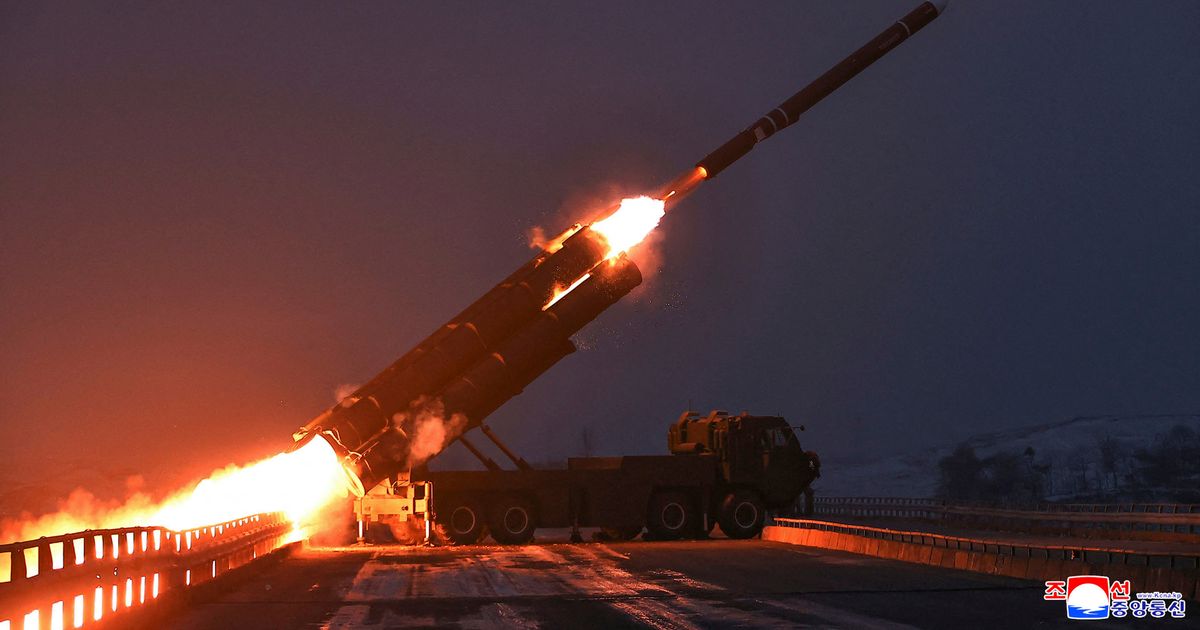
The decades-old truce between North and South Korea appears more fragile than ever, with volatile dictator Kim Jong-un persistently displaying his military might.
And while closer ties with Russia have helped ease a food crisis, it is unlikely to bring stability as his country continues to supply Russia with ammunition and troops for the war in Ukraine.
Mr Ingram said: “Kim Jong-un, the despot leader of North Korea, is feeling emboldened in his relationship with Russia, supplying over 70% of Russia’s ammunition for its war in Ukraine.
“Kim has also developed capabilities and been brought centre stage at Xi and Putin’s parades.”



