
News Beat
The history of now destroyed Streatlam Castle, County Durham

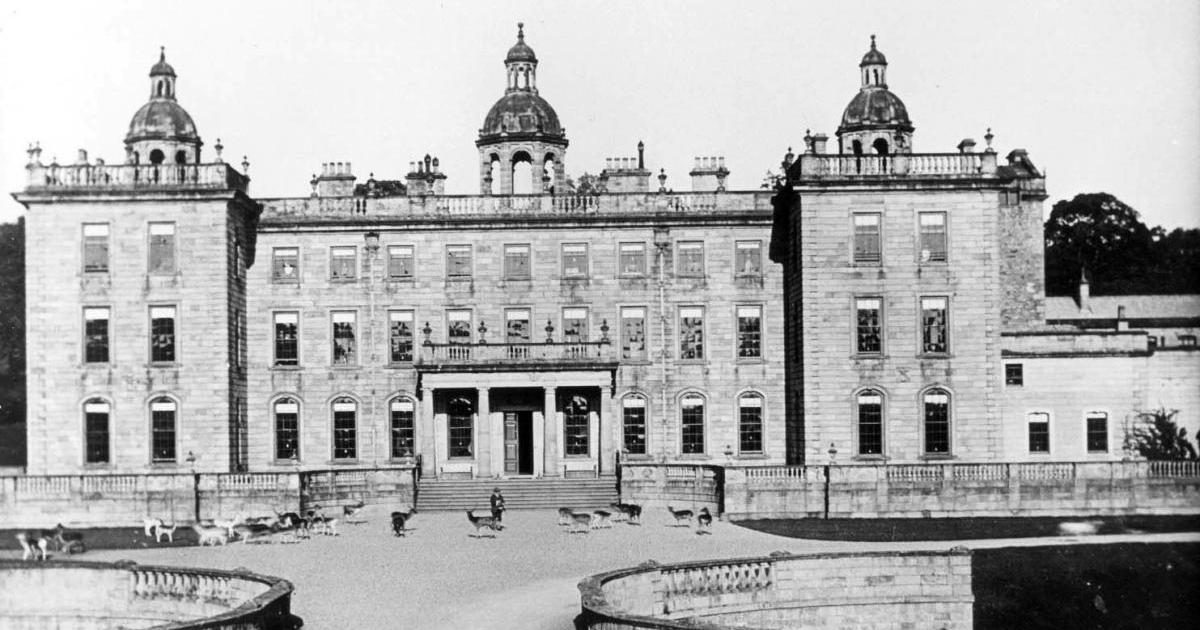
Streatlam Castle, near Barnard Castle, was demolished in a controlled explosion in 1959 after centuries as the ancestral home of the Bowes family.
Over the last few years, detailed scale models, historic paintings, and newly uncovered material have managed to reconstruct the vanished building and shed some light on what happened there all those years ago.

Streatlam stood for more than 600 years, evolving from a medieval stronghold into a grand 19th-century mansion. It survived rebellion, plunder and scandal, but not the 20th century.
After being sold by the Bowes-Lyon family in 1922, the castle was stripped of anything valuable and left to decay.
It was later occupied by the Army during the Second World War before being used as a demolition site by the Territorial Army on March 29, 1959.

Within minutes, a building that had belonged to the Bowes family since 1310 was reduced to rubble.
At its height, Streatlam was owned by John Bowes, a coal magnate, racehorse breeder and one of the wealthiest men in England.

His horses included West Australian, the first ever Triple Crown winner, and Cotherstone, Derby winner in 1843.
Bowes earned the modern equivalent of £3 million a year from his Durham estates and made fortunes on the turf.

Despite his success, Bowes remained a marginal figure in elite society due to his illegitimacy, and increasingly retreated to Paris, where he and his wife Josephine began buying artworks with the ambition of founding a public museum.
Although the couple planned to establish their museum at Streatlam, the project ultimately moved to Barnard Castle. Their art collection survived, but their home did not.
Neither John or Josephine lived to see the museum open in 1892.
By then, Streatlam had begun its final decline, becoming “one castle too many” for the family.
Today, only fragments remain in the surrounding private parkland, including a heated orangery, rare exotic trees, and a now-notorious iron mantrap once used to deter poachers.
In 2017 and 2018, there was an exhibition that documented the height and decline of Streatlam.



