

This roundup of The Conversation’s climate coverage was first published in our award-winning weekly climate action newsletter, Imagine.
Each year, as temperatures drop, the same promises resurface. A tiny heater that can warm your whole home for pennies. A simple hack using candles and flowerpots. A wood-burning stove that’s cosy, clean and cheap.
Some of these fixes are outright scams. Some are just dangerous. Others work, but with hidden costs most don’t know about.
All of them run into the realities of physics, pollution or safety.
Wood-burning stoves are becoming more popular and I can see the appeal. When visiting my in-laws in rural Dorset, I sometimes work from a shepherd’s hut in their garden, which is heated with a wood stove. I like the sense of control and the boom-and-bust cycle of warmth caused by loading firewood every hour or two.
The real fire feels dependable in a way that modern systems sometimes don’t. It feels traditional. And, increasingly, it is presented as environmentally acceptable.
But beneath the romance and the cosiness there is an uncomfortable truth. Domestic burning is now recognised as a leading source of PM2.5, one of the most harmful forms of air pollution.
The UK does regulate wood stove emissions, but under a system designed for another era, says James Heydon of the University of Nottingham.

Kev Gregory / shutterstock
“Smoke control areas” were created as a response to lethal smogs in the 1950s, he says, but the system has barely changed since.
“Even perfect enforcement”, he writes, “would not solve the core problem. SCAs were designed to reduce visible smoke, not invisible PM2.5. Modern ‘Defra-approved’ and ‘EcoDesign’ stoves are exempt because they emit less visible smoke.”
But those exempt stoves still emit lots of PM2.5 – more than 300 times that of a gas boiler, says Heydon. “Since 2010, more than 2,500 stove models have been exempted from SCA rules, steadily widening the loophole and gradually weakening the system’s ability to control PM2.5.”
A few months back, my father-in-law replaced the shepherd’s hut stove with an electric heater. My lungs will remain pollution-free this Christmas, but I do miss the stove.
Beware heater scams
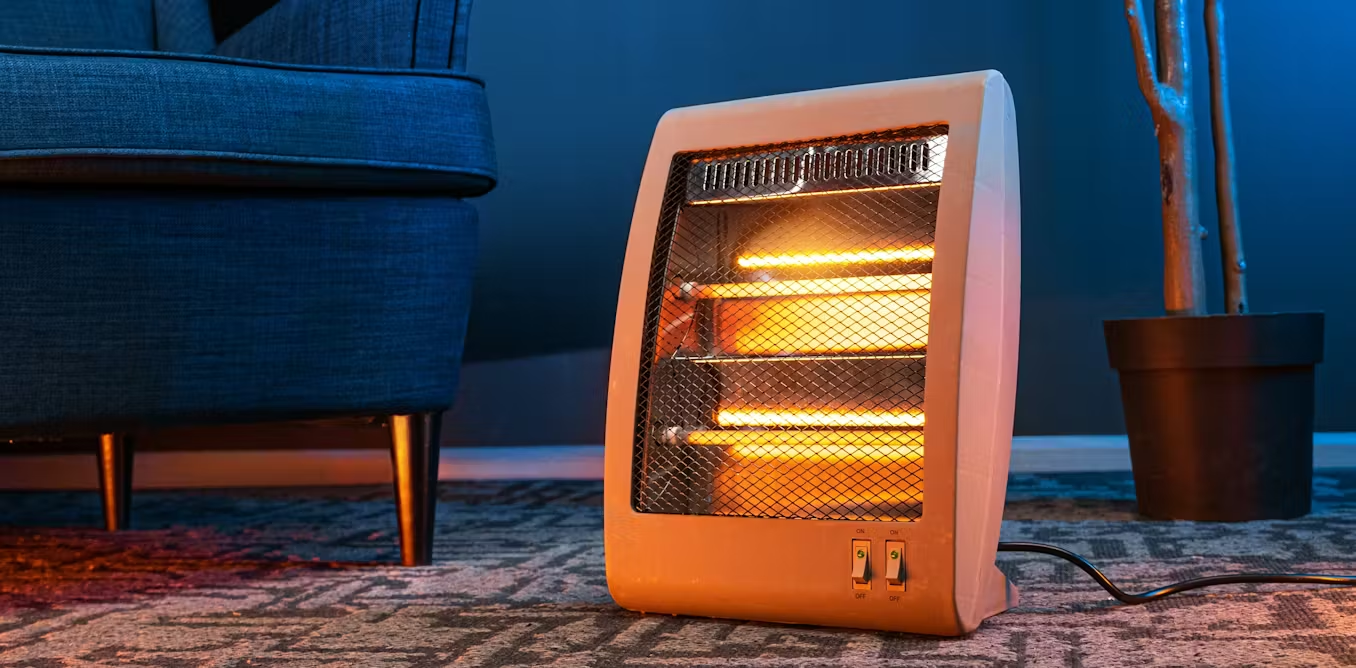
My father-in-law appears to have bought an appropriate heater that actually works. Unfortunately, many people are being sold devices that don’t live up to expectations as social media is filled with portable heater scams this winter.
Doomscrolling through a cold snap, you may see bold claims for heaters that can supposedly warm an entire home in minutes while costing pennies to run. It can often feel like true cosiness is only a click away.
These products rely on a powerful idea, that fancy new designs have unlocked a step-change in efficiency. But language, not technology, is doing the heavy lifting.
In reality, says Dylan Ryan of Edinburgh Napier University, almost all electric heaters are already close to 100% efficient. That means all the electricity is turned into heat, not “lost” as light or noise. The more electricity you put into the heater, the more it will warm your home, and vice versa.
This is why engineers like Ryan stress there is no clever design or secret hack that can make one plug-in heater significantly more efficient than another. “When a product claims to heat more while using less electricity”, he writes, “alarm bells should ring.”
Some adverts promise to warm a home in minutes. But the numbers don’t work.
Here’s Ryan again:
Heating a typical home means warming hundreds of cubic metres of air, as well as countering heat losses to the outside. That takes lots of energy. To do it quickly would require tens of kilowatts of power – far more than can be drawn safely from a standard household plug socket.
In practice, the wattage of most portable heaters is deliberately limited to avoid overheated wiring and reduce fire risk. The allowed wattage is enough to warm a small room, says Ryan, but is “nowhere near enough to rapidly heat a whole house”.
When neither tradition nor technology has the answer, people sometimes look elsewhere for answers.
This is where “heating hacks” flourish. Social media is filled with improvised fixes: bricks heated in ovens, tea lights beneath flower pots, makeshift indoor fires.
I get the appeal of feeling like an energy efficient MacGyver, keeping warm on the cheap using unexpected household goods. Unfortunately, these set ups still run into basic physics: they deliver warmth at a far higher cost per unit of energy than electricity or gas.
In a helpful piece on how to keep warm on a budget during very cold weather, Mari Martiskainen of the University of Sussex points out candles and similar heating hacks are also a major fire risk.
Smoky stoves, scam heaters and viral hacks are all responses to the same problems: energy is expensive, homes are leaky, and people are cold. But as Ryan points out, the real solutions are slower and more boring: better insulation, more efficient heating, and reforms to lower the cost of energy itself.
To contact The Conversation’s environment team, please email imagine@theconversation.com. We’d love to hear your feedback, ideas and suggestions and we read every email, thank you.

Don’t have time to read about climate change as much as you’d like?
Get a weekly roundup in your inbox instead. Every Wednesday, The Conversation’s environment editor writes Imagine, a short email that goes a little deeper into just one climate issue. Join the 45,000+ readers who’ve subscribed so far.



