LAREDO, Texas (AP) — A month after ICE agents sent the young Ecuadorian mother and her 7-year-old daughter to a sprawling detention center 1,300 miles from their Minnesota home, they were finally free.
But when the bus pulled up to a migrant shelter in the border city of Laredo, dropping off a half-dozen families lugging bags stuffed with belongings, the stress of recent weeks tracked mother and daughter like the long shadows on that mid-February afternoon.
Night after night inside south Texas’ Dilley Immigration Processing Center with hundreds of other families, the grade-schooler wept and pleaded to know why they were being held.
“She would tell me, ‘Mom, what crime did I commit to be a prisoner?’ I didn’t know what to tell her,” said the 29-year-old, who spoke on condition of anonymity for fear being identified could negatively affect their immigration case. Her husband was deported to Ecuador soon after they were taken into custody.
Advertisement
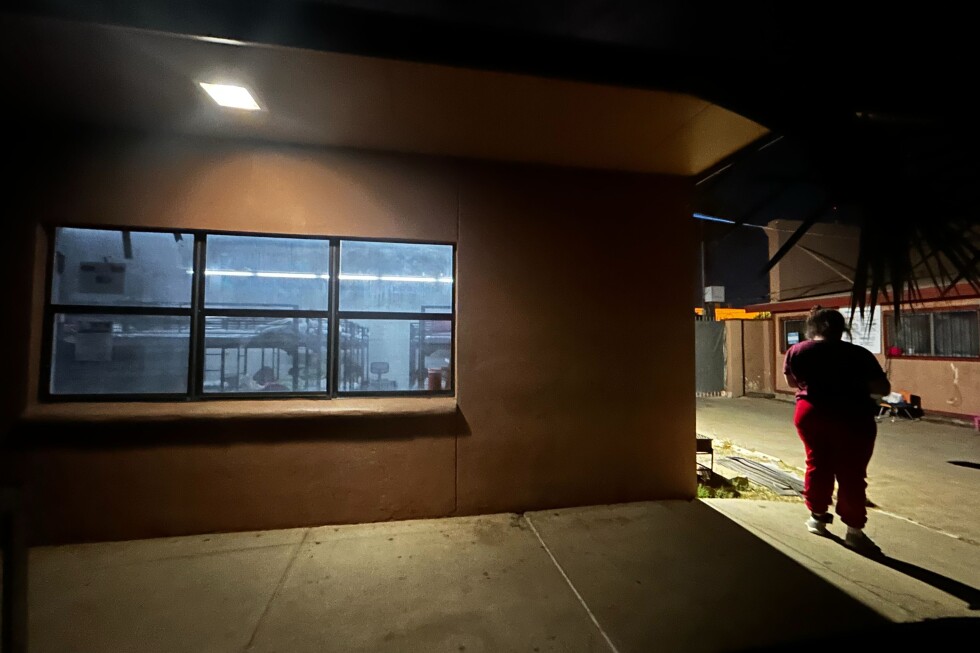
Immigrant families settle in for the night at the Holding Institute in Laredo, Texas, on Feb. 12, 2026. (AP Photo/Valerie Gonzalez)
Advertisement
Immigrant families settle in for the night at the Holding Institute in Laredo, Texas, on Feb. 12, 2026. (AP Photo/Valerie Gonzalez)
Advertisement
Advertisement
Advertisement
Advertisement
Many Americans were alarmed last month when photos circulated showing U.S. Immigration and Customs Enforcement agents in Minneapolis detaining a 5-year-old boy wearing a bunny hat and carrying a Spiderman backpack. The concern followed Liam Conejo Ramos and his father when they were sent to Dilley, surrounded by chain-link fences on a dusty plain about 75 miles south of San Antonio.
But Liam was hardly an outlier. ICE has been holding hundreds of children at Dilley — many for months.
“We are all Liam,” Christian Hinojosa, an immigrant from Mexico, said by phone from Dilley, where she and her 13-year-old son were held for more than four months. They were released this month and allowed to return home to San Antonio where she works as a health aide.
She noted that Liam and his father were released from Dilley after 10 days, when members of Congress and a judge intervened.
Advertisement
“My son says, ‘That’s unfair, Mama. What’s the difference between him and us?’”
Ramping up family detentions
When the Obama administration opened Dilley in 2014, nearly all families detained there had recently crossed the border from Mexico. Detentions at the facility were scaled back by the Biden administration in 2021, before it was closed three years later.
___
EDITOR’S NOTE — This story includes discussion of suicide. If you or someone you know needs help, the national suicide and crisis lifeline in the U.S. is available by calling or texting 988.
Advertisement
___
Since being reopened by President Donald Trump’s administration last spring, life inside Dilley — a compound of trailers and other prefabricated buildings — has been shaped by three decisive changes.
The number of detained families has risen sharply since last fall. The government is holding many children well beyond the 20-day limit set by longstanding court order. And many detainees have lived in the U.S. for several years, with roots in neighborhoods, workplaces and schools, according to lawyers and other observers.
“Just imagine that you’re a child and you’re taken out of your surroundings,” said Philip Schrag, a Georgetown University law professor and author of “Baby Jails: The Fight to End the Incarceration of Refugee Children in America.”
Advertisement
Suddenly you’re in “a completely strange environment with the doors locked and guards in uniform roaming around,” said Schrag, who counseled Dilley detainees as a volunteer lawyer during the Obama administration.
ICE booked more than 3,800 children into detention during the first nine months of the new Trump administration, according to an Associated Press analysis of data from the University of California, Berkeley’s Deportation Data Project. On an average day more than 220 children were held, with most of those detained longer than 24 hours sent to Dilley. More than half of Dilley detainees during that period were children.
Advertisement
A young immigrant girl who just arrived at the Holding Institute, a shelter in Laredo, Texas on Feb. 12, 2026, pets a cat as her mother and other families receive a welcome and instructions on how to purchase tickets to get back to their homes in the U.S. (AP Photo/Valerie Gonzalez)
A young immigrant girl who just arrived at the Holding Institute, a shelter in Laredo, Texas on Feb. 12, 2026, pets a cat as her mother and other families receive a welcome and instructions on how to purchase tickets to get back to their homes in the U.S. (AP Photo/Valerie Gonzalez)
Advertisement
Advertisement
Advertisement
Nearly two-thirds of children detained by ICE were eventually deported and almost 1 in 10 left the country when their parents accepted voluntary departure, according to an AP analysis of the latest comprehensive data. About a quarter were released in the U.S., requiring their parents to check in regularly with ICE as their legal cases proceed.
The number of detainees at Dilley has risen sharply since the period covered by the data, nearly tripling between last fall and late January to more than 1,300, according to Relevant Research, which analyzes immigration enforcement data.
“We’ve started to use 100 days as a benchmark for prioritizing cases because so many children are exceeding 20 days,” said Leecia Welch, the chief legal director at Children’s Rights, who visits Dilley regularly to ensure compliance. In a visit this month, Welch said she counted more than 30 children who had been held for over 100 days.
Advertisement
The increased detention of children comes as the Trump administration has gutted a Department of Homeland Security office responsible for oversight of conditions inside Dilley and other facilities.
“It’s a particular concern that family detention is being increased,” said Dr. Pamela McPherson, a child and adolescent psychiatrist contracted by DHS from 2014 until last year to inspect and investigate conditions at Dilley and other ICE facilities holding children.
“Just who’s providing that check-and-balance now?”
Rep. Tony Gonzales, who represents the congressional district where Dilley is located, said multiple visits have convinced him criticism of the center is unfair.
Advertisement
He said he’d been impressed by Dilley’s facilities and the professionalism and dedication of staff. “They’re not doing policy. They’re just fulfilling a duty,” said Gonzales, a Republican.
DHS did not respond to detailed questions about Dilley submitted by the AP. But both DHS and ICE sharply refuted allegations of poor care and conditions there.
“The Dilley facility is a family residential center designed specifically to house family units in a safe, structured and appropriate environment,” ICE Director Todd M. Lyons said in a statement this week. Services include medical screenings, infant care packages as well as classrooms and recreational spaces.
But concerns about Dilley are personal for Kheilin Valero Marcano, a Venezuelan immigrant detained with her husband and 1-year-old daughter, Amalia, in December and held for nearly two months.
Advertisement
Migrants from Venezuela, Stiven Arrieta Prieto and his wife, Kheilin Valero Marcano, with their 18-month-old daughter, Amalia Arrieta Valero, pose for a photo in Southern California on Tuesday, Feb. 10, 2026. (AP Photo/Damian Dovarganes)
Advertisement
Migrants from Venezuela, Stiven Arrieta Prieto and his wife, Kheilin Valero Marcano, with their 18-month-old daughter, Amalia Arrieta Valero, pose for a photo in Southern California on Tuesday, Feb. 10, 2026. (AP Photo/Damian Dovarganes)
Advertisement
Advertisement
Advertisement
When the child got a high fever, Valero Marcano said Dilley staff told her it was just a virus. Two weeks later, Amalia started vomiting, then losing weight. Valero Marcano said she took her to the Dilley doctor’s office at least eight times but was offered Tylenol and ibuprofen.
Advertisement
The baby was eventually sent to two hospitals, where doctors diagnosed COVID, bronchitis, pneumonia and stomach virus, she said.
ICE disputed Valero Marcano’s account, saying in a statement the baby “immediately received proper medical care” at Dilley before being sent to the hospital. Back in Dilley, “she was in the medical unit and received proper treatment and prescribed medicines,” it said.
The family’s return to Dilley coincided with a measles outbreak there. They were released earlier this month after their lawyers petitioned the court.
“I’m so worried for all the families who are still inside,” Valero Marcano said.
Advertisement
A teen in distress
After more than two months in a cramped room at Dilley with three other families, the 13-year-old girl’s depression turned increasingly dark.
The eighth grader stopped eating after finding a worm in her food, family members said. Staff sometimes withheld medications she’d long been prescribed to keep her anxiety in check and help her sleep.
When a total lockdown was imposed, a guard blocked the teen from leaving the crowded room to join her mother and sister in the bathroom. She spiraled into crisis, and used a plastic knife from the cafeteria to cut her wrist.
“She said she didn’t want to live anymore because she preferred to die rather than having to keep living in confinement,” her mother, Andrea Armero, told the AP in a video call from Colombia, where the family was deported this month. The AP generally avoids identifying people who attempt or die by suicide.
Advertisement
The girl’s struggles began before she arrived at Dilley. Soon after starting middle school in Colombia, she learned a family member had sexually abused her younger sister. Armero said she saw no option but to leave and in early 2024 she and her daughters traveled to the U.S. border with Mexico, applying for asylum.
Living with family in Florida, the 13-year-old was doing well in school but sometimes experienced panic attacks about being sent back to Colombia. Under a psychiatrist’s care, she was prescribed anti-anxiety and anti-depression medications and regularly saw a therapist. Then, in December, ICE agents detained Armero and her daughters during a routine check-in.
At Dilley, the 13-year-old calmed herself by drawing, producing haunting pictures of a girl locked inside gates. But when she and other detainees took part in a protest after 5-year-old Liam and his father got to Dilley, guards took away drawing materials and ordered everyone to stay inside.
Advertisement
This image provided by the family in February 2026 shows a drawing made by a 13-year-old Colombian girl when she was detained at South Texas Family Residential Center in Dilley, Texas, where the Trump administration is holding immigrant families. (AP Photo)
Advertisement
This image provided by the family in February 2026 shows a drawing made by a 13-year-old Colombian girl when she was detained at South Texas Family Residential Center in Dilley, Texas, where the Trump administration is holding immigrant families. (AP Photo)
Advertisement
Advertisement
The teen’s mental health collapsed. She tried to harm herself with the plastic knife, Armero said, and repeatedly hit her head. The family was put into isolation without seeing a doctor, then deported to Colombia on Feb. 11 after a judge ordered them removed, she said.
Dilley discharge documents described “active problems,” including a “suicide attempt by cutting of wrist” and “self-harm,” in addition to a “history of post-traumatic stress disorder” and “history of anxiety.” AP also spoke with detainees and attorneys who independently described the girl’s suicide attempt.
Advertisement
Responding to questions from AP, a DHS official acknowledged there had been “a case of self-harm” inside the facility, but did not specify what had happened, or how staff handled the incident. When AP asked for details, DHS did not respond to follow-up questions.
“No child at Dilley … has been denied medical treatment or experienced a delayed medical assessment,” said Ryan Gustin, a spokesman for CoreCivic, the for-profit prison company that operates the facility under contract with ICE. Gustin declined to answer specific question about the 13-year-old girl, citing privacy rules.
Detention weighs on children
On a phone call from inside Dilley, 13-year-old Gustavo Santino-Josa introduced himself to a reporter by name and the 9-digit identification number ICE assigned him when he was taken into custody with his mother.
“Until today I don’t know what we did wrong to get detained,” Gustavo said. “I’ve seen my mom cry almost daily and I ask God that we can go out and go home soon.”
Advertisement
He worried they might never be released.
“My mom says that as long as there is hope it is worth fighting for,” Gustavo said before handing the phone to his mother, Christian Hinojosa, the health care aide originally from Mexico.
“All his friends have left already,” his mother said. “Some were deported. Some got released recently. And it hurts. It hurts to see people leaving and you’re staying here.”
Advertisement
Andrea Armero, right, and her daughter, who were deported from the United States, sit in a park in Colombia, on Wednesday, Feb. 18, 2026. (AP Photo/Fernando Vergara)
Advertisement
Andrea Armero, right, and her daughter, who were deported from the United States, sit in a park in Colombia, on Wednesday, Feb. 18, 2026. (AP Photo/Fernando Vergara)
Advertisement
Advertisement
Dilley was built to hold 2,400 people, housed in clusters ICE calls “neighborhoods.” Bunk beds are arranged side-by-side for up to four families, frequently putting parents with young children in close quarters.
Once in full operation, Dilley is expected to generate about $180 million in annual revenue for CoreCivic, according to the company’s recent filing with securities regulators.
Advertisement
In a video on its website, CoreCivic says Dilley’s “open campus layout allows residents to move freely and unescorted throughout the day.”
It does not mention that parents and their children are locked inside.
In response to questions from the AP, CoreCivic’s Gustin said the staff at Dilley includes a pediatrician, pediatric nurse practitioner, other trained medical professionals, as well as mental health services to “meet the needs of children and families in our care.”
In talks with parents of children held at Dilley, however, the same problems come up repeatedly, said Welch, the children’s rights lawyer.
Advertisement
Kids cry often and don’t get enough sleep, in part because lights are on around the clock, she said. The water tastes terrible and causes stomachaches and rashes, so some families stick to what they can buy in the commissary.
Their children don’t eat enough and have lost weight, Welch said. There are classrooms, but instruction is limited to an hour daily, mostly filling out worksheets.
A 14-year-old girl, identified in court papers by the initials NVSM, reported there were tensions with up to 12 people sharing their room. At night when she and her mother tried to sleep, others insisted on turning up the TV.
“I feel very sad and stressed to be here,” the teen said in an account filed with the court that oversees a binding settlement governing detention and release of children. “My nerves are so high. I don’t know what is happening. My muscles will twitch because I’m so nervous and on edge.”
Advertisement
Concerns about oversight
As the government’s detention of parents and their children came under scrutiny in 2014, an ICE official insisted that family detention centers, equipped with basketball courts and medical clinics, were “more like a summer camp.”
The characterization irritated McPherson, the child psychiatrist who, along with another physician, was retained in 2014 by DHS to inspect family detention centers. Their contracts were not renewed by the Trump administration last year after DHS announced sweeping staff reductions.
“Having a clean place to sleep, having food, that’s not the same thing as having family and community,” McPherson said.
The doctors’ investigations of family detention centers exposed consistently inadequate staffing and disregard by administrators for the trauma caused by detention, concerns they reported in 2018 to a Senate caucus set up to hear from whistleblowers.
Advertisement
At Dilley, the doctors noted a persistent shortage of pediatricians and the inability to hire a child psychiatrist from the time they began their inspections until they alerted senators.
Employees unsure how to deal with 2-year-olds biting and hitting each other placed the children and their parents in medical isolation for days, McPherson and her colleague told senators. Without supervision, a nurse at Dilley gave adult-strength hepatitis A shots to about 250 children in 2015, the American Immigration Lawyers Association reported.
Advertisement
Kheilin Valero Marcano, hugs her 18-month-old daughter, Amalia Arrieta Valero, in Southern California on Tuesday, Feb. 10, 2026. (AP Photo/Damian Dovarganes)
Kheilin Valero Marcano, hugs her 18-month-old daughter, Amalia Arrieta Valero, in Southern California on Tuesday, Feb. 10, 2026. (AP Photo/Damian Dovarganes)
Advertisement
Advertisement
Advertisement
DHS responded to many of the findings by making changes before a special committee recommended in late 2016 that the government discontinue family detention except in rare cases. The first Trump administration increased family detention before the Biden administration began phasing it out in 2021.
That the Trump administration is again holding families at Dilley after so many warnings feels “dystopian,” McPherson said.
“The decision to knowingly traumatize children and subject them to chronic stress, I just have no words for it,” she said.
Advertisement
Worries even after release
Huddled around picnic tables at the Laredo migrant shelter, parents released from Dilley searched anxiously for flights back to the homes they left behind. They called relatives, friends, teachers, anyone who might help with money to get there.
The young Ecuadorian mom talked of returning to Minneapolis, where her 2-year-old daughter, born in the U.S., was staying with a friend. With her husband deported, parenting will be entirely her responsibility.
That means getting her 7-year-old back in school. Then the woman, who had a work permit and a job in a Minneapolis restaurant before being detained, needs to keep her children fed.
“Let’s go home, Mom, but don’t go back to work because ICE is going to pick you up again,” the little girl said. Her mother tried to reassure her.
Advertisement
That won’t happen, she said, because now they have a special paper telling ICE to leave them alone.
She hopes that’s a promise she can keep.
—
AP Data Reporter Aaron Kessler contributed from Washington.
Advertisement
___
Contact AP’s global investigative team at [email protected] or https://www.ap.org/tips/
Our thoughts are with those who have lost a loved one
Announcing the passing of a loved one in local news media is a long standing tradition and we are proud of the trust placed in us to make these important announcements. Every notice published to our newspaper and news site also appears on funeral-notices.co.uk – the UK’s number one site for death notices and memoriams. Every notice remains online forever providing friends and families with a lifelong tribute to their loved one, a safe place online to share memories, add tributes, photographs and make donations in memory.
Advertisement
Each week we pay tribute to the loved ones remembered in our area with a funeral notice and online tribute page. To read the latest announcements and add tributes to those from our area who have passed away, or to create a funeral notice yourself, click here. Alternatively, you can create a notice by calling the team on 01482 908084.
Here are a selection of notices published earlier this week.
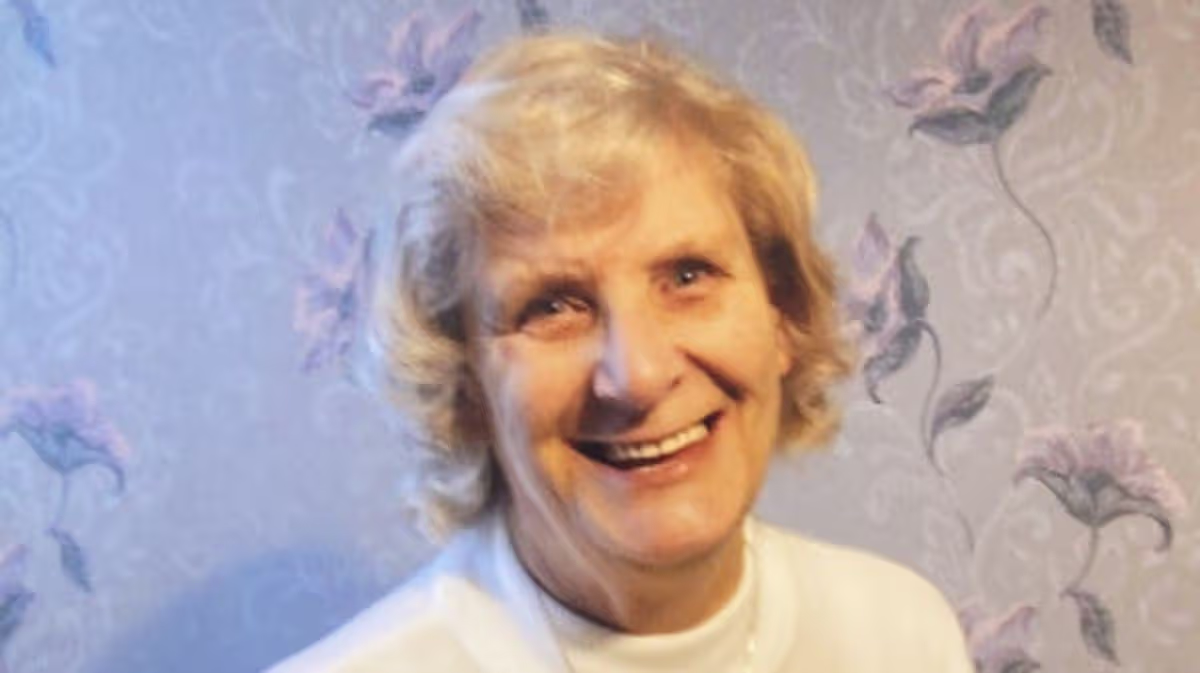
Passed away peacefully on Friday 6th March 2026 aged 74. Jan was a wife, mother, grandmother, great grandmother and friend to many. She will be sadly missed by all who knew her. Funeral service to take place at Cambridge City Crematorium, West Chapel on Monday 30th March at 3:15pm. Bright colours are warmly welcomed. Family flowers only please. Donations, if desired, to the benefit of Cancer Research UK can be made at the service, via Janice’s In Memory Page at www.peasgoodandskeates.co.uk or sent c/o 164 Histon Road Cambridge CB4 3JP 01223 791060
(Ray) Beloved husband to Helen, precious dad to Sarah, Katy and son-in-law Adam, treasured grandad to Lucie and Jamie, passed peacefully to rest at his home in Trumpington on Tuesday 3rd March 2026 aged 84 years. Ray will be greatly missed and remembered with eternal love. The funeral service celebrating Ray’s life will take place at St Mary and St Michael’s Church, Trumpington CB2 9LH on Tuesday 31st March 2026 at 1.00pm. Family flowers only please, but donations in memory of Ray may be made to Arthur Rank Hospice Charity at the service or online via Ray’s personal InMemory page at www.peasgoodandskeates.co.uk or sent c/o 617 Newmarket Road Cambridge CB5 8PA 01223 415255
of Papworth Everard passed away on Wednesday 18th February 2026 aged 58 years. A loving son of Joan and Mick, brother to Cheryl and Natalie and uncle to six. Funeral service to be held at 2:30pm, Histon Baptist Church on Tuesday 31st March 2026 followed by burial in the Histon and Impington Parish Cemetery. Family flowers only, donations if desired made payable to the British Heart Foundation maybe left following the service or forwarded to Richard Stebbings Funeral Service Ltd, Kendal House, Cambridge Road, Impington, Cambridge CB24 9YS. Tel: 01223 232309.
Peacefully in Addenbrookes Hospital on Thursday 5th March 2025, surrounded by her family, aged 87 years. Reunited with her beloved husband Jim, much loved mum of Eunan, Senan and Fiona, treasured nana of Joe, beloved sister, sister-in-law, aunt and friend, who will be sadly missed by all who knew her. Requiem Mass to be held at St. Laurence’s Church, Milton Road on Thursday 26th March at 1pm, followed by cremation. Family flowers only please, donations may be made at the service for Kidney Research. Enquiries c/o Weyman Funeral Service, 26, Abbey Walk, Cambridge CB1 2QJ
Of Wisbech St Mary, MA PhD ScD Cambridge University Professor Emeritus in Primate Biology and Conservation & College Lecturer Emeritus in Veterinary Anatomy. Adored Husband of Christine, beloved Father of Katy, James, John, Joseph, Daniel & Rebecca, brother of Rina, Grandfather of Georgia, Toby, Oliver, Isabella & Emmeline, passed peacefully away at QEH King’s Lynn, Norfolk on Thursday 5th March 2026. FUNERAL at Selwyn College Chapel at 1p.m. on Monday 30th March – for family, friends & colleagues – followed by private interment at the Arbory Trust Woodland Cemetery, Barton. To honour David’s love of life please wear joyful clothing or Indonesian Batik shirts. MEMORIAL SERVICE during Summer date TBC. Family flowers only. Donations for Cancer Research UK to Peasgood & Skeates, 617 Newmarket Road, Cambridge CB5 8PA.
Passed away peacefully on Friday 6th March 2026, aged 77. Beloved husband of Manuella, much loved father of Marco and Valerio, and a proud Nonno to Luca. Dear brother of Teodoro, Rodolfo and his twin brother Roberto. He will be sadly missed by all who knew and loved him. The funeral service will take place on Tuesday 31st March at 10:00am at Cam Valley Crematorium, Field Farm Drive, Great Chesterford, Saffron Walden, CB10 1FE. Family flowers only please. Donations, if desired, to Arthur Rank Hospice via the service collection box.
Of Cambridge. Passed away on Sunday 22nd February 2026 at home, aged 86 years. Dearly loved Uncle to Gary and Annie. Les shall be deeply missed by all. Funeral service to be held on Tuesday 24th March 2026 at Cam Valley Crematorium at 1pm. Donations, if desired, to the benefit of Dementia UK may be made at the service or online via Les’ personal InMemory page at www.peasgoodandskeates.co.uk All other enquiries to 617 Newmarket Road Cambridge CB5 8PA Tel: 01223 415255
It is with great sadness that we announce the passing of Jean Gaze on 19th February 2026, age 85. A loving wife, mother, grandmother and friend who will be deeply missed by all who knew her. The funeral service will take place at the Small Chapel, Chanterlands Crematorium, Hull HU5 4EF, on Monday 23rd March at 2pm. All who knew Jean are welcome to attend. Donations, if desired, to Macmillan Cancer Support.
It is with great sadness that we announce the peaceful passing of our beloved Rod on Tuesday 11th February, at Duxford, aged 86. He will be forever missed by his loving family – Ben, Toby, Florence and Jessica, and his cherished grandchildren. In keeping with his wishes, there will be no service. Rest in peace, Dad.
of Great Abington died peacefully on Monday 23rd February 2026, aged 85 years. Beloved wife, mother and grandmother. She will be greatly missed by all her family and friends. Funeral Service at St Mary’s Church, Little Abington on Tuesday 24th March at 12.30pm followed by interment. If wished, flowers may be sent c/o H. J . Paintin Ltd, 43 High Street, Linton, Cambridge, CB21 4HS
Died peacefully at Arthur Rank Hospice on 7th March 2026, aged 91 years. Devoted wife of her late husband John. Much-loved mother to Tracey and Lynn and their husbands Rollo and Joff. Beloved grandmother to Gemma and Mark, and great-grandmother to Grace, Lily, Archie, Lola and Nora. Sheila will be dearly missed by all who knew her. Sheila’s funeral service will be held at Cam Valley Crematorium, Great Chesterford, on Monday 23rd March 2026 at 12pm. Family flowers only, but donations, if desired, in memory of Sheila to Arthur Rank Hospice may be made online at https://www.arhc.org.uk/donate/ or on the day or sent c/o Funeral Directors, Woodland Wishes, 4 High Street, Fulbourn, Cambridge, CB21 5DH.
Sadly passed away on 7th March 2026 aged 94 years. Wife of the late Andrew, mother to Duncan, Fiona and Bruce, granny and great granny. Funeral service to take place at All Saints Church, Haslingfield on Tuesday 31st March at 10:30am followed by a burial in the churchyard. Family flowers only please. Donations will be gratefully received for the British Heart Foundation or Dementia Research UK and can be made by visiting Dorothy’s in memory page at www.peasgoodandskeates.co.uk or sent to Peasgood and Skeates 45 Moorfield Road, Duxford CB22 4PP
Mum, You were such a special Mum in whom I always could confide; Always wise and caring always on my side. We shared so much happiness in times of yesterday; And to say how much I miss you I could never find a way. Memories will never fade, Mum. Loving Daughter Janet & and the late Mick
Nan In loving memory of our little Nan. Of all the special gifts in life however great or small; To have you as our Nan was the greatest gift of all. Love Grandchildren Stephen, Andrew and the late Kevin xxx
Also Paul, Roberta and our Maggie. It breaks our hearts to have to write these words, a Mother who was so loving and caring, who left a void that can never be filled. A Mother, Brother, Sister and Partner so sadly missed. The memories you left behind will stay in our hearts forever. You are all missed beyond measure. God bless you all. The Brown Family xxx
To add your own tributes to the loved ones from our area, or to publish a notice for your loved one, visit funeral-notices.co.uk
Our thoughts are with the family and friends of those we have lost.
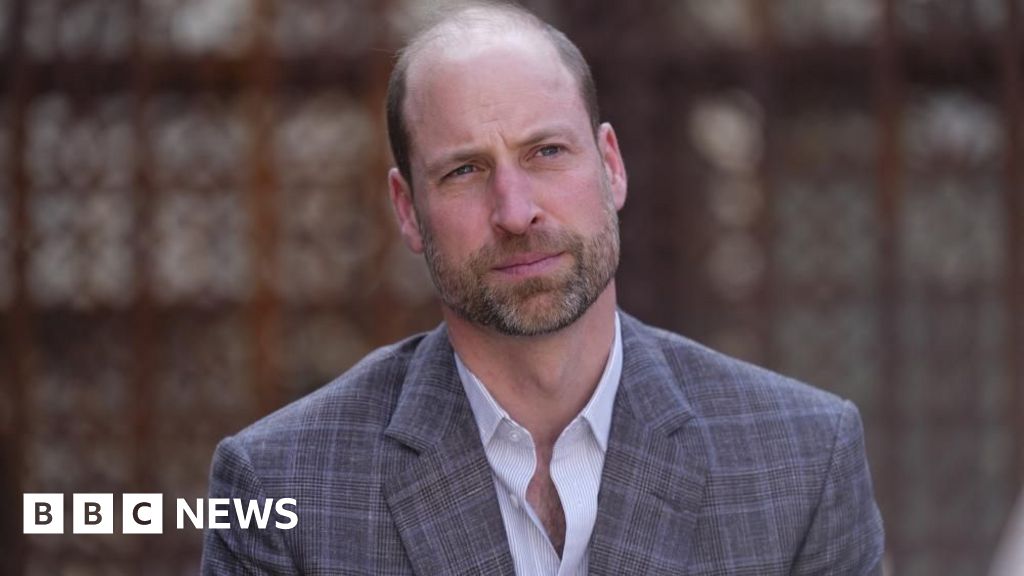
The aide said of the prince: “As he looks ahead to the responsibilities he will one day assume as Supreme Governor, he is keen to build a strong and meaningful bond with the Church and its leadership, one that respects tradition while speaking to a modern Britain, and reflects his broader belief that institutions must continue to remain relevant and connected to the people they serve.
For decades, mole catchers in the countryside have hung their carcasses on fences to be counted for payment and as evidence of their trapping prowess. But when hill walker Simon Lucas shared a photograph of the tradition on social media, he was unprepared for the ferocity of the response.
Viv Rollo is attempting to trace her father’s historically significant ring after it was lost or stolen.
Neil Pooran and Ewan Mowat Deputy Lifestyle, Trends, & Showbiz Editor
00:01, 23 Mar 2026
A “hidden” fragment of the Stone of Destiny was set into a ring which was lost or stolen shortly afterwards, it has emerged. The pieces of the historic rock were separated from the artefact in 1951.
The daughter of the ring’s previous owner is now appealing for help in tracking down what she says could be a precious family heirloom. Viv Rollo’s father David was gifted part of the ancient stone following the famous raid in which a group of nationalist students took it from Westminster Abbey and returned it to Scotland.
Advertisement
The Stone of Destiny broke in two during the daring heist and it was repaired in secret by a supportive stonemason called Bertie Gray. A research project recently revealed Mr Gray’s work may have resulted in around 34 fragments of the original Stone of Destiny.
These were distributed by Gray to people around the Scottish nationalist movement. One ended up at the SNP’s headquarters after being gifted to Alex Salmond.
David Rollo is believed to have been gifted one of the fragments in 1951, which he had set into a ring. He was good friends with Gavin Vernon, one of the four students who took the stone from Westminster Abbey, after they shared a flat as students in in Glasgow.
Mr Rollo died in 1997, aged 70, and his daughter Vivienne is now trying to unravel the mystery of the ring’s fate. Her father left few clues as to what became of it, and only told her the ring was either lost or stolen and that he had an idea of who had it – but he would not name the person he suspected.
Advertisement
Ms Rollo, who lives in Wester Ross, told Press Association: “I would definitely like to know what happened to it. It would be such a thing to have as a family heirloom.”
She said she believes Mr Vernon had asked her father to join him in the fateful Christmas Day heist at the end of 1950, but he declined to take part.
“I’m pretty sure Gavin asked my dad if he wanted to come along for this,” she said. “My dad said ‘don’t be daft, you’ll never do it’.”
Advertisement
Mr Rollo was called in for questioning by police in the days after the raid, as the authorities tried to recover the Stone of Destiny.
He told the police nothing and was not directly involved in hiding the artefact before it was later found by police at Arbroath Abbey in April 1951. However in a strange coincidence, Mr Rollo shared a surname with a man who did hide the Stone – John Rollo.
Ms Rollo said: “There must have been about 100 people who knew [about the stone], but they all kept quiet.”
Advertisement
Mr Gray’s work is thought to have resulted in at least 34 fragments of the Stone of Destiny, which has been associated with the crowning of Scottish and UK monarchs for centuries.
Ms Rollo, 70, said: “[My father] managed to get one of them and he said he got it made into a ring with a Celtic design. He said he knew who had taken it but he couldn’t prove it. Obviously you wouldn’t want to accuse one of your friends about something like that.”
Mr Rollo was well-known among the group of nationalist students involved in the Christmas Day raid – the parties at his house were famous and even immortalised in a song called The Lane Outside Dave Rollo’s Door.
He was tight-lipped around exactly who gave him the fragment or what may have become of it. He got married in 1956 but did not have the ring in his possession at that point. The ring is likely to be made of silver or a similar metal and has a Celtic design with three points.
The missing ring is one of several stories which have emerged as a research project seeks to document the fate of the fragments from the sandstone block, which were considered “hidden” for many years.
Advertisement
Professor Sally Foster of Stirling University has been working to trace the stories of the fragments. She is still keen to hear from people who may have knowledge of the whereabouts of the pieces.
“I treated every call as a privilege, even the most horrible and gruesome ones, I was the one to go in there to try and help”
A semi-retired paramedic has written a memoir on his experiences of working on the front lines of the Troubles.
Advertisement
North Belfast Blues by Brendan Magill details his journey from a troubled childhood where dead bodies would be left in his neighbourhood, to returning to those same streets as a paramedic, helping those most in need.
Through a turbulent upbringing on Adela Street and the New Lodge, the now 61-year-old was shaped by the things he saw at such an early age. He told Belfast Live he was “terrified of death”.
He said: “I was forced to deal with death at a young age and where we lived on that corner of north Belfast, we had a couple of bodies dumped in our street.
“When I was growing up, it felt like if it wasn’t on the news, it was on your doorstep. During those early years in the Troubles, I was hounded by death.
Advertisement
Magill has previous experience in writing, including children’s novels to encourage them to learn first aid. But it was in writing North Belfast Blues that he discovered a therapeutic experience, even if he didn’t originally intend for it to be that way.
He continued: “The only way I could do my story was to deal with the calls I faced as a paramedic, but when I started chronicling them, they reminded me of similar incidents from when I was a kid, and it became a form of therapy for me.”
“Before I started writing I would have said my childhood would have been very unhappy.
“After writing, I rediscovered that there were good things, like when I went out with my dad, or playing football despite the hassle we had. I realised we tried to make the most of things, despite the horrible backdrop of the Troubles.”
Advertisement
Through the tough years of childhood, Brendan admits there was an element of trauma, something he “buried through his teenage years”.
“It wasn’t until I was dealing with the deaths in the ambulance service that I was forced to look back.
“When you go to so many sudden deaths and murders, you can’t help but go and look back at your childhood. It didn’t matter that I had tried to bury those experiences; they eventually came back around.”
The retired paramedic never had any desire to join the ambulance service while growing up, and in his early twenties, Magill roamed aimlessly from job to job searching for a purpose.
Advertisement
It was one morning on his way to work when everything changed for him.
“I heard sirens behind me walking up the Dublin Road in a suit, to a job I didn’t want to go to. I looked around and it was a fire engine. Everyone’s heads turned to see what was going on, and I imagined what it would be like to do that job, to put on a uniform and have a sense of responsibility.
“That night I saw an advertisement in the Belfast Telegraph for the ambulance service, and that was it.”
Advertisement
After working in the ambulance service for 37 years, with many of those being during the Troubles, the retired paramedic has seen a lifetime of hardship.
He was one of the first on the scene for the Sean Graham Bookmakers shooting, in which five people were murdered and nine were injured.
“One shift, I was called to Dan’s Bar on Roden Street, where the INLA had killed two people. Then two hours later on the same shift, we were called to another shooting, where a Catholic had been killed.
“It really showed the brutality of what was happening on a daily basis. Tit-for-that, retaliation killings.”
Advertisement
Despite the challenging aspects of his job, Magill still found an identity within the Ambulance Service, and for the first time in his life, he had a purpose.
He continued: “When you’ve dealt with so much trauma and fear in your life and no one was helping you, it’s a privilege to walk into someone’s house as a paramedic, when they are at their worst moments in life, and offer some form of comfort.
“It’s nice to be able to go in and help people when you weren’t getting any help yourself.
Advertisement
“I loved wearing the uniform and the respect you got from it. I treated every call as a privilege, even the most horrible and gruesome ones, I was the one to go in there to try and help.
“I’m under 5ft 6ins and was always called shorty and that’s how I’ve felt most of my life. But when you put that uniform on and walk into someone’s house when there’s mayhem happening, you feel like the biggest person in the room. When I put that uniform on, I’m not small anymore.
“That uniform and call gives you a sense of purpose, and all of a sudden that height doesn’t matter.”
Brendan’s novel, North Belfast Blues is available now as an e-book on Kindle, with a physical copy expected in April.
The tower was lived in by an Italian religious figure
A tiny tower in Cambridge was once gifted to and lived in by Italians. History is all around in Cambridgeshire, with some historic buildings standing the test of time for hundreds of years.
Advertisement
One in Chesterton, known as Chesterton Tower, is a building that’s stood since the mid-14th century in Chapel Street.
This tiny tower was built in a gothic style. In 1227, Chesterton Church was gifted by Henry III to an abbey in Vercelli, northern Italy.
This was given as a thanks for the cardinal’s help in preventing a civil war. A procurator, who was most likely a canon of the abbey, lived in the tower.
It’s believed the procurator would have watched over affairs of the area. In 1440, the tower’s ownership then changed hands, as Henry VI gave the buildings to King’s Hall in Cambridge. King’s Hall later became Trinity College, as named by Henry VIII.
Advertisement
In 1949, the tower was fully restored and today it is now used as offices. It also stands in the former vicarage garden of nearby St Andrew’s Church.
The tower is made up of two storeys. It was built from field stones, clunch, brick and ashlar quoins. Inside, there are vaulted ceilings, a spiral staircase and garderobe, making it a home. It also includes original windows and old fireplaces.
The UK has inadequate means to stop ballistic missiles fired from Iran, military experts have warned – although they also voiced doubts over Iran’s capability and its desire to carry out such a strike.
British defences lack the ability to shoot down ballistic missiles, they have claimed, and the systems that they do have are out at sea, and in numbers too small to be fully effective.
The base on the Chagos Islands is 3,800km (2,360 miles) away from Iran, further than previous estimates on the range of Iran’s missiles.
Advertisement
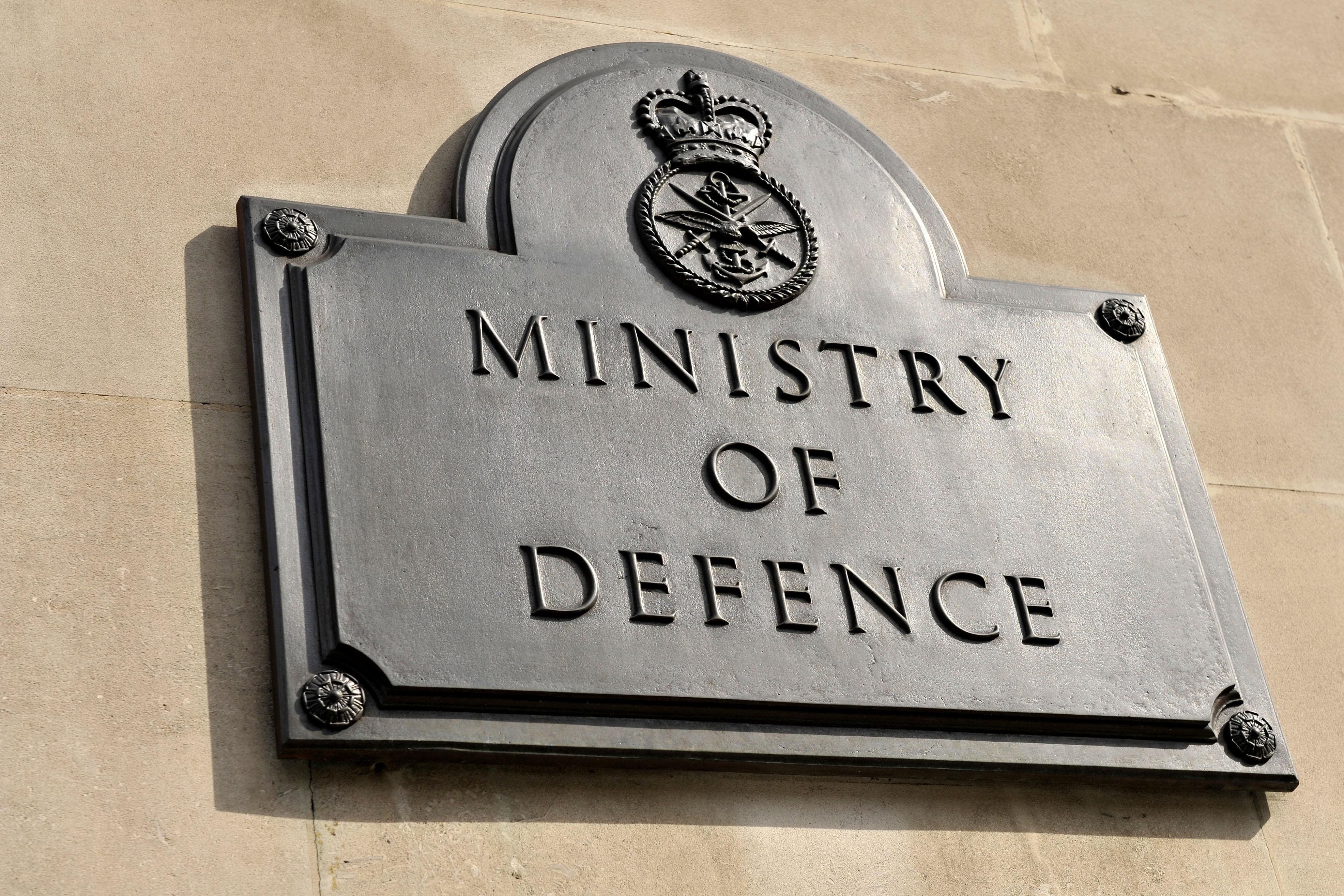
On Sunday morning, senior government minister Steve Reed stressed that Britain was safe, as he called Israel’s threat exaggerated and an attempt to garner support for the war. Hours later, a Ministry of Defence (MoD) spokesperson doubled down on Mr Reed’s comments, stating that the country had the resources to “keep the United Kingdom safe from any kind of attacks”.
However, some military experts have suggested that Britain could be left vulnerable if Iran did have the capacity to strike.
Professor Michael Clarke, who was director general of the Royal United Services Institute think tank, told The Independent: “Could Britain defend itself against ballistic missiles coming from anywhere, whether it’s Russia or Iran? The answer is absolutely no. We have nothing.”
The UK has six Type 45 destroyers (UK MOD Crown copyright)
The only line of defence the UK had was its Sea Viper systems, he said, which are carried on the Royal Navy’s Type 45 destroyers and can counter ballistic missiles. One of the six destroyers, the HMS Dragon, has been ordered to Cyprus, while three others are in port and are effectively non-operational, Mr Clarke added.
However, Britain, as a member of Nato, is protected by the organisation’s Ballistic Missile Defence (BMD) system, which includes sites in Poland and Romania. It also features four US Navy destroyers, which are better equipped than the Type 45 destroyers and can intercept the missiles.
Advertisement
Matthew Savill, director of military sciences at the Rusi think tank, told The Times: “If launched towards the UK, this is what Nato’s BMD is designed for. The UK isn’t actually defenceless against a threat launched from Iran.”
Speaking on Sky News’s Sunday Morning With Trevor Phillips programme, Mr Reed said: “We have systems and defences in place that keep the United Kingdom safe, and that will continue to happen.”
The housing minister refused to say how close Iranian missiles had come to Diego Garcia, but said the fact that one was intercepted and the other failed shows “that our defensive capabilities are correct”.
Britain could be unable to defend itself against an attack from Iran, experts have said (AFP/Getty)
Mr Clarke also said he was doubtful Iran had the missile range to reach the UK. “I’m not sure they could have reached Diego Garcia. We don’t know. The fact that they tried, it may have been just a political gesture,” he said.
Retired Brigadier Ben Barry, who was formerly a Nato commander and director of the British Army Staff, described the UK’s defence system as “not adequate” against the threat of weapons such as ballistic missiles, if they reached the country.
Advertisement
He told The Independent: “UK’s ability to counter ballistic missiles, cruise missiles and drones, is not adequate to protect the UK homeland, and it’s not clear that it’s adequate to protect UK troops deployed overseas where there’s a considerable threat.
Diego Garcia was targeted by Iran this week (DOD/AFP via Getty Images)
“If an enemy had ballistic missiles that were capable of reaching the UK, just having three ships would mean protection was pretty minimal. One could sit in the Thames covering London, but there’d be hard choices about what to do with the other two.”
Mr Barry, now a member of the International Institute for Strategic Studies, said that if Iran were to attack the UK, the defence force would have “the option of attempting to attack missile launchers. But to do that, it would effectively have to join the war along with the US and Israel. So far, the UK has said it supports only defensive action in the conflict.
“You could argue that it would be preemptive self defence, but in practice, to coordinate RAF aircraft looking for missile launches with Israeli and US aircraft, it would be very risky to do that unilaterally,” he said.
The Ministry of Defence said it has the resources available to defend Britain (PA Wire)
An MoD spokesperson said: “We have the resources we need to keep the United Kingdom safe from any kind of attacks, whether it’s on our soil or from abroad. The UK stands ready 24/7 to defend itself.
“The UK operates a layered approach to air and missile defence, provided by Royal Navy, British Army and Royal Air Force assets equipped with a range of advanced capabilities, working in tandem with our Nato allies.
Advertisement
“This government has prioritised the need for air and missile defence for UK national security after years of underfunding, and that is why last June, following recommendations in the Strategic Defence Review, we announced up to £1bn in new funding to improve air and missile defence and keep the UK secure.
“This includes a new £118m contract announced last year to deliver six state-of-the-art Land Ceptor missile systems, which as part of the Sky Sabre system can hit a tennis ball-sized object travelling at twice the speed of sound.”
SAN DIEGO (AP) — Dylan Darling hit a driving layup as time expired for his only bucket of the game, and St. John’s advanced to its first Sweet 16 since 1999 with a 67-65 victory over Kansas in the NCAA Tournament on Sunday.
Darling, the Johnnies’ tenacious point guard, coolly won it after Kansas (24-11) erased a 58-45 deficit with 7 1/2 minutes to play, making a furious 20-7 run capped by Darryn Peterson’s two free throws to tie it with 13.1 seconds left.
The Jayhawks had four fouls to give, and they used all four to wind the clock down to 3.9 seconds. That was plenty of time for Darling, the Idaho State transfer who had missed his four previous shots.
Darling got the ball up top and drove the lane for a shot that banked in as time expired. His teammates tackled him in front of the St. John’s band in celebration.
Advertisement
Zuby Ejiofor and Bryce Hopkins scored 18 points apiece for the fifth-seeded Red Storm (30-6), who have roared back to college basketball prominence in just three seasons under coach Rick Pitino.
St. John’s advanced to face No. 1 overall seed Duke in the East Region semifinals in Washington.
The 73-year-old Pitino and 63-year-old Bill Self coached against each other for only the second time in the Hall of Famers’ decades-long careers, meeting for the first time in March Madness. They’re two of the three active coaches with multiple national titles, and now Pitino still has a chance to claim his third.
With Kansas transfer Ejiofor leading the way, St. John’s has won 21 of its last 22 games since early January, capped by the Johnnies’ second and third NCAA Tournament victories in the past quarter-century this weekend.
Advertisement
St. John’s won the Big East regular-season and tournament titles during its surge, and this Red Storm haven’t eased up a bit.
Peterson scored 21 points and Melvin Council Jr. had 15 points and nine rebounds for the fourth-seeded Jayhawks, who still haven’t returned to the Sweet 16 since they claimed Self’s second national title in 2022. After Kansas ended Arizona’s unbeaten season in a landmark victory on Feb. 9, the Jayhawks subsequently lost six of their final 11 games.
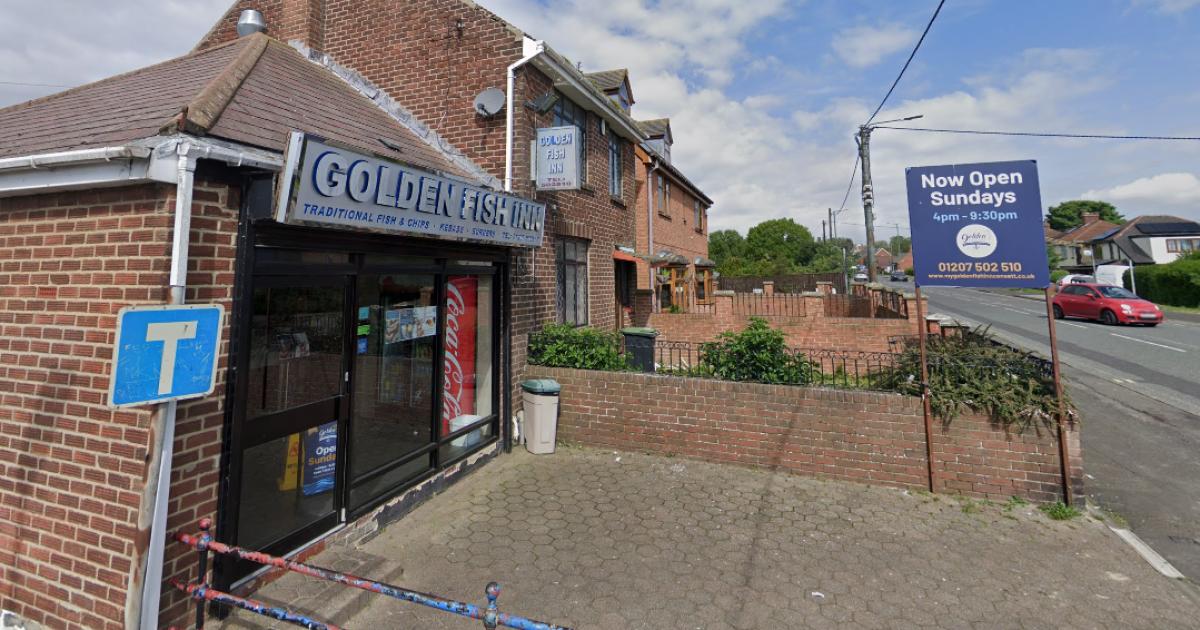
Sharing the latest progress, the business said: “From the original drawings to where we are today, the transformation is well underway, and we’re now around 80 per cent complete on the externals.”
The Consett chippy shared pictures of its planned expansion online. (Image: Golden Fish Inn)
The next phase of the project will focus on installing a new shopfront and completing the block paving in the drive area, with both expected to be finished in the coming weeks. After that, attention will turn to structural changes inside the property.
The update continued: “The new shopfront and block paving drive area will be going in over the next few weeks… and then it’s time for the knock-through!”
Advertisement
Internal works are set to follow, as the takeaway prepares for a relaunch that will include a refreshed offering for customers.
The business added: “Next up: the internal works. We can’t wait to share our brand new menu with you! Golden Fish Inn 2.0 Coming soon!”
Earlier plans revealed the refurbishment and extension would almost double the size of the long-standing chippie, which has operated with limited space for two decades.
Advertisement
A spokesperson previously said: “We’ve had limited space for the last 20 years. More equipment will make it easier for our staff.”
They also confirmed ambitions to broaden the menu, adding: “We are looking to expand our menu too and include pizzas and smash burgers.”
The original announcement drew strong support from the local community, with residents welcoming the investment and looking forward to the upgraded facilities and expanded food options.



















































You must be logged in to post a comment Login