
News Beat
Trump was ‘most culpable’ for Jan 6 riot and would have been convicted in court, Jack Smith told Congress

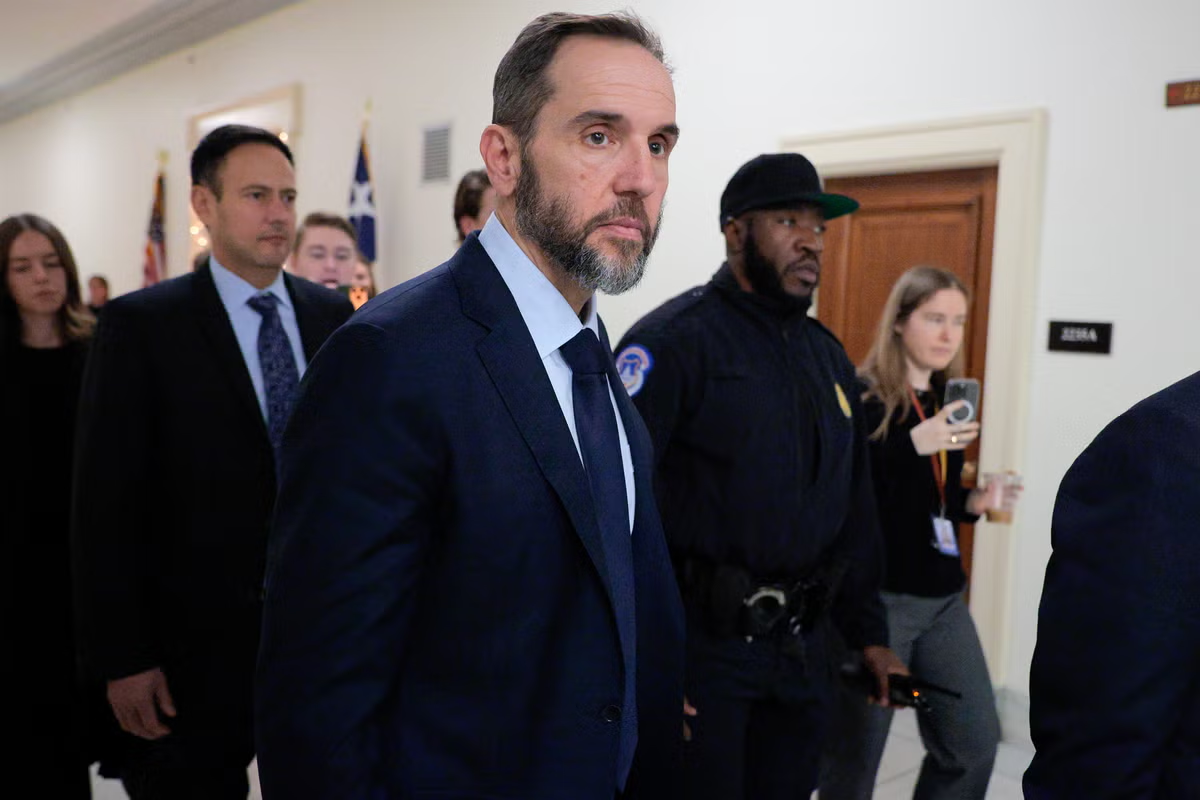
Donald Trump was “most culpable” for the January 6 riot and would have been convicted in court had the case gone to trial, according to explosive testimony from former special counsel Jack Smith, released Wednesday afternoon by the House Judiciary Committee.
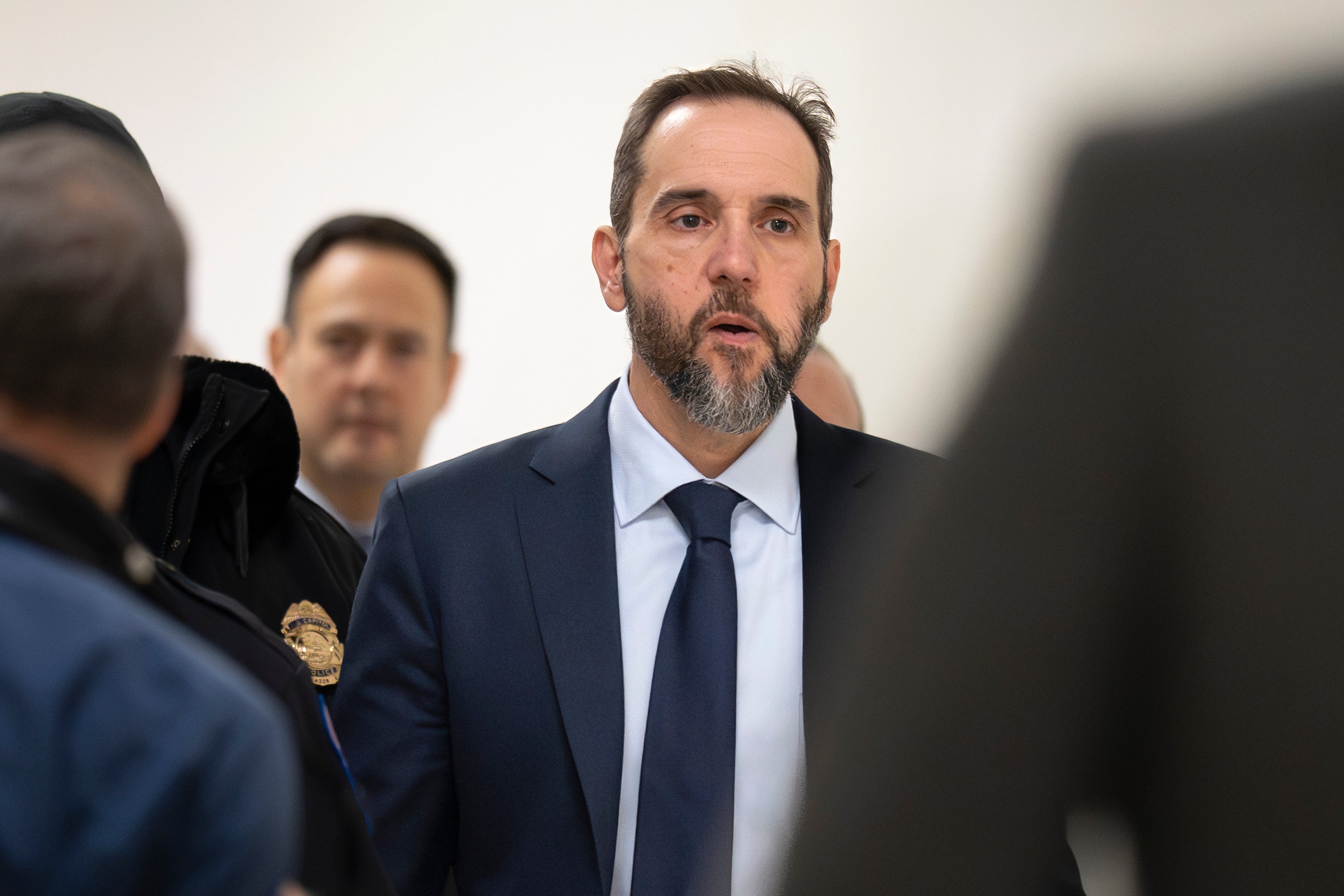
Smith led both Justice Department prosecutions of Trump: the first over the January 6, 2021 attack on the U.S. Capitol by his supporters after he lost the 2020 election, and the second over his alleged concealment of classified materials at his Mar-a-Lago club in Florida. He testified before the Judiciary panel in a closed-door session earlier in December as the committee investigates whether Trump was politically targeted by the Justice Department under Attorney General Merrick Garland and President Joe Biden.
Trump’s 2024 election victory ended the DOJ effort to hold him criminally liable. Many experts and Democrats in Congress grew frustrated with the Biden administration as a result of the DOJ’s year of delays before it directly confirmed it was investigating Trump for the attack on the Capitol; he was not indicted until August of 2023 on the election charges.
Among the revelations in the 225 pages of Smith’s testimony were:
- Trump’s actions “without question” added to the danger faced by his Vice President Mike Pence, who was in the Capitol during the riot and was targeted by Trump’s supporters, some of them chanting “Hang Mike Pence”;
- The Supreme Court’s ruling on executive immunity was not an affirmation in Smith’s opinion that the president’s conduct leading up to January 6 was legal;
- Smith’s case relied heavily on the testimony of Republicans who “put their allegiance to the country before the party”;
- The president’s demand that Georgia officials “find” more than 11,000 votes was seen by Smith as evidence of criminal intention;
- Smith had “no doubt” that the president sought political retribution against him for filing the cases.
Throughout his 2024 campaign, Trump argued that he’d done nothing illegal and that the prosecutions were political efforts to punish him and prevent his return to the White House.
Smith told the committee that he believed he could have obtained a conviction in what was seen by many as the most serious of the charges: Conspiring to deny Americans a free and fair election by pushing to overturn the 2020 election.
“Our investigation developed proof beyond a reasonable doubt that President Trump engaged in a criminal scheme to overturn the results of the 2020 election and to prevent the lawful transfer of power,” said Smith.
The former special counsel said he relied heavily on the testimony of Republican state officials for his case, similar to the investigation headed up by the bipartisan House January 6 committee in 2021.
“President Trump was by a large measure the most culpable and most responsible person in this conspiracy. These crimes were committed for his benefit. The attack that happened at the Capitol, part of this case, does not happen without him,” Smith told the lawmakers.
Smith’s office also oversaw the investigation into Trump’s allegedly illegal retention of White House documents at Mar-a-Lago, for which he was also criminally charged.
Trump wrote in a Truth Social post Sunday shortly after the committee’s release of Smith’s testimony that Democrats were “cheaters,” and attacked the party for not suppoting voter ID. He has long claimed that the efforts to prosecute him for the January 6 riot amounted to weaponization of the Justice Department against him by Joe Biden.
“The Democrats are a bunch of cheaters and thieves that never want to do what’s good for America. As an example, they refuse to even consider Voter Identification. Why??? Because they want to cheat, and the Republicans should not put up with this, and many other such things, any longer!!!”
The president continues to regularly insist that the 2020 election was stolen, including recently during a press conference with Ukrainian President Volodymyr Zelensky.
Pressed by Republicans to accept that the president’s statements were merely voicings of opinions protected by the First Amendment, Smith insisted in turn that Trump crossed a line by reaching out to public officials and asking them to do his bidding, as was the case in the infamous call between Trump and Georgia’s secretary of state, Brad Raffensperger, who was asked by the president to “find” more than 11,000 votes necessary to change the results in that state.

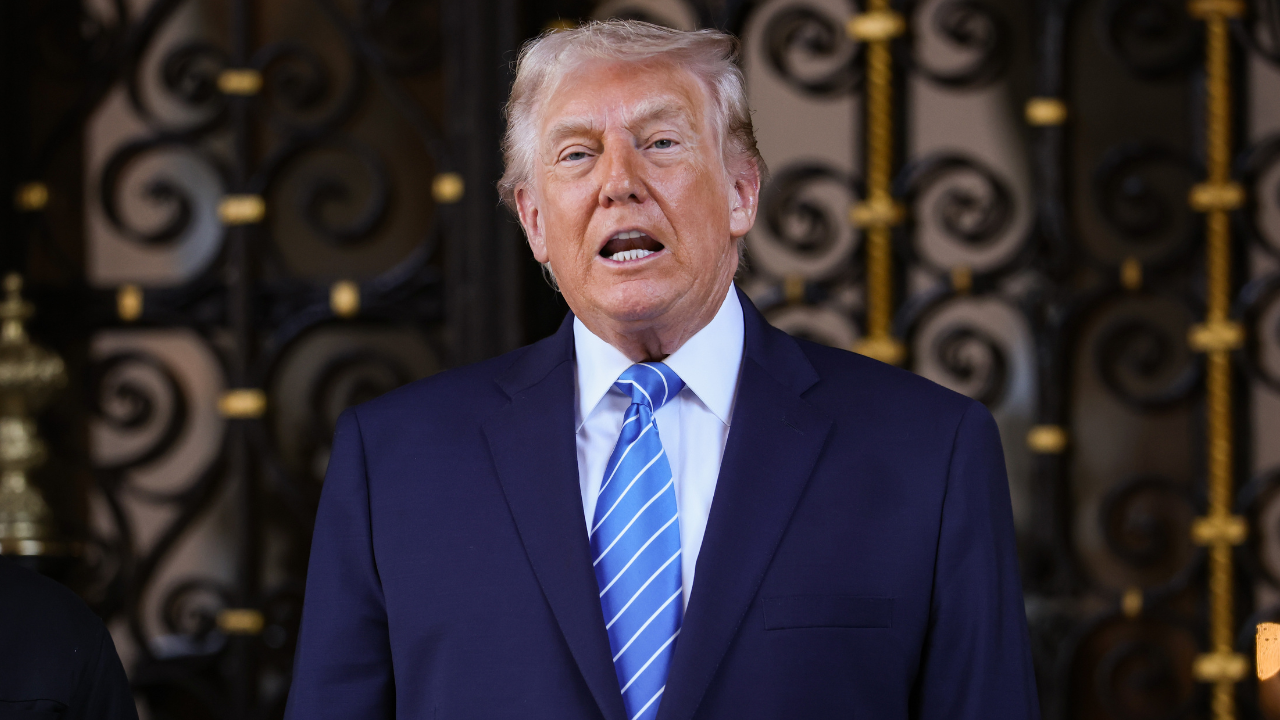
“As we said in the indictment, he was free to say that he thought he won the election. He was even free to falsely say he won the election,” said Smith. “But what he was not free to do was violate federal law and use knowingly false statements about election fraud to target a lawful government function.”
“Our view of the evidence was that he caused [the Jan. 6 riot] and that he exploited it and that it was foreseeable to him,” added Smith.
The riot on January 6 lasted for several hours as Trump initially refused, according to the House Jan. 6 investigation, to issue a video statement calling on his supporters to leave the vicinity. The president initially said that he would join the rioters at the Capitol, following a speech in front of the White House where Trump once again accused Republicans and Democrats alike of participating in election fraud.
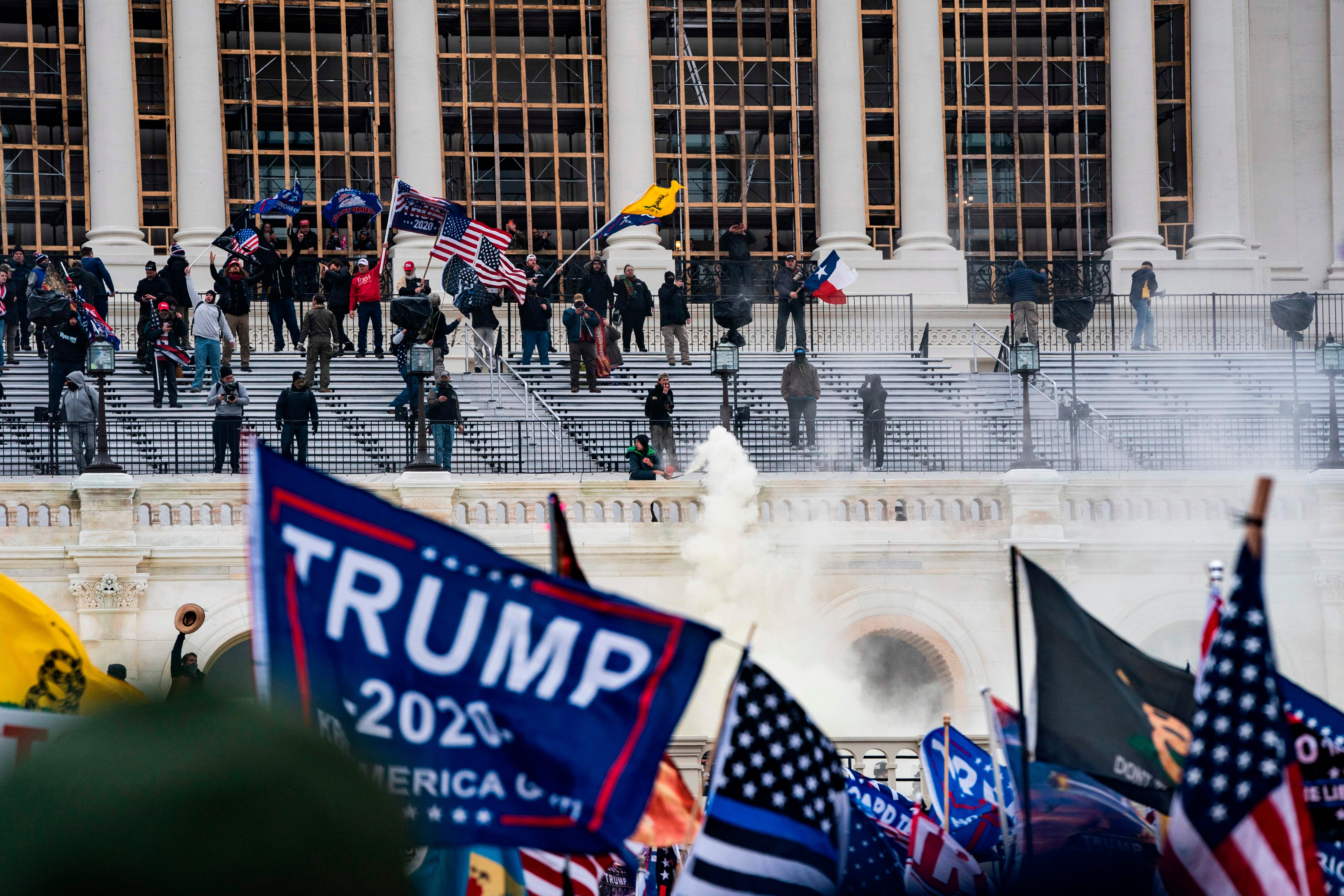

The massive crowd descended on Capitol Hill from the White House and besieged it for several hours, battling with police and injuring dozens of officers. Perimeters were breached and protesters stormed the building, chanting out calls for violence against top officials including the vice president and then-Speaker of the House Nancy Pelosi, while defacing the building.
Lawmakers huddled in secure areas and in once case were barricaded inside the main chambers as rioters attempted to break down the door, leading to the death of one protester.
Smith refuted claims repeatedly made by Republican members of Congress after the attack that it was peaceful in any way.
“There were people who certainly had weapons at the Capitol,” Smith said. “That I recall with certainty. And there’s people who used weapons, whether they be poles or sticks or other weapons, against police officers. I know there was one officer who they took his gun. And so the use of weapons against members of law enforcement, it was outrageous.”
Even in the hours after the attack, the president was actively trying to convince members of the U.S. Senate to delay certification of the election, according to Smith. He cited testimony from Trump ally Boris Epshteyn, who told the DOJ that the White House was working to contact senators such as Lindsey Graham throughout the evening.
Smith went on to say that he was still considering charging other co-conspirators in the election conspiracy case when Trump won the election, making it a moot point.
The special counsel’s office was shut down and Smith resigned from the department in January of 2025, ten days before Trump took office. DOJ policy prohibits the agency from investigating or prosecuting a sitting president. Shortly after Trump’s inauguration several lawyers who worked with Smith’s team were fired from the agency.



