
News Beat
UK government set to introduce new rule for drivers over 70

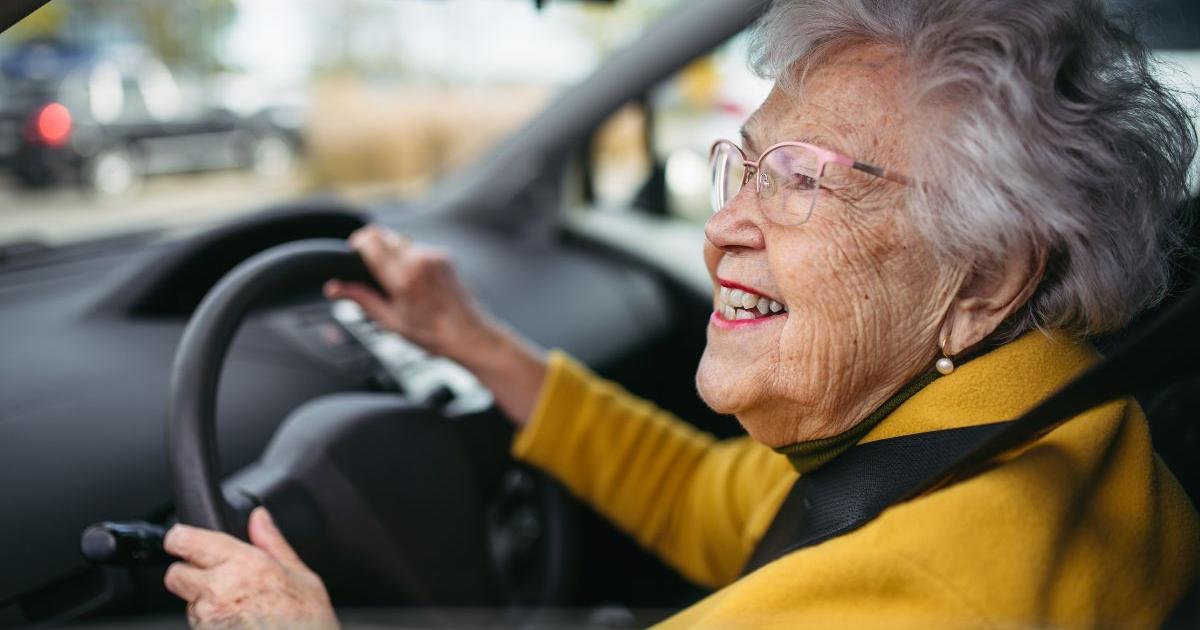
Currently, motorists are not subjected to obligatory checks of their skills or health once they obtain their licence, no matter how old they become.
However, they are required to inform the Driver and Vehicle Licensing Agency (DVLA) if they are no longer fit to drive.
Officials hope the move will boost the road safety of older drivers without unnecessarily restricting their mobility and personal freedom.
What’s that one tip that really helped you pass your practical driving test?
The one thing that made you think, ‘This made a difference’?
Drop your best advice!#DrivingTips pic.twitter.com/t4BqC5fprn
— Driver & Vehicle Standards Agency (@DVSAgovuk) December 31, 2025
The first road safety strategy in more than 10 years aims to reduce deaths and serious injuries on Britain’s roads by 65% by 2035, and by 70% for children under 16.
It comes as around 24% of all car drivers killed in 2024 were 70 or older, and 12% of all casualties in car collisions involved older drivers.
Lilian Greenwood, local transport minister, said: “We know driving can be very important for older people’s wellbeing and help them to live independently, but we must also make sure everyone is safe on our roads.
“As the country’s older population grows, our plans in the first road safety strategy in more than a decade will preserve personal freedoms where possible with action to save lives.”
With nearly six million over-70s on the road across the UK, and numbers increasing each year, an eye clinician has warned current figures could get worse if action isn’t taken now.
10 Obscure driving laws you may not know
Eye doctor says proposed mandatory eye tests for over-70s are ‘vital safety measure’
In response to the road safety strategy measure, vision and eye health expert Dr Stephen Hannan has highlighted how age-related vision decline can happen sooner and more subtly than many people expect.
Dr Hannan, clinical services director at Optical Express, commented: “With the government now considering tougher rules for over-70s, it’s more important than ever that older motorists take their eye health seriously.
“Regular vision and health tests should be seen as every bit as essential as an MOT or insurance.
“You might think your eyesight hasn’t changed – but from your 40s onwards, the eye is already ageing.
“The lens inside your eye becomes stiffer and less flexible, making it harder to focus on close objects. Over time, this can lead to cataracts, where the lens clouds and scatters light.”

Dr Hannan continued: “As we age, contrast sensitivity declines – making it harder to spot hazards like a grey car on a rainy day.
“The pupils shrink and let in less light, making night driving tougher. Peripheral vision narrows, and the eyes take longer to adapt between light and dark. All of this can affect your safety on the road.
“The danger is that these changes happen slowly, so people don’t realise their vision has slipped – sometimes until an accident happens.”
Dr Hannan also believes mandatory eye tests for over-70s are a “vital safety measure”.
The Optical Express expert continued: “But the truth is, age-related sight changes often start long before that. The earlier we detect them, the easier they are to fix, and the longer people can keep driving safely.
UK speed limits explained
“Age-related sight changes can start years before you turn 70, and early detection allows for simple interventions that can restore safe vision and keep people driving for longer.
“An eye test is quick, painless, and often life-benefiting. Sometimes it’s as simple as updating your prescription or treating cataracts. That small step could make the difference between safe driving and a serious accident.”
What are the eye test requirements for driving in the UK?
The government explains that the standards of vision for driving are: “You must be able to read a number plate from 20 meters away (about the length of 5 parked cars). You can wear your glasses or contact lenses if you use them for driving.
“You must also meet the minimum eyesight standard for driving by having a visual acuity of at least decimal 0.5 (6/12) measured on the Snellen scale (with glasses or contact lenses, if necessary) using both eyes together or, if you have sight in one eye only, in that eye.
“You must also have an adequate field of vision – your optician can tell you about this and do a test.”
At the start of your practical driving test you have to correctly read a number plate on a parked vehicle.
Recommended reading:
“If you cannot, you’ll fail your driving test and the test will not continue. DVLA will be told and your licence will be revoked,” the government states.
“When you reapply for your driving licence, DVLA will ask you to have an eyesight test with DVSA.
“This will be at a driving test centre. If you’re successful, you’ll still have to pass the DVSA standard eyesight test at your next practical driving test.”



