Connect with us

NewsBeat

US-Iran talks are not a countdown to conflict

Published

on

US-Iran talks are not a countdown to conflict

When Iranian and US officials met for talks in the Omani capital of Muscat on February 6, many journalists and analysts were speculating as to whether diplomacy will fail and whether war will inevitably follow. But that framing misses the deeper reality of this moment. The more important question is why both sides have returned to the negotiating table at all, despite years of hostility, sanctions, proxy conflict and open threats.

The anxiety that has surrounded the talks is understandable. Washington warned its citizens to leave Iran hours before the talks took place, fuelling speculation about military strikes. US officials outlined sweeping demands that go far beyond wanting to curb Iran’s ambition to possess nuclear weapons. And recent history offers no shortage of examples where negotiations have collapsed into violence.

But treating the talks as a countdown to conflict misunderstands diplomacy and the balance of power in the Middle East today. Negotiations are not a single test of resolve, nor a one-off gamble on peace. The talks in Oman were not a final reckoning but an opening move. They reflect a shared recognition in Washington and Tehran that 15 years of coercion, pressure and force have failed to produce decisive outcomes, and that escalation now would be vastly more dangerous than before.

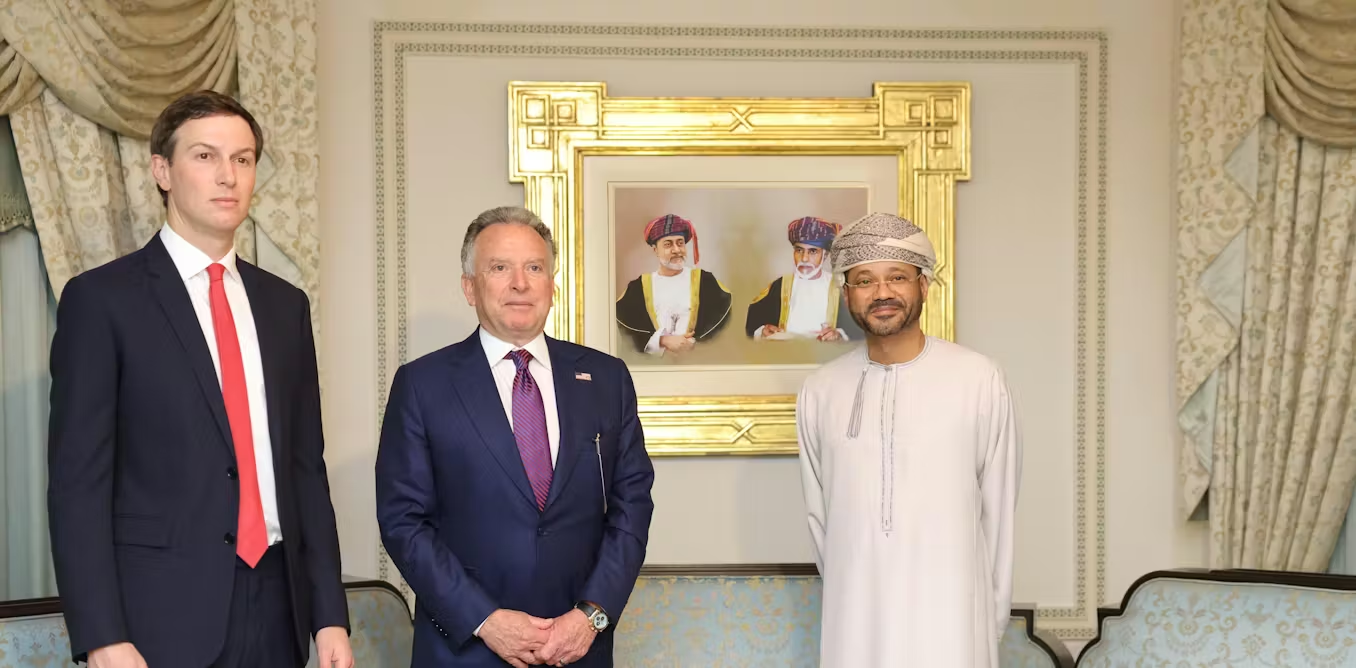
Iran’s foreign minister, Abbas Araghchi, arrives in Muscat for talks with the US on February 6.
Iranian Foreign Ministry / EPA

As diplomacy scholar Geoffrey Berridge has long argued, the first stage of any serious diplomatic process is the establishment of common ground on key points. Only once this groundwork is laid can substantive negotiations begin. The talks in Oman should thus be understood as an opening phase rather than a decisive round.

Advertisement

The purpose was to clarify positions, communicate red lines and test whether a workable diplomatic pathway exists. Iranian officials described the atmosphere as constructive, noting that the two sides communicated their concerns and views through their host, Oman’s foreign minister Badr Albusaidi. This is precisely how diplomacy begins, not how it ends, and Iranian and US officials have both subsequently called for talks to continue.

For Tehran, engaging a US delegation in talks is significant. Iran has consistently sought recognition as a legitimate regional player rather than a state to be coerced or isolated. The willingness of Iran’s foreign minister, Abbas Araghchi, to attend the talks personally signals how seriously Iran views this moment and how invested it is in a diplomatic outcome that confers mutual respect.

For Washington, the incentives are equally clear. Over the past 15 years, the US has applied nearly every available tool of pressure against Iran. These have included sanctions, cyber operations, targeted strikes, the killing of senior Iranian figures, the degradation of Iran-aligned groups across the region and direct support for Israel during its brief 2025 war with Iran. Yet none of this has delivered regime change, capitulation or lasting regional stability.

Sanctions have devastated the Iranian economy and Tehran’s regional network has been weakened. Hezbollah has faced mounting pressure and economic strain in Lebanon, Hamas has been severely battered in Gaza and Houthi forces in Yemen have been constrained by international military patrols. Even so, Iran’s core political system remains intact.

Advertisement

Domestic unrest has also failed to produce collapse. Recent protests, met with intense and often violent repression, did not topple a regime that has been deliberately built to survive external pressure since 1979. This highlights a central paradox: Iran may be weaker than at any point in recent decades, but it is not as fragile as many external observers assume.

Washington’s negotiating position

Statements from US officials insisting that talks should encompass Iran’s ballistic missile programme, its regional alliances and its domestic governance represent the high end of any negotiating position.

This is not unusual. In diplomacy, opening demands are often maximalist by design. They are intended to create leverage rather than define an achievable endpoint, something the US president, Donald Trump, is known for. The risk lies in treating these demands as simultaneously attainable.

From Tehran’s perspective, these issues are not equivalent. Iran has consistently signalled that nuclear weapons are the only area it is prepared to engage meaningfully over. This is because its nuclear programme has already been internationalised through treaties, inspections and prior agreements.

Advertisement

Iran’s leadership has also repeatedly pointed to Supreme Leader Ayatollah Ali Khamenei’s religious decree declaring the production and use of nuclear weapons forbidden under Islamic law. Western policymakers are sceptical of the decree’s legal enforceability. But it nonetheless provides Tehran with an ideological framework that allows nuclear restraint to be framed domestically as principled rather than imposed from outside.

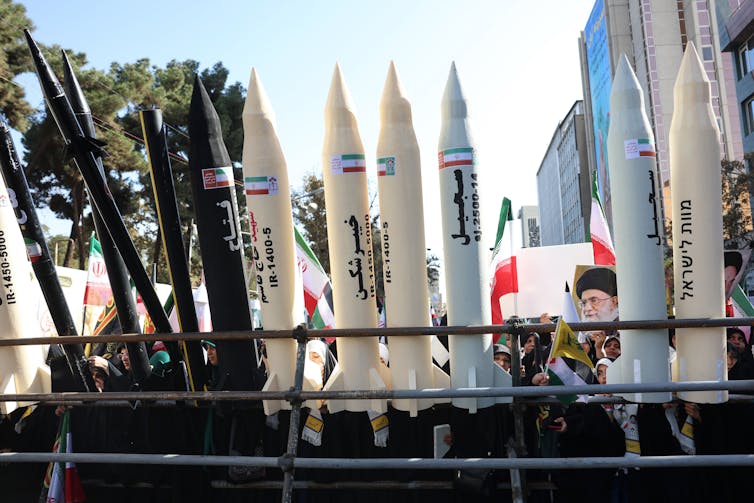
In contrast, Iran views the existence of its ballistic missile arsenal as non-negotiable. In a region where Iran faces nuclear-armed adversaries and an overwhelming conventional military imbalance, missile capabilities are central to its deterrence strategy. Likewise, Iran’s regional alliances are not simply tools of influence. They are an extension of this defensive posture that has been shaped by decades of war, sanctions and isolation.

Domestic governance is even more sensitive. No Iranian negotiating team could accept external constraints on how the Islamic Republic governs itself without calling into question the legitimacy of the system they represent. Attempts to fuse diplomacy with demands for internal political reform are therefore perceived not as bargaining positions, but as existential threats.

Bundling nuclear limits, regional retrenchment and internal transformation into a single negotiating framework thus risks overreach. Progress is far more likely through sequencing: addressing the nuclear issue first, building confidence through verification and reciprocity, and only then exploring narrower forms of deescalation elsewhere. Understanding this helps explain why talks can proceed despite sharp rhetoric and military signalling.
Advertisement
Iranians display a portrait of Ali Khamenei and mock missiles during an anti-US rally.
Iran views the existence of its ballistic missile arsenal as non-negotiable.
Abedin Taherkenareh / EPA

Mutual risk, mutual opportunity

Araghchi’s description of the talks in Muscat as a “good beginning” where both sides were able to convey their interests and concerns, as well as his subsequent expression of hope for further negotiations, suggests that diplomacy remains preferable for Iran. The same probably applies for the US.

Military intervention has rarely produced stable outcomes in recent Middle Eastern and North African history. The removal of Saddam Hussein in Iraq, Muammar Gaddafi in Libya and the collapse of state authority in Syria did not bring immediate peace or genuine democracy. They produced power vacuums, proxy wars, mass displacement and chronic instability.

Iran is larger, more institutionalised and more deeply embedded in regional dynamics than any of those cases. A conflict involving the Islamic Republic would be longer, more destructive and far harder to contain.

The real danger is not that diplomacy between Iran and the US will fail, but that it will be dismissed too quickly. Negotiations are incremental, often frustrating and rarely linear. But in this case, they may reflect the only viable strategy available to both sides.

Iran avoids an unwinnable war. The US avoids another Middle Eastern quagmire. And the region gains a fragile but vital opportunity to move away from permanent crisis. In that sense, the talks themselves may already represent the most meaningful progress possible.


Advertisement

Source link

Continue Reading
Click to comment

Leave a Reply

Your email address will not be published. Required fields are marked *

NewsBeat

Lottery winner threatened to petrol bomb and murder terrified family

Published

on

Daily Record

Jack Tanbini and Logan Hards, both 30, admitted carrying out a violent raid on a family home.

A lottery jackpot winner made threats to petrol bomb residents in their home and murder them and their relatives.

Advertisement

Jack Tanbini has been remanded in custody after he and his friend Logan Hards admitted carrying out a violent raid on a family’s home.

The duo were captured on CCTV as they launched a tirade of violent threats while kicking in the door of the property. A woman could be heard screaming from inside the property.

Hards, 30, and Tanbini, 30, are then seen fleeing from the flat in Watson Street, Dundee, with a bag of mystery items on November 25, 2024.

Tanbini, who scooped £100,000 from a winning scratchcard when he was a teenager, and Hards had sentence deferred by Sheriff Alastair Carmichael.

Advertisement

Both admitted making threats to kill the occupants and booting in the door of the property before taking items from within.

Fiscal depute Joanne Ritchie told Dundee Sheriff Court that the duo arrived in a car and parked outside before storming upstairs to a flat occupied by siblings.

The CCTV footage captured them saying “hear you are away to get murdered. If you dinnae chuck the money out the windae, you’re about to get petrol bombed. I’m going to kill your mum. Where’s the money?”

They tried and failed to kick the door in, before returning a short time later and successfully forcing their way into the flat at the second attempt.

Advertisement

Tanbini’s solicitor Jim Caird told the court the former lottery winner was currently serving more than five years in jail for a drug dealing charge.

“There’s no violence on his record,” Mr Caird said. “He is currently serving a very lengthy sentence. His liberation date is not until the end of 2029.

“The sentence he received has been absolutely life-changing as he had never been in prison before. A very hard lesson has been learned.”

Tanbini was jailed for five years and five months at the High Court in 2025 after he was caught being concerned in the supply of cocaine worth around £150,000.

In 2019, Dundee Sheriff Court heard how Tanbini was caught with around £1,000 worth of cannabis after being stopped by police for dangerous driving.

Advertisement

He admitted dangerous driving, failing to stop, driving without insurance and possession of cannabis – and told the court he had already blown most of his teenage lottery win.

Cash and carry apprentice Tanbini bought his £1 scratchcard when a shopkeeper refused to let him pay for crisps after he’d delivered his groceries.

He claimed he would use the windfall for driving lessons and to buy a car, but by 2019 his solicitor Jim Caird revealed Tanbini had spent almost every penny.

Mr Caird said: “He has had five years where he hasn’t had to work. He has something like £2,000 left.”

Advertisement

Source link

Continue Reading

NewsBeat

Control fears as DWP gets new power to access your bank account

Published

on

Wales Online

Banks will be required to hand account information to the DWP and even allow them to take money

The Department for Work and Pensions (DWP) must make sure it uses its significant new bank account checking powers proportionately because public trust is at stake, according to a spending watchdog. The Public Accounts Committee (PAC) highlighted how the DWP has been given powers to compel banks and other financial institutions to provide information to help verify a claimant’s eligibility and entitlement to benefits.

The Public Authorities (Fraud, Error and Recovery) Act 2025 gives the Department its new legal powers. The Department can force third parties to provide information when it is conducting criminal investigations, and in some cases recover money owed by people directly from their accounts without a court order.

But the PAC said the DWP has not fully set out how it will use its powers in a way that supports public trust. In a report, it is calling for the department to report in its annual report and accounts on how often it has used the powers given to it in the 2025 Act, and with what impact.

Advertisement

The PAC’s report said: “The department also needs to improve its processes and controls to stop overpayments arising in the first place and prevent losses to the taxpayer. A key element of this is drawing on data held by other government departments to help check claimants’ entitlement to benefits.”

The report also highlighted how the DWP has now committed that it will put right the cases of 26,000 carers incorrectly recorded as having overpaid carer’s allowance. The PAC’s inquiry heard that it will take around two years to identify all those affected, with 200,000 cases to be reviewed.

The PAC also said that people not receiving their full benefit entitlement as a result of not informing the DWP of a change in their circumstances is also a growing problem. Its report said: “Unfulfilled eligibility was estimated to be £3.7 billion in 2024–25, up from £3.1 billion in 2023–24. It particularly affects claimants of disability benefits, such as personal independence payment, who fail to report that their condition has worsened.”

The PAC said said the DWP should evaluate how well it is encouraging claimants to report changes in their circumstances. Sir Geoffrey Clifton-Brown, chair of the Public Accounts Committee, said: “Make no mistake, the DWP’s new powers to reach further into citizens’ lives are significant.

Advertisement

“Our committee of course firmly supports Government in its responsibility to ensure people are paid the correct benefits. But it is essential that these extensive new powers – of compulsion of disclosure over banks and financial institutions, of recovering funds directly from people’s accounts without the aid of the courts – have the risk of over-reach mitigated against right from the outset.

“Indeed, a separate element of our report, which saw a welcome apology from the DWP’s permanent secretary to all those carers wronged by his department, demonstrates the impact that wrongly-implemented powers can have on people’s lives.

“Our report finds beyond doubt that current ambitions to address unacceptable levels of benefit fraud and error are not stretching enough. More could be done on a cross-government basis to improve the accuracy of benefit payments, and the Department has not yet taken a proper look in the mirror to address official error rather than focusing entirely on claimants.

“But our report marks the now 37th year in which the DWP has had its accounts qualified by the UK’s chief auditor due to material levels of fraud and error. As PAC chair, I would say to the department’s leadership directly: we are just three years away from what would be a sad and embarrassing milestone. Urgent action must be taken per our recommendations for the DWP to have something to celebrate in the years to come.”

Advertisement

A DWP spokesperson said: “We have introduced major reforms to ensure people are paid the correct benefits, to recover overpayments and to help save billions of pounds for the taxpayer. The powers in the Fraud, Error and Recovery Act have numerous safeguards and will be independently overseen.

“We will not have access to claimants’ bank accounts when checking they are receiving the correct benefits. We are forecasting an ambitious reduction in fraud and error levels to 2.8% by 2028-29, the lowest level since tax credits were introduced in 2003-04.”

Source link

Advertisement
Continue Reading

NewsBeat

Everything you need to know about Chinese New Year 2026 and celebrations in Belfast

Published

on

Belfast Live
Everything you need to know about Chinese New Year 2026 and celebrations in Belfast | Belfast Live

reach logo

At Reach and across our entities we and our partners use information collected through cookies and other identifiers from your device to improve experience on our site, analyse how it is used and to show personalised advertising. You can opt out of the sale or sharing of your data, at any time clicking the “Do Not Sell or Share my Data” button at the bottom of the webpage. Please note that your preferences are browser specific. Use of our website and any of our services represents your acceptance of the use of cookies and consent to the practices described in our Privacy Notice and Terms and Conditions.

Source link

Advertisement
Continue Reading

NewsBeat

Linfield issue Swift reponse to recent struggles to ease pressure on David Healy

Published

on

Belfast Live

With the Irish League title almost certainly gone and, following their elimination from the Irish Cup, the Blues may have to rely on the BetMcLean Cup for a possible route to European football

Linfield came back off the ropes following their shock Irish Cup exit at their weekend with an impressive win over Rodney McAree’s Dungannon Swifts at Windsor Park on Tuesday night.

Advertisement

Goals from Matthew Fitzpatrick, who bagged a sensational treble, skipper Kyle McClean and substitutes Isaac Baird and Sean Brown helped lift the gloom that has hovered over David Healy’s team.

The reality is, with the Irish League title almost certainly prised from their grasp and, following their elimination from the Irish Cup, the Blues may have to rely on the BetMcLean Cup for a possible route to European football.

They face Glentoran in next month’s showcase final, with the winners guaranteed a slot in the end-of-season Euro Play-off Final.

At least their fans at last had something to smile about last night.

Advertisement

It was the Swifts who had the first sniff at goal after only five minutes. Kealan Dillon slipped a clever pass to Adam Glenny on the left channel, and his shot was superbly saved by Chris Johns at the near post.

Linfield retaliated with Fitzpatrick picking out Samy Taylor at the back post, only to see his rasping left-footed drive whacked off the goal line by Steven Scott.

The Swifts threatened again with Leo Alves tricking his way past Ben Hall, but his finishing shot fizzed high and wide.

Linfield’s Ethan McGee had a glorious chance to break the deadlock on 16 minutes when he met a Kirk Millar corner, but his downward header crashed off the surface and over the crossbar.

Healy’s men finally forged ahead four minutes later. McGee’s penetrating run sliced open the Swifts defence and he found Fitzpatrick, his shot arrowed into the bottom corner.

Dungannon responded in a positive manner with Dillon sending in a fierce drive from 30-yards that had Johns clawing out of the bottom corner.

The action quickly switched to the other end. Fitzpatrick sent Millar charging through the middle and, just when he was about to pull the trigger, Glenny came in with a goal saving block.

Swifts goalkeeper Declan Dunne then produced a wonder save to keep out a stinging Josh Archer drive, the ball spinning agonisingly for a corner kick.

Advertisement

But the Blues were not to be denied. They nicked a second three minutes before the interval when Adam Frizzell’s cutback from the left found McClean, who shot low and hard past Dunne.

Linfield were out of sight on 62 minutes with Baird gobbled up the third.

He was only on the pitch for 90 seconds when he latched on to a McGee cross and he thundered the ball home from close range.

Fitzpatrick then produced a classy finish to a Darragh Leahy cross 15 minutes from time, his deft little back flick, creeping past Dunne.

Advertisement

And, he done it again with three minutes left. Again, Leahy was the provider and this time the former Glenavon man flicked home with the outside of his boot.

Substitute Sean Brown put the icing on the cake with practically the final kick, thundering home a Charlie Allen pass.

Click here to sign up to our sport newsletter, bringing you the top stories and biggest headlines from Ireland and beyond

Source link

Advertisement
Continue Reading

NewsBeat

Skatefest 2026 coming to Thornton-le-Dale, North Yorkshire

Published

on

Skatefest 2026 coming to Thornton-le-Dale, North Yorkshire

Skatefest 2026 will take over Manthorpe Park Skatepark in Thornton-le-Dale on Saturday, May 23, running from 10am to 4pm with a packed programme of activities.

The free, family-friendly event is open to all ages and aims to celebrate skateboarding while supporting the long-term regeneration of the skatepark.

Manthorpe Park Skatepark in Thornton-le-Dale (Image: Supplied)

Ryan Swain, a community advocate and lead organiser, said: “This is about community coming together.

“Working alongside the Manthorpe Play Park Committee, we wanted to create a free event that celebrates skate culture while also giving something lasting back to the village.

Advertisement

“The skatepark is a brilliant space and this is about helping rejuvenate it, inspire pride in it, and make it somewhere young people feel excited to be.”

Skatefest is a collaboration between the Manthorpe Play Park Committee and Ryedale Skate School.

Skatefest 2026 will take over Manthorpe Park Skatepark in Thornton-le-Dale (Image: Supplied)

Organisers describe Skatefest as a community culture festival, aiming to bring together families, young people, creatives, and residents.

The skatepark, which opened in February 2001, marks its 25th anniversary this year.

Advertisement

New graffiti and street art features will be added to the skatepark wall as part of the wider improvement project.

These will be created voluntarily by artist Ben Walgate, known professionally as Moni Graffiti Art.

Skatefest 2026 (Image: Supplied)

The artwork is intended to give the park “a more inspiring, welcoming environment for young people and the wider community.”

The wall is also being restructured thanks to funding from Matthewsons.

Advertisement

The Skatefest line-up will include live music from bands and DJs such as Lukey-G, Swag, Ryan Swain, Charlie Boy Sings, Strawb, and Callum Russell.

There will also be skate competitions with prizes for best tricks and best runs, as well as free learn-to-skate sessions led by Ryedale Skate School.

Artisan stalls, food vendors, and live street art and graffiti demonstrations will further add to the festival atmosphere.

Organisers say additional activities and announcements will follow.

Advertisement

The event is one of two free community skatepark gatherings planned for the year across Ryedale, with details of the second still to be announced.

Organisers are calling on performers, traders, sponsors, and community partners to get involved.

Enquiries, participation requests, and sponsorship opportunities can be directed to ryedaleskateschool@gmail.com.

Advertisement

Source link

Continue Reading

NewsBeat

Devine blasts ‘horrendous, diabolical’ display by officials as Glens have two sent off at Inver Park

Published

on

Belfast Live

The Invermen led the game early on thanks to Paul O’Neill’s penalty, but two goals either side of half-time from Pat Hohan turned the contest on its head before more late drama

Andy Ryan’s 94th minute leveller to make it 2-2 saw Larne rescue a huge point in their top of the table clash with Glentoran at a rain-lashed Inver Park.

The Invermen led the game early on thanks to Paul O’Neill’s penalty, but two goals either side of half-time from Pat Hohan turned the contest on its head as it looked like the visitors were going to eat into the Invermen’s handsome lead at the top.

Advertisement

However, Andy Ryan scored the rebound after his own penalty was saved in stoppage time to keep Declan Devine’s men at arm’s length. Hoban was sent off while the Glens also had Ryan Cooney red carded after the final whistle.

“It was an outstanding performance by us, a horrendous performance from the officials,” fumed Glens boss Declan Devine afterwards. “Andy Mills, it looks a penalty initially but he gets the first touch.

“There is no handball in the second one (goal). And if Pat Hoban’s is a sending off, where a man’s grabbing him and he pushes his hand away, then I don’t know the game any more.

“I’m so angry. The decisions that have went against us tonight were diabolical and I’m not surprised. That’s the bottom line, I’m not surprised.

Advertisement

“When a referee is telling the first team coach at half-time that he knows more about the game than you, then that sort of sets up the arrogance of it all. It’s not acceptable when there’s so much at stake. I have to be careful, because it’s just not acceptable.

“I’m absolutely proud of the players, we took the game to them. The game is defined on fine margins, we defended our box really well. There’s a lot of football to be played, the players have showed they can go toe to toe with everybody.

“Then to send Ryan Cooney off after the game, it just puts the icing on the cake for them. I’m sure they’ll be happy tomorrow. Tonight’s just raw.”

Elsewhere, Coleraine’s late winner against Portadown did see the Bannsiders reduced the lead to six points, although Gary Haveron’s Larne enjoy a game in hand.

Advertisement

The game sparked into life on 17 minutes when a lofted ball from Chris Gallagher inside his own half allowed Paul O’Neill a clear run on goal.

He got to the ball first with Andrew Mills in the Glentoran goal taking out the striker, picking up a knock in the process.

After a two-minute delay for treatment, O’Neill dusted himself down to slot the penalty home down the middle despite Mills getting a hand to it.

A large slice of fortune helped to Glentoran draw level two minutes before the break.

Advertisement

Paul O’Neill’s pass was intercepted and it allowed Glens’ skipper Marcus Kane to drive forward and let fly from 35 yards, with his effort taking a large deflection off Pat Hohan to wrongfoot Rohan Ferguson.

It set up the second half nicely for Glentoran, who were now just potentially a goal away from the result they needed.

As the game swung from one end to the other it was Glentoran who got their noses in front on 49 minutes.

Advertisement

James Singleton had an age to cross from the left flank and he produced a superb ball to the back post for Pat Hoban to cushion a lovely finish into the roof of Ferguson’s goal much to the delight of the Glentoran fans just behind the goal.

Glentoran really had their tails at up at this point and home boss Haveron responded by making four changes in one fell swoop midway through the half.

Within a minute of the changes, however, the Glens had a chance to extend their lead, but James Singleton crashed an effort from a throw-in off the base of Ferguson’s left-hand post.

It was an action-packed final quarter to the game Larne had a Ryan effort cleared off the line with strong appeals for a penalty from the home side.

Advertisement

From the resulting corner, the league’s leading goalscorer Hoban was sent off for an off-the-ball altercation with Andy Ryan.

As the game entered the final 10 minutes, Glentoran sub Jordan Jenkins broke the offside trap, but could only fire straight at Rohan Ferguson with defender Matt Ridley bearing down on him.

The biggest moment of the game came in stoppage time when Ryan was first to react to Mills’ save and there was worse to come for the Glens when Ryan Cooney was sent off after the full-time whistle for something said to referee Shane Andrews.

Click here to sign up to our sport newsletter, bringing you the top stories and biggest headlines from Ireland and beyond

Advertisement

Source link

Continue Reading

NewsBeat

Beverley skincare doctor to head anti-ageing conference

Published

on

Beverley skincare doctor to head anti-ageing conference

Dr Katerina Steventon, from Beverley, will lead the 10th annual anti-ageing skin care conference.

The event will be held at the Royal College of Physicians in London on June 23 and 24.

Dr Steventon said: “With a focus on the biology of skin ageing, new technologies, efficacy testing, and future trends, this event is one of the only in the beauty industry calendar that provides a unique platform for knowledge exchange and inspiration.

Advertisement

“It is a pleasure to bring together an event dedicated to advancing knowledge and inspiring discussion around Systems Biology and Skin Ageing.”

The conference will feature talks from experts on the skin microbiome, the brain–gut–skin connection, emerging consumer trends, and longevity skincare.

Dr Steventon has assembled a line-up of speakers from leading companies, including L’Oreal, Boots No7 Company, Unilever, and Procter & Gamble.

She added: “This leading international event will explore the science of healthy skin ageing, longevity, and functional skincare innovation.”

Advertisement

Dr Steventon is known for her work in psychodermatology and facial skincare and touch therapy.

Early bird tickets are priced at £1,150.

Visit https://hpcimedia.com/anti-ageing/ for more information.

Advertisement

Source link

Continue Reading

NewsBeat

Simple and easy Ryanair ‘seat switch’ app hack that saves passengers money

Published

on

Belfast Live

TikTok users reveal how to switch to better seats on Ryanair flights without paying extra fees using the airline’s manage booking feature

Ryanair passengers have uncovered a simple hack that could significantly improve your in-flight comfort without spending a penny. The secret? Changing seats at the last minute.

Advertisement

It’s among those savvy strategies that seasoned travellers swear by. If your original reservation landed you in a middle seat or cramped spot, this trick could bag you a window, aisle, or a place with more legroom. All without shelling out for an upgrade.

The hack was shared by LivCityTravels in a TikTok clip, and it’s garnered substantial interest across social media. At the time of writing, the 13-second video has racked up over 50,000 likes, 21,000 favourites, and an impressive 12,500 shares.

It says all you need to do is the following:

  1. Open the Ryanair app
  2. Click on ‘Manage Booking’
  3. Click on ‘Add Extras’
  4. Click on ‘Add or Change Seats’
  5. Rows of unallocated seats will appear, choose one you fancy and it’s yours

The approach capitalises on how Ryanair releases unallocated seats. As travellers check in and pick seats earlier in the day, some positions remain available.

By waiting until the final hours before departure, you can often snag superior spots that weren’t available when you initially booked.

Advertisement

While this tip won’t secure you an entire row or a seat with endless legroom, it can significantly improve your flight experience – and all it takes is a few taps on your mobile.

Content cannot be displayed without consent

TikTok users have been quick to share their reactions to the revelation in the comments.

“This works up to three hours before boarding,” one person disclosed. “Also, don’t try this in the first six rows or the last three rows when the flight is half full.”

Another confessed: “I have done this three times and it’s always worked.” A third user pleaded: “Don’t tell anybody!” However, there was a word of warning: “Only works until too many people decide to do it”.

Advertisement

So, the next time you’re getting ready to board, it might be worth giving the app one last look. With a bit of good timing, you could turn a cramped middle seat into a spacious, comfortable journey – without having to part with any extra cash.

Source link

Advertisement
Continue Reading

NewsBeat

LK Bennett at Trafford Centre to shut down amid closures

Published

on

LK Bennett at Trafford Centre to shut down amid closures

LK Bennett currently operates a concession at John Lewis in the Trafford Centre, alongside nine standalone stores and 13 concessions across the UK and Ireland.

The retailer has been acquired by US investment firm Gordon Brothers, which also owns Laura Ashley and Poundland.

However, the deal did not include LK Bennett’s physical stores or concessions.

Advertisement

Administrators have confirmed that the outlets will continue trading for up to three months, with all remaining stores and concessions expected to close by spring 2026, likely around April.

A statement published on the LK Bennett website said: “John Noon and Mark Firmin of Alvarez & Marsal Europe LLP were appointed Joint Administrators of LK Bennett Fashion Limited on 27 January 2026 pursuant to paragraph 22 of Schedule B1 to the Insolvency Act 1986.

“Immediately following their appointment, the LK Bennett brand and related intellectual property were sold to LKB IP Holdings, LLC, a Gordon Brothers-affiliated entity.

“The LK Bennett stores were not included in the transaction and continue to trade under the administration.

Advertisement

“Online sales via the LK Bennett website continue for the foreseeable future.”

The closures could lead to up to 89 redundancies, according to retail trade publication Drapers.

LK Bennett employs around 145 staff across the UK and Ireland, with 89 roles linked to its store and concession estate.

Founded in London in 1990 by Linda Bennett, the brand rose to prominence in the 1990s and early 2000s and became a favourite of the Princess of Wales, contributing to its reputation as a premium British fashion label.

Advertisement

Shoppers in Trafford and across Greater Manchester will still be able to visit the John Lewis concession in the short term, but it is expected to close permanently once the administration trading period ends.

Source link

Advertisement
Continue Reading

NewsBeat

Michael Carrick happy with his start as Manchester United boss

Published

on

Manchester United striker Benjamin Sesko (left)

Carrick’s initial victories over title challengers Manchester City and Arsenal were unexpected. The ones against Fulham and Tottenham were anticipated but did not arrive without problems that had to be solved.

Combined with the failings of Chelsea and Liverpool, the end outcome is United are fourth, with a handy, but by no means pivotal, advantage in the hunt for a Champions League return, something few could visualise in the wake of Ruben Amorim’s dismissal following the draw at Leeds on 4 January.

“We know how hard it is to put a run together in this league,” said Carrick, whose side are now unbeaten in nine league games, which spanned three managers, including initial interim Darren Fletcher.

“Sometimes it comes naturally, it flows and everything clicks. You look really dangerous and there’s a spark. Sometimes it’s a little bit stodgy.”

Advertisement

The question being asked of Carrick is whether his side can deliver winning performances against opposition they are expected to beat.

Many felt West Ham were in that category, even though Nuno Espirito Santo’s side were aiming for their fourth win in five league games and they had led Chelsea 2-0 in the one that got away.

Carrick did not manage a victory.

What he did do was take a risk to try and get something from a game that appeared lost.

Advertisement

When Manchester United drew against West Ham at Old Trafford in December, Amorim’s only substitution involving an offensive player was Mason Mount for Joshua Zirkzee, 12 minutes from time.

His last change was one defender, Lisandro Martinez, for another, Luke Shaw. Midfielder Kobbie Mainoo and young forward Shea Lacey remained on the bench.

At London Stadium, Carrick gambled. Not so much with Sesko, who replaced Matheus Cunha, who had been ineffective, a charge that could be levelled at all United’s attacking players on this occasion.

It was through his introduction of Zirkzee for full-back Diogo Dalot eight minutes from time where the risk and reward element came.

Advertisement

Carrick switched to a back three and pushed men forward.

He knew there was a chance of conceding a second. It didn’t happen, thanks to two superb saving tackles from another substitute, Leny Yoro, and a Senne Lammens save.

It meant as the clocked ticked past five minutes of injury-time played of the seven added, Carrick’s side still had a chance. Sesko’s brilliant finish ensured they did not head home empty handed.

“It’s always worth it to try and get something out of the game,” said Carrick of his substitution.

Advertisement

“We all want the perfect kind of performance, to be the best we can be.

“Sometimes it doesn’t quite happen, but it doesn’t mean you give up.

“Obviously we went for it, with three at the back and the rest all attacking basically to try and find that goal. That’s the way we should do it.”

It’s an attitude straight out of the Sir Alex Ferguson playbook. He was always prepared to gamble in order to get a desired outcome and felt it was why he enjoyed so many late successes in his stellar career.

Advertisement

An 87th-minute winner against Arsenal, a 90th-minute winner against Fulham, and now a 95th-minute equaliser against West Ham.

Carrick is pleased with 13 points out of 15 from his first block of games.

As he regroups before the next run of three matches, he will be just as delighted at the spirit and never-say-die attitude that helped to get them.

Source link

Advertisement
Continue Reading

Trending

Copyright © 2025