
News Beat
What is a ‘Velcro kid’, and is yours one?

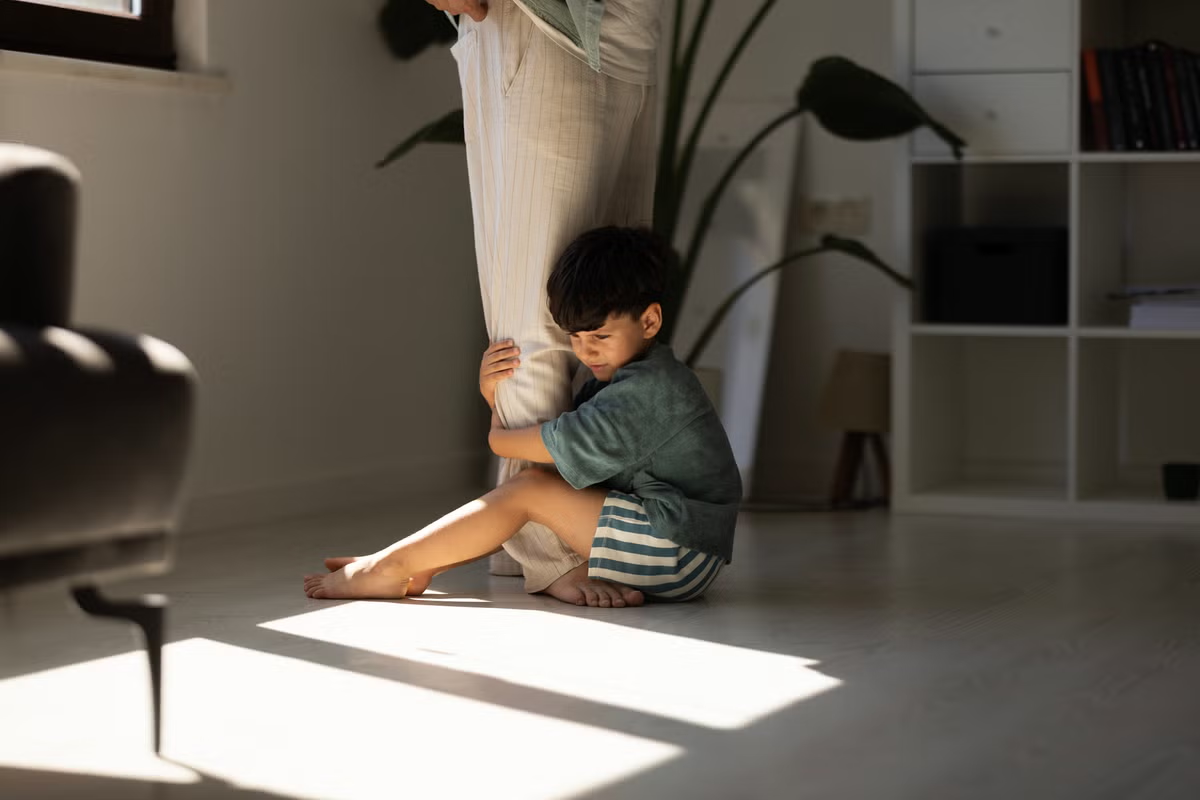
Children who have difficulty separating themselves from their parents are sometimes referred to as “Velcro kids” – a reference to the company that makes the fastener famous for its temporary adherence.
On social media, parents have used the term to share frustrating – and sometimes endearing – moments of clinginess. Examples include when a toddler attempts to break into the bathroom to try to reach a parent or when a child attaches themselves to a parent’s leg while walking around a shopping center.
Even teenagers can express similar “Velcro” behaviors – in one video shared online, a teenager gently uses his foot to touch a parent while lounging on the couch.
But children who have a habit of following their parents around, touching them constantly or becoming upset when they’re apart can provoke some to ask: Is this a phase or an unhealthy attachment style?
Psychological research indicates it’s normal for infants and toddlers to attach themselves to a parent and become upset when they’re apart because they rely on parents for food, comfort, safety, cleanliness and other basic needs.

Studies also suggest that a baby’s lack of object permanence, or the understanding that objects continue to exist even when they’re not directly seen or felt, contributes to their negative emotions when a parent walks away – even for a second.
But research has not found a correlation between a baby’s attachment style and their clinginess as a toddler or child.
Separation anxiety can increase throughout childhood as children go through environmental and lifestyle changes.
“A baby who seemed content to explore independently or was not in distress when separated from a parent may become clingy later due to developmental changes or life stressors such as starting school, adjusting to a move, or a family change,” Dr. Danika Perry, a pediatric psychologist at Nemours Children’s Health, told Parents.com.
Even as they grow into adolescence, children may seek out their parents’ reassurance or comfort, resulting in “Velcro” behaviors such as wanting to stay in constant communication or following parents around the house.
While most children’s clingy patterns are temporary, being in the throes of it can cause parents emotional exhaustion.
“Over time, the constant lack of personal space can contribute to burnout, anxiety, or feelings of guilt. This can also affect relationships with partners or other children,” Perry said.
So what can parents do?
Parents who are emotionally exhausted due to their child’s clinginess can set boundaries by enlisting the help of a partner or other adults they trust, according to the Child Mind Institute. Setting expectations for a child to say “goodbye” to the parent and then allowing another person to take over can give some reprieve and help children practice
Clinical experts suggest that other caretakers can redirect children’s attention away from missing a parent by giving children a task, setting up a fun activity and rewarding them for separating.
There are some situations where “Velcro” behavior can be a symptom of separation anxiety disorder, a type of anxiety disorder diagnosed by a doctor. But those behaviors are more intense than traditional clinginess, interfering with daily activities and mood.
Children with separation anxiety disorder have a constant fear of separation that can manifest in nightmares, intense tantrums, constant worry about something bad happening to a parent, refusal to participate in activities or attend school, headaches, and stomach aches, according to Mayo Clinic.
Medical professionals determine a child has separation anxiety disorder by looking at the intensity of a child’s reaction and the frequency they occur when separating or potentially separating from a parent.
Once diagnosed, doctors can provide a treatment plan that could include therapy to help a child learn coping mechanisms and understand the root of the fear, lifestyle changes to make a child more comfortable with separating, and, in some cases, medication.



