
News Beat
What Keane and McCarthy’s absurd row in Saipan tells us about Irish identity and principles

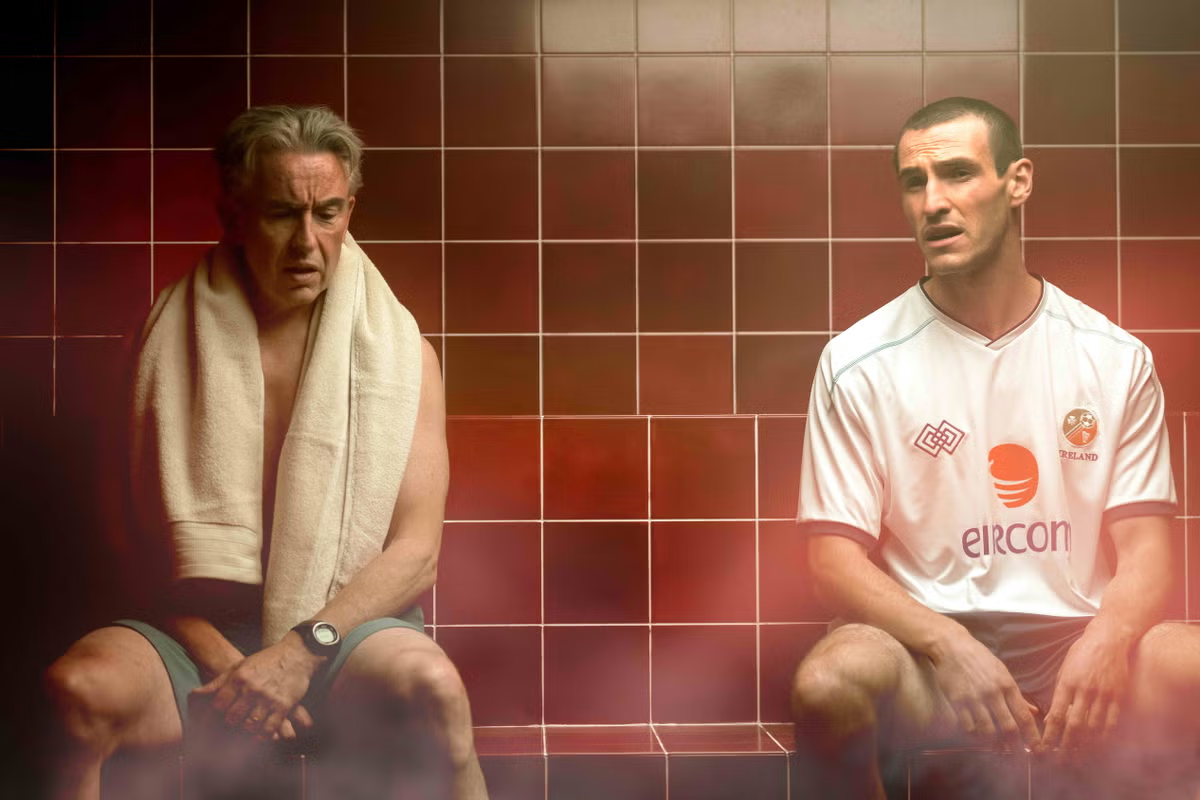
For all the debate about the fictionalisation of a football event people feel intensely about, and how some figures are represented, there might be a considerable irony to the film ‘Saipan’. It may have revealed something new.
While it’s hard to say whether ‘spoilers’ can apply to real history, and one where people have argued about fine details for two decades, it is probably apt here. So consider this fair warning.
It is not just a spoiler that follows, but a detail that may change how people think about one of the biggest controversies in Irish sporting history, as well as the story of how Manchester United’s star captain somehow didn’t play at a World Cup he had been crucial to qualifying for – out of principle.
The film is about Roy Keane’s departure from the Ireland squad on the eve of the 2002 World Cup due to his enmity with manager Mick McCarthy… but there may well have been a twist.
At the film’s climax, as Ireland is in a frenzy over whether Keane might return, the McCarthy character, played by Steve Coogan, actually calls him. The magnitude of this would have been huge, since one of the country’s obsessions was to just get the two men talking. Coogan had been consulting with McCarthy in preparation for the role, as scriptwriter Paul Fraser explains.
“Mick told Steve about what happens at the very end of the film, that he rang him up and said ‘do you want to play?’ I don’t think Mick has ever declared that… and that was a very last-minute addition to the script. But that is what he told Steve. And I thought, ‘I’ve got to put that in because that’s important’.”
To say the entire story was important to Ireland is an understatement. Keane’s departure – finally sparked by a row about poor preparation at the training base from which the film takes its name – was described as the country’s “Princess Diana moment”. Such sentiments actually appear in the film’s montages of real footage, which serve to show the emotional chaos Ireland descended into. Or, as co-director Glenn Leyburn puts it, “a fever dream”.
If you’ll forgive a brief diversion into the first person, this writer felt that all too keenly. As a then 18-year-old in Dublin who was a football obsessive and also studying a journalism degree, I did my thesis on the media coverage of ‘Saipan’. I was in deep. I even know of a group of brothers who staged what was essentially “a summit” to decide the family stance.
There is a danger when you watch a film from that perspective that you care too much about fine details – a common issue for real-life stories.
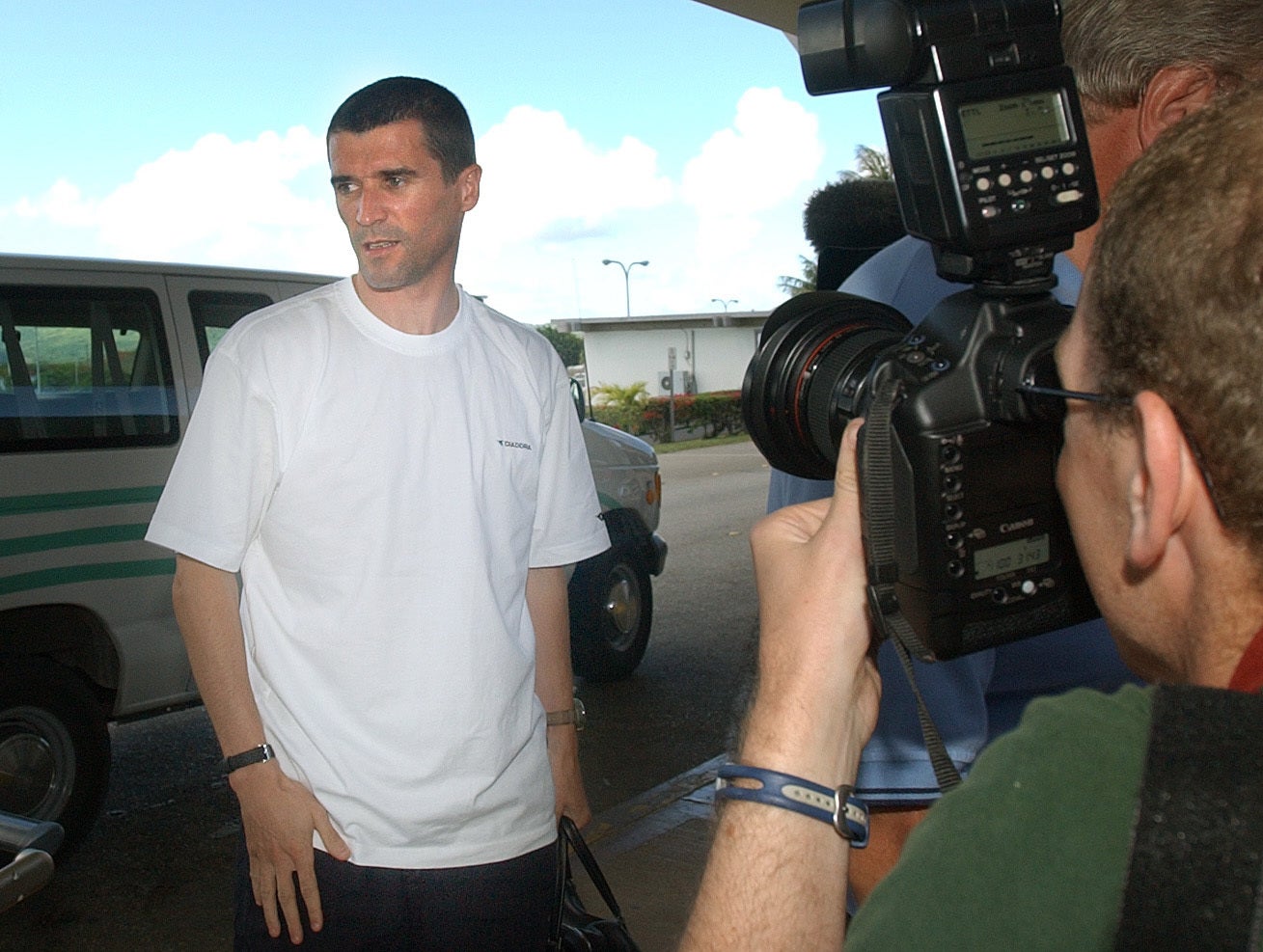
But the film was mostly just… great fun. It’s also funny, in two ways, not least because mere mention of some details has dredged up 24-year-old arguments.
It’s put to Fraser, Leyburn and co-director Lisa Barros D’Sa that the tone was to evoke the absurdity of the period.
“I suppose it’s a heightened tone,” Barros D’Sa says, pointing to an invented giant cardboard head of Eanna Hardwicke’s superbly observed Keane, that seems to be following him around. “It felt like Ireland stepped into Saipan and through the looking glass, to confront a perhaps distorted, exaggerated, but ultimately revelatory version of itself.”
Leyburn adds: “If you look at broad strokes, the team goes to an island that took them 24 hours to get to, three different flights, and there’s no football pitch there and no balls. That is absurd.”
The tone only went so far, though. “It’s written as a tragedy,” Fraser says. “I saw it as two impossibly complicated egos unwilling to step down and look at the consequences. If one of them could have just…”
Those are words many Irish fans have uttered over the years, as a belief pervades that a peak Keane could have driven a good side to the final of a World Cup characterised by upsets. Another spoiler: Ireland were eliminated by Spain in the last 16 on penalties.
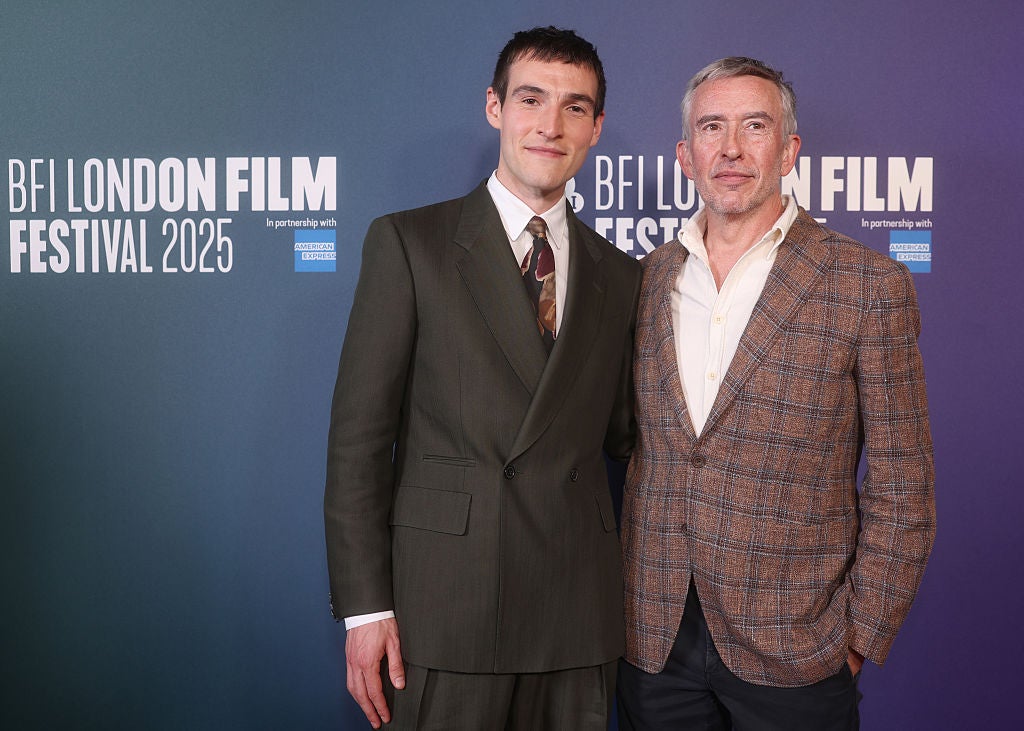
“The great tragedy was that they weren’t able to communicate and get over those things,” Leyburn says. “I did have my side on this, but I have sympathy for both men, both of whom passionately want the same thing, are massively committed to making it happen, but have different perspectives and are at the mercy of the circumstances around them.”
Hence, Barros D’Sa explains, the film was also done as “a shipwreck story”, the island itself a character in that classic sense, as it closed both men in.
“I was really interested in that bubble,” Fraser explains. “It was almost when Ireland went to sleep, Saipan woke up.”
The creators immersed themselves in it, too, consuming all the material from the time. Barros D’Sa was often in her car listening to hours of Ireland’s hysterical radio debates, where Keane biographer Eamon Dunphy was very much a main character.
While creators don’t need to repeat the idea that real-life details have to be changed for a compelling narrative, some of the decisions invite intriguing questions.
At its core, the real-life story of Saipan feels like it is about two things: standing by your principles, and Irish identity, especially as regards a more haphazard old Ireland, happy to be there, and Keane’s modern ultra-professionalism. “Obviously, the modern world looks a bit more like Roy’s version of how things should be done,” Barros D’Sa says.
As regards Irish identity, though, a distinctive theme is the exploration of the diaspora to the UK; the “plastic Paddies”, as Ireland’s teams of the era became known for.

This all plays into the film’s dramatic climax and one of its main controversies. That is the ultimate argument between McCarthy and Keane that saw the player depart. Former players who were in the room insist Keane never called his manager an “English c**t” or questioned his Irishness, as was briefly reported in 2002, and that they believe the film portrayed.
But. “There’s no point in the film where it actually says that,” Leyburn laughs. “It says ‘useless c**t. It goes to show the fallibility of memory!”
If Keane directly questioned McCarthy’s Irishness – and that in a team of “Anglos” – has been denied by those involved, Fraser explains the rationale. “The story needs to build to this argument,” he says. “When you’re writing a scene, and you have an escalating argument, you’ve got to get to that point where you go ‘oh f**k, you’re not coming back from this’. And you’re not going to come back from that. It’s there for a different reason to the kind of arguments that the generation of Irish people have been having…”
“People’s faces, the way they talked about it, it was clear a line had been crossed,” Leyburn says. “And in terms of talking about Englishness, obviously, we have the wider research, Roy’s autobiographies,” Barros D’Sa adds.
There was one line they couldn’t cross, mind. “Some people have said to me they knew the story, but they still thought he might come back and play,” Fraser says. “It’s a work of fiction, but based on some kind of given truth. It’s not like ‘Inglourious Basterds’, there’s never going to be a version of this where Roy stays and Ireland beat Spain.”



