
News Beat
What We Know Now About The Novichok Poisonings, Seven Years Later

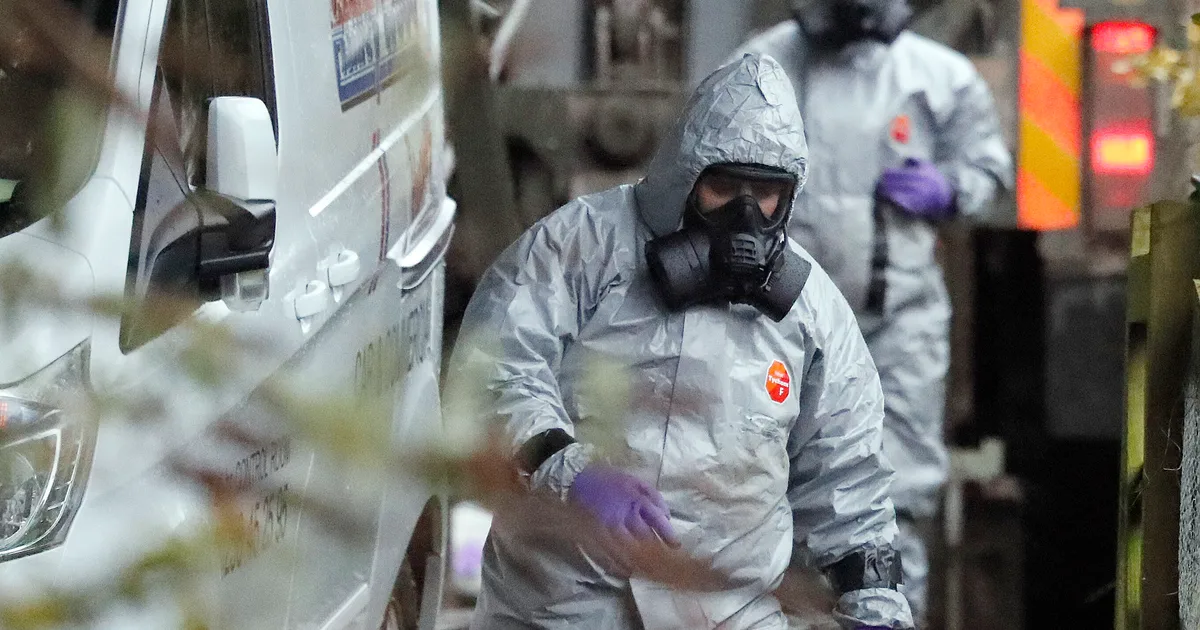
A long-awaiting report into the shocking and deadly novichok poisonings from 2018 has finally been published – and it lays the blame squarely at Vladimir Putin’s feet.
After an £8.3 million inquiry, here’s what you need to know.
What happened in 2018?
A former Russian spy Sergei Skripal and his daughter Yulia were hospitalised after coming into contact with a nerve agent at their home in Salisbury.
The ex-spook had been settled in a suburban cul-de-sac after a previous spy exchange.
While the Skripals survived their near-death encounter, Russian agents inadvertently poisoned more people by casually disposing of the novichok nerve agent, which was stored in a fake perfume bottle.
An unconnected individual, Dawn Sturgess, later died after spraying the same substance over herself while at the home of her boyfriend Charlie Rowley in Amesbury, on June 30, 2018.
It’s thought Rowley gave the bottle to his partner after he found it abandoned.
He too fell ill and went into a coma after coming into contact with the poison, but later recovered.
Two Russian men who were named as suspects that September claimed to have been visiting Salisbury Spire as tourists and were supported by Vladimir Putin who claimed there was “nothing criminal about them”.
The incident was instrumental in souring UK-Russian relations.

What did the report conclude?
The inquiry concluded Putin is “morally responsible” for Sturgess’s death and that the poisoning was meant to be a “public demonstration of Russian power”.
Lord Hughes, the inquiry chair, said the Russian president must have authorised the assassination attempt on former spy Sergei Skripal in Salisbury.
He said: “I am sure that in conducting their attack on Sergei Skripal, they were acting on instructions. I have concluded that the operation to assassinate Sergei Skripal must have been authorised at the highest level, by President Putin.”
He also criticised the “astonishingly reckless act” of the Russian men who filled a fake perfume bottle with novichok.
Hughes said: “They recklessly discarded this bottle somewhere public or semi-public before leaving Salisbury. They can have had no regard for the hazard thus created, of the death of, or serious injury to, an unaccountable number of innocent people.”
Sturgess suffered from “very serious brain injury” after her heart stopped for “an extended period of 30 minutes or so immediately after she was poisoned”.
The report also found three Russian operatives had arrived in London from Moscow on March 2, intending to kill the double agent Skripal.
Novichok was later placed on the handle of his front door, according to the inquiry.
What about the implications for the UK?
Hughes said Wiltshire police wrongly characterised Strugess as a dug user after she was poisoned.
He said there was “no alert” that could have stopped Sturgess’s death or improved her treatment,
But he noted it was reasonable public health officials had not given the public advice not to pick anything up, because it was not clear where the poison came from at the time.
He also said there were mistakes in the way the British state ought to have taken steps to prevent the poisoning, particularly in the way Skripal was managed as an exchanged prisoner.
While Hughes admitted more security would not have helped anything, he added: “The only such measures which could have avoided the attack would have been such as to hide him completely with a new identity.”
The inquiry also called for a new process to be set up to alert local police if anything happens to individuals with “sensitive backgrounds”.
What happens now?
Immediately after the report was released, the Foreign Office (FCDO) declared that it is cracking down on the Russian intelligence agency linked to the poisonings – the GRU, Russia’s military intelligence agency – in its entirety.
The FCDO claims the UK has sanctioned and exposed 11 actors behind Russian state sponsored hostile activity, including those working for the GRU.
The Russian ambassador has also been summoned to the Foreign Office to answer for Russia’s ongoing campaign of hostile activity against the UK.
The new sanctions will also zero in on eight cyber military intelligence officers working for the GRU.
Starmer said: “Today’s findings are a grave reminder of the Kremlin’s disregard for innocent lives.”
However, the Russian agents named as suspects are unlikely to ever face justice as they are protected by the Kremlin.



