

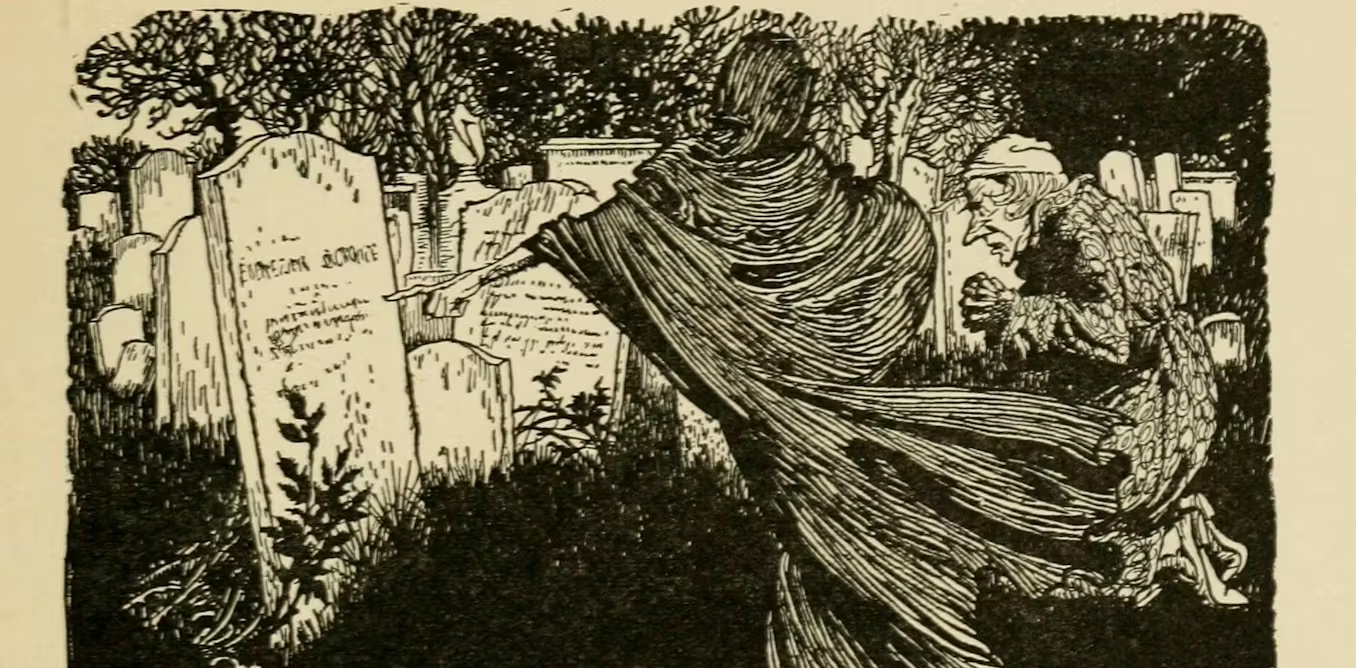
Christmas is usually seen as a time of light, warmth, and happiness. However, in Europe there is a long tradition of people embracing the darker side by telling ghost stories during the festive season.
One of the most famous Christmas stories of all, A Christmas Carol, is essentially a ghost story. Indeed, Mark Gatiss’s well-received staging of the play is currently running under the name A Christmas Carol: A Ghost Story at London’s Alexandra Palace Theatre. But what is the psychology behind people who enjoy hearing, reading and watching ghost stories at Christmas?
One important reason comes from Christmas’s winter setting (in the northern hemisphere at least). The short days and long nights of winter provide us with the opportunity for reflection on dark topics such as the supernatural.
The stark contrast between our warm homes and the coldness outside can create the sense of a liminal space (from the Latin word limen, meaning threshold) between light and dark, and between the end of the old year and the beginning of a new one. This can encourage reflection on liminal beings that cannot easily be defined or understood, such as ghosts and spirits.
The religious themes of Christmas also encourage many people to lean into the supernatural. Although for Christians the Christmas story is about the joy surrounding Jesus’s birth, the spectre of his death and resurrection are never far away.
Many Christmas carols mention Jesus’s eventual death, such as We Three Kings, which describes the Wise Men giving the baby Jesus the gift of myrrh, a herb used to prepare bodies for burial:
Myrrh is mine, its bitter perfume
breathes a life of gathering gloom,
sorrowing, sighing, bleeding, dying,
sealed in the stone-cold tomb.
Ghost stories, which often encompass themes such as judgement and retribution, have also often been intertwined with religious perspectives of morality. It has been argued that the rise in the popularity of ghost stories during the Victorian era was in part due to their attempt to inject Christian values into modern secular society, with Charles Dickens’s A Christmas Carol a prime example.
Psychology of spookiness
The psychological value of the ghost story’s communal experience should not be underestimated. The seminal ghost story writer M.R. James began telling his stories to students and friends at Christmas Eve parties at the University of Cambridge. Gatherings like this create an ideal setting for sharing stories. The thrill and suspense of collectively engaging with a spooky tale can not only entertain, it can create a sense of bondedness and shared identity, which, as I have shown in my research can benefit people’s wellbeing.
Research has also shown that collective continuity – the ability to maintain values and ideas over time by passing them on to the next generation – enhances wellbeing. Telling ghost stories, like all Christmas traditions, is a clear example of collective continuity.
One way this can enhance wellbeing is by helping people to cope with the prospect of their own death. Terror management theory argues that people manage the fear of their own death by investing in social groups. This essentially allows them to transcend death by being part of a collective that is more enduring than themselves: even after they have gone, the group will remain.
BBC/Adorable Media/Joe Duggan
Ensuring that social groups have strong values and traditions (such as storytelling) allows this sense of transcendence to be maintained. The telling of ghost stories offers an additional layer to this continuity. Like horror in general, these stories allow us to explore our fears and reflections on mortality in a safe and supportive environment with like-minded people.
Many ghost stories also encapsulate themes of continuity, such as spirits from the past engaging with people living in the present. The ancient winter festival of Yule (which long predates Christmas) is strongly linked to ideas of continuity and involves ceremonies designed to honour one’s ancestors.
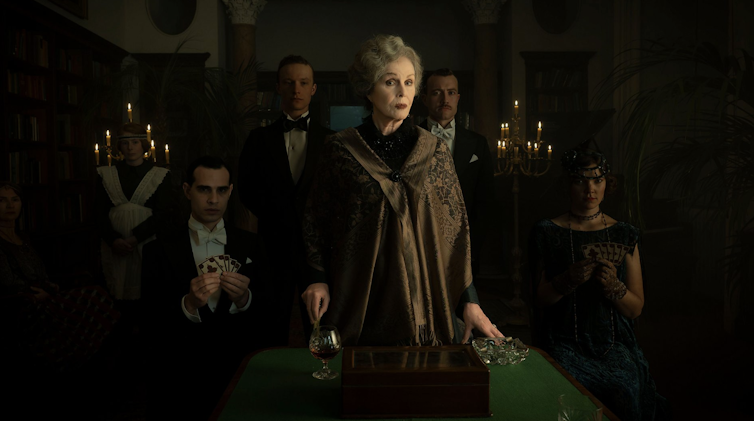
So where should you begin if you want to get into Christmas ghost stories this year? You may wish to start with some modern examples. Master of the ghost story Mark Gatiss has been writing Christmas ghost stories for the BBC for the past few years. His next instalment A Room in the Tower, based on E.F. Benson’s short story, will be on BBC2 at 10pm on Christmas Eve. Interestingly, Benson’s love of ghost stories developed from his attendance of M.R. James’s storytelling events at Cambridge.
Gatiss’s League of Gentlemen co-writers Reece Shearsmith and Steve Pemberton have also created an excellent Christmas ghost story in The Bones of St. Nicholas. Part of their anthology series Inside No. 9, it is available on BBC iPlayer. You can also buy DVDs of the classic BBC Christmas ghost stories, including Dickens’s The Signalman and M.R. James’s Whistle and I’ll Come To You.
There are also excellent anthologies of written Christmas ghost stories, such as Chill Tidings. Wishing you all the best for the spooky Christmas season!
This article features references to books that have been included for editorial reasons, and may contain links to bookshop.org; if you click on one of the links and go on to buy something, The Conversation UK may earn a commission.

Looking for something good? Cut through the noise with a carefully curated selection of the latest releases, live events and exhibitions, straight to your inbox every fortnight, on Fridays. Sign up here.



